
A cucumber plant can cover a surprisingly large area even when its roots live in one pot. Success in a container depends on matching three things before planting: the cultivar’s mature vine habit, the volume and drainage of the container, and a structure that can carry foliage and wet fruit without tipping. A fourth decision appears later, when flowers open: not every cucumber sets fruit the same way. This guide is a pot-first plan rather than another general cucumber trellis tutorial. It shows how to choose a manageable setup, record root-zone moisture, and recognize when a flower problem is not a fertilizer problem.
Match Cucumber Growth Habit to a Real Pot
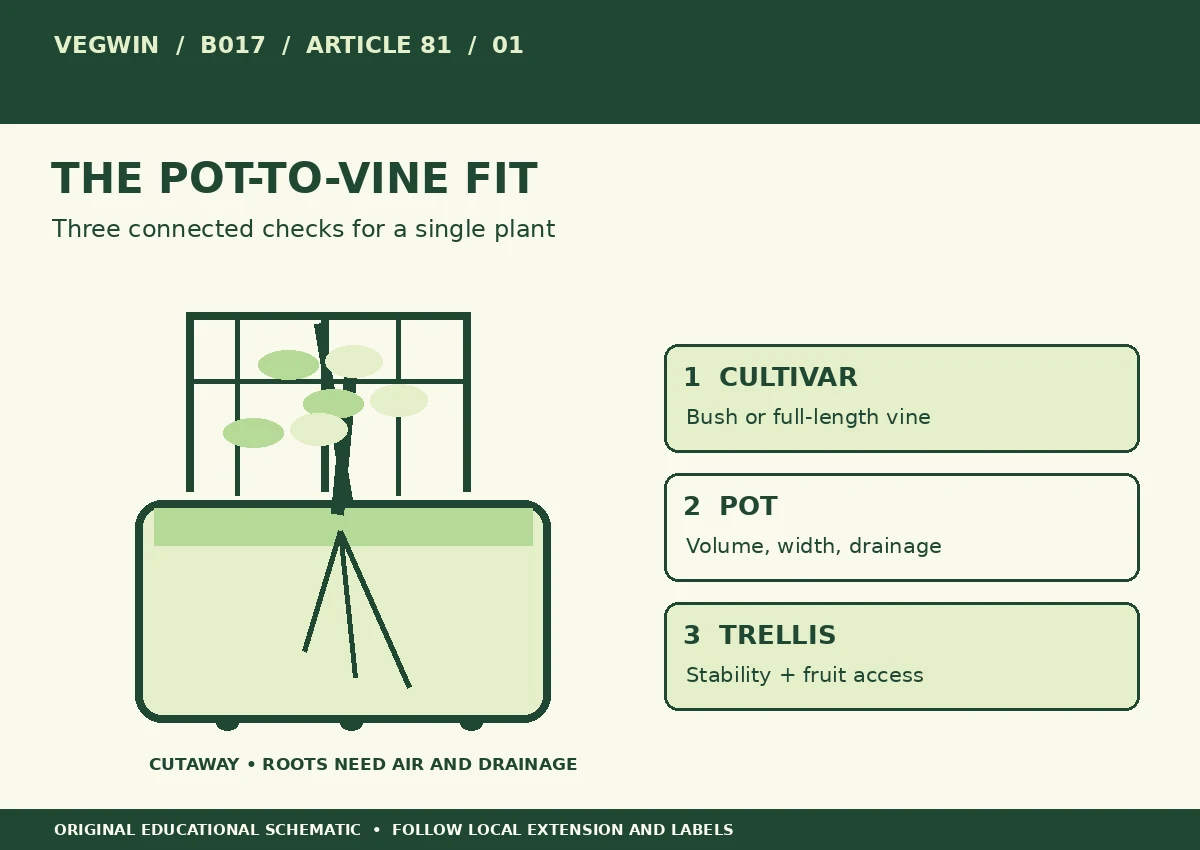
First read the actual seed packet or plant label. “Cucumber” covers standard long-vining cultivars, bush types, and compact or dwarf lines, so an image of a tiny transplant says little about its mature reach. Maryland Extension recommends selecting bush or dwarf container cultivars when space is limited, and its container guide lists a five-gallon minimum for cucumbers. Treat that as a starting point, not proof that any five-gallon pot will support a vigorous full-season vine equally well. A larger stable container can supply more rooting room and resist rapid drying. If you want the full process, read how to train vining cucumbers up a trellis without breaking stems.
Assess the container’s width as well as its labeled volume. A tall narrow pot on an exposed deck is more likely to tip when a vine climbs and fruit adds weight. Use a food-growing-appropriate container with effective drainage and a light, formulated potting medium instead of heavy compacted garden soil. If you are gardening on a balcony, obey building rules and verify safe loads and drainage; neither an attractive trellis nor an online planter calculator can certify a structure. Start with one plant and evaluate its progress before crowding the pot. Our guide to growing peppers in pots adds more detail on this.
Build a Freestanding Support Before Vines Run
Cucumbers climb with tendrils, but the growing shoot still needs a route to a solid frame. A short tomato cage may be enough for a truly compact type while standard vines can outgrow it. Install a freestanding trellis or well-secured support at planting time, before expanding roots make staking destructive. Use a mesh with openings that allow easy fruit access, and make sure the frame and pot remain stable during wind or a soaking rain. Do not tie a tall heavy frame to a weak railing without authorization. Our guide to growing pumpkins adds more detail on this.
Guide young shoots gently onto their support and check often that leaves are not packed into an opaque wall. Good access matters because cucumbers may hide beneath leaves and become oversized before they are noticed. If an exposed corner receives damaging gusts, moving the whole container to a safer bright site may be more effective than adding more string. Separate “support failed” from “plant failed”: leaves and fruit that fall to the ground can rot or become hard to inspect even when the roots are healthy.
Water the Entire Root Zone and Verify Drainage
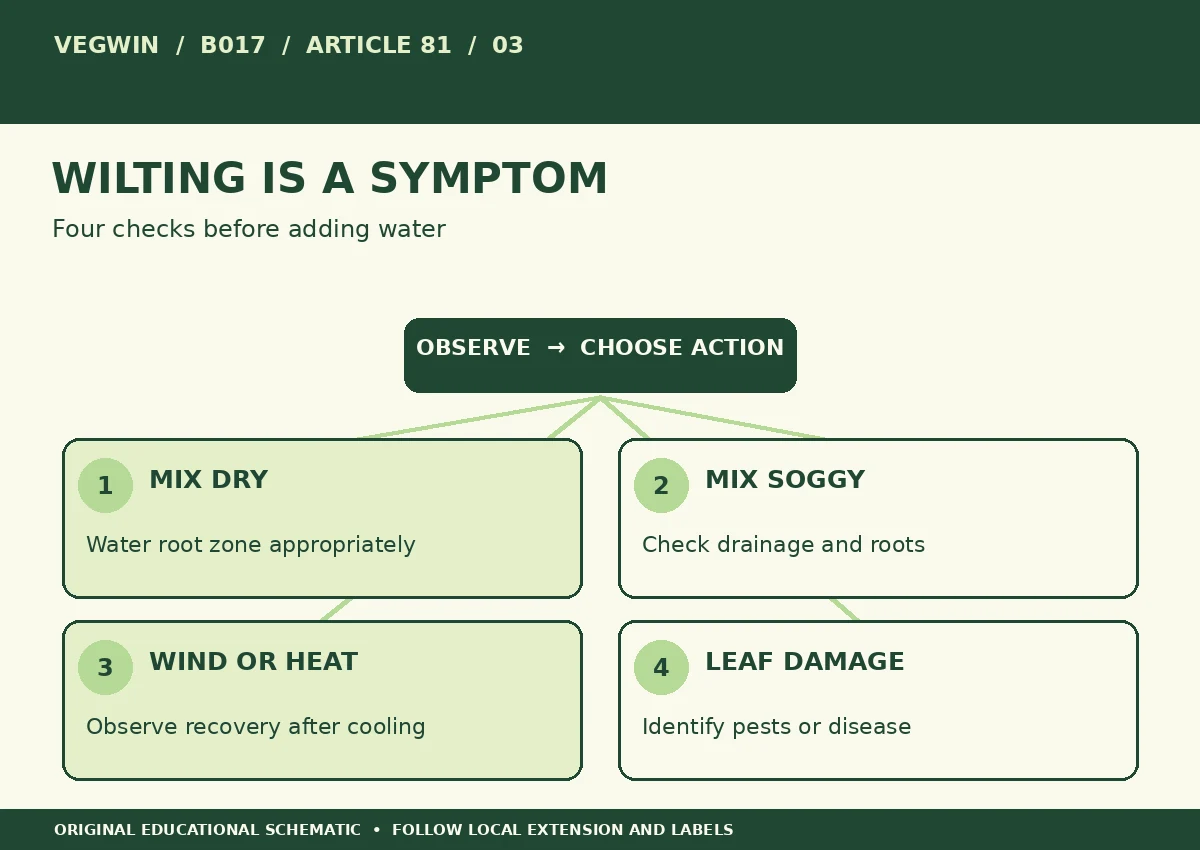
A leafy cucumber transpires heavily during warm, windy weather, and containers have less water-buffering capacity than garden soil. Do not promise one watering schedule for every pot. Insert a finger or suitable moisture probe into the growing mix below the dry surface and check whether the full root zone is drying; feel the container weight when feasible. Water until the mix is appropriately moistened and excess can leave through functioning drainage, then recheck the actual conditions as weather and plant size change.
Sudden yellowing or wilting is not automatic proof of drought. A chronically saturated pot can also injure roots, and a hot midday droop may improve as conditions cool. If water pools above the medium, inspect for compaction or drainage blockage instead of pouring on more. Where fertilizers are needed, follow the crop’s needs and the product instructions rather than adding arbitrary weekly doses. Poor fruit set can result from flower biology, heat or inadequate pollination; more nutrients are not a universal cure.
| Observed situation | Likely decision point | Safer next step |
|---|---|---|
| Plant repeatedly tips | Tall narrow pot or wind-exposed support | Select broad stable base and secure a suitable frame |
| Leafy vine with no usable fruit | Flower biology, pollination or stress | Identify cultivar and compare male/female blooms |
| Midday wilt with wet mix | Root stress or environmental demand possible | Inspect drainage; do not automatically water again |
| Yellow oversized fruit | Harvest stage missed | Inspect behind leaves and harvest to cultivar cue |
Check Male Flowers, Female Flowers, and Fruit Type
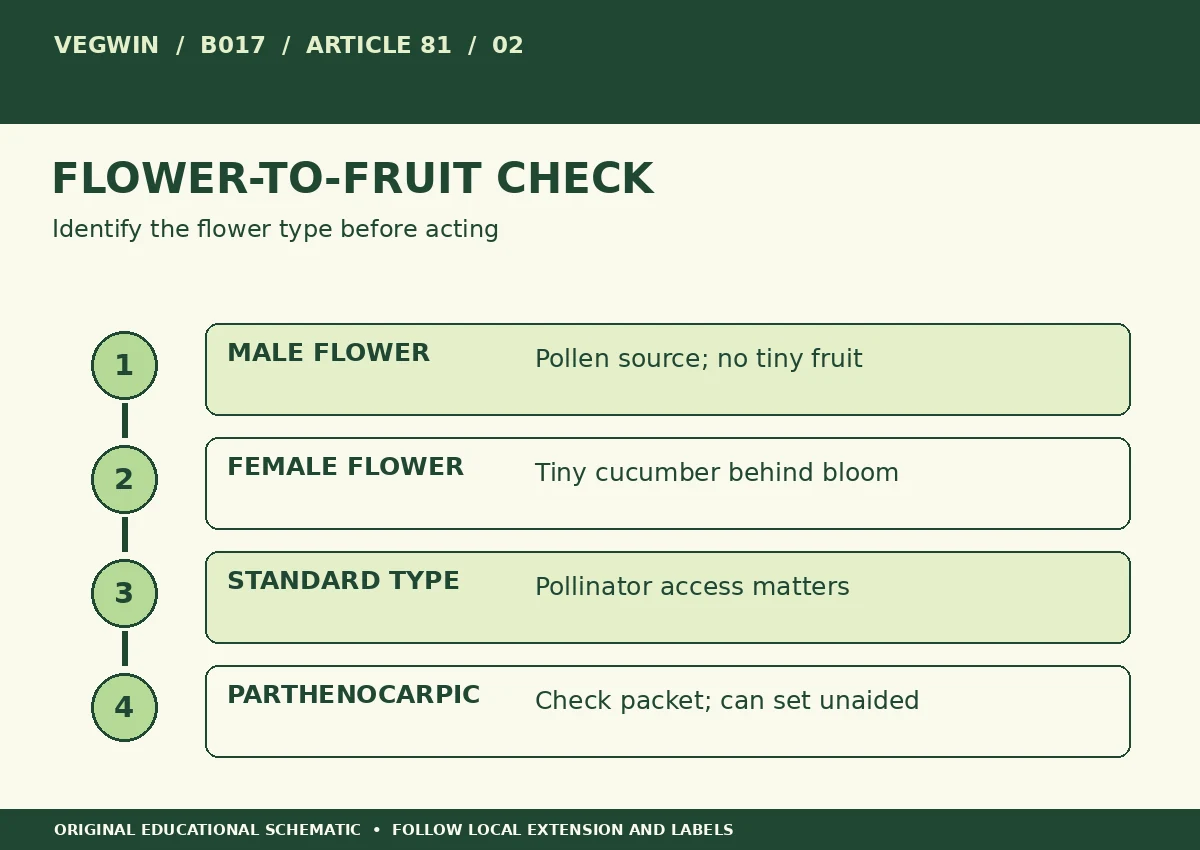
Most common cucumbers produce both male and female flowers. Male blooms often appear earlier; female blooms have a tiny developing cucumber behind the petals. Maryland Extension explains that bee-mediated pollen movement matters for these standard types and that some packets of predominantly female-flowering cultivars include pollen-producer seed. By contrast, a parthenocarpic variety may produce fruit without pollination, which is particularly relevant to protected spaces. Confirm the actual cultivar description instead of assuming every greenhouse cucumber is seedless or self-fertile.
When flowers drop without fruit, observe which flower types are actually present. If female flowers are open but fruit stays tiny and aborts, investigate access for pollinating insects on ordinary cultivars, heat stress and plant condition. A misshapen cucumber may suggest inadequate pollination, but diagnosis should also consider environmental stress and injury. Avoid indiscriminate pesticide use during bloom and follow Extension IPM if a pest is actually identified. A balcony screened from insects creates a different problem from a sunlit outdoor pot with visible bee visits. Our guide to growing zucchini adds more detail on this.
Harvest Young Fruit and Note the Next Picking
Cucumber harvest size depends on whether you grow a pickling, slicing, miniature or specialty type; the packet offers more useful guidance than one universal fruit length. Check vines frequently as harvesting begins, and remove fruit cleanly without wrenching the vine or detaching the support. Overmature cucumbers can shift a plant’s resources toward seed development and become poorer eating quality, even while the leaves still look productive. Monitor fruits behind the trellis as well as those facing outward. Our guide to growing cucumbers in garden beds adds more detail on this.
Keep a short log with cultivar, pot volume, first female bloom, first harvest and days between useful picks. Record whether the pot dried unexpectedly after hot or windy weather. That information tells you whether to increase watering attention, improve trellis access or change varieties next season. Do not evaluate a container only by the number of tiny fruit that form: harvestable straight fruit and a healthy plant are better measures of whether the site is working.
Troubleshoot the Container Before Replacing the Plant
Use a sequence rather than a shopping list. If a vine wilts, feel the mix and test drainage before guessing about pests. If stems are breaking, inspect the weight and attachment of the frame before feeding. Also, if flowers appear without fruit, check flower sex, cultivar and pollinator access. If leaves show mottling, lesions or visible insects, photograph both leaf surfaces, look for a reliable diagnosis through Extension, and apply IPM. A quick response is useful only when it addresses the actual cause. Our guide “Balcony Gardening for Vegetables” adds more detail on this.
When repeating the crop, discard or sanitize diseased growing media and containers as advised for the diagnosed problem; do not assume ordinary reuse always prevents disease. Wash hands and tools appropriately when working across unhealthy plants. Plan next year’s setup with one improvement at a time: a wider pot, a truly compact cultivar, a safer support or a better check of moisture. Each change has a measurable purpose, and none requires inventing a chemical treatment or promising a harvest.
Related Guides
- Vegetables in Pots: Match Crops, Container Volume, Sun, and Water
- How to Grow Lemon Cucumbers and Pick Round Yellow Fruits
- How to Grow Lemon Cucumbers Vertically in a Container and Pick Round Fruit
- How to Recognize Downy Mildew on Cucumber Leaves Before Vines Collapse
How We Research and Review These Gardening Decisions
We consulted these original public university Extension and government resources on 2026-10-20: University of Maryland Extension, University of Maryland Extension, University of Minnesota Extension. We checked how their recommendations depend on crop biology, growing environment, cultivar and region. The custom diagrams visualize decisions; they are educational illustrations, not experimental measurements or photographs. We compared the first 80 planned article topics for intent overlap, but could not independently inspect the full live WordPress index on VegWin.org. Current local advice, crop packets, measured conditions, and updated guidance take precedence over generic rules. Structural preflight cannot confirm every biological fact.
Buttons lead to public Extension or government educational resources; no partnership or approval is implied. We checked sources including affiliate disclosure. If products or treatments are later added, review labels, affiliations, and applicable rules first.
Frequently Asked Questions
Maryland Extension lists five gallons as a minimum container size for cucumbers; actual performance depends on cultivar, drainage, rooting volume and support.
Compact cultivars may need less support, but many types benefit from a stable frame that improves access and keeps fruit off the ground.
Determine whether flowers are male or female and whether your cultivar needs pollination. Heat, poor plant health and inadequate pollinator visits may also matter.
Parthenocarpic types can develop fruit without pollination, but check the exact seed packet because flower and fruit traits vary among cultivars.
Check the root-zone moisture and drainage regularly, especially during warm or windy weather; no fixed interval works for every pot and site.