
A cucumber leaf can turn yellow for many reasons, but downy mildew produces a characteristic combination: angular pale-yellow patches between veins on the upper side and, during humid weather, gray-purple spore growth beneath those same lesions. The culprit is the water mold Pseudoperonospora cubensis, not the fungus that causes white powdery mildew. Early recognition matters because infected leaves can decline quickly and expose fruit to sunscald, yet guessing from one yellow spot can lead to unnecessary spraying. This guide shows what to inspect, how to compare look-alike symptoms, and which home-garden preventive actions are supported by Extension advice.
Inspect Older Leaves for Angular Yellow Spots
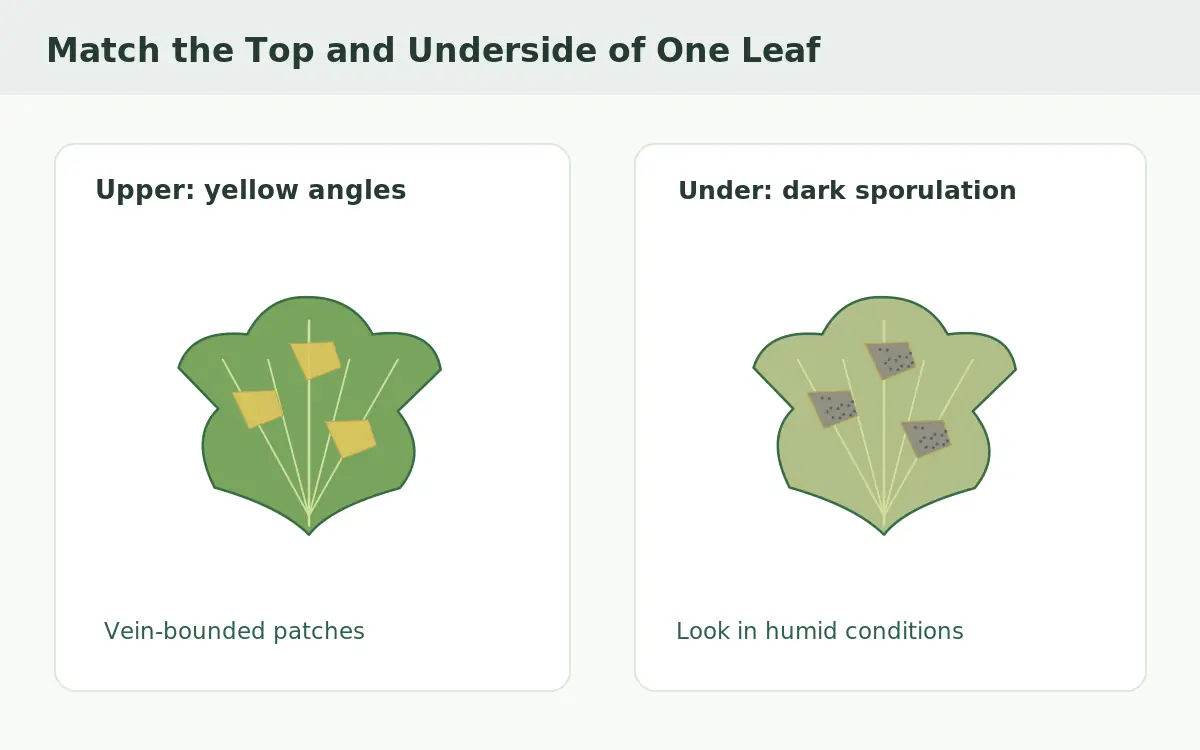
Start with the oldest cucumber leaves that are beginning to look patchy. The upper surface may show pale green or yellow regions with edges that seem squared off because leaf veins limit their spread. Later the affected areas turn tan or brown and may join together. Do not mistake every yellow lower leaf for downy mildew: natural aging, root stress and nutrition problems can also yellow foliage. Look for repeated angular lesions in different places across the canopy rather than one uniformly yellow leaf. Photograph the upper surface while the leaf is still attached, because the distribution of spots is valuable when asking an Extension diagnostician for help.
Turn Over the Same Leaf to Look Beneath
Minnesota and Penn State Extension both emphasize checking the underside of an affected leaf. Under humid conditions, the lower surface beneath a yellow lesion can carry a subtle gray, brownish or purplish fuzzy growth made of pathogen structures. It may be easiest to see early in the morning before the leaf dries. Turn the leaf gently so you do not rip the vine, and use good light or a hand lens. A lack of obvious fuzz at midday does not rule the disease out, but it makes diagnosis less certain. The paired diagram connects an upper vein-bounded lesion to its matching underside, instead of pointing to unrelated discoloration.
Separate Downy Mildew From White Powdery Mildew
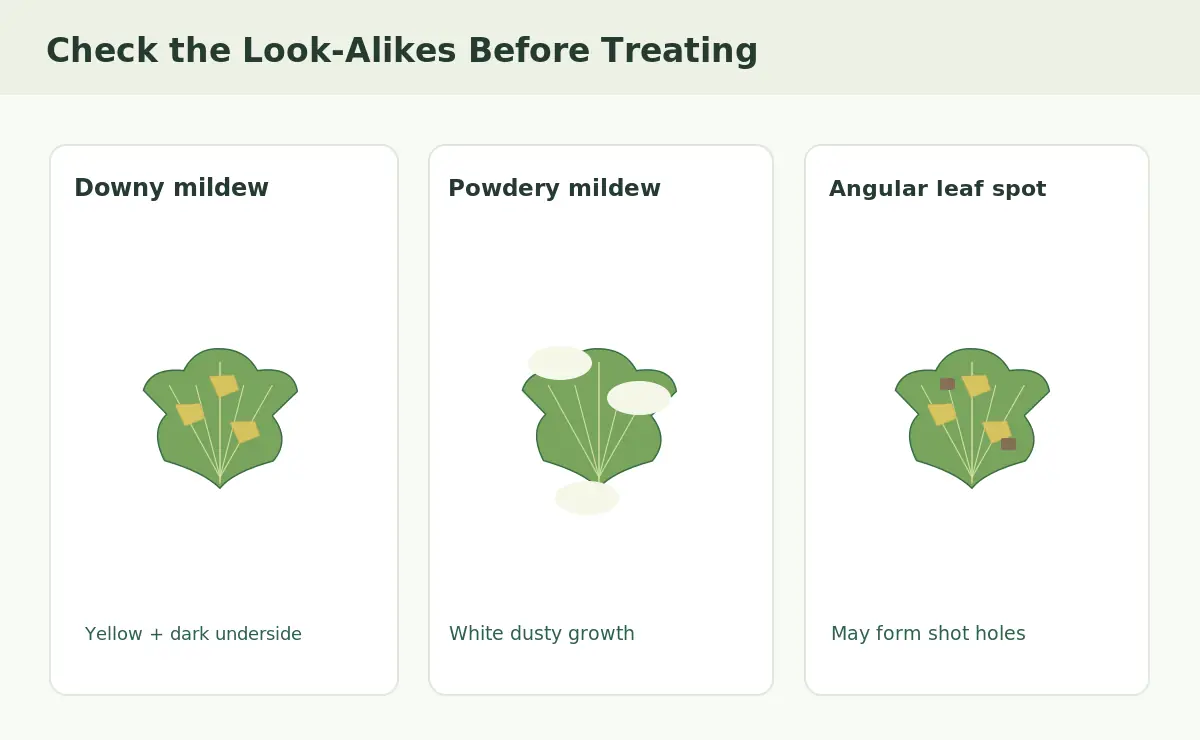
Powdery mildew generally produces clearly whitish dusty colonies on leaf surfaces. Downy mildew is characterized by angular yellow upper patches and darker underside sporulation under moisture. It is not enough to see the word “mildew” and choose one management plan for both problems. Minnesota Extension identifies different pathogen types and symptom patterns. A dusty white deposit on top of a leaf is not the expected underside growth for downy mildew, and a yellow angular lesion without sporulation can have other explanations. Compare several leaves, noting which surface carries the characteristic sign and whether the problem spreads rapidly during damp weather.
Check Bacterial Angular Leaf Spot as a Look-Alike
Bacterial angular leaf spot can also leave vein-bounded lesions on cucumbers. According to Minnesota Extension diagnostics, these can start water-soaked and later dry out or become holes, sometimes with bacterial exudate in wet conditions. A dry brown hole is not the same as gray-purple downy growth. Because the symptoms can overlap, avoid naming the disease from a phone photo of one old leaf alone. Check multiple spots and the underside in suitable light, and seek a local plant disease clinic when uncertain. This distinction matters because a fungicide intended for one disease may not work against the other, and neither diagnosis justifies unlabelled treatments.
Understand Why Humidity Drives the Disease
The downy mildew pathogen needs moisture for infection and spreads as airborne spores under favorable conditions. In some temperate regions it arrives seasonally on wind currents from areas where susceptible plants remain alive, so infected crop debris is not always the main source of a new outbreak. Minnesota Extension notes that humid weather can accelerate defoliation. Dense foliage, wet leaves and poor air circulation can worsen plant conditions, although spacing alone cannot block spores carried long distances. Pay attention to regional downy mildew reports when available. A wet summer followed by rapid angular yellowing warrants an especially careful inspection.

Improve Canopy Drying Without Overpruning
Use spacing appropriate to the cucumber cultivar and grow vines on a sturdy trellis when practical so leaves dry faster. Water the soil using drip or directed irrigation instead of repeatedly wetting the foliage overhead. Remove weeds that restrict air flow around the crop. Avoid stripping all leaves from an infected cucumber: healthy foliage is still needed to support developing fruit, and too much removal can cause sunscald. If individual leaves are badly diseased, handle and discard them according to local disease advice without shaking spores through the bed. These cultural measures reduce favorable conditions, but they are not a guaranteed cure once a severe epidemic is underway.
Decide When a Plant Is Too Damaged to Keep
When many leaves become brown and collapse, the remaining fruit can sunburn or stop developing normally. Minnesota Extension recommends removing plants with downy mildew symptoms in home gardens where the disease is established. Where only a few suspicious lesions exist, first confirm the diagnosis to avoid discarding an otherwise healthy cucumber for ordinary aging. If the plant is clearly devastated, removal may simplify cleanup and protect nearby plantings from excessive handling. Do not compost diseased foliage in a cool pile if local guidance advises disposal, and clean tools and work surfaces. Replanting susceptible cucumbers immediately beside infected vines will not remove windborne disease pressure.
Choose Resistant Varieties for Another Season
If downy mildew is a recurring problem in your region, look for cucumber varieties with documented resistance or tolerance appropriate to the strains present. Resistances are not perfect shields, and the mix of pathogen populations changes across crops and years. Certified disease-free seed and vigorous transplants help establish plants but do not prevent every airborne infection. Crop rotation is valuable for general garden health, yet the downy mildew pathogen can travel on air currents and may not depend on local debris to persist through cold winters. Monitor nearby Extension alerts and match the next planting to local disease timing as well as ordinary cucumber growing conditions.
Treat Pesticide Claims With Caution
Some commercial production programs rely on preventive registered fungicides and regional resistance-management advice; a list of commercial products must not be interpreted as legal or effective for a home vegetable garden. Minnesota Extension states that it has no effective home-garden pesticide product recommendation for cucumber downy mildew in its setting. Never apply a product that lacks a label for the crop, disease and location, and do not invent application rates or mix unapproved ingredients. Follow local Extension and regulatory guidance before any treatment. Infected leaves will not turn healthy again simply because a spray is applied after lesions appear.
Record Evidence Before Requesting Diagnosis
Take separate well-lit photos of the plant canopy, upper leaf and underside of the same lesion. Note how quickly symptoms spread, what recent weather was like, and whether neighboring cucurbits are affected. A clinic may request a fresh sample packaged according to its directions; check requirements before mailing plant material across regions. Avoid keeping damp, sealed samples in the sun, where breakdown may obscure the original symptoms. A good diagnosis distinguishes disease from weather injury, nutrient stress, bacterial leaf spot and white powdery mildew. Use the guide’s comparison image as a checklist, not as laboratory confirmation.
Apply Local Forecast and Food-Safety Judgment
Downy mildew occurrence changes by region and season, so a fixed calendar spray or a USDA hardiness-zone prediction is not reliable. In short-season areas, it may appear late in summer; under warm, wet conditions elsewhere it can become important earlier. Do not claim that a symptom-free neighboring pumpkin proves the cucumber is safe: downy mildew pathogen groups vary in host preference. Inspect remaining cucumbers for direct damage and follow ordinary food hygiene, but do not consume spoiled fruit. The priority is reliable diagnosis, sound canopy management and a resistant cultivar where recurring local disease pressure makes it worthwhile.
Authoritative Sources and Further Reading
These primary horticultural references informed the identification, timing and procedure in this guide: extension.umn.edu reference (Minnesota Extension documents angular yellow cucumber spots, purplish-gray underside sporulation, moisture-driven spread and home-garden prevention.). extension.psu.edu reference (Penn State Extension provides 2026 disease scouting guidance and illustrates why underside sporulation supports diagnosis.). extension.umn.edu reference (Minnesota Extension contrasts powdery mildew, which produces white surface growth.). apps.extension.umn.edu reference (Minnesota Extension diagnostics distinguishes downy mildew, bacterial angular leaf spot and other cucumber disorders.).
Related Guides
- How to Identify Spider Mites on Cucumber Leaves Before Webbing Spreads
- How to Identify Striped Cucumber Beetles and Protect Young Cucumber Plants
- Cucumber Beetles: Identify the Pest and Prevent Wilt Risk Early
- Cucumber Trellis Guide: Choose Support, Train Vines, and Harvest
- Container Cucumbers: Choose the Pot, Vine Support, and Fruit-Set Plan
How We Research Plant-Care Instructions
We compared practical horticultural recommendations across the cited university Extension and RHS materials, reviewed critical growth points and common look-alike plants, and created the accompanying botanical teaching diagrams to match those instructions. Sources checked October 27, 2026. Our title comparison covered 155 accessible articles from B097–B127, but we cannot certify an exhaustive B001–B096 inventory; site-wide editorial review remains appropriate before publishing.
Climate, Safety and Independent Editorial Disclosures
Timing varies with species, local weather, growing conditions and cultivar, and USDA plant hardiness zones alone do not provide an annual sowing, pruning or disease calendar. Follow product labels and regional Extension guidance; there is no claim of a confirmed commercial partnership or special pesticide treatment. The illustrations are simplified educational diagrams, not photographs or a replacement for laboratory identification. For site policies see VegWin affiliate disclosure.
It usually creates angular pale-yellow patches between leaf veins and, in humid conditions, gray-purple growth beneath corresponding lesions.
No. Powdery mildew makes a white dusty growth, while downy mildew typically forms angular upper lesions with darker underside sporulation.
No. Aging, nutrition, watering stress and bacterial diseases can also produce yellow or brown spots.
No proven cure restores diseased tissue; use local Extension guidance and only products legally labeled for your crop and disease.
Choose locally appropriate resistant cultivars, monitor reports, use good air circulation and direct irrigation, and remove severely affected plants.