
A pepper plant can flower enthusiastically in a pot and still produce few fruits. A cramped root zone, uneven watering, reflected heat or cool nights may matter more than how green the leaves look. Container peppers deserve a separate checklist because the soil volume heats, cools and dries much faster than an in-ground bed. This guide focuses on selecting a stable pot, maintaining a breathable root zone and investigating flower drop before adding fertilizer. It complements general pepper growing advice rather than repeating an entire crop encyclopedia.
Match One Pepper Plant to a Suitable Pot
A container must have enough growing volume for roots, branches and a full fruit load. Oregon State Extension describes a five-gallon bucket or similarly sized container as working well for a single pepper plant; Maryland Extension likewise lists a five-gallon minimum for peppers in its home-garden guidance. Treat that as a sensible starting point for many types, not proof that all miniature cultivars need exactly the same dimensions. Read the variety’s mature size and choose a pot that is stable as the plant gets heavier.
A taller pot is not always a better pot if it tips easily or dries unevenly. A broad-based container can offer useful stability, particularly on a windy deck. Start with one pepper rather than squeezing multiple vigorous plants into one under-sized bucket. If you use a recycled food-safe container, ensure suitable drainage and material condition; avoid containers that previously held unknown chemicals. Plan how you will carry or move the pot when it is wet—especially if unexpected cold requires temporary shelter.
Build a Drainable Root Zone That Still Holds Moisture
Use a quality, well-drained potting mix and functional drainage holes. Oregon State Extension specifically warns against native garden soil in pots because it can drain slowly and favor root problems. Fill the container so water can enter evenly without flowing off the rim. Check that holes remain open after setting the pot on paving; pot feet or another safe raised position may help where appropriate. A decorative outer cachepot needs attention so drained water does not accumulate invisibly around the growing container.
After planting, water to settle the mix and inspect how water exits. If liquid rushes down a gap at the pot wall without wetting the root ball, the mix may have become difficult to rewet. If the medium stays saturated long after watering, inspect drainage and whether the pot is too large relative to a small transplant in cool conditions. Do not add a permanent standing-water reservoir by accident. Your goal is evenly moist and aerated roots, not an arbitrary daily number of watering-can refills.

Use Light and Temperature as Fruit-Set Clues
Peppers need strong light and a favorable warm-season window. A container on concrete may receive extra reflected heat while another beside a north-facing wall receives too little light. Oregon State Extension discusses peppers’ sensitivity to extreme temperatures and the importance of avoiding overheated protection systems. Flower drop during an unusually hot stretch or a period of cool nights may reflect plant stress rather than a pollination or fertilizer crisis. Check weather records alongside where the pot actually sits. If you are starting from scratch, read Why Tomato Flowers Drop Without Fruit.
Move pots carefully when conditions demand it, but do not shuttle them through abrupt changes of intense sun or temperature without acclimation. A shade cloth or protective placement may be appropriate in severe heat if installed safely, yet prolonged shade can also reduce production. Observe several flowers and new fruitlets over time. If the plant remains otherwise healthy and newer flowers set fruit as weather moderates, that pattern offers a better clue than treating a single dropped bloom as evidence of disease.
| Observed situation | Likely decision point | Safer next step |
|---|---|---|
| Plant top-heavy | Pot unstable; branches carrying fruit | Move to approved stable site; support gently |
| Flowers dropping | Heat, cold, wet/dry swings possible | Log weather and root-zone moisture first |
| Media always wet | Drainage blocked or too little root uptake | Inspect holes, saucers and mix |
| Leaf yellowing | Several possible environmental or pest causes | Review feed history, roots and symptoms |
Check Root-Zone Moisture Before Adding Fertilizer
Pots expose roots to sharper wet-dry cycles than beds. University of Minnesota Extension notes that container plants may need watering more than once a day in some hot conditions, while stressing that the plants generally prefer moist, not soggy soil. A moisture check at root depth is more useful than feeling the dry surface only. Track morning and late-afternoon conditions during heat, and water according to what the pot actually needs. A wilted pepper in saturated mix requires a very different response from a dry pot. To go further, our guide “Potted Tomato Plants” shows how to choose the right container and prevent water stress.
Frequent irrigation can leach nutrients from potting media. Follow a suitable vegetable fertilizer label or an Extension container program, considering whether the original mix already included slow-release nutrients. Do not apply extra nitrogen whenever buds fall or yellow leaves appear; nutrient excess can create its own problems. If you suspect a nutrient issue, review the feed history, media, water patterns and all leaves, not just one damaged leaf. An arbitrary “one tablespoon per pot” recommendation without knowing the product would be misleading.

Support Branches Before Fruit Becomes Heavy
Pepper branches can snap when numerous fruits develop or a pot blows over. Install modest, secure support early if the chosen variety and site need it. Avoid tight ties that cut into expanding stems; use soft material and check it after strong winds. A large fruiting plant in a tall light pot is a mechanical problem as well as a watering problem. Choose a stable location with room to reach all sides for inspection and picking.
Examine the plant during routine watering. Pinpoint whether yellowing begins low on older leaves, follows a dry spell, or accompanies spotting or insect colonies. Blossom-end rot and sunscald have different causes from insect feeding, and a pale patch on fruit is not enough to choose a chemical product. Maryland Extension lists several common pepper disorders for further diagnosis. If you need a treatment decision, identify the issue using Extension or IPM before taking action; product labels and local rules apply.
Trace Poor Fruit Set With a Four-Question Log
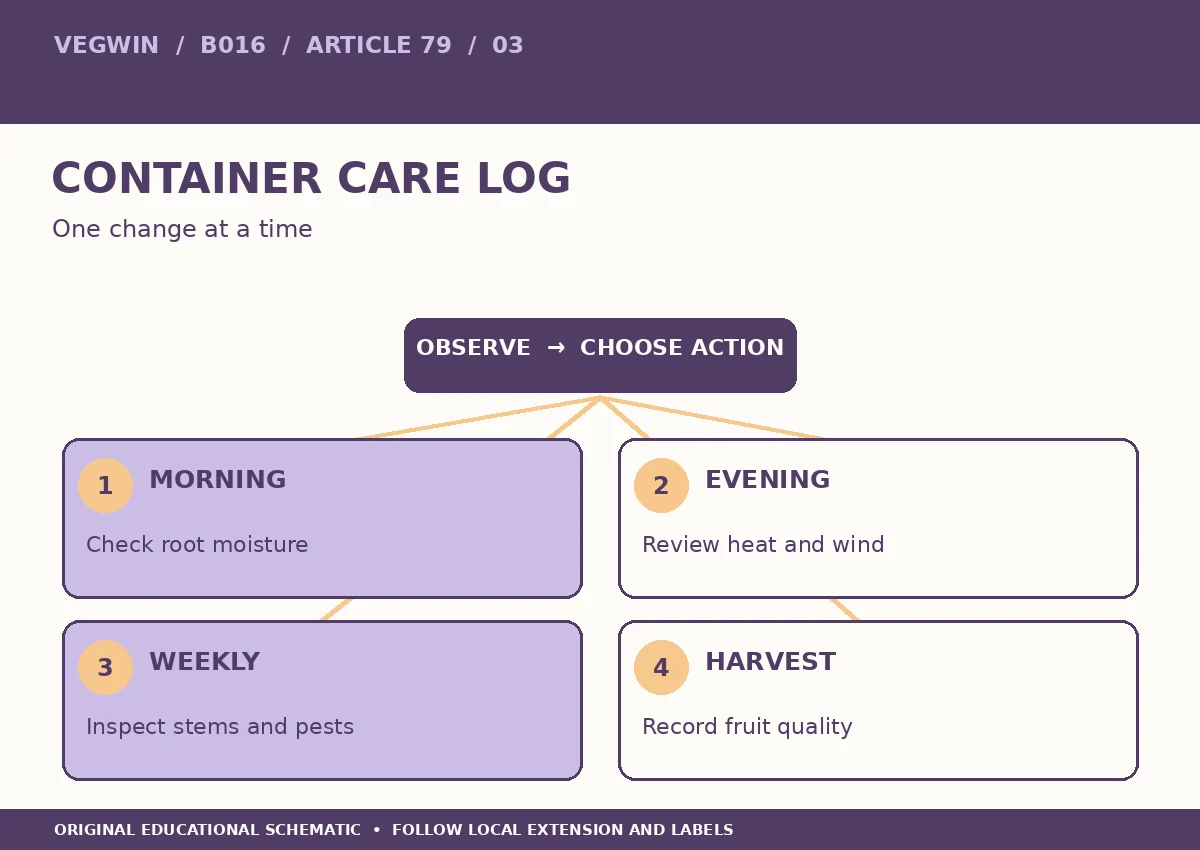
When blossoms fall, ask four questions in order: Was the plant exposed to an unusual hot or cold period? Was the pot very dry or waterlogged? Does it receive strong usable light? Has recent feeding been excessive or absent? Write notes for several days instead of changing three conditions at once. A plant that drops flowers under heat stress may set again when weather improves. A persistently wet root zone calls for drainage investigation, not more fertilizer.
If the pot has many leaves but no fruit, check the variety and its expected maturity, growth stage, and whether flower opening coincided with extreme weather. If young fruit develops pale leathery areas, consider sun injury; if fruit tips discolor, investigate blossom-end rot factors, including moisture fluctuations, before blaming lack of calcium. This decision order prevents “fixes” that conceal the original cause. Keep the plant and pot history together so you can recognize repeated stress. If you want the full process, read how to prevent blossom-end rot on peppers by managing soil moisture.
Harvest With the Container Plant in Mind
Peppers often begin green and may develop another mature color depending on the cultivar. A glossy mature-sized green pepper can be harvested if that is the stage wanted; full color requires additional time and suitable weather. Compare the packet’s cultivar description and the actual condition of the fruit. Use clean snips instead of pulling heavily on a branch that has limited support. Harvesting gently is especially important when the whole plant can rock inside a pot. If you want the full process, read how to grow bell peppers.
After a picking, assess whether the pot is still stable and roots have enough moisture to support the next fruit load. Remove obviously damaged or decayed fruit and diagnose recurring problems rather than letting them accumulate. At season’s end, record pot volume, drainage, light exposure, cultivar and how many weeks the plant set useful fruit. These notes help distinguish a poor site choice from a variety that simply needed a longer season. Container success is repeatable root-zone management, not one impressive fruit.
Related Guides
- Vegetables in Pots: Match Crops, Container Volume, Sun, and Water
- How to Start Jalapeño Pepper Seeds Indoors for Stocky Transplants
- When to Harvest Bell Peppers Green or Fully Colored and Where to Cut
- How to Save Pepper Seeds Without Confusing Maturity and Crosses
- How to Overwinter Pepper Plants Indoors: Resting or Growing
How We Research and Review These Gardening Decisions
We consulted these original public university Extension and government resources on 2026-10-20: Oregon State Extension, University of Maryland Extension, University of Minnesota Extension. We checked how their recommendations depend on crop biology, growing environment, cultivar and region. The custom diagrams visualize decisions; they are educational illustrations, not experimental measurements or photographs. We compared the first 75 planned article topics for intent overlap, but could not independently inspect the full live WordPress index on VegWin.org. Current local advice, crop packets, measured conditions, and updated guidance take precedence over generic rules. Structural preflight cannot confirm every biological fact.
Buttons lead to public Extension or government educational resources; no partnership or approval is implied. We checked sources including affiliate disclosure. If products or treatments are later added, review labels, affiliations, and applicable rules first.
Extension sources describe approximately five gallons as a useful minimum for many peppers. Check cultivar size, container shape and water management.
Temperature extremes and water stress are common considerations. Check recent conditions and plant health before blaming pollination or fertilizer.
Water when the root zone needs it. Some warm windy days demand frequent checks, but saturated pots should not be watered by a fixed schedule.
Reduced light often limits fruit production. Assess actual direct sunlight and cultivar requirements before expecting a heavy crop.
Do not assume a calcium fertilizer fixes the underlying problem. Investigate blossom-end rot and uneven moisture using Extension guidance first.