
A cucumber bed succeeds or fails partly before sowing, when the seed packet tells you how the plants grow and reproduce. Slicing and pickling types differ in typical harvest size, while compact and long-vining selections need different layouts. Flower terminology also matters: many traditional cucumbers produce separate male and female blossoms, while some cultivars are predominantly female or set seedless fruit without pollination. Do not assume that every cucumber will fruit after bees visit, or that every female-only seed packet requires the same companion variety.
University of Minnesota Extension explains that parthenocarpic types can develop fruit without pollination. Some all-female selections, however, require a pollen source, sometimes supplied as a few traditional seeds in the packet. Read the exact cultivar description rather than improvising flower management. In a large outdoor bed, bee access becomes part of the production plan. In a container, pot size is a central problem; the present guide instead focuses on field spacing, pollination, vine training and repeat harvest. To go further, our guide “Container Cucumbers” shows how to choose the pot, vine support, and Fruit-set plan.
Read the Seed Packet for Vine and Flower Types
For foundational crop recommendations, consult University of Maryland Extension. Its local conditions are a research reference, not a universal planting-date rule. This page focuses on the specific decisions below; keep your seed packet and local Extension information close when making a regional plan.
Sow After Frost and Protect Tender Young Roots
Cucumber seed germination and young growth slow substantially in cold soil. Maryland and Minnesota Extension recommend planting outdoors only after frost risk is past and the soil has warmed, or transplanting carefully from a short indoor start. Direct sowing can avoid transplant root disturbance when the climate provides enough time. Start only a modest number of transplants if you choose that route, because large, root-bound cucumbers can be difficult to move successfully.
Use local frost patterns, soil condition and the cultivar maturity estimate to choose the window; USDA hardiness zone is not a vegetable seed calendar. Sow at packet depth, keep the seed zone moist until emergence, and thin by cutting extra seedlings rather than yanking their neighbor roots when appropriate. Cover young plants if local pests or variable weather warrant it, but plan from the beginning for the cover to be opened or removed when pollination must occur. Our guide to growing zucchini goes into more detail.

Give Field Vines Space or a Stable Trellis
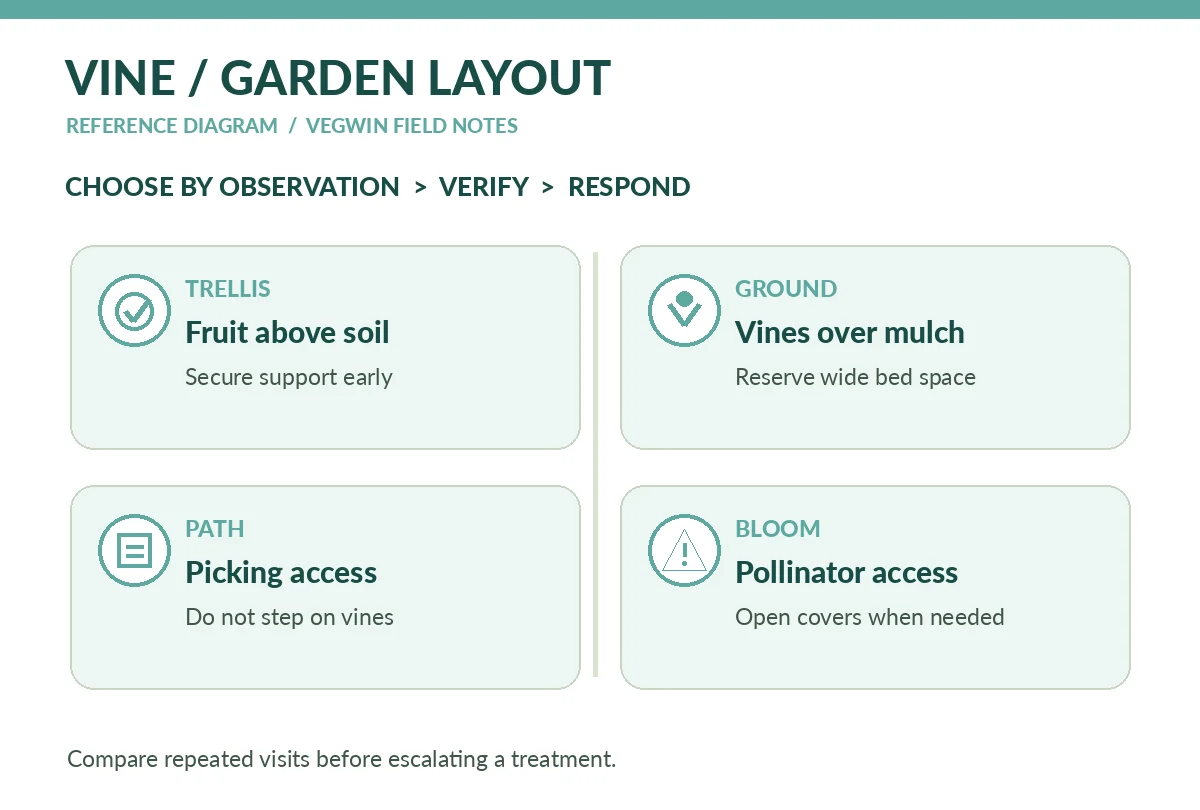
Some gardeners let cucumber vines spread on a clean mulched bed; others guide them up a trellis. A trellis can make fruit easier to find, keep vines out of pathways and reduce direct contact of fruit with wet soil. A ground-growing design needs adequate space and a way to reach fruit without crushing stems. Build stable supports early and remember that wet vines and growing fruit carry weight. Position structures so they do not shade lower neighboring vegetables unnecessarily. To go further, our cucumber trellis guide shows how to choose support, train vines, and harvest.
Do not use a single spacing number for all packet types. Compact bush selections, long vines and trained beds have different needs; follow the chosen cultivar and local Extension layout for the planting system. Train stems gently rather than sharply twisting them. Avoid moving vines once the nodes have anchored to the soil, since Minnesota Extension notes that some vine joints may root and tear when shifted. Preserve airflow while keeping paths open for harvest.
For a second independent view of the underlying horticulture, see University of Maryland Extension. Pay attention to the specific cultivar, symptom, or growing condition discussed rather than copying any regional calendar literally.
Understand Male, Female, and Seedless Flowers
Traditional cucumber plants frequently begin with male flowers, so the earliest blossoms falling without fruit is often normal. The female flower has a small cucumber-shaped ovary behind it. Where pollination is required, insects transfer pollen from male to female blooms. Cold, rainy or otherwise unfavorable bee-flying weather can limit visits; misshapen fruit or fruit that fail to enlarge may justify observing pollinator activity. Flowers and young fruit must be assessed together rather than equating every fallen blossom with disease.
Before hand-pollinating or adding a pollen source, check whether the packet identifies a parthenocarpic cultivar. These can produce seedless fruit without insect pollination, and some all-female varieties rely on companion pollenizer seeds. Keep row covers from blocking insect access during the flowering stage when the cultivar needs pollination. Avoid using pesticides during bloom; if an intervention is considered, follow local Extension IPM advice and current labeling that protects pollinators. If you want the full process, read how to start watermelons from seed and check fruit ripeness.
Keep Soil Moist Through Flowering and Fruit Growth
Cucumbers need a well-drained root zone with steady water, especially during flowering and fruit development. Use a finger or trowel to check below the dry surface and confirm that irrigation actually wets the inhabited soil, not merely the edge of a row. Deep irrigation, mulch and weed control may stabilize conditions. Adjust frequency to rain, soil texture, temperature and the size of the vines; universal irrigation minutes are not reliable. Pooling water after irrigation is a warning to check drainage.
Large nutrient doses are not a substitute for water management. Use soil-test-based fertilizer advice and observe how plants respond. A bed with massive foliage but limited fruit may need a review of flower type, bee access and conditions before extra nutrients. Likewise, a bitter cucumber is not a laboratory diagnosis of low water: cultivar genetics, growing stress and fruit maturity all influence eating quality. Harvest frequently and note whether off-flavor repeats on the same plant. Our guide “Eggplant Gardening” goes into more detail.
| Flower or fruit clue | What it could mean | Check next |
|---|---|---|
| Only early male blossoms visible | Normal beginning in many types | Wait for female flowers; verify packet |
| Female flowers but poor fruit growth | Pollination or stress, cultivar-dependent | Check bees, weather, water and type |
| Seedless parthenocarpic cultivar | May set fruit without pollination | Follow packet; do not assume bees required |
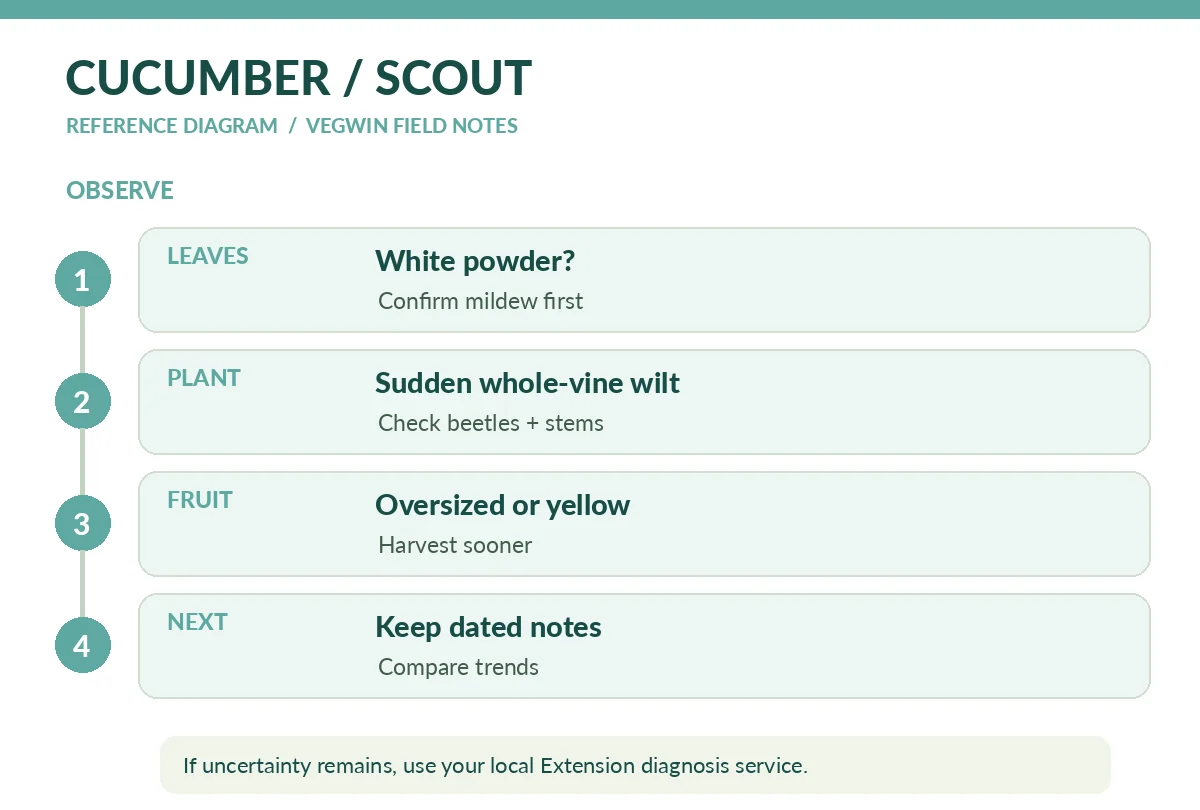
| White powdery leaf coating | Possible powdery mildew | Confirm with Extension diagnostic guide |
| Fruit becoming large and yellow | Overmature for many edible types | Harvest more frequently per variety |
Separate Cucumber Wilt, Mildew, and Poor Fruit Set
Sudden whole-vine wilt is a different problem from a scattered white powder on older leaves or angular patches between veins. Maryland Extension lists bacterial wilt, powdery and downy mildews, viruses and cucumber beetle injury among common issues, but symptoms overlap and location matters. Check leaf surfaces, lower stems, the progression of damage and whether neighboring plants are affected. Do not apply a generic fungicide to a vine simply because it looks unhealthy.
Scout regularly and remove heavily diseased plant material as locally recommended, with tools and hands cleaned appropriately. Disease-resistant or tolerant cultivar labeling can help when a specific disease has been identified in past seasons; resistance is not immunity. IPM begins with accurate identification, airflow, irrigation placement and pest monitoring. If chemical control is warranted, consult current labels and local Extension guidance for that particular crop and problem; no off-label treatment is supplied here.
Pick Often to Keep the Cucumber Bed Productive
Cucumbers should generally be harvested before becoming oversized, yellowish or heavily seeded. Slicing and pickling types have different target sizes and the packet is the best reference for the variety. Minnesota Extension emphasizes frequent picking: fruit left to become very large can reduce further yield. Use clean pruners or a gentle method that avoids tearing vines. Check hidden fruit under lower leaves and behind trellis ties during each visit.
Avoid handling foliage while it is wet if disease spread is a concern. Keep harvested cucumbers cool and plan to use them relatively promptly. If you want to preserve cucumbers by pickling or canning, use tested food-safety processes, not the fresh-harvest advice in this guide. Track the day the first harvest began and the pace of the next few harvests; those notes reveal whether a cultivar is a good fit for the space, pollinator availability and length of season. Our guide to growing leeks goes into more detail.
Related Guides
- How to Train Vining Cucumbers Up a Trellis Without Breaking Stems
- How to Grow Lemon Cucumbers and Pick Round Yellow Fruits
- How to Grow Lemon Cucumbers Vertically in a Container and Pick Round Fruit
- How to Identify Striped Cucumber Beetles and Protect Young Cucumber Plants
How We Research and Update This Guide
Research checked on October 20, 2026: Minnesota Extension; Maryland Extension; Maryland Extension. We compare university Extension and IPM advice, prioritize observable crop-specific decisions, and avoid giving universal pesticide doses, fertilizer rates or nationwide transplant dates. Recommendations that depend on soil, cultivar, weather and local regulations must be rechecked for your location.
For the site-wide policy, see VegWin affiliate disclosure. The status and availability of that page should be verified in WordPress. Information here does not replace local Extension diagnosis, an approved pesticide label, or tested food-preservation instructions.
Early male blossoms commonly drop. Female flowers, cultivar pollination requirements and weather determine subsequent fruit set.
No. Some parthenocarpic types can form fruit without pollination, but many standard types require insect pollen transfer.
Either can work. A trellis improves access and keeps fruit off wet soil; ground vines require enough space and careful picking.
Variety, environmental stress and fruit stage can affect bitterness. One bitter fruit alone does not prove one specific cause.
No. Sudden wilt has several possible causes. Inspect stems, roots, pests and leaf symptoms and consult local Extension guidance.