
Lemon cucumber (Cucumis sativus) needs species-specific growing decisions. The pictures below mark its real botanical structures rather than relying on a generic garden template. Start by checking an accurately labeled plant or seed packet, then observe the leaf, stem, crown, flower or fruit before choosing a planting or cutting action. Conditions differ with cultivar, weather and region, so the sequence uses visible growth stages and source-backed practices rather than invented calendar dates. The final comparison calls out a mistake that can damage living tissue or cause an incorrect identification.
Identify the lemon cucumber as a cucumber vine
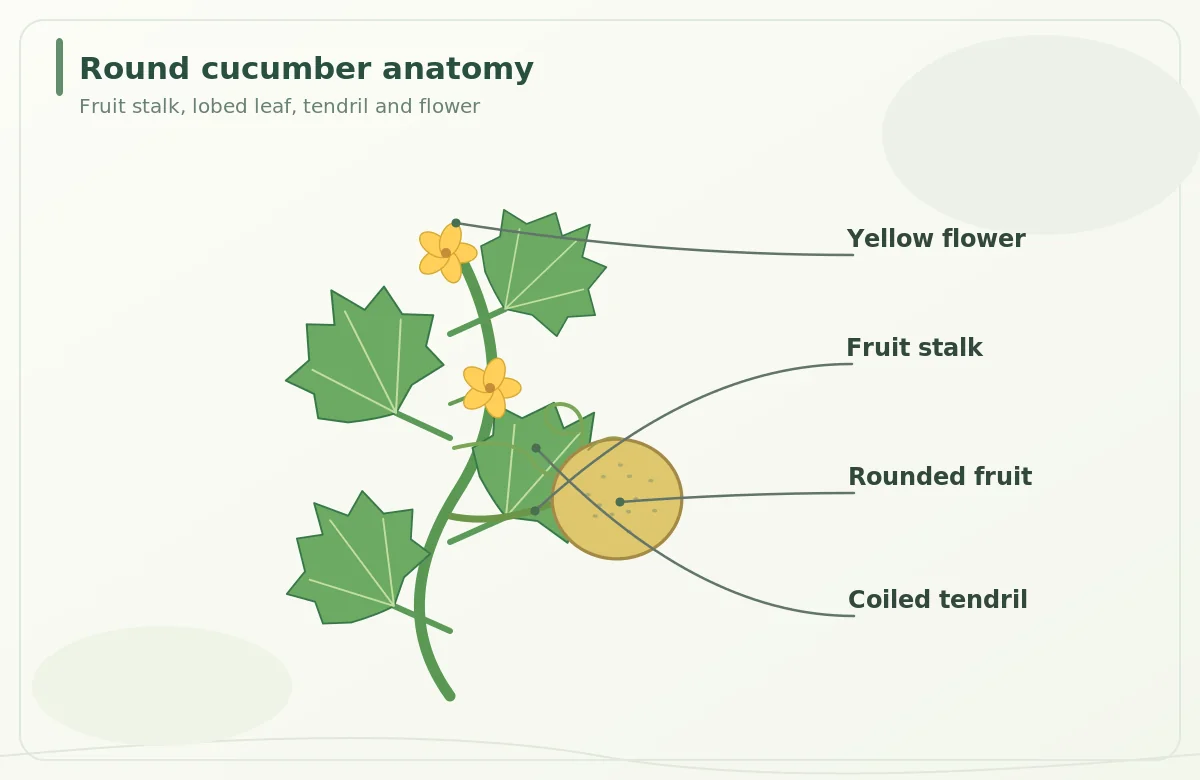
Lemon cucumber is a round yellow-fruited selection of Cucumis sativus, the same species as common slicing cucumber. Despite its name it is not a citrus fruit or a sour lemon, and its growing vine does not resemble a tree. Expect rough, angular leaves with several shallow lobes, long trailing green stems, curled tendrils and small yellow flowers.
A developing fruit is attached to a stalk behind a female flower. On cucumber plants, flower position matters: male flowers occur without a miniature cucumber behind them, while female flowers show an enlarged ovary that can become a fruit after successful pollination. Some modern cucumber cultivars have differing fruit-set habits; match your seed packet rather than assuming every bloom must be hand pollinated.
Choose warm soil and space for a climbing plant
Cucumbers grow in reliably warm conditions and do poorly when transplanted into cold wet soil. Oregon State Extension describes them as warm-season vegetables and recommends selecting varieties for available room and weather. Choose a location with strong sun, well-drained soil and access to water. A strong trellis or net can keep rounded fruits visible and away from damp ground.
Make sure a support is securely anchored before the vines grow heavy. An improvised thin stick may work for a seedling but fail under several mature fruits in wind. Leave access to inspect both sides of leaves for pests and to harvest without wrenching a fruit off. Where summers are brief, choose an appropriate early variety and warm microclimate; dates must follow local frost information rather than a zone number alone.
Start seed after local frost danger has passed
Sow cucumber seed in a prepared bed after conditions warm, at the depth recommended on the particular seed packet. Indoors, start in individual cells if your season demands an early start; cucumber roots are sensitive to rough handling. Keep the medium evenly moist rather than saturated. Handle seedlings by their seed leaves during transplanting and avoid tearing the main root system apart.
Thin direct-sown clusters to avoid several seedlings competing in one small hole. Give each plant adequate spacing for leaves and airflow, even if it will eventually climb. Move seedlings outdoors only after a gradual hardening-off period and no danger of damaging frost. Plant at the original root-ball depth without piling wet soil against the tender stem. Keep mulch clear of the central stem base while roots establish.

Train curling tendrils around a clean support
Cucumber climbs using slender coiling tendrils that wrap available rails or mesh. These tendrils are not roots and are not the leaf stalk. Guide a young flexible vine toward the support while it is still growing, allowing tendrils to find the structure. If a stem needs extra help, use a soft loose tie below a leaf node without crushing it.
A tendril must actually coil around the support to carry weight; a decorative spiral floating beside the mesh will not hold the vine. Check ties as stems thicken, and retie gently when needed. Avoid aggressive pruning that removes most of the leaf canopy, which supplies energy to the fruits. Vines and branching patterns vary among named cucumber cultivars, so there is no one mandatory pruning diagram.
Watch yellow blossoms form attached fruit
Small yellow flowers open along the vine. Female flowers can carry a tiny elongated or rounded ovary directly behind the petals; this is a developmental structure, not a fully mature cucumber. Normal fruit growth may follow suitable pollination unless the cultivar sets fruit without pollination. If small fruits yellow and abort, consider poor pollination, temperature or root stress before concluding the entire plant is diseased.
Inspect the fruit surface gently as it enlarges. Lemon cucumbers become spherical to somewhat oval rather than long and cylindrical, and change from pale green toward light yellow with maturity. A young fruit can still be mottled; do not use color alone to declare it spoiled. Check the particular seed variety for a preferred eating stage and pick fruits regularly to keep quality high.
Decide when round fruits are tender enough
Most gardeners select lemon cucumbers while their round skins are light yellow and the fruit is still firm, before the skin becomes deeply colored and the seed cavity becomes coarse. Oregon State Extension advises picking cucumbers for eating quality rather than waiting until they are completely overmature and yellow-orange; lemon types are an exception to the ordinary green-fruit rule, so distinguish normal cultivar color from excess ripeness.
Compare two fruits on the same healthy vine: the usable young one is compact and firm with a tender skin, while an overmature one may be dull, thick-skinned and seed-heavy. Actual preferred diameter varies among cultivars and conditions; do not impose an invented universal size. Taste and harvest history are more reliable than assuming a yellow cucumber must be ripe in exactly the same way as a citrus fruit.

Cut the fruit stem rather than the main vine
Support a ready round fruit with one hand and use clean snips to cut through the short fruit stem while leaving a small piece attached. The blade should be on the fruit peduncle, not through the fruit body and not across the main vine or nearest leaf node. Pulling twists the young stem and can break other vines held to the same trellis.
If a cucumber is at the back of a dense support, move surrounding leaves gently rather than forcing shears into an unseen position. Harvest regularly as fruits reach their intended table stage. Check both sides of the trellis and underneath leaves, because round pale fruits can disappear in foliage. Use clean containers and chill harvested produce promptly according to standard food-handling guidance.
Prevent bitter fruit and diagnose damaged foliage
Misshapen fruits may reflect incomplete pollination or fluctuating water; bitter flavor can have several causes, including cultivar genetics and stress. Do not assume watering alone will fix every bitter fruit. Keep the root zone evenly moist without leaving the bed waterlogged, and avoid extreme cycles of wilting followed by flooding.
Inspect for cucumber beetles, mites, mildew and wilt symptoms based on local conditions. Scout insects and leaf undersides before selecting any treatment, and follow integrated pest management recommendations for the confirmed problem. Diseased cucumber leaves are not automatically a fertilizer deficiency. Remove severely damaged debris appropriately and rotate cucurbit crops where garden space allows.
Related Guides
- How to Grow Lemon Cucumbers Vertically in a Container and Pick Round Fruit
- Cucumber Trellis Guide: Choose Support, Train Vines, and Harvest
- Container Cucumbers: Choose the Pot, Vine Support, and Fruit-Set Plan
- Growing Cucumbers in Garden Beds: Flowers, Vines, and Harvest
How We Research and Check Plant Details
For this guide, VegWin reviewed species descriptions and cultural guidance from extension.oregonstate.edu, plants.ces.ncsu.edu on October 29, 2026. The information was checked against the named botanical species, with specific attention to root location, shoot buds, leaf arrangement and the actions shown in the diagrams. Where geography, cultivar or seed-lot instructions change the result, the text identifies that limitation instead of claiming a universal date or exact result. Illustrations are teaching aids rather than proof of successful identification of an unknown specimen.
VegWin is an independent informational gardening project. Mentioning university, Extension and RHS resources does not imply affiliation or endorsement. No affiliate purchase or partnership is claimed in this guide; see the affiliate disclosure. Always verify current local restrictions on potentially invasive plants and follow appropriate hygiene, diagnosis and legally valid product labels before using any treatment on edible or ornamental crops.
No. It is a round yellow form of Cucumis sativus, a true cucumber.
No, but a strong trellis can improve access, fruit cleanliness and harvesting in a small space.
Cucumber tendrils coil around the mesh or rail, while the green stem carries the leaves and fruit.
A firm, gently yellow fruit is generally preferred for lemon types; check your seed variety and avoid dull overmature fruit.
Cut its short attached fruit stalk, preserving the main vine and nearby leaf nodes.