
A pumpkin seed may look modest, but many pumpkin plants become sprawling vines that need room, pollination and a long enough season for fully mature fruit. Unlike zucchini, which is picked tender and immature, a pumpkin intended for storage should remain on the vine until the cultivar’s maturity cues are present. The most useful planning questions are therefore not simply “How many seeds?” but “How much ground will the mature vine occupy?”, “Can fruit finish before damaging cold?”, and “Which harvested fruit is sound enough to keep?” This guide turns those decisions into a workable home-garden plan.
Choose a Pumpkin Purpose Before Selecting Seeds
Pumpkins vary in shape, mature color, rind character, eating quality and vine growth. A large carving type may not be the best choice for a kitchen pumpkin, and a compact vine may suit a smaller garden better than a vigorous sprawling type. Read an actual cultivar description for intended use, mature spread, days to maturity and any stated disease resistance; do not invent a performance rating from a variety name alone. University of Maryland Extension describes pumpkins as members of the gourd family with varieties and colors that differ, and notes their mature-fruit harvest stage. For the fuller picture, see our guide “Grow Luffa Gourds From a Strong Trellis to a Dry Sponge”.
Check the local frost-free growing window and the conditions expected while fruit ripens. Days to maturity on a packet are approximations, not a guarantee when spring is cool or soil stays wet. In a very short season, a locally adapted shorter-season cultivar may be more practical than a giant long-season type. In hot regions, choose planting timing from local Extension because intense heat and moisture stress can affect pollination and fruit development. USDA hardiness zones do not by themselves give reliable annual sowing dates. For a step-by-step method, see how to start watermelons from seed and check fruit ripeness.
Reserve the Mature Vine Footprint and Access Path
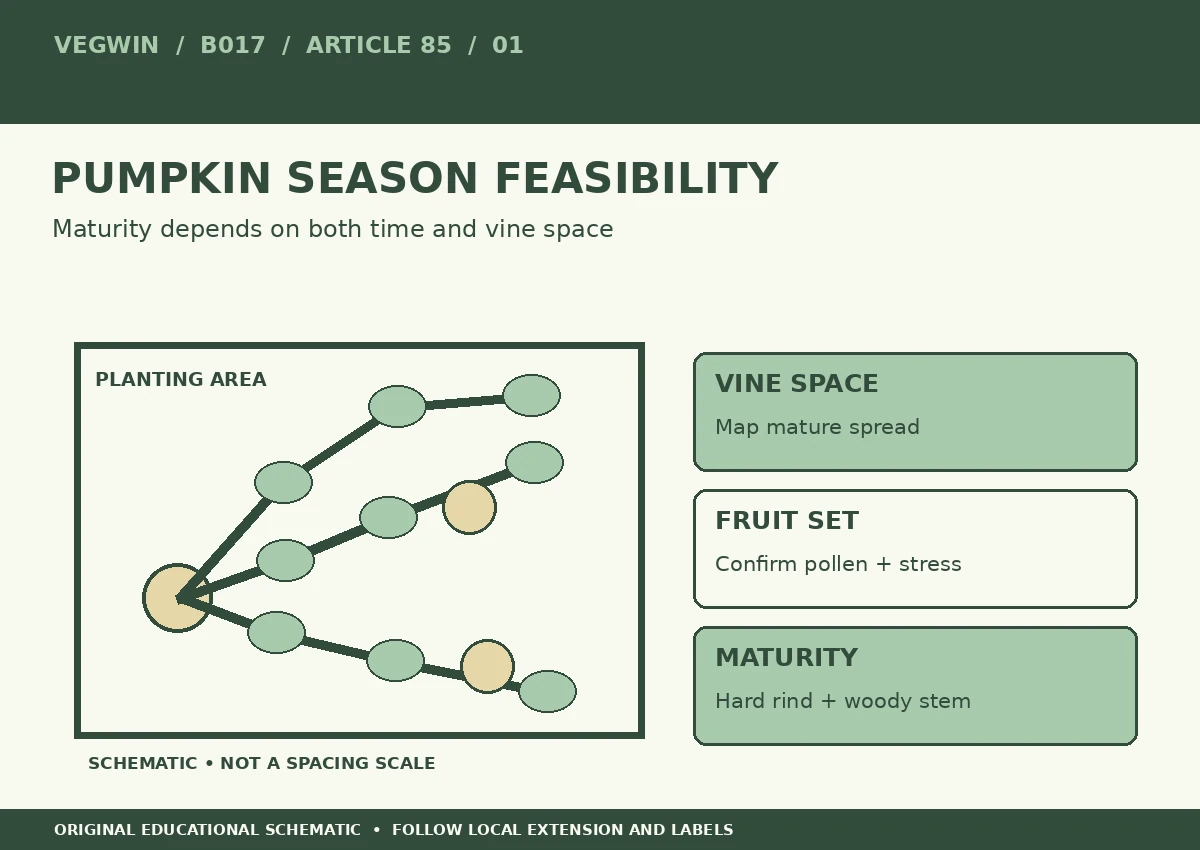
Pumpkin vines can run well beyond the small circle occupied by the new seedling. Check mature plant size and leave room for stems, leaves and fruit without covering paths or crowding smaller crops that need sunlight. Some gardeners direct vines away from walkways while they are flexible, but avoid repeatedly twisting older stems or cutting roots that develop at nodes. If space is constrained, select a verified compact cultivar rather than assuming heavy pruning will turn any field pumpkin into a balcony plant.
Prepare well-drained growing soil and assess fertility with appropriate soil information. A plant with vigorous leaves but limited fruit may face pollination or weather limits; adding more nitrogen is not the universal answer. Irrigate the root zone according to observed moisture and local conditions. Mulch can help reduce soil splash and stabilize moisture after planting conditions are suitable. Keep enough access to lift or inspect fruit and look beneath the canopy for damage. A dense maze of vines makes timely scouting harder. For the fuller picture, see our guide to growing zucchini.
Watch Bloom Types and Verify Fruit Set
Pumpkins usually have separate male and female flowers. Female flowers carry a small potential fruit beneath the petals; most plants need insects to move pollen between bloom types. Male flowers may start before female flowers. If a baby pumpkin begins to form but aborts, inspect whether male and female flowers overlapped, whether pollinators visited and whether heat or plant stress was severe. The presence of many large leaves alone is not evidence that the plant has everything needed to set a fruit.
Provide attractive flower habitat and avoid unnecessary pesticide use during bloom. If a crop is covered for pest exclusion, consider how pollinators will reach ordinary pumpkin flowers. Manual pollination can be considered where poor pollination is plausibly identified, but it should not be sold as an all-purpose cure for rotted fruit. Recheck the seed packet for maturity and pollination details. Confirm symptoms with Extension rather than treating every flower drop as a nutrient deficiency.
| Observed situation | Likely decision point | Safer next step |
|---|---|---|
| Vines crowd neighboring crops | Cultivar footprint underestimated | Choose appropriate site or verified compact type |
| Female flowers drop | Pollination and weather stress possible | Check blooms and pollinator access |
| Fruit orange but rind soft | Color alone may not prove maturity | Check cultivar, rind and woody stem |
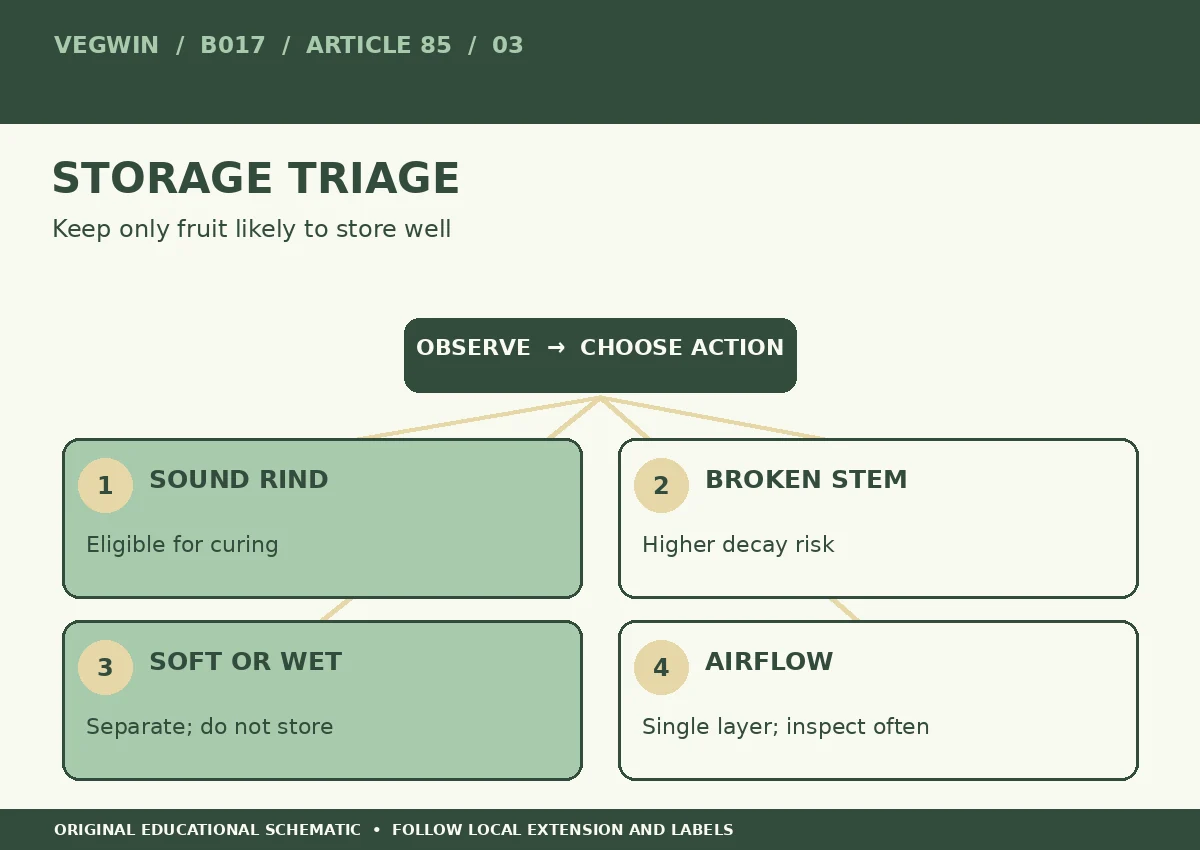
| Harvested fruit bruised or weeping | Poor storage candidate | Separate and inspect; do not store with sound fruit |
Differentiate Pest and Disease Injury Early
University of Maryland lists cucumber beetles, squash bugs, vine borers, downy mildew, powdery mildew and viruses among pumpkin problems. These conditions do not share a single symptom or solution. Scout leaves on both surfaces, observe the crown and stem bases, and note whether the problem begins in a few vines or all plants at once. White fungal growth on leaves should be distinguished from normal leaf markings on some squash types. Abrupt wilting despite wet soil can point toward stem injury or disease rather than drought.
Use integrated pest management: correctly identify the organism, assess severity and consider prevention and cultural options first. Row covers may help during earlier growth stages against some insect pests, but remove or manage covers appropriately for pollinator access when flowers open. Never transfer a pesticide rate or fungicide recipe from another crop or country. If a registered treatment is justified, follow its current edible-crop label, protective equipment, harvest restrictions and regional regulations.
Harvest When Rind and Stem Show True Maturity
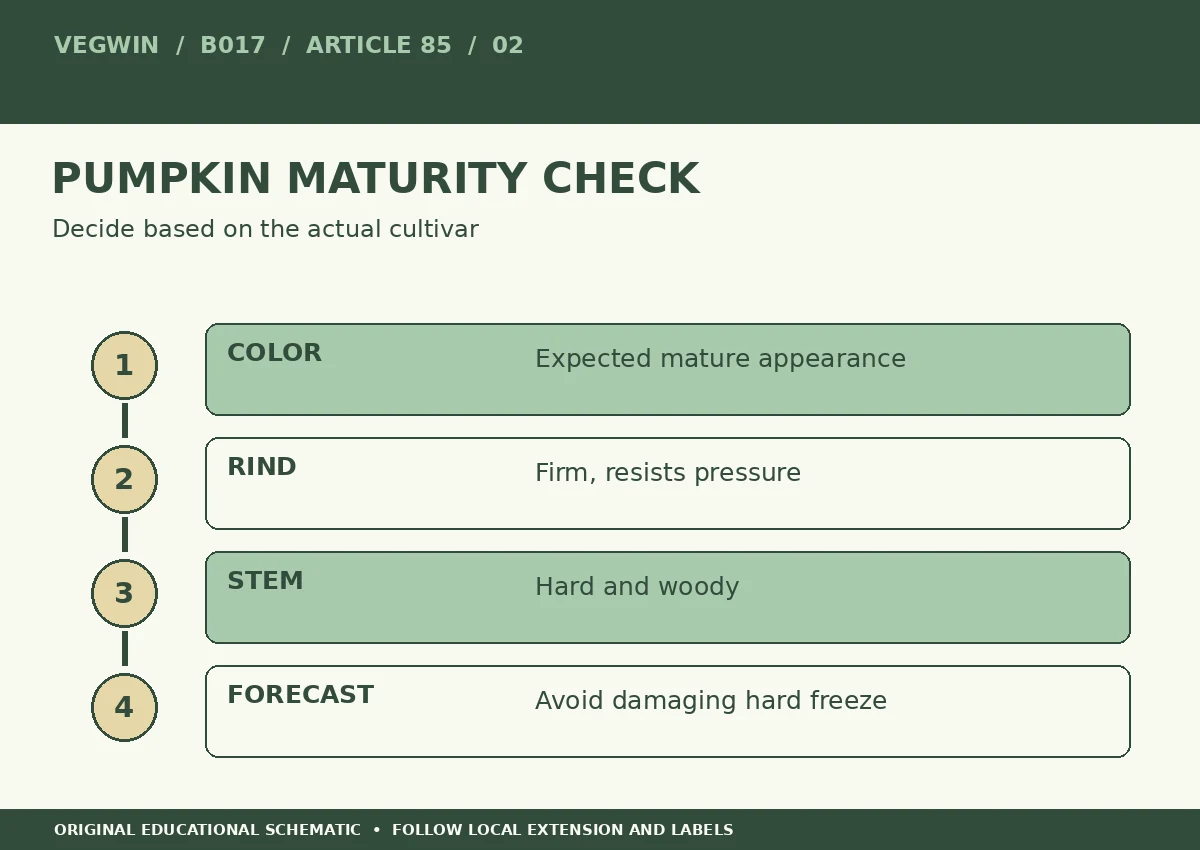
Unlike summer squash, pumpkins intended for keeping should be fully mature on the vine. Cultivar-specific final color matters, but not every mature pumpkin is orange. Iowa State and Minnesota Extension advise using firm rind, a stem becoming hard and woody, and the cultivar’s normal appearance as useful cues. A dull firm rind that resists gentle fingernail pressure often indicates better maturity than a glossy soft one. Avoid using a single fixed calendar date for every pumpkin, and plan harvest before hard freezing damages fruit.
Cut the fruit with a sharp tool, leaving a substantial stem attached as recommended by the source, and do not lift it by that stem. Handle gently: bruises, cuts and broken stems create entry points for decay. If severe frost threatens before full maturity, collect what can be salvaged but do not claim an immature pumpkin will develop into a fully ripe storing fruit on a shelf. Fruit with obvious damage should be assessed separately from sound produce intended for long storage. If you want the full process, read how to grow chayote from a whole fruit on a strong trellis.
Cure and Store Only Sound Mature Pumpkins
Curing hardens the rind and allows small superficial injuries to heal under suitably warm, dry and ventilated conditions. Iowa State Extension offers specific curing and cool-storage conditions, while Minnesota Extension notes that duration, humidity and storage life vary by squash species and cultivar. These are institutional examples, not permission to heat a damp closet or leave fruit outside during rain or frost. Check the source guidance appropriate to your crop and actual postharvest environment. If you want the full process, read how to grow winter squash and decide when each fruit is ready.
Keep sound pumpkins in a single layer with airflow, rather than stacked where hidden decay can spread. Inspect for soft spots, leaking, mold and other damage, removing compromised fruit promptly. A carving pumpkin left outside as seasonal decoration may have reduced storage life, especially after cold or rain. If cooking fruit, wash the exterior under running water before cutting and use validated food-preservation guidance if you later consider canning; never improvise pumpkin canning times. Record which cultivar stored well so next year’s seed choice reflects real results.
How We Research and Review These Gardening Decisions
We consulted these original public university Extension and government resources on 2026-10-20: University of Maryland Extension, Iowa State University Extension, University of Minnesota Extension. We checked how their recommendations depend on crop biology, growing environment, cultivar and region. The custom diagrams visualize decisions; they are educational illustrations, not experimental measurements or photographs. We compared the first 80 planned article topics for intent overlap, but could not independently inspect the full live WordPress index on VegWin.org. Current local advice, crop packets, measured conditions, and updated guidance take precedence over generic rules. Structural preflight cannot confirm every biological fact.
Buttons lead to public Extension or government educational resources; no partnership or approval is implied. We checked sources including affiliate disclosure. If products or treatments are later added, review labels, affiliations, and applicable rules first.
Yes with a cultivar suited to the available space, but many types are vigorous vines that need far more room than a seedling suggests.
No. Final color is cultivar-dependent; also consider firm rind, woody stem and expected maturity.
Early flowers may be male. Later poor set can involve pollination, heat or plant stress; identify flower types first.
No. Harvest with a stem attached but support the fruit itself to avoid breaks that increase decay risk.
For sound mature types meant for storage, curing may help harden rinds. Follow species-appropriate Extension guidance for curing and storage conditions.