
Zucchini is a summer squash harvested while its skin and seeds are still immature. That single distinction explains two common surprises: a healthy vine can bloom before it produces a usable fruit, and a fruit that looks small one day can become oversized quickly in favorable weather. Another surprise is that not every drooping squash plant needs more water. This guide moves from growing conditions to flower identification, timely harvest and plant-problem triage. The goal is a productive crop you can inspect easily rather than a thicket that hides fruit and makes diagnosis difficult.
Pick a Summer-Squash Variety and Growing Window
Zucchini is one form of summer squash in the gourd family. Most familiar zucchini cultivars have a spreading bush habit rather than the long trailing vines of many pumpkins, but a bush can still become broad. Read the selected packet for mature footprint, pest or disease resistance claims and harvest characteristics. The University of Maryland Extension notes that summer squash is typically picked immature and identifies several squash types, including zucchini, pattypan and yellow forms. Space plants by cultivar guidance so foliage can be examined and picked without major damage. Our guide “Grow Luffa Gourds From a Strong Trellis to a Dry Sponge” adds more detail on this.
Plant only when frost risk and soil conditions suit a warm-season crop. Indoor starts, when used, need careful handling because cucurbit roots can be disrupted by transplanting. For many gardens, direct sowing into adequately warm, workable soil is straightforward, but local Extension advice and the actual season length determine the best method. Do not use a USDA hardiness zone number as a planting date. In regions with heavy summer pest pressure, choosing a locally recommended sowing window can matter as much as choosing the cultivar.
Find Male and Female Flowers Before Diagnosing Set
Zucchini usually produces male and female flowers separately on the same plant. The female flower has a small, zucchini-shaped ovary directly behind the bloom; the male does not. Male blooms may appear first, and flowers may open for only a short part of the day. Minnesota Extension describes how insect pollination supports fruit set in cucurbit crops. A garden full of early male flowers is therefore not necessarily suffering a fertility failure. Observe bloom type and timing over several mornings before intervening.
If small fruit begins to enlarge but then yellows or aborts, inadequate pollination is one possible explanation, especially during poor bee-foraging conditions. Heat, stress and disease can produce similar outcomes, so do not conclude from shape alone. Encourage diverse flowering habitat and avoid disrupting pollinators with unnecessary treatments. Maryland Extension also discusses parthenocarpic summer-squash cultivars that can develop fruit without pollination; verify the packet because the trait is not universal. Hand pollination may be useful in specific situations if performed carefully and with correct flower identification.

Make Enough Room for Leaves and Harvest Access
A thriving zucchini is not a tiny salad plant. Its leaves expand over nearby beds and create shade that changes how rain and irrigation reach the soil. Plant placement should leave a clear path for checking under broad leaves while minimizing stem damage. If growing in a container, the container must be adequate for a large summer squash: Maryland Extension’s general container guide gives a larger minimum than it does for many leafy vegetables. The plant still needs suitable light, stable drainage and enough room for harvest access. Our guide to growing okra adds more detail on this.
Water the root zone thoroughly as needed based on actual soil moisture rather than a universal clock. Consistent water availability supports developing fruits; repeated saturation can damage roots. Mulch may moderate moisture and reduce splash, but keep materials appropriate to the season and avoid burying the plant crown. Fertilizer needs depend on soil nutrients and plant development; use a regional soil test or label-supported container plan, not a generic dose copied from another crop. Extra nitrogen cannot replace sunlight, pollen or healthy roots. To go further, our guide “Container Cucumbers” shows how to choose the pot, vine support, and Fruit-set plan.
| Observed situation | Likely decision point | Safer next step |
|---|---|---|
| Many blooms, only male flowers | Early normal flowering possible | Check again when female blooms appear |
| Tiny fruit shrivels | Pollination or weather stress possible | Inspect flower type and pollinator access |
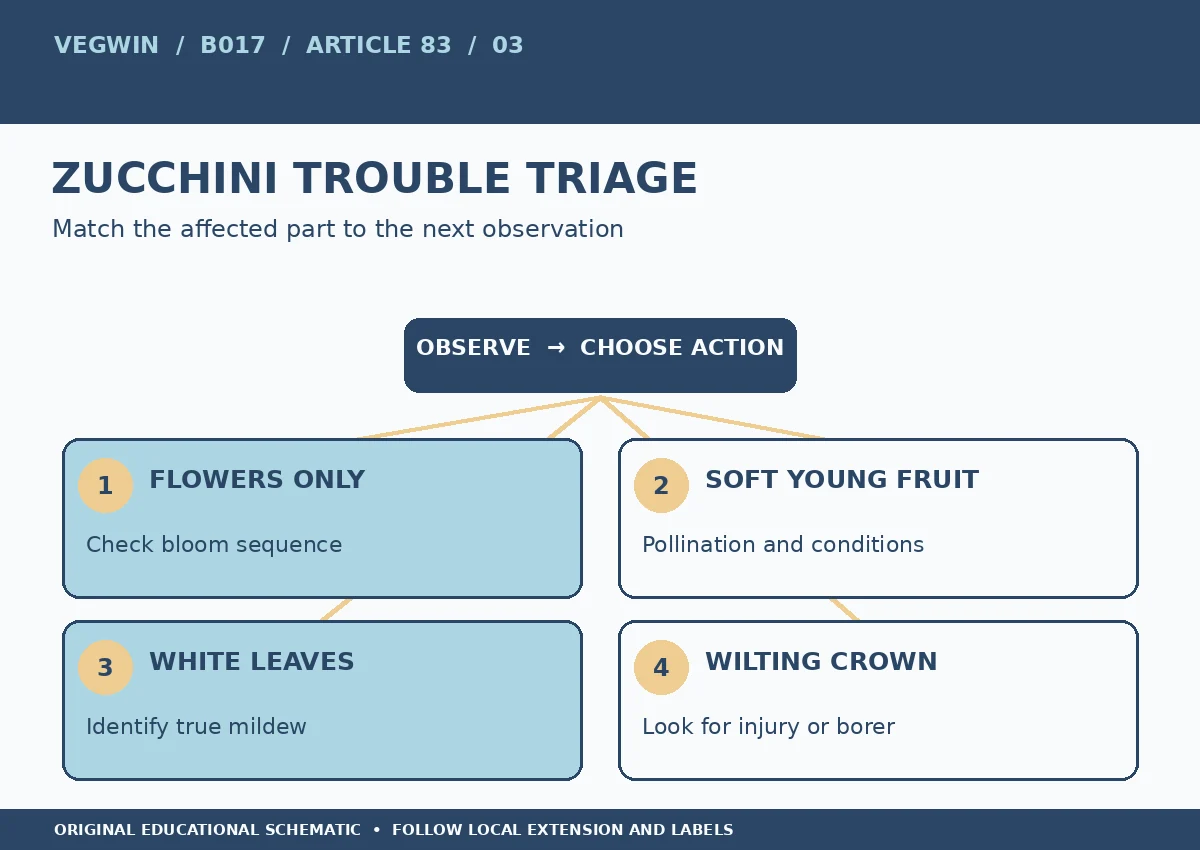
| Sudden wilt with moist soil | Root or crown problem possible | Inspect crown, look for borer injury; seek diagnosis |
| Large tough seedy fruit | Harvest stage passed | Pick more often to variety tenderness |
Harvest Tender Zucchini on a Frequent Routine
University of Maryland Extension describes harvesting elongated zucchini when still young and tender, commonly around six to eight inches for many standard types. This is a practical cue, not a strict rule across specialty miniatures or unusually long cultivars. Check fruit daily during strong growth, including those partly hidden below the canopy. Cut the stem with a clean knife or pruners instead of pulling the fruit and tearing plant tissue. Remove overly mature fruit when possible so you can resume picking at the intended eating stage.
Your picking record should include cultivar, typical tenderness, actual fruit size and how often the kitchen uses the harvest. Oversized squash is not automatically a crop disease; it is often a missed picking. The plant may continue to produce, but large seedy fruit is not the same culinary product as young zucchini. When a fruit turns soft or rots on the plant, examine where decay begins and whether the blossom was properly pollinated. Do not classify all soft ends as the same disorder without considering weather and pathogens.

Triage Leaf Spots, Crown Injury, and Sudden Wilt
Powdery white growth on leaves, yellow mottling, damaged stems and sudden whole-plant wilt do not all have the same cause. Minnesota Extension identifies cucumber beetles and squash vine borers among the summer-squash problems worth distinguishing; a vine borer can damage the crown and cause a sharp decline even when the soil is moist. Inspect the base of a plant, both leaf surfaces and patterns among nearby plants. Photograph symptoms and use an Extension diagnostic key before deciding on a response.
Preventive measures depend on identifying the actual pest and on pollination timing. Exclusion netting may protect young plants against some insects, but ordinary squash flowers require pollinator access once they open. Some parthenocarpic cultivars are better suited to sustained exclusion, as Maryland Extension notes. Avoid homemade chemical mixtures and blanket insecticide or fungicide routines. If a product is considered after confirmed diagnosis, the current label, edible-crop listing, preharvest interval and local rules control its use. Remove severely infected plant material as recommended for the identified problem.
Review the Season for a Cleaner Next Planting
At the end of the season, compare dates of planting, first male flowers, first female flowers and the first ten harvests. This helps separate slow establishment from pollination or harvesting problems. If the main problem was repeatedly missing fruit under leaves, the next improvement may be wider access or fewer plants, not a different fertilizer. If the main problem was documented insect injury, ask local Extension which cultivars and planting windows are better adapted to that risk in your region.
Zucchini shares the gourd family with cucumbers, pumpkins and other squash, so note those crops in your rotation record when specific soilborne disease risks matter. Yet close rotation within a tiny garden may do little for mobile insect pressure. Keep clear records, inspect regularly and remember that a healthy plant can still show occasional old leaves. Decisions based on a reliable symptom pattern serve you better than spraying whenever a leaf looks imperfect. Our guide to growing pumpkins adds more detail on this.
Related Guides
- When to Harvest Zucchini and Cut the Fruit Without Damaging the Vine
- How to Find Squash Bug Eggs and Protect Zucchini Before Wilt
- How to Recognize Powdery Mildew on Zucchini Versus Natural Leaf Markings
How We Research and Review These Gardening Decisions
We consulted these original public university Extension and government resources on 2026-10-20: University of Maryland Extension, University of Minnesota Extension, University of Minnesota Extension. We checked how their recommendations depend on crop biology, growing environment, cultivar and region. The custom diagrams visualize decisions; they are educational illustrations, not experimental measurements or photographs. We compared the first 80 planned article topics for intent overlap, but could not independently inspect the full live WordPress index on VegWin.org. Current local advice, crop packets, measured conditions, and updated guidance take precedence over generic rules. Structural preflight cannot confirm every biological fact.
Buttons lead to public Extension or government educational resources; no partnership or approval is implied. We checked sources including affiliate disclosure. If products or treatments are later added, review labels, affiliations, and applicable rules first.
Male flowers often appear before female flowers. Later poor set may reflect pollinator access, weather stress or other problems; identify flower types first.
Many standard elongated zucchinis are picked tender at about six to eight inches, but specialty varieties need their own harvest cues.
Usually not when suitable pollinators are active. Hand pollination may help some situations, but first establish that inadequate pollination is likely.
Check root-zone moisture and the crown; squash vine borer, other injury and disease can mimic drought. Seek an accurate diagnosis before treatment.
No. Both are in the gourd family, so changing zucchini for pumpkin does not break a gourd-family rotation.