
“Tomato blight” describes a frightening-looking problem but is not a precise diagnosis. Early blight and late blight involve different pathogens, risks and responses. Septoria leaf spot, bacterial problems and even environmental injury can look like blighting from a few steps away. Before considering a spray, record which leaves are affected, how individual spots look, what the fruit and stems show and what weather preceded symptoms. This guide prioritizes recognition and integrated pest management (IPM), not an aggressive treatment schedule. If late blight is possible, a prompt local Extension diagnosis matters because the implications extend beyond one plant.
Begin With the Pattern, Not a Product Label
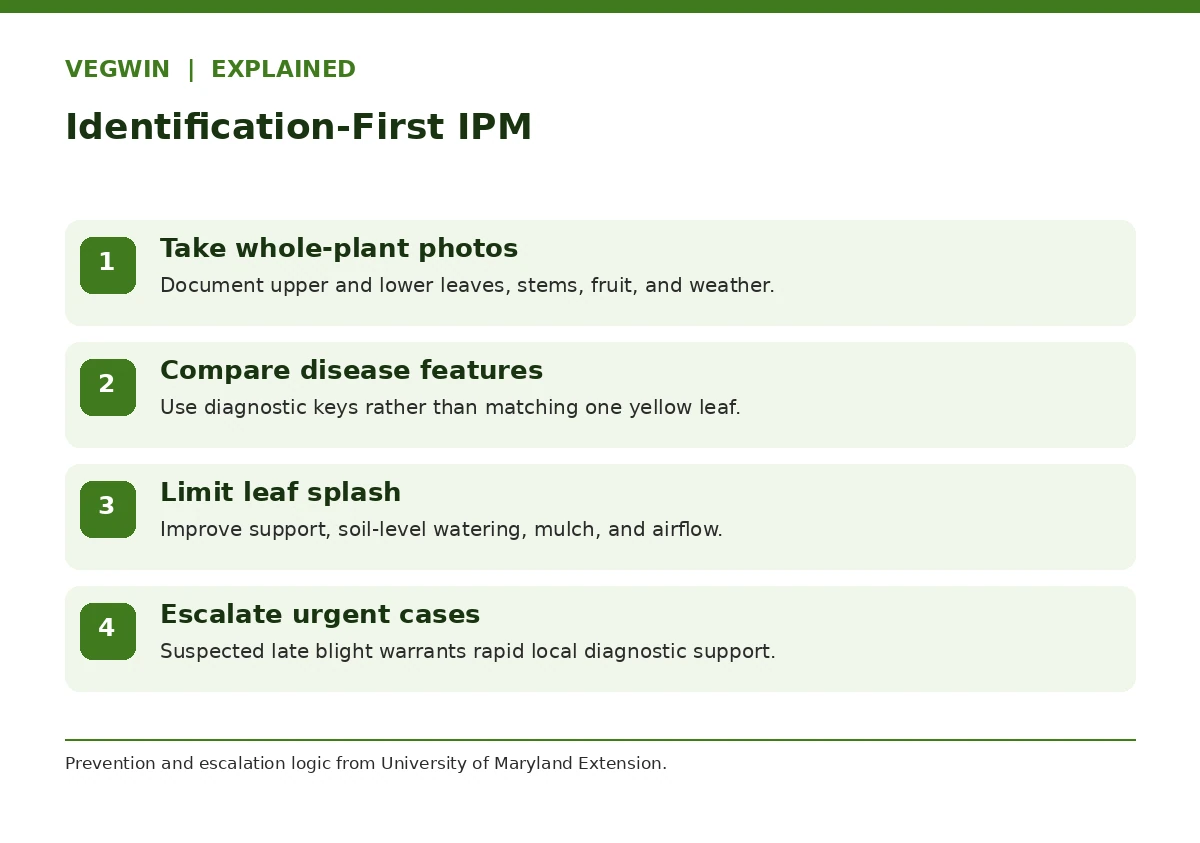
Photograph the whole plant, its upper and lower foliage, an individual spot and affected fruit from more than one angle. Look for whether symptoms began on lower older leaves or appeared rapidly on new growth. Note whether the mark is dry with concentric rings, a small round spot with a light center, or a large water-soaked blotch. Record recent rainy or humid weather, overhead watering, wind damage and whether nearby potatoes are affected. One brown leaf does not identify a pathogen.
Maryland Extension’s illustrated tomato problem key is useful because it places diseases beside other causes of poor-looking foliage, including weather injury and nutrient-related fruit disorders. Do not diagnose from a photo of a single brown tip alone. A local Master Gardener clinic or Extension plant diagnostic lab can review images and sometimes a sample. If a disease is rapidly spreading, isolate the decision from routine yellowing and ask for help promptly.
Recognize the Typical Early Blight Pattern
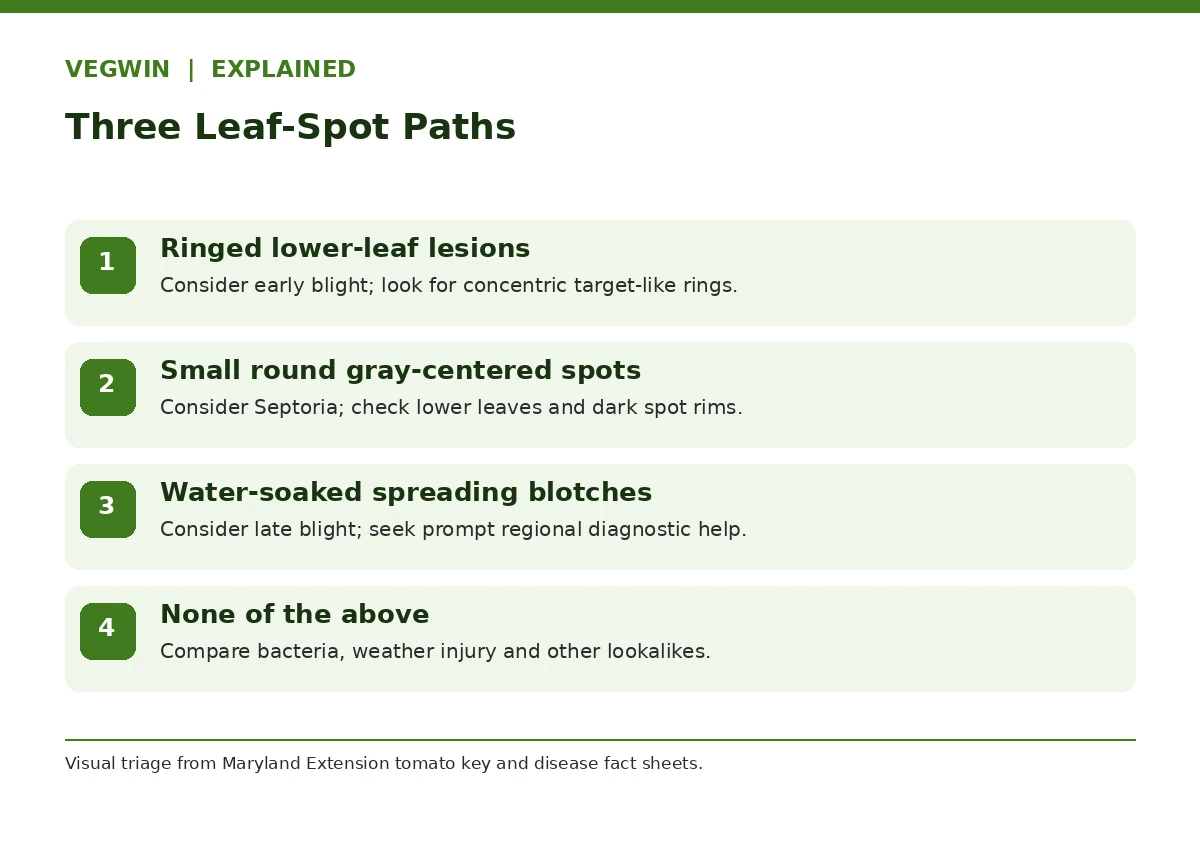
Early blight frequently starts with brown spots on older lower leaves. University of Maryland Extension describes lesions with yellow halos and concentric “bull’s-eye” rings that enlarge and may join together, eventually killing leaf tissue. Dark lesions can also occur on stems or fruit. The rings are a clue, not a definitive laboratory test, and the disease may appear together with Septoria. The specific organism is commonly cited by Maryland as Alternaria linariae, also called A. tomatophila.
Since splashing water and leaf wetness help many tomato leaf diseases, practices such as mulching, watering at the base, supporting vines and appropriate spacing can lower risk. Remove badly affected lower foliage when Extension guidance for your situation supports that step, without stripping a weak plant bare. Clean tools appropriately and dispose of confirmed diseased debris according to local instructions. None of these steps means a heavily diseased plant will suddenly regrow its lost leaves.
Distinguish Septoria Spots From Ringed Lesions
Septoria commonly begins on lower foliage with many small round spots, often grayish in the center with dark borders. Maryland Extension notes that tiny black fungal structures may be visible inside some lesions. Lower leaves turn yellow and die as spots become numerous. A photograph of an entire blighted lower branch can look much like early blight; zoom in on the single-lesion shape and look for rings versus many tiny round spots before giving the problem a name.
Early blight and Septoria often coincide and share certain preventive practices: reduce leaf splash, maintain airflow and remove symptomatic leaf material as appropriate. However, shared prevention does not excuse a guess at pathogen identity. Bacterial speck and spot also have small marks with different patterns. Use Maryland’s image-based key to rule out these alternatives. If you cannot distinguish lesions, describe the observable symptoms in your notes instead of recording a confident but unverified diagnosis.
Treat Possible Late Blight as a Different Urgency
Late blight is caused by Phytophthora infestans, a water mold rather than the fungus responsible for early blight. Maryland Extension describes rapidly expanding water-soaked dark blotches, sometimes with whitish growth at the margin in humid weather; stems and fruit may also develop oily-looking dark lesions. Cool, wet conditions can favor outbreaks, but weather alone cannot confirm the cause. Look beyond leaf position: fast progression, affected stems and nearby susceptible plants raise concern.
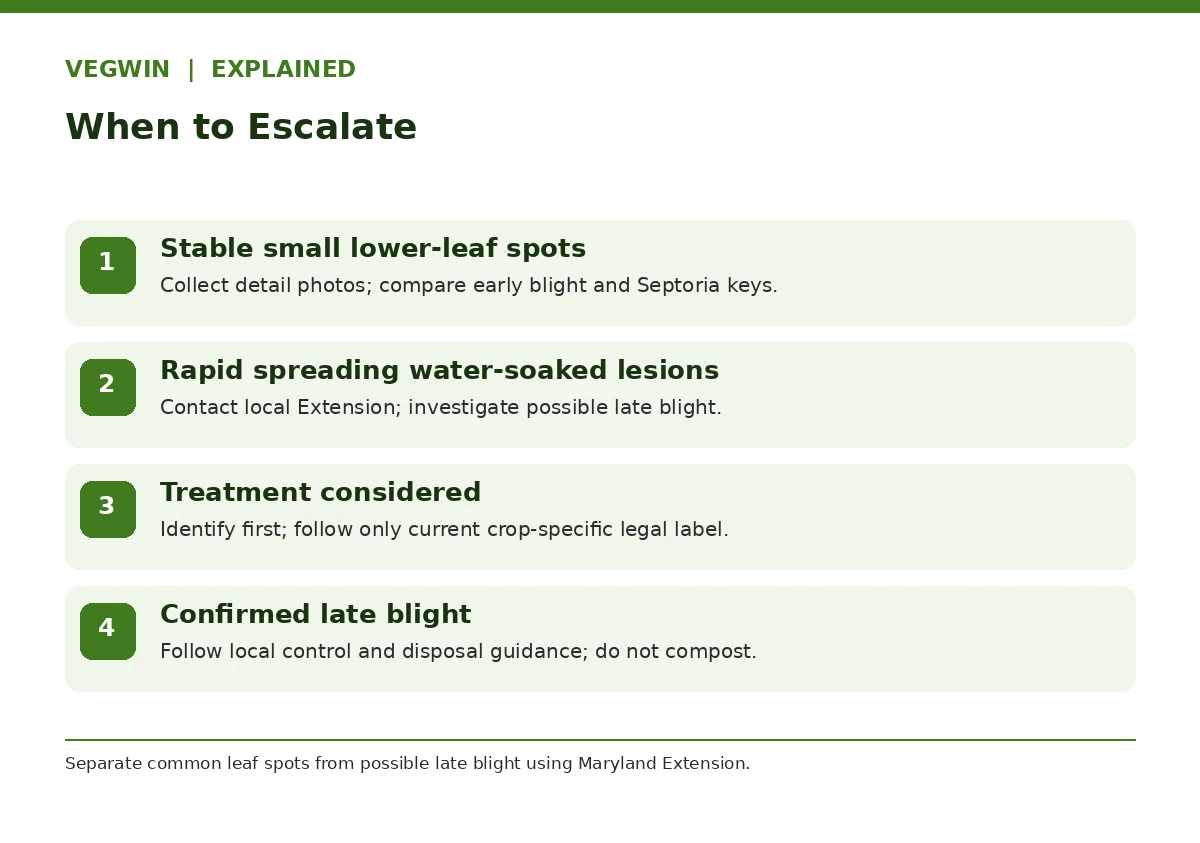
Late blight can spread across gardens and farms. If you suspect it, contact local Extension or a diagnostic service quickly, and follow current regional outbreak notices. Maryland recommends prompt removal and secure disposal of affected tomato plants when late blight is identified; it specifically advises against composting infected plants. Do not casually transfer instructions for ordinary early-blight leaf pruning to a confirmed late-blight situation. Exact recommended disposal practices can vary by jurisdiction.
Build Prevention Around the Tomato Environment
Healthy transplants, local resistance information, good spacing, steady water and avoidance of wet leaves are the foundation of prevention. Maryland’s key recommends selecting varieties with disease resistance where it is relevant; verify the cultivar’s documented resistance package rather than assuming a name proves protection against every blight. Avoid splash by using mulch and directing irrigation to soil. Keep supports and paths arranged so plants can be inspected rather than becoming an impassable wall of foliage.
Document crop-family rotation opportunities, but recognize that pathogens differ in survival and spread; a simple one-year rotation is not an insurance policy. Check neighboring volunteer tomatoes, old fruit and debris where local disease guidance indicates sanitation. Do not wash potentially infected leaves in order to “clean off” internal disease. If a cluster of plants is affected, review weather and watering patterns before treating one isolated spot as a complete explanation.
| Observation | Possible explanation | Best next action |
|---|---|---|
| Older lower leaves, ringed brown spots | Early blight may fit | Compare individual lesions with Maryland photos |
| Many tiny dark-rimmed gray-centered spots | Septoria may fit | Zoom in; check small lesions and mixed infection |
| Rapid water-soaked blotches, stem/fruit lesions | Late blight is a concern | Seek prompt local Extension diagnosis |
| Uniform yellowing or underside fruit lesion | Potentially non-blight problem | Use whole-plant problem key first |
Choose IPM and Label Rules Before Any Chemical
The IPM sequence is to identify the problem, judge likely damage and spread, adjust cultural practices, then consider whether an intervention is justified. A fungicide is not a cure for tissue already dead, and it is not an adequate substitute for confirming which pathogen is present. No universal product, homemade copper mix, dilution, or calendar schedule is recommended here. Be especially careful when a tomato is close to harvest because edible-crop use restrictions and preharvest intervals are product-specific.
If a pesticide is contemplated, ask local Extension which materials are legally registered and appropriate for the confirmed problem. Read the current EPA-approved label and all local rules, including crop, rate, personal protection, reentry and harvest restrictions. The word “organic” does not remove label responsibilities. In a questionable rapid outbreak, getting a diagnosis and limiting spread is more important than experimenting with several chemicals. Keep photos and dates to see whether nonchemical measures are helping.
Use a Symptom Log to Decide What to Do Today
For each plant, write the observation date, first leaf level affected, lesion appearance, fruit or stem involvement, recent weather, severity and whether new lesions appear on later checks. One morning of observation may not establish a diagnosis. If spots remain limited to lower older leaves with rings, follow the early-blight confirmation route; if many tiny circular spots dominate, compare Septoria; if water-soaked blotches spread quickly, prioritize possible late-blight diagnostic help.
Use an Extension diagnostic service when symptoms conflict. Accurate naming matters because unnecessary pesticide exposure, poor disposal choices and a missed late-blight outbreak each have consequences that a simple “blight spray” search fails to address.
Related Guides
- Growing Tomatoes: A Step-by-Step Plan from Transplant to Harvest
- How to Tell Tomato Early Blight From Septoria Leaf Spot and Prevent Spread
- Tomato Blossom-End Rot: Check Water Before Calcium
- How to Prevent Damping-Off in Tomato Seedlings Started Indoors
- Tomato Hornworm: Identify the Caterpillar and Choose an IPM Response
How We Research and Update This Guidance
Sources and their current text were inspected on October 19, 2026. The accompanying diagrams are original decision aids summarizing those sources; they are not photos, field-trial results, or a substitute for local Extension diagnosis. Climate, crop varieties, changing pathogen prevalence and institutional revisions can change appropriate guidance. The author should revisit local recommendations before publishing or when a reader reports new field conditions.
Evidence and further reading: [1] University of Maryland Extension [2] University of Maryland Extension [3] University of Maryland Extension [4] University of Maryland Extension
Disclosure: No product or partner recommendations in this guide are sponsored or commissioned, and its buttons are educational links rather than affiliate offers. We checked sources including affiliate disclosure.
No. They have different causal organisms and can demand very different responses. Confirm symptoms before any action.
Concentric rings are a common early-blight clue, but other diseases can overlap. Consider location, growth pattern and an Extension diagnostic reference.
Get prompt advice from a local Extension office or diagnostic service; confirm and follow its outbreak and disposal recommendations.
Removing affected leaves can be one cultural step in some cases, but it does not reverse existing lesions or treat a confirmed late-blight outbreak.
No. Identify the cause first. Any pesticide decision must follow current local Extension advice, the legal label and edible-crop restrictions.