
Large green caterpillars on a tomato plant can be alarming, especially when a leafy branch seems to disappear overnight. But a missing leaf is not an insect ID, and the first useful response is to inspect the plant. Tomato and tobacco hornworms are similar-looking relatives that both eat tomato foliage. Their management in a home garden is often straightforward once you confirm the caterpillar and assess the actual damage. A hornworm wearing white rice-like cocoons deserves a different response from one feeding actively on your crop.
Confirm That the Pest Is a Hornworm
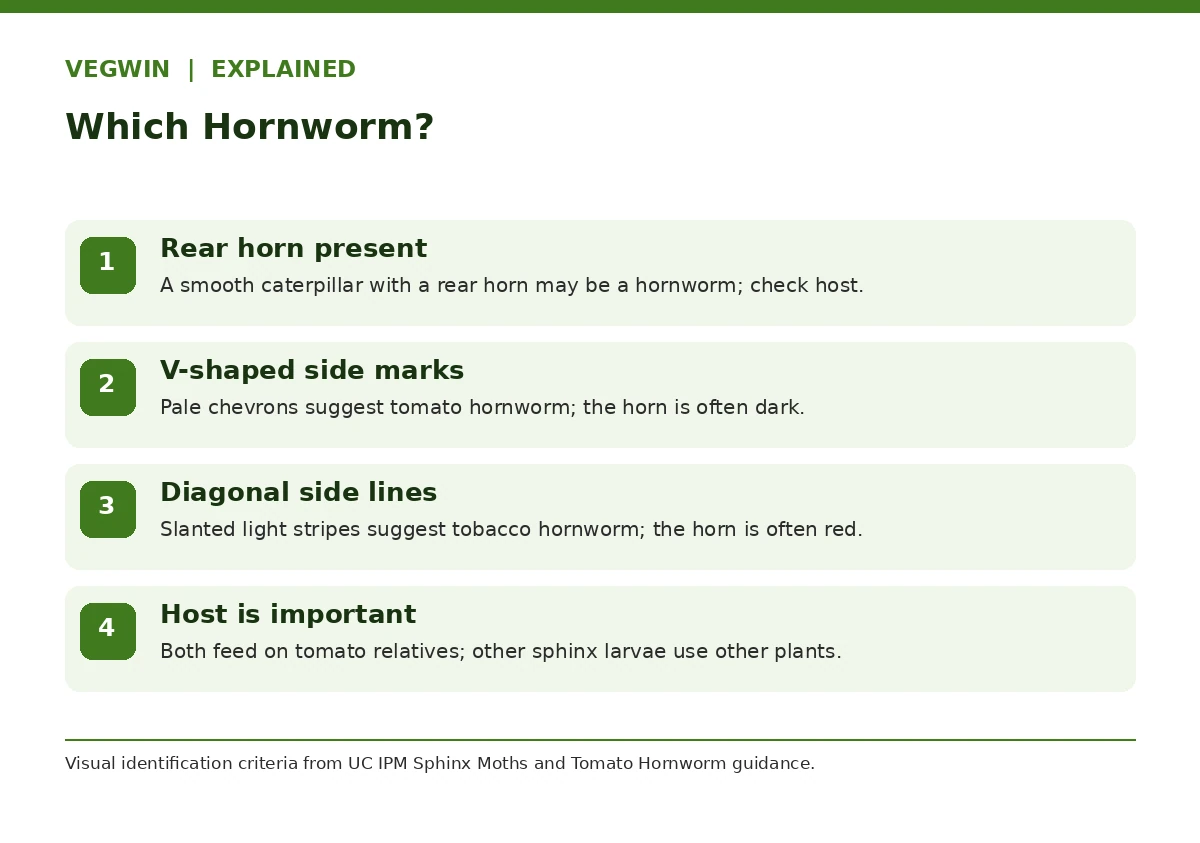
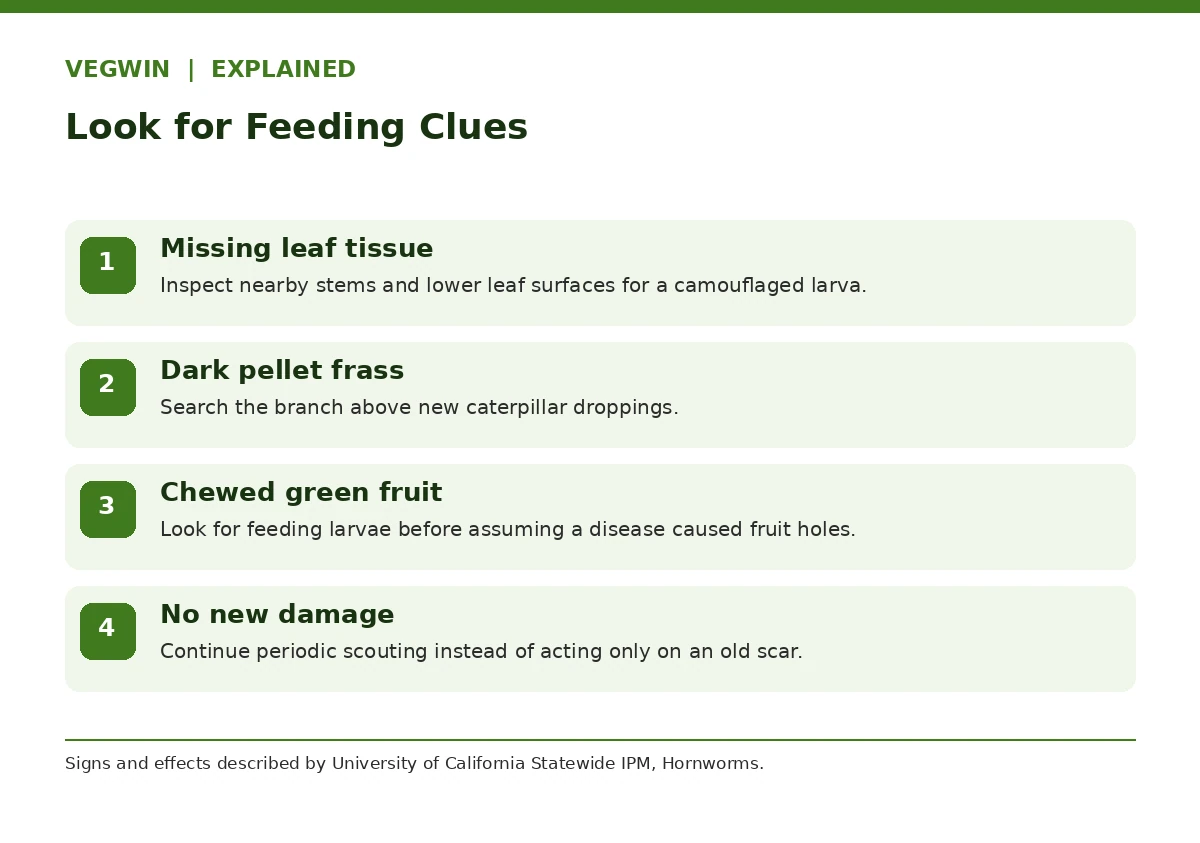
Hornworms are smooth-bodied caterpillars, commonly green, with a prominent horn at the rear. They can grow large and blend astonishingly well among tomato leaves. UC IPM notes that their feeding can remove entire leaves and small stems and sometimes chew green fruit. The large, dark pellet-like droppings called frass beneath a branch often reveal where a caterpillar is hiding. Look above the droppings and under leaves before concluding what caused damage.
Do not diagnose hornworms from yellowing, leaf curl, dark leaf spots, or wilting alone. Those problems may involve disease, water stress, other insects, or several causes together. Inspect both sides of leaves, stems and fruit. Take clear photos of the caterpillar and its host plant if uncertain. Different sphinx moth larvae feed on other plants, so the host species is an important part of identification.
Tell Tomato From Tobacco Hornworms
The common names cause confusion because both insects can feed on tomatoes, peppers, eggplants and related plants. UC IPM distinguishes tomato hornworm larvae by pale chevron or V-shaped marks along the sides and a horn often dark in color. Tobacco hornworms have oblique white diagonal stripes and often a reddish horn. Individual appearance can vary, and lighting may change the perceived color. The side-pattern shape is often more useful than the horn color alone.
You do not need exact species-level identification to begin ordinary monitoring, but you do need to confirm that the creature is indeed a hornworm. Both are larvae of sphinx or hawk moths, whose adults can visit flowers. Adults are not the leaf-chewing stage. Do not interpret a large adult moth visiting a flower as proof that a tomato plant requires treatment; search the foliage for actual feeding larvae and damage.
Find Fresh Damage Before It Spreads
Start where leaves or tender shoots are missing, then scan along nearby leaf midribs and green stems. Fresh frass below damaged branches can help narrow the search. Hornworms tend to hide on the underside and inside portions of foliage. Check the plant carefully, including younger growth, because a large caterpillar may eat a surprising amount while remaining almost invisible.
Count the active caterpillars and note whether several plants have new injury. Distinguish old damage from continuing damage by photographing a branch and checking it again. One chewed leaf on a vigorous plant is not the same as ongoing extensive defoliation or damaged fruit. Conditions and local beneficial insects influence what happens next. The purpose of scouting is to decide whether action is needed, not to justify an automatic spray.
Protect Hornworms With White Cocoons
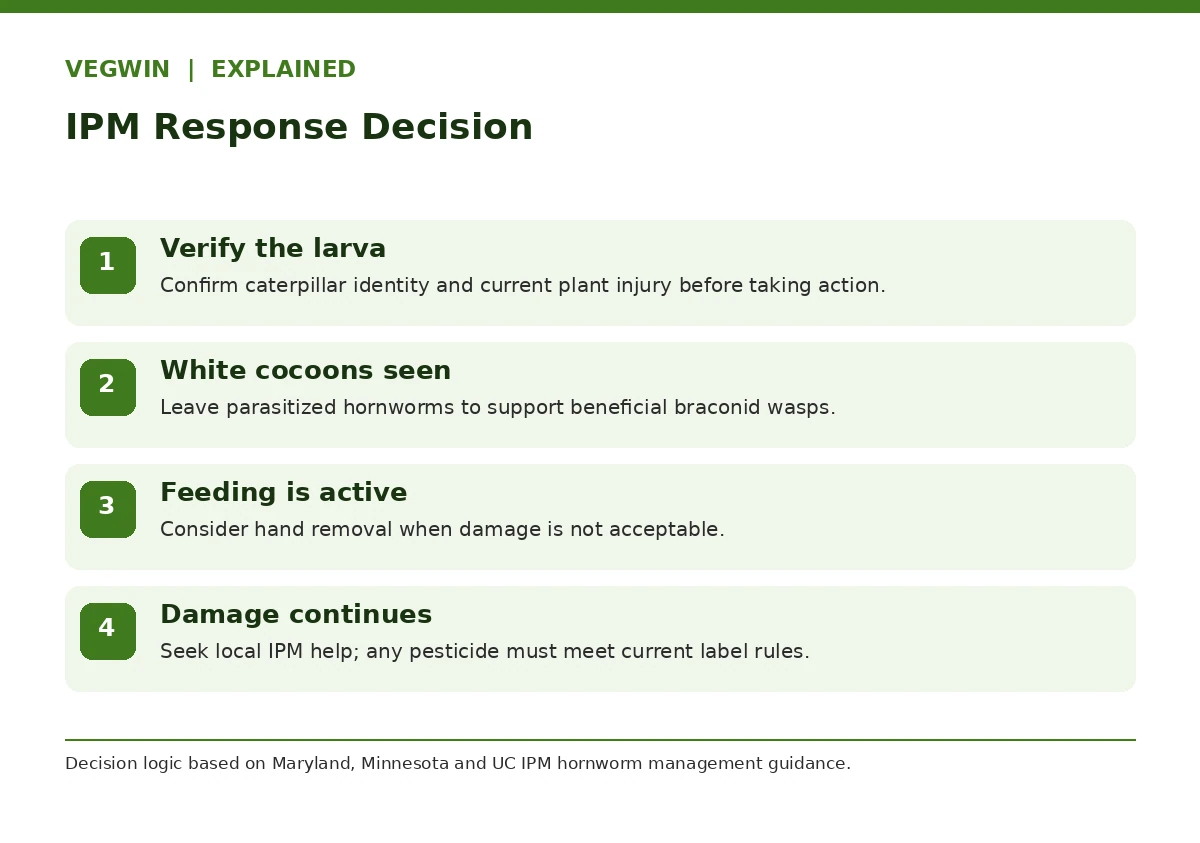
White grains attached to a hornworm’s body are often the silk cocoons of parasitoid braconid wasps, not the hornworm’s own eggs. Maryland and Minnesota Extension explain that the wasp larvae develop inside the caterpillar, then form visible cocoons; the hornworm normally stops feeding and ultimately dies. Leaving a parasitized caterpillar allows the next generation of beneficial wasps to emerge and search for other hornworms.
Before removing a larva, inspect it for these cocoons. Avoid crushing or discarding a visibly parasitized caterpillar unless there is a separate compelling safety issue requiring professional advice. A cluster of white cocoons does not mean your tomato plant is infested with a new crop-eating insect. It is evidence that natural enemies are operating, and preserving them may reduce later hornworm pressure.
Use Low-Impact Actions First
If you find an actively feeding hornworm without visible parasitoid cocoons and fresh damage is unacceptable, hand removal is a practical home-garden response. University of Maryland Extension describes removing caterpillars manually; inspect your plants carefully and use gloves if desired. If you prefer not to handle a caterpillar, use a tool to transfer it according to a locally suitable disposal method. Do not pull so hard that you damage the tomato stem.
Many gardens have natural enemies that help keep numbers low, so periodic monitoring may be all you need. Avoid killing every sphinx moth larva in the landscape without knowing its host and impact. The goal of integrated pest management is to limit damage through identification, observation and the least-disruptive effective method. Keep flowers and habitat for beneficial insects where compatible with your garden plan; a particular companion planting does not guarantee hornworm control.
| What you see | What it suggests | Next step |
|---|---|---|
| Green larva with rear horn | Likely hornworm or related sphinx moth | Confirm host and side markings |
| White V side marks | Tomato hornworm is more likely | Look for active feeding and frass |
| White slanted stripes | Tobacco hornworm is more likely | Treat as a feeding hornworm if injury merits action |
| White rice-like cocoons | Braconid wasp parasitism | Leave the caterpillar for beneficial wasps |
Keep Pesticides as a Separate Decision
UC IPM mentions certain products for small larvae but also cautions that registrations, availability and guidance may change. This guide does not prescribe insecticides, homemade mixtures, application rates or treatment intervals. Before considering any product, verify that the caterpillar has been identified, that damage justifies control, and that a current label explicitly permits its use on the specific edible crop and at the intended site.
Pesticide law and label instructions vary by location; follow EPA and state requirements, restrictions, protective equipment, harvest intervals and pollinator cautions where applicable. A product being called “natural” is not evidence it is safe for every crop or beneficial organism. Local Extension IPM advice is the appropriate next stop when hand removal and monitoring are insufficient, not a general internet recipe.
Recheck the Plant After Removal
Revisit the same branches over the next several days and look for fresh missing foliage, new frass and remaining larvae. Inspect neighboring solanaceous crops if you find active feeding, but do not assume every damaged pepper or eggplant was attacked by a hornworm. Record whether beneficial wasps are present, and avoid unnecessary disruptions to plants that have stabilized.
If a plant continues to wilt, develop spots, or lose vigor after all visible caterpillars are gone, change the investigation. Hornworm feeding does not explain every tomato symptom. Take photographs and consult a state Extension diagnosis service for persistent or spreading problems. Good IPM ends with a reassessment of plant health and actual injury, rather than a single treatment followed by no observation.
How We Research and What May Change
This guide compares public Cooperative Extension and university IPM recommendations, emphasizing the decisions a home grower can check in their own garden. The linked references were checked on October 19, 2026. No product testing, private cultivar trials, or site-specific soil analysis is claimed. Recommendations may change with climate, crop variety, local regulations, newly diagnosed disease, or revised Extension guidance; for a local decision, consult your state or county Extension office.
Sources reviewed: [1] University of California Statewide IPM [2] University of California Statewide IPM [3] University of Maryland Extension [4] University of Minnesota Extension
Disclosure: This article contains no sponsored recommendations and no affiliate links. See the designated VegWin affiliate disclosure page; its live availability must be confirmed by the site owner before publication.
The rear projection is not a stinger. The insect is a caterpillar, but handling any wildlife should still be careful and hygienic.
Tomato hornworms usually show V-shaped pale side marks; tobacco hornworms show diagonal stripes. Horn color also differs often but is less dependable alone.
Usually not. They are often braconid wasp cocoons. Extension sources recommend leaving the parasitized hornworm so beneficial wasps can emerge.
Yes. Large larvae can consume leaves and small stems and may chew green fruit, although damage alone does not prove the species.
Often no. Identify and scout first; hand removal and natural enemies usually come before a separate, label-verified pesticide decision.