
A root-cellar photo makes it look as though every root vegetable can be piled into one cold box. Real harvests need sorting first. Carrots, beets, parsnips and turnips generally benefit from cold, humid storage with careful moisture control, while potatoes bring separate curing, light-exposure and temperature requirements. A normal home refrigerator is a useful fallback for some roots, but its dry air and limited space change what you can expect. This guide is about storing sound fresh produce, not home canning or extending questionable food indefinitely. Start with the crop and its condition, then choose the environment.
Sort the Harvest by Crop and Condition
Record what you have: carrots, beets, parsnips, turnips, rutabagas, potatoes or mixed small quantities. Set aside roots with deep cuts, soft areas, unexplained dark spots or active decay, rather than burying them among undamaged produce. Gardening Extension resources advise handling roots gently because bruises become points where quality and keeping life decline. Eat sound but slightly nicked produce promptly if appropriate; never store visibly rotting items hoping cool temperatures will repair the injury.
Use the crop name, variety where known, harvest date and approximate quantity on a label. Sorting is especially important when several people harvest at once. Separate roots intended for quick refrigerator use from storage-quality produce. Do not wash everything indiscriminately before deciding on storage: cleaning recommendations differ among crops and guides. Follow the storage instructions for the specific root rather than treating a soil-coated potato like a bunch of carrots with greens still attached.
Handle Carrots, Beets, and Parsnips Gently
South Dakota State Extension explains that carrots can be lifted once they reach a usable size, and late-season roots may be stored in suitable conditions. Avoid yanking long roots out of hard ground, which can snap them. Free soil gently and remove leafy tops according to Extension guidance to reduce moisture loss. Parsnips are especially easy to break during digging; carefully loosen soil near the plant rather than pulling against resistant ground.
UMass Extension describes trimming carrot greens, using perforated bags and storing the roots cold and humid. Practical methods vary between guides on whether to rinse before longer storage, so select one complete method, including drying of surface water if instructed. For beets and turnips, avoid tearing the crown while removing greens. Treat tops as a separate, perishable harvest if you plan to eat them. Long-term storage roots should be sound and adequately cooled before being crowded into containers. If you are starting from scratch, read When to Harvest Shallots and Cure the Bulbs for Reliable Storage.
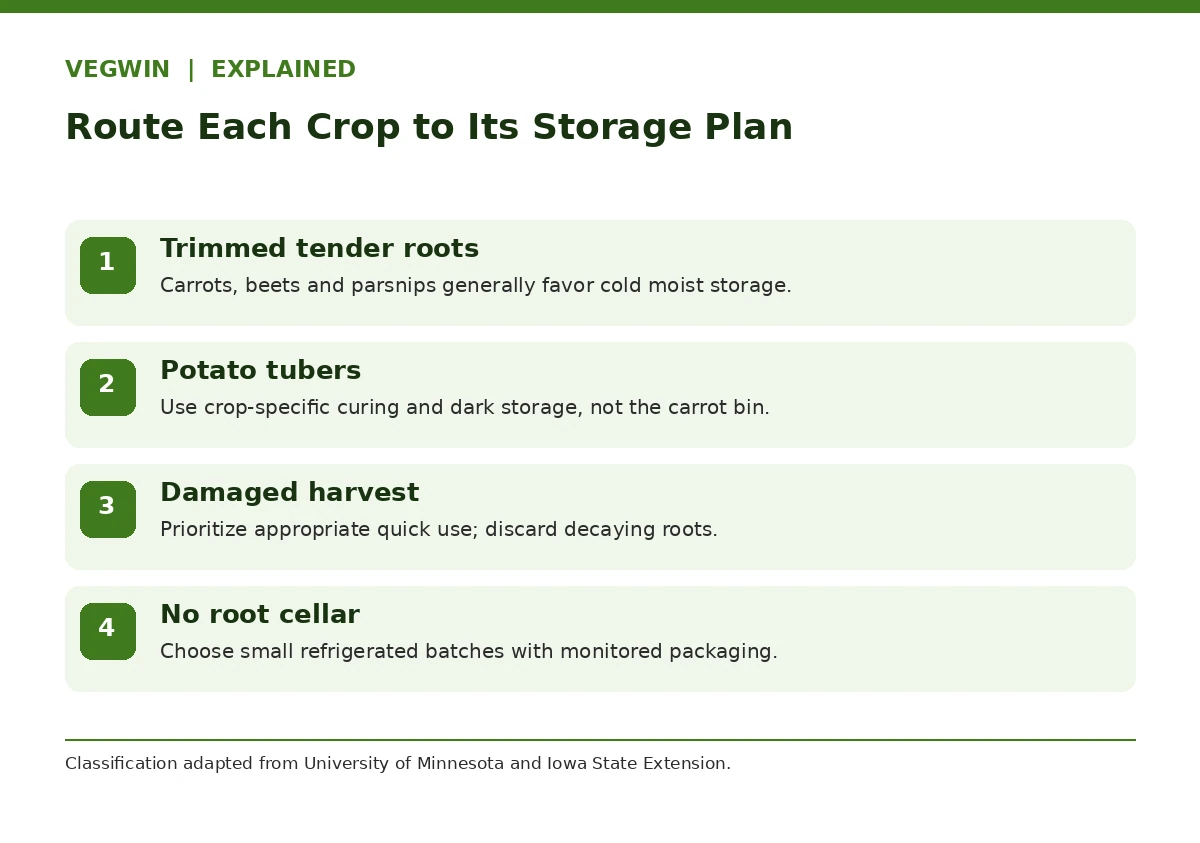
Match Storage Temperature and Humidity to the Crop
Minnesota Extension groups many harvested roots into cold, moist storage, around 32–40°F with high relative humidity, rather than the ordinary “cool and dry” pantry environment. A root cellar can create that combination but requires ventilation and protection from rodents. A home refrigerator is generally cold but relatively dry, so appropriately perforated plastic bags can help preserve moisture around trimmed roots. Sealed wet bags are not a shortcut to high humidity: condensation can foster spoilage.
Use a thermometer to check actual storage temperatures and inspect moisture in containers. Do not assume a basement is cold enough or that an attached garage cannot freeze. Roots that freeze and thaw or sit in water may deteriorate. Storage life is a variable outcome based on crop, damage, variety and conditions rather than a universal promise of several months. If you lack a suitable cellar, a smaller quantity of sound roots in the refrigerator may be better than a large harvest deteriorating in a warm room.
Keep Potatoes on Their Own Storage Track
Potatoes are underground stem tubers and differ from carrots or beets. Iowa State Extension recommends curing harvested potatoes under controlled conditions before their longer-term storage; its guidance also emphasizes a dark storage environment because light exposure causes greening. Do not treat green skin as a decorative color: it signals conditions associated with glycoalkaloid accumulation, so follow qualified food-safety advice when deciding whether a potato is usable. Darkness, airflow and cultivar choice all matter. Our walkthrough on how to dehydrate garden vegetables safely sets out each step.
A potato’s ideal longer-term storage conditions are not identical to the coldest, moistest root-vegetable bin. Iowa State describes a separate potato storage temperature and humidity after curing. Excessively warm areas can encourage sprouting; colder temperatures can change cooking quality. Do not infer that the carrot crisper drawer, a sealed plastic bag and a basement shelf are interchangeable. Keep potatoes away from sunlight and check stored tubers regularly for soft spots, wet rot or other evidence that the batch is failing.
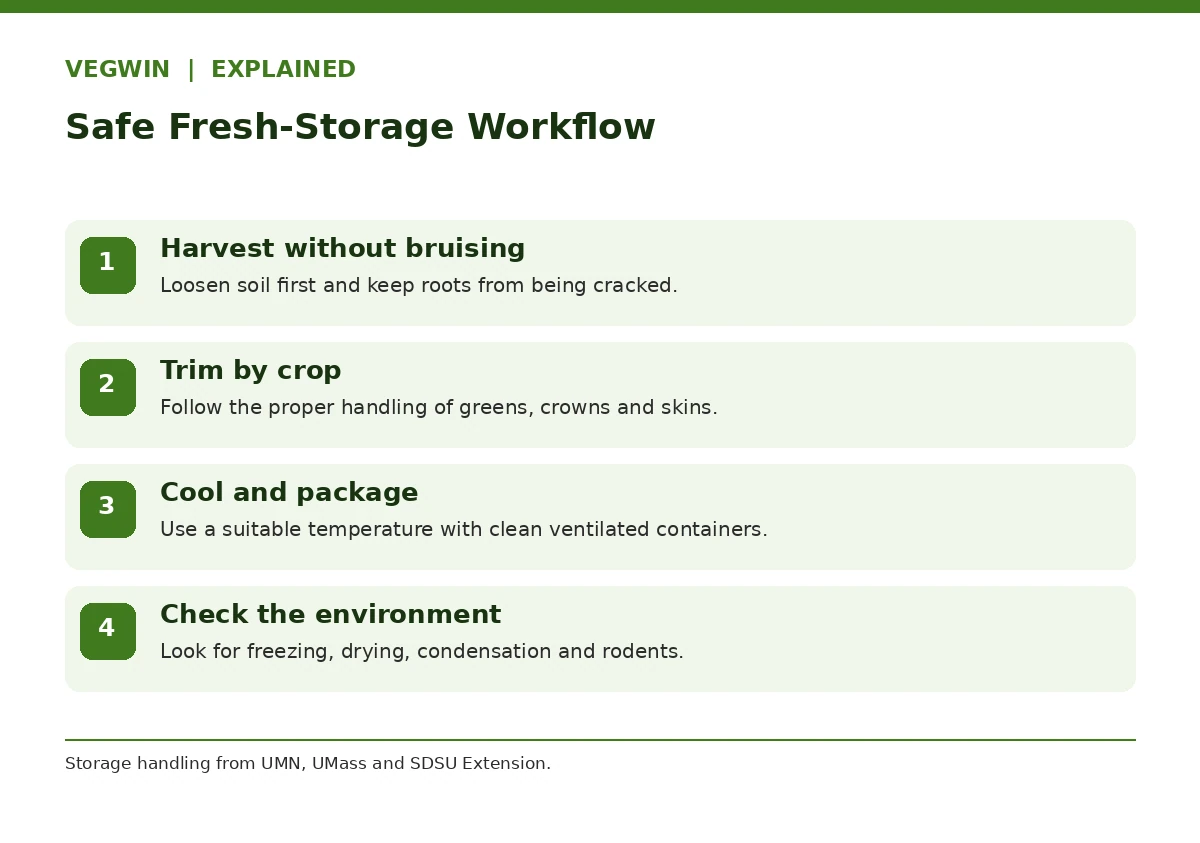
Choose Containers That Limit Drying and Rot
For appropriate cold-moist roots, perforated bags or carefully managed damp packing material can reduce shrinkage while avoiding standing water. Minnesota Extension warns that unperforated bags can collect excess moisture and encourage mold or bacteria. Where damp sand is recommended, it should be slightly moist, clean and free of contaminants—not a wet bucket. Boxes should be easy to inspect and should not crush the bottom layer. Food-contact materials must be clean and suitable for produce.
Ventilation and sanitation are part of storage, not optional refinements. In a cellar, prevent rodent access, manage condensation and keep containers off wet flooring where practical. In a refrigerator, do not stack heavy produce above tender greens or pack the crisper so tightly that you cannot see rotting roots. Keep root types in labeled separate groups to compare how they are keeping. A configuration that works for a week needs continued inspection for long-term use.
| Crop group | Main storage choice | Do not assume |
|---|---|---|
| Carrots, beets, parsnips | Cold, humid conditions with suitable ventilation | Warm dry pantry equals root cellar |
| Turnips and rutabagas | Crop-specific cold moist handling after sorting | All greens should remain attached |
| Potatoes | Separate curing and dark storage plan | Same temperature and packaging as carrots |
| Any moldy or wet-rotting root | Reject suspect spoiled produce | Cooling reverses rot |
Inspect for Spoilage and Protect Food Quality
Check periodically for a soft root, mold, unusual odor, leak or condensation. Separate spoiled produce from adjacent roots without handling edible food on a contaminated surface. Thoroughly clean affected containers before reuse. Do not recommend trimming visibly extensive rot and storing the remainder as though nothing happened. A root that has lost firmness from drying is not identical to one that is slimy or moldy; identify the problem before deciding whether any food use remains appropriate. To go further, our garden harvest tips shows how to pick at the right stage and handle crops safely.
For potatoes, also look for greening, significant sprouting and decay; if uncertain about glycoalkaloid risk, do not use the tuber. Refrigeration and cellar conditions preserve raw produce temporarily, but they do not sterilize contaminated roots. Follow safe kitchen washing and preparation procedures when ready to cook. This guide does not offer homemade canning times: low-acid root vegetables require tested pressure-canning methods if canning is chosen as a separate preservation project.
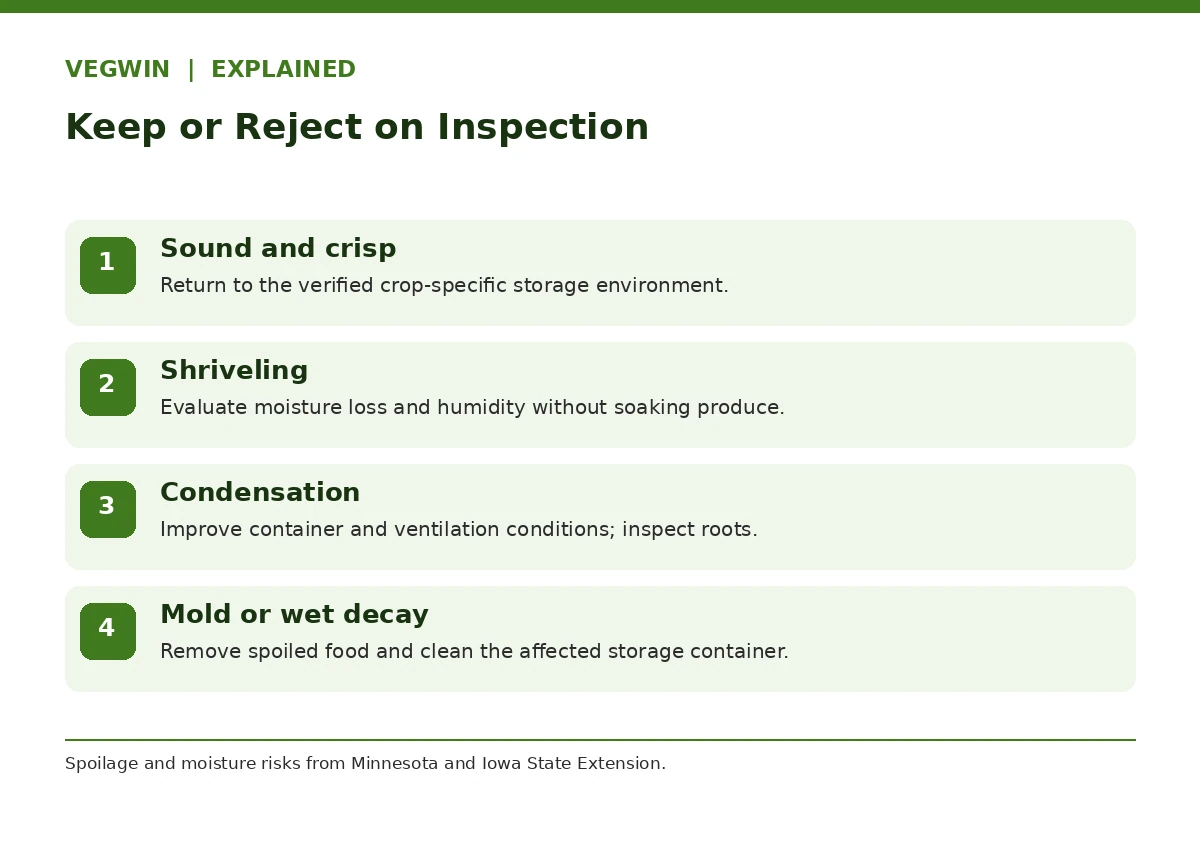
Build a Small Household Storage Routine
The simplest routine is an inventory with crop, location, first inspection date and observed losses. Every time you take vegetables for dinner, scan neighboring produce for moisture, softness and changes in ventilation. When you notice shrinkage, examine humidity and packaging; when you find condensation, check airflow and the amount of moisture in the container. Avoid trying to fix either problem with an invented chemical treatment. Quality improvements come from harvest care and conditions. Our guide “Harvest and Cure Sweet Potatoes Without Bruising or Chilling” adds more detail on this.
If you grow only a few roots, a refrigerator drawer plus labeled perforated bags may fit your real needs better than building a cellar. If you grow bushels, test the cellar with a thermometer and examine its climate and pest security before filling it.
Related Guides
- Growing Potatoes at Home: Seed Tubers, Hilling, and Safe Harvests
- Winter Vegetable Gardening: Plan Harvests Around Light and Cold
- When to Harvest Celeriac: Check Root Size, Weather, and Storage Needs
How We Research and Update This Guidance
Sources and their current text were inspected on October 19, 2026. The accompanying diagrams are original decision aids summarizing those sources; they are not photos, field-trial results, or a substitute for local Extension diagnosis. Climate, crop varieties, changing pathogen prevalence and institutional revisions can change appropriate guidance. The author should revisit local recommendations before publishing or when a reader reports new field conditions.
Evidence and further reading: [1] University of Minnesota Extension [2] Iowa State Extension [3] South Dakota State Extension [4] University of Massachusetts Extension
Disclosure: No product or partner recommendations in this guide are sponsored or commissioned, and its buttons are educational links rather than affiliate offers. We checked sources including affiliate disclosure.
Yes, particularly for modest quantities. Trim and package as recommended; the refrigerator is often drier than an ideal root cellar.
Not automatically. Their recommended curing, light exposure, humidity and temperature handling differ; keep their storage plans separate.
Moisture loss can cause shriveling. Check storage humidity, packaging and temperature while also distinguishing drying from microbial spoilage.
Depending on crop, weather and local guidance, some can remain under protective mulch for later digging, but frozen or waterlogged soil creates risks.
No. Fresh storage is separate from canning. Low-acid roots require tested pressure-canning directions from USDA or NCHFP if preservation by canning is desired.