
Brown spots on lower tomato leaves do not identify one disease by themselves. Early blight and Septoria leaf spot both tend to begin low in the plant after moisture splashes pathogens upward, but their better-developed lesions have different patterns. Use several clues together and begin practical moisture management even when you cannot yet distinguish every tiny mark.
Inspect the Lowest Leaves First
Start at leaves nearest the soil because common fungal tomato leaf spots often show there before spreading upward. Support a leaf with your hand and examine both surfaces in good daylight, without rubbing diseased tissue across healthy foliage. Note which plant was affected first and whether recent rain or overhead watering splashed soil onto the canopy. University of Minnesota Extension explains that early blight and Septoria both can begin on lower leaves and may be hard to distinguish early. One spot is not enough for a firm diagnosis. Photograph several lesions with a coin or ruler nearby for scale, then compare shape, size and distribution.
Look for Early Blight Targetlike Rings
Early blight on tomatoes commonly produces relatively large, irregular brown lesions that can show concentric dark rings like a target. Yellowing tissue may surround the damaged area, and multiple lesions can merge as the leaf deteriorates. Minnesota Extension describes ringed spots on older foliage, with infections sometimes affecting stems and the fruit near its attachment. Not every lesion develops a textbook bullseye, especially when small, so do not diagnose entirely from a single yellow halo. The magnified drawing shows rings inside the brown dead tissue, not a perfect circle printed on healthy green leaf. Look for the combination of lesion expansion and location.

Look for Many Small Septoria Spots With Pale Centers
Septoria leaf spot often appears as numerous smaller round spots, usually with darker margins and tan or grayish centers. University of Minnesota diagnostics note that tiny dark fruiting bodies may later be visible in the centers, but these require close observation and are not always obvious. Unlike early blight, Septoria does not typically create large target-ringed spots on fruit. A leaf dotted with dozens of small lesions can still lose substantial functioning area. Do not assume every tiny dot is Septoria; bacterial diseases and other problems can look similar. The comparison drawing keeps lesion size and distribution distinct rather than merely changing background color.
Do Not Confuse Early Blight With Late Blight
The common names are misleading: early blight and late blight are different diseases, with different pathogens and risks. Late blight may create rapidly expanding water-soaked or greasy-looking dark areas, and serious outbreaks need prompt local advice. A cluster of dry ringed lesions developing over time more strongly suggests early blight than late blight, but mixed symptoms require expert review. Check the regional disease alerts where available, especially in cool wet outbreaks. Do not claim that all dark tomato spots are harmless because the plant still looks vigorous today. A photograph and the known weather history can help a local diagnostic clinic evaluate ambiguous symptoms.
Distinguish Diseases From Ordinary Yellowing
Nutrient problems, aging leaves and water stress may yellow foliage without producing distinct fungal lesion patterns. A leaf with many pinpoint marks may also have bacterial spot or feeding damage. Examine the whole plant: is discoloration uniform, patterned between veins or concentrated around real dead spots? University of Minnesota notes that young fungal and bacterial leaf spots overlap in appearance, so early visual diagnosis has limits. Before reaching for a spray, document the damage and check several leaves. If the symptoms do not fit a supported identification, contact an Extension clinic with clear photos or a properly prepared sample.
Reduce Splash by Mulching Exposed Soil
Both diseases benefit from moisture that moves pathogens or keeps foliage wet. Put clean organic or appropriate landscape mulch over exposed soil without burying the tomato stem or creating a constantly soggy mound. Minnesota Extension recommends mulch as a barrier limiting contaminated soil splash. Adjust the material and thickness to your site and irrigation setup rather than piling a heavy layer against the crown. Splash reduction cannot remove lesions already present, but it can lower repeated contact between wet soil and the canopy. Water at the root zone with a gentle stream, drip line or soaker hose to keep foliage drier whenever practical.
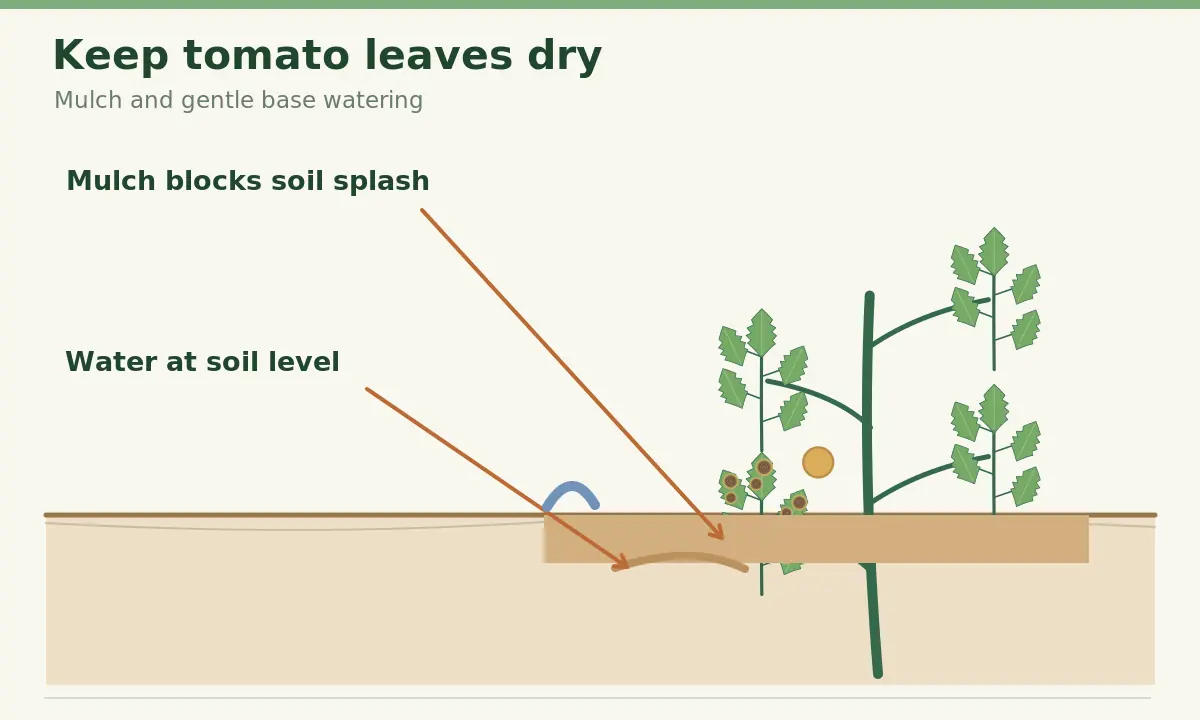
Open the Canopy Without Stripping It
Stake, tie or trellis plants to improve air movement and prevent leaves from lying on the ground. Remove weeds competing for space, and avoid crowding several large tomato plants into a narrow bed. If lower leaves are visibly infected, selectively remove the worst ones with clean tools during dry conditions. Minnesota Extension cautions against removing more than about a third of a plant’s leaves, because the remaining foliage supports fruit growth. Indeterminate and determinate cultivars also differ in pruning needs; leaf-spot management is not permission to remove productive branches indiscriminately. Bag or otherwise manage infected debris according to local guidance.
Handle Infected Foliage and Tools Carefully
Do not carry wet infected leaves through healthy tomato foliage while inspecting each plant. Work when leaves are dry and sanitize cutting tools after contact with diseased tissue. Place heavily spotted removed leaves where they will not be repeatedly splashed back onto the garden. The appropriate disposal method depends on local municipal and composting rules; do not make a universal claim that all home compost kills every pathogen. Wash hands after handling infected material before tending healthy plants. Removing one old damaged leaf can improve airflow, but it does not instantly cure a fungus already present elsewhere. Follow up by checking newly expanding leaves.
Avoid Reflexive Spraying and Unverified Mixtures
Most small home tomato plantings do not require an automatic fungicide application for every early blight spot. Minnesota Extension notes that many home plants tolerate considerable leaf spotting while still producing. A treatment decision depends on confirmed disease, regional pressure and product registration. Never invent a dish-soap recipe, spray concentration or application frequency; labeled products differ by active ingredient, crop authorization and safety restrictions. Follow the label for reapplication and harvest intervals if a treatment is selected. Use disease-resistant tomato varieties when practical, but remember that resistance may reduce damage rather than eliminate every lesion.

Track New Spots Rather Than Waiting for Old Leaves to Heal
Mark the date and photograph affected leaves, then check whether new foliage remains cleaner after improving water delivery and airflow. Dead brown tissue will not turn healthy green again, so judge progress by fewer fresh lesions and overall plant growth. Fruit condition matters too: early blight can affect fruit, while Septoria is principally a leaf-spot concern. If leaf loss accelerates, fruit becomes damaged or the appearance suggests a more urgent disease, seek local diagnostic advice. At the end of the season, remove spent debris and plan a sensible rotation away from susceptible nightshade-family hosts where space permits. A record of symptoms helps choose a better site next year.
Related Guides
- Growing Tomatoes: A Step-by-Step Plan from Transplant to Harvest
- Tomato Blight Symptoms: Tell Early Blight From Late Blight First
- Tomato Blossom-End Rot: Check Water Before Calcium
- Tomato Leaf Mold: Check Leaf Undersides Before Treating Yellow Spots
- How to Prevent Damping-Off in Tomato Seedlings Started Indoors
How We Research and Verify Plant Advice
Sources checked on 2026-10-26: extension.umn.edu; apps.extension.umn.edu; extension.umn.edu; blog-fruit-vegetable-ipm.extension.umn.edu. We reviewed each institution’s plant identification, correct growth stage and relevant cultural recommendations before adapting them into an independently written step-by-step guide. Where sources are region-specific, their calendar details are not applied universally. Pictures use simplified teaching shapes and should be compared with living specimens; they are not a substitute for laboratory disease diagnosis or local climate guidance. The relevant advice is paraphrased rather than reproduced.
Safety and Independent Editorial Disclosure
This independently prepared educational article does not claim sponsorship or affiliate approval. Our category reading links are informational, not product endorsements. See the VegWin affiliate disclosure. Clean sharp tools before cutting plants, protect hands from thorns and blades, and keep cut plant material away from children and pets where appropriate. Use only locally registered plant treatments labeled for the actual crop, and observe the product label. Do not rely on unsupervised home remedies or unverified harvest-safety promises.
Early blight often develops larger brown target-ringed spots; Septoria usually produces many smaller dark-rimmed spots with pale centers.
Yes. Both often appear first on lower foliage, so location alone does not identify the pathogen.
No. Remove selectively and avoid taking more than roughly a third of foliage.
No. Mulch reduces soil splash and future risk; dead tissue will not heal.
Not automatically. Confirm the diagnosis and use local Extension and labeled products when treatment is warranted.