
Growing tomatoes well means making a series of linked decisions, not finding a secret additive. A plant may have perfect soil and still fail if it is transplanted into a cold bed, left without support, or stressed by swings between dry and saturated roots. Tomato varieties also differ in growth habit and fruiting pattern. Use this seasonal roadmap to plan from a healthy transplant through harvest, then diagnose problems by symptoms rather than reaching immediately for fertilizer or a spray.
Choose a Tomato for Space and Harvest
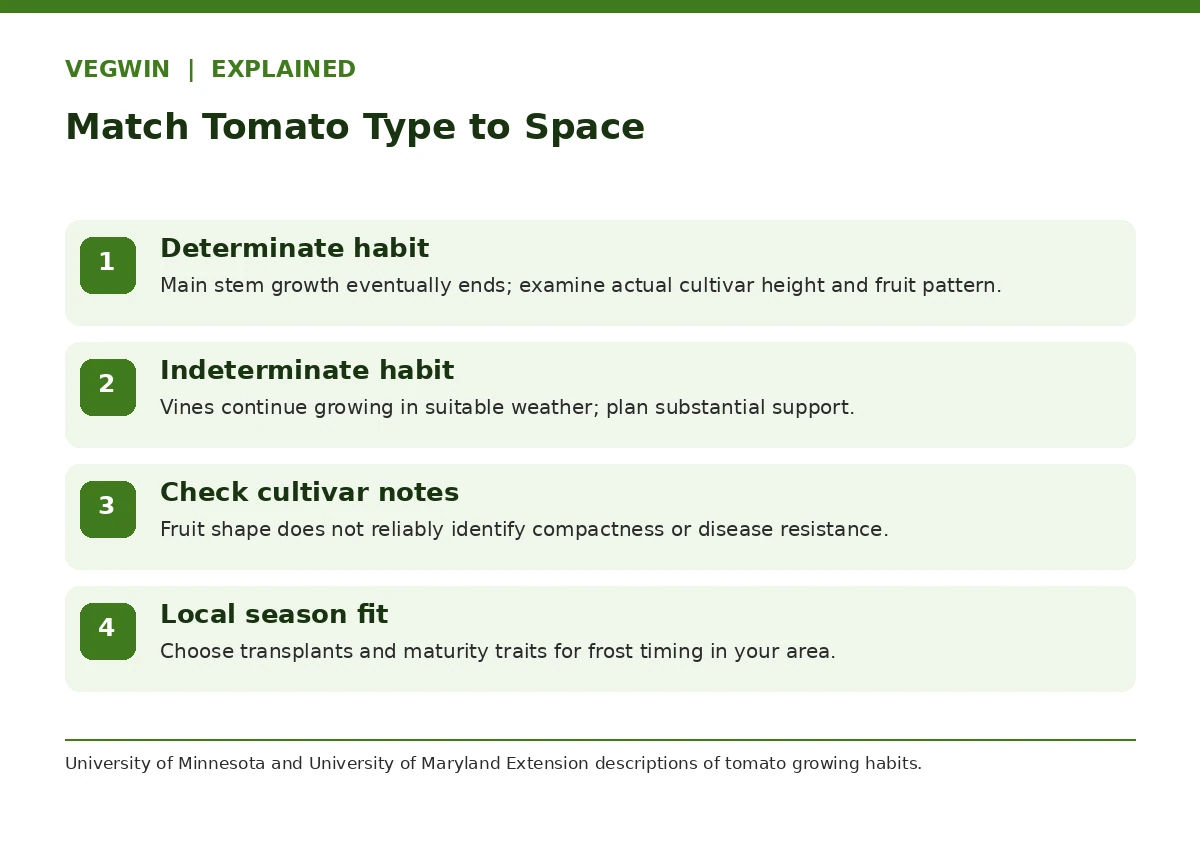
Determinate tomatoes generally stop extending the main growing point after reaching their characteristic size, while indeterminate types keep producing new growth during favorable weather. Both can yield useful fruit, but an indeterminate vine usually demands more vertical support and management. A compact variety may suit a smaller bed or container; check the actual cultivar description for mature habit, expected fruit size, and disease-resistance traits. “Cherry,” “paste,” and “beefsteak” primarily describe fruit type, not a guarantee of compact growth.
Choose varieties for your local growing season and past garden disease experience. Resistance codes on seed packets can help when a particular disease has been confirmed, but they do not protect against every problem. Buy stocky, healthy transplants without unusual leaf spots, obvious insect colonies, or tangled roots. If starting seeds, count backward from a locally appropriate outdoor planting window, rather than using a USDA hardiness zone as a spring planting date.
Time Transplanting by Frost and Soil
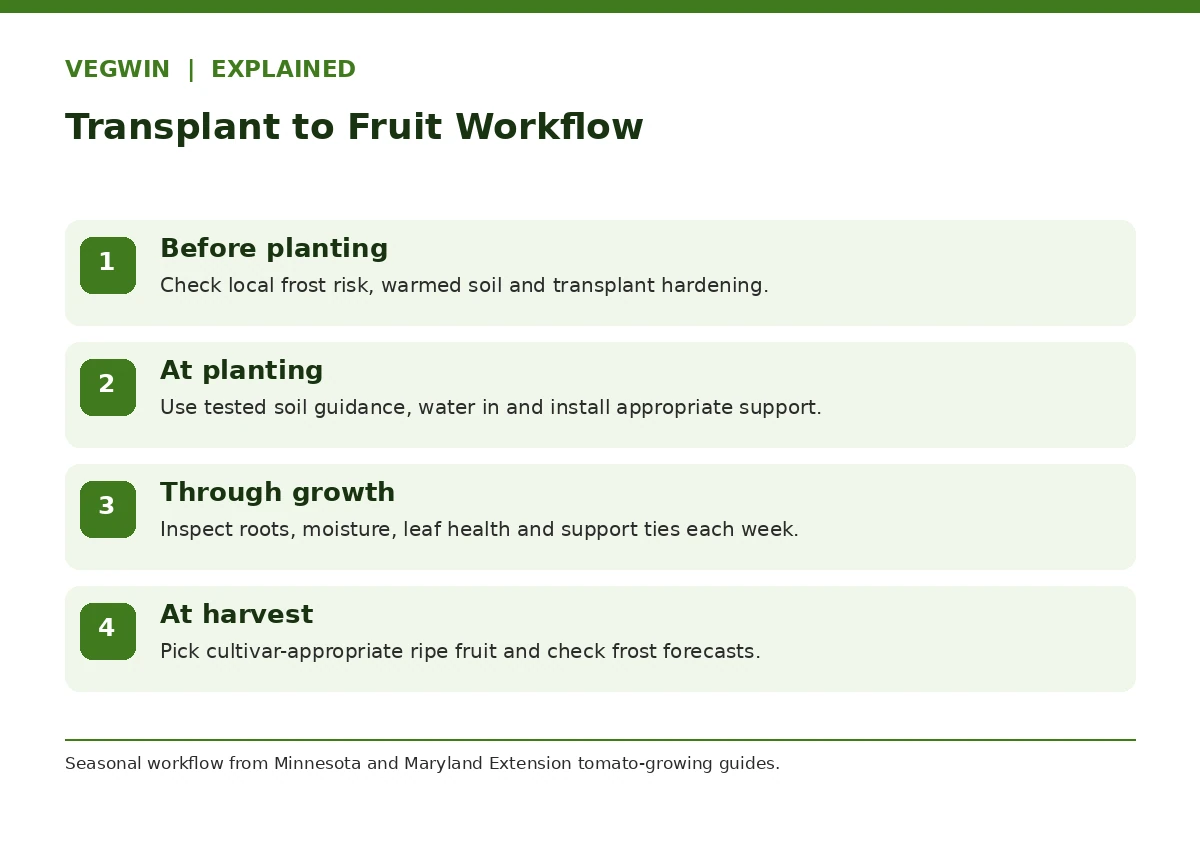
Tomatoes are frost-sensitive, warm-season crops. University of Minnesota Extension advises planting outside after frost risk has passed and soil has warmed, with timing adjusted to local conditions. Use a current local frost reference, the forecast, and the actual garden situation. Sheltered urban yards, exposed rural beds, and high elevations can behave very differently even inside one state or hardiness zone.
Before planting outside, acclimate indoor-grown transplants gradually to direct sun and wind, protecting them from sudden chill. Do not confuse a warm afternoon with soil that is consistently ready for roots. A cool, calm day or late afternoon can make transplanting easier. Set the transplant into a suitable planting hole, handle the roots carefully, water it in, and install support at planting time instead of driving large stakes through established roots later.
Prepare Soil and Support the Plant
Select a sunny spot with a soil structure that drains but retains enough moisture for roots. Use a soil test to evaluate pH and nutrients and follow that lab’s fertilizer guidance. Excess nitrogen can favor lush foliage at the expense of fruit, and adding phosphorus without evidence is not a reliable growth strategy. Compost can help soil condition, but it does not eliminate the need to understand what is already in the bed.
Cages, stakes, or trellises can hold fruit off the ground and make inspection easier. Provide support suited to the cultivar rather than copying a single cage size for every variety. Maryland Extension explains that pruning is a management choice: moderate sucker removal can shape staked indeterminate plants, but removing too much foliage risks unnecessary stress. Avoid treating heavy pruning as a requirement for every determinate tomato.
Water for Even Root-Zone Moisture
Tomatoes benefit from a steady supply of moisture as fruit develops. Minnesota Extension describes deep watering at the root zone and notes that watering needs vary with rainfall and soil type. Rather than following a rigid daily schedule, check how far moisture penetrates and how quickly the soil dries. Sandy beds, containers, and heat waves may need different intervals from heavier garden soils in a rainy week.
Mulch helps moderate evaporation and reduces soil splash onto lower leaves. If possible, water at soil level rather than routinely wetting foliage. A plant wilting in afternoon heat does not always need more water: check the actual root zone before irrigating again. Severe drying followed by soaking can contribute to cracking and blossom-end rot, but neither symptom proves that the soil lacks calcium.
Prevent Problems Before Treating Symptoms
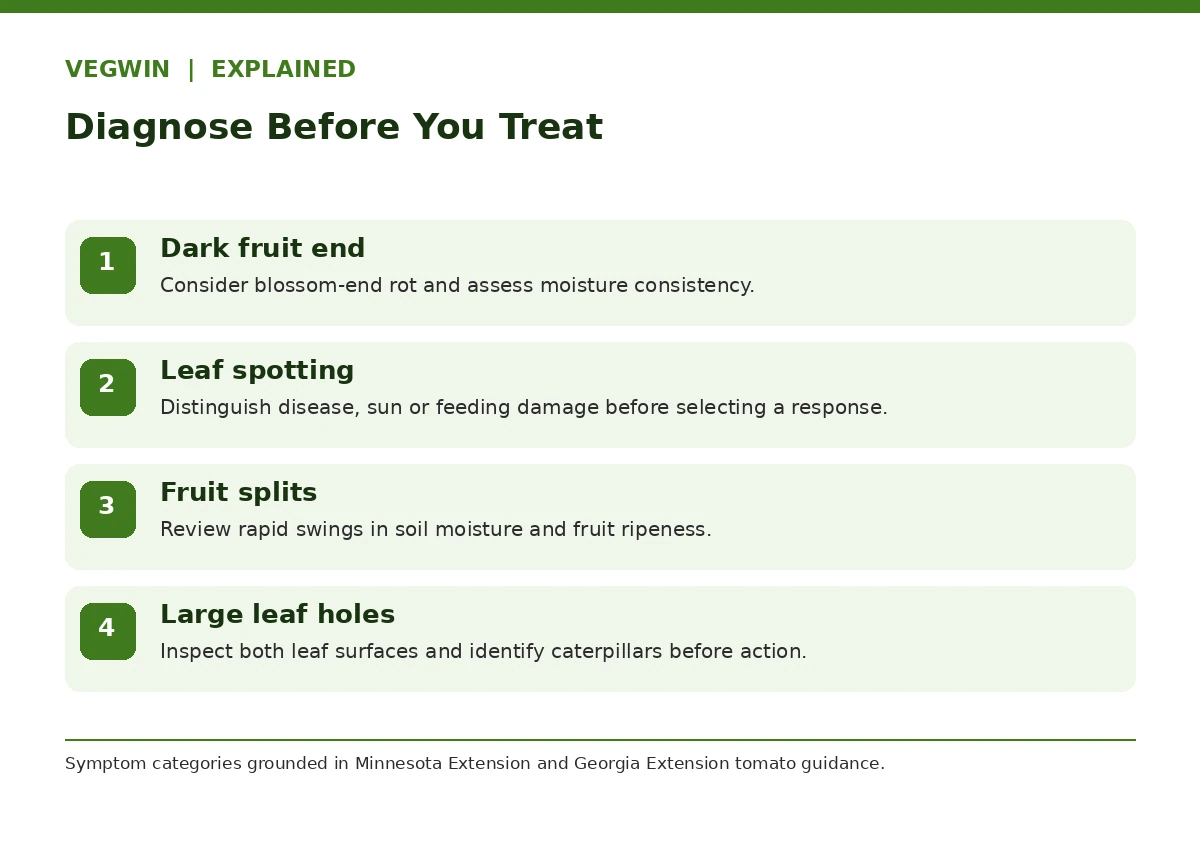
Good airflow, clean supports, rotation when possible, weed control, and checking leaves routinely reduce avoidable stress and may slow some diseases. If spotting starts low on a plant, examine the shape and spread of lesions rather than assuming all spots are “blight.” Insect chewing, nutrient stress, sun injury, and disease are different conditions that require different next steps. A photo of both leaf surfaces and the entire plant helps a local Extension clinic with identification.
Blossom-end rot creates a dark, sunken patch at the blossom end of fruit; it is a physiological problem involving calcium movement and is often associated with uneven moisture. It is not a reason to spray fungicide on fruit. If you suspect late blight or another serious disease, seek timely local identification and follow current regional advice. Do not invent home pesticide mixtures or apply a labeled product to a crop not listed on its label.
| Decision point | What to check | Action direction |
|---|---|---|
| Choosing a variety | Growth habit, season, disease history | Match cultivar description to bed and support |
| Moving outdoors | Local frost risk and warmed soil | Harden off and transplant when conditions suit tomatoes |
| Fruit cracking | Recent moisture changes | Aim for steadier root-zone moisture |
| Leaf spots or holes | Actual symptoms and pest identity | Use Extension diagnosis before any treatment |
Check Flowers and Harvest Fruit Carefully
Tomato fruit set responds to plant health and weather as well as pollination. When flowers drop, review temperature, nutrition, and soil moisture rather than trying an arbitrary fertilizer dose. Keeping plants supported helps you locate hidden fruit and spot damage early. If fruit shows holes, inspect for pests; if it is splitting, review moisture swings and the cultivar’s susceptibility.
Harvest according to the cultivar’s normal ripe color and the fruit’s condition, rather than waiting for an exact number of days from transplanting. Minnesota Extension explains that some mature fruit can continue ripening indoors when frost threatens. Keep harvested fruit with visible rot separate from sound fruit. If you preserve tomatoes, use a tested food-safety process; this article does not provide a canning recipe or processing time.
Run a Simple Weekly Tomato Check
Inspect supports, ties, and new shoots while plants are small. Feel soil below mulch, look under leaves, and record symptoms and weather together. During fruiting, observe whether new cracks or blossom-end lesions coincide with changes in rain or irrigation. That log is far more useful for diagnosing a repeated issue than remembering only the day it first looked bad.
At season end, remove plant debris with obvious disease symptoms appropriately under local guidance, clean reusable supports, and note the planting location for next year. Record which variety actually fit your space and ripened in time. The useful result is a repeatable plan tailored to your garden, not a promise that one variety or nutrient schedule works in every climate.
How We Research and What May Change
This guide compares public Cooperative Extension and university IPM recommendations, emphasizing the decisions a home grower can check in their own garden. The linked references were checked on October 19, 2026. No product testing, private cultivar trials, or site-specific soil analysis is claimed. Recommendations may change with climate, crop variety, local regulations, newly diagnosed disease, or revised Extension guidance; for a local decision, consult your state or county Extension office.
Sources reviewed: [1] University of Minnesota Extension [2] University of Maryland Extension [3] University of Georgia Extension [4] University of Minnesota Extension
Disclosure: This article contains no sponsored recommendations and no affiliate links. See the designated VegWin affiliate disclosure page; its live availability must be confirmed by the site owner before publication.
After local frost risk has passed and soil has warmed, allowing for the forecast and a gradual hardening-off period. A hardiness zone is not enough.
No. Pruning depends on growth habit, support and goals; aggressive pruning is not a universal requirement, especially for compact determinate plants.
A dark sunken patch at the blossom end often indicates blossom-end rot, a calcium-movement disorder often worsened by inconsistent root-zone moisture.
Check root-zone moisture, soil texture, weather and plant size. Water thoroughly when needed instead of treating a calendar interval as universal.
Fully developed fruit at an appropriate mature stage may ripen after harvest; very immature fruit generally does not develop equally good flavor.