
Flowering quince (Chaenomeles species and hybrids) is one of the first shrubs to color the garden, often before the leaves open. Its arching branches can also become a thorny tangle. The key is to prune just after the spring flowers finish, using a few well-chosen cuts instead of trimming every shoot to the same outline. Flower buds are carried on older wood; removing growth in late summer or winter may sacrifice the next display. Before lifting your pruners, identify whether the shrub truly needs renewal, a small clearance cut, or no cutting at all. This guide explains each decision and shows how to avoid common mistakes.
Identify flowering quince before selecting pruning cuts
Look for a deciduous, often spiny shrub with arching woody branches and clusters of red, coral, pink, or white flowers in late winter or spring. Depending on the species and cultivar, some stems can be nearly leafless when blooms open. Flowering quince belongs to Chaenomeles; it is not the fruit tree Cydonia oblonga, whose pruning needs differ. A densely branched old shrub is not necessarily unhealthy, and some cultivars naturally spread lower than others. Examine its actual mature habit rather than forcing every plant into a formal upright ball. Wear eye protection, sturdy sleeves, and thorn-resistant gloves so that you can see and reach inner stems safely. If you are starting from scratch, read When to Prune Pyracantha Without Losing Spring Flowers or Winter Berries.
Understand why next spring’s buds matter now
Chaenomeles makes its spring floral display on established wood, which is why extension services recommend pruning after flowering. A late-summer haircut can remove shoots that would have carried flowers in the following season. Winter trimming is especially visible because it can cut away branches already bearing dormant flower buds. The exact week varies widely: a shrub may finish bloom while another region is only beginning. Use the end of its own main bloom, not a generic calendar date, as your trigger. A handful of spent flowers is not a reason to postpone minor safety cuts, but avoid routine reshaping while good buds remain unopened. For the basics, see our guide: When to Prune Viburnum Shrubs Without Removing Next Year’s Flowers.
Inspect the oldest stems and crossing branches
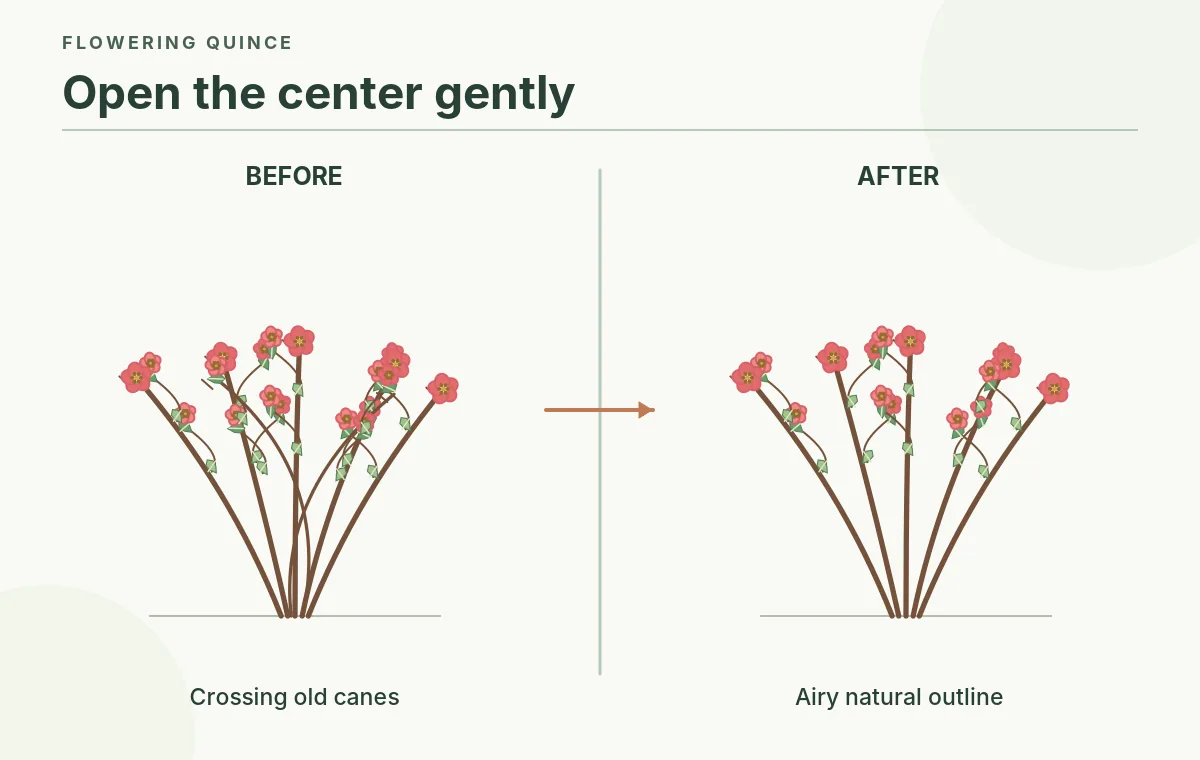
Begin at ground level. Identify older, thick, dark stems; dead or split sections; branches rubbing one another; and growth that blocks a path or presses against siding. Trace each candidate stem to its origin before cutting. The aim is to leave a balanced set of younger and established branches with room for light and air. Do not automatically remove every upright shoot: new replacement stems are needed for future flowers. If several old canes crowd the center, consider taking only a few this season, then reassess next spring. This prevents a drastic loss of the spring display and allows the shrub to recover gradually. If you are starting from scratch, read When to Prune Japanese Pieris Without Losing Next Spring’s Flowers.
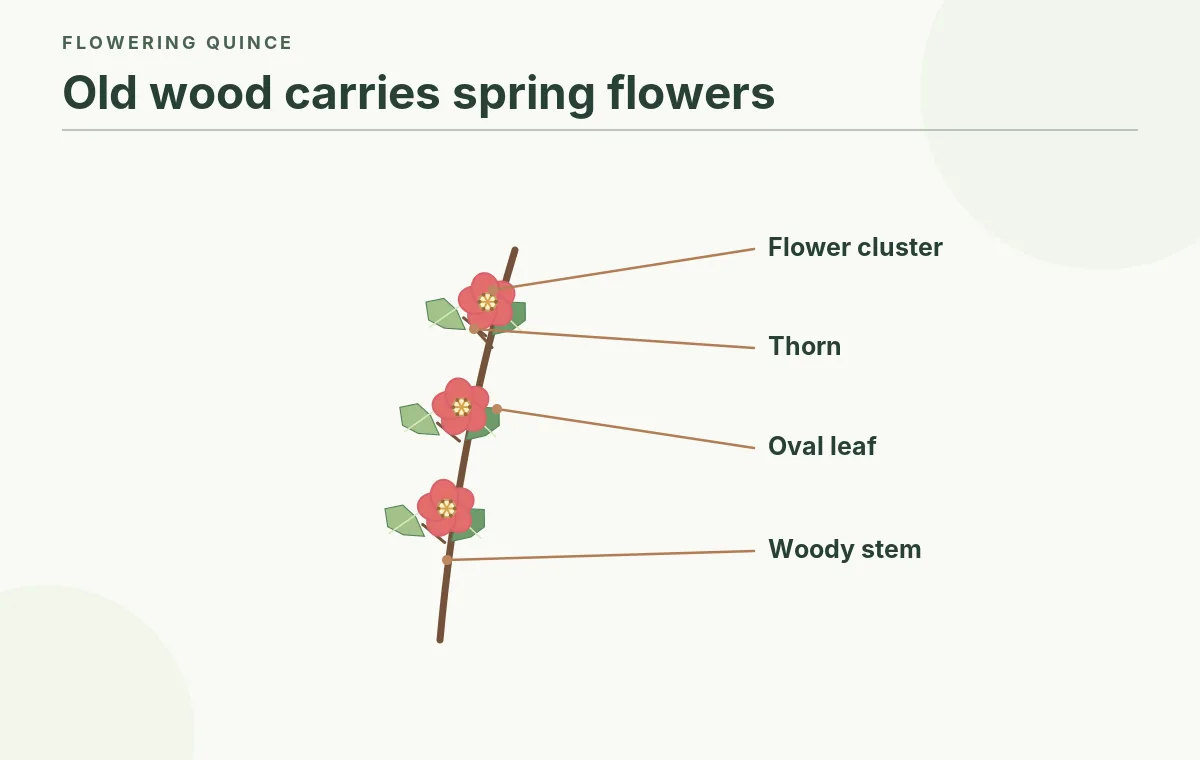
Make a renewal cut close to a stem origin
To renew an overgrown shrub, remove selected old stems near their point of origin at the base. NC State Extension describes basal removal of the oldest stems, which encourages fresh growth. Follow the stem downward, clear away nearby twigs, and use bypass loppers or a pruning saw appropriate to its size. Cut cleanly just outside the natural branch collar where one exists; do not leave a long stub, and do not gouge into the crown. Collect thorny cuttings promptly. This is different from cutting all stems halfway up, which tends to leave a thicket of short, vigorous shoots and sacrifices a great deal of established flowering wood.
Shorten a stray branch at a suitable side shoot
If a branch extends over a walkway or spoils the natural outline, trace it back to a healthy outward-directed lateral branch or visible bud. Make a clean reduction cut that preserves that lateral rather than leaving a bare peg in the middle of the shrub. Avoid repeatedly clipping the entire outer surface with shears. On a formal wall-trained specimen, a different pruning system may be appropriate; this article focuses on freestanding garden shrubs. Several modest corrections usually look more natural than one severe flattening. Check that the new opening will not expose a pedestrian to thorns at face level, and step away to reassess the silhouette after each cut.
Distinguish maintenance from major renovation
Light maintenance might mean removing a dead branch, one rubbing cane, and a low thorny shoot. Renewal removes a small selection of declining old canes so younger stems can replace them. Major renovation means removing a large portion of the whole framework and can dramatically reduce flowers for a season or more. Choose the least intervention that solves the real problem. A healthy, well-spaced flowering quince may not need annual structural pruning at all. If damage, disease, or storm breakage is extensive, make safety and plant health the priority and accept that some flowers may be lost. Do not mistake a sparse bloom in shade for a problem that hard pruning will automatically fix.
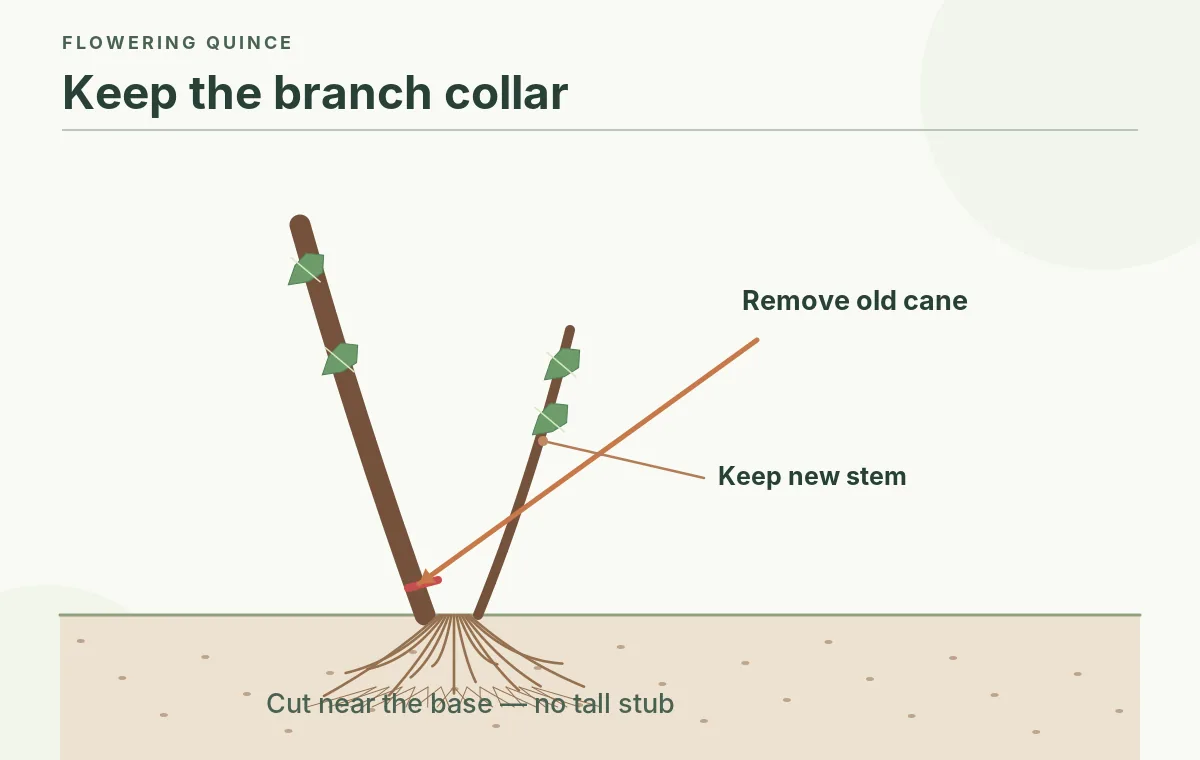
Avoid cutting too late in the growing season
Once the post-flowering window has passed, leave healthy shoots largely alone to grow and mature. Late trimming removes potential flowering wood, especially when repeated as a neat summer hedge haircut. The occasional broken, dead, or hazardous shoot can be removed as needed, but that is not a reason for a full cosmetic pruning. If the spring period was missed, record what bothers you, photograph the shrub in leaf, and schedule the main shaping for immediately after its next display. In climates where the shrub flowers in winter rather than conventional spring, the same sequence still holds: prune after the plant finishes, not after a fixed month printed in a distant region’s calendar. If you are starting from scratch, read When to Prune Mock Orange After Bloom Without Losing Next Year’s Flowers.
Help the remaining shrub recover naturally
After pruning, remove trapped debris, weeds, and cut branches from the center. Maintain a surface mulch ring if desired, but keep mulch off the woody crown, and water during dry establishment periods if new shoots need it. Routine fertilizer is not an automatic reward for pruning; first evaluate growth, soil condition, and whether the shrub is in full sun. NC State Extension notes that flowering is usually best in full sun, though the plant can tolerate partial shade. Do not apply wound paint to ordinary clean cuts. Watch for shoot emergence before deciding whether further thinning is needed, and avoid adding additional cuts simply because the first pass made the center look unexpectedly open. For the basics, see our guide: When to Prune Deutzia After Flowering and Thin Older Canes Correctly.
Read the branch structure from two useful views
Stand where you usually enjoy the flowers, then inspect the shrub from the side. In the front view, retained arching branches should frame gaps through which you can see a little interior growth; the plant need not be transparent. In profile, make sure large limbs do not rub walls or force people into the thorny canopy. Compare a before photograph to an after photograph at the same distance. If you removed a very old cane, notice whether a young basal shoot already exists to take its place. This visual test is more reliable than imposing a fixed removal percentage without knowing cultivar, age, or vigor.
Know when a different problem needs attention
A shrub that blooms poorly may be shaded, immature, frequently trimmed at the wrong time, or stressed. Examine the pattern before using pruning as a cure. If shoots show unusual dieback, sunken lesions, or persistent browning, contact local Extension for diagnosis instead of spreading tools from affected growth to healthy plants. Sanitize cutting tools after working with suspected infectious material. Check for wildlife nests before entering a dense shrub and obey applicable local protections. The recommendation is deliberately conservative: remove what you can identify as damaged or congested, preserve flower-bearing wood, and re-evaluate next year rather than chasing instant symmetry. For the basics, see our guide: When to Prune Spring-blooming Azaleas Without Losing Next Year’s Flowers.
Related Guides
- When to Prune Ninebark Without Losing Next Spring’s Flowers
- When to Prune Rhododendrons After Bloom Without Removing Next Spring’s Buds
- How to Prune Weigela After Flowering Without Losing Next Spring’s Blooms
- When to Prune Azaleas After Bloom Without Losing Next Spring’s Buds
- When to Prune Bridal Wreath Spirea and Keep Its Arching Spring Flowers
How We Research and Check Recommendations
Research checked October 23, 2026. We compared species-specific or safety guidance from the institutional sources listed below, cross-checked planting or action timing against plant biology, and distinguished evidence from reasonable garden practice. The information is for home gardening, not a site inspection or substitute for local soil tests, plant diagnosis, or food-safety rules. Local climate, cultivars, and current Extension recommendations can change the appropriate decision.
Sources reviewed: NC State Extension Plant Toolbox (Flowers form on old growth; prune sparingly and thin oldest basal stems.); Mississippi State University Extension (Prune directly after the bloom; remove a few oldest stems at ground level.); Royal Horticultural Society (Spring-flowering japonica/Chaenomeles is pruned after flowering.). This article does not claim a sponsorship, compensation, product endorsement, or verified affiliate relationship. Review our affiliate disclosure for site-wide policy.
Dead or hazardous stems can be removed, but routine winter shaping may cut away buds on old wood. Wait until the spring bloom ends for normal pruning.
Remove only the stems needed for clearance, health, or gradual renewal. Favor a few old basal stems over shearing the whole plant.
Flowering quince is Chaenomeles, usually a shrub; common fruiting quince is Cydonia oblonga, a different plant with different pruning guidance.
The same timing principle applies, but pruning can be minimal if the mature shape and flowering are satisfactory.
Consider shade, repeated late pruning, plant age, and growing stress. Identify the cause before cutting or adding fertilizer.