
An azalea can look untidy after its spring flowers fade, yet the wrong cleanup can take away most of the following spring’s display. Traditional spring-blooming azaleas form the next crop of flower buds later in the growing season. University of Georgia and Clemson Extension recommend doing ordinary shaping just after flowering, leaving time for new shoots and their future buds to develop. There are important exceptions: dead wood can be addressed when discovered, major renovation may require accepting a season without blooms, and reblooming selections have different flowering patterns. The objective is not to shear every shrub into a ball. It is to decide whether the plant actually needs pruning and make the smallest useful cut.
Identify the Flowering Habit Before Choosing a Date
Most traditional azaleas put on one main spring bloom on wood formed the previous growing season. They are botanically Rhododendron species or hybrids and may be evergreen or deciduous. Some marketed reblooming groups carry additional flowers later, so package or cultivar information matters. Maryland Extension’s general timing for spring-flowering shrubs is immediate post-bloom pruning because overwintered flower buds have already been used. Do not assume every plant labeled azalea flowers on exactly the same calendar day. Watch the last flowers fade on your own plant, then make shaping decisions. Local weather and cultivar determine when that observation happens. For a step-by-step method, see how to prune camellias by bloom season without losing buds.
Decide Whether the Shrub Needs a Cut at All
A compact, healthy azalea with room to grow may not need annual pruning. Step back and identify a real reason: dead twigs, damaged branches, stems blocking a path, or a few vigorous shoots sticking far beyond its natural outline. Many azaleas have shallow roots, so preventing drought and compaction can matter more than removing foliage. Resist trimming merely because the flowers are gone. Clemson notes that thinning and heading produce different results; repeated hard shearing can make a dense outer shell and conceal a bare interior. Keeping an irregular but balanced flowering form is often better than forcing uniform height.
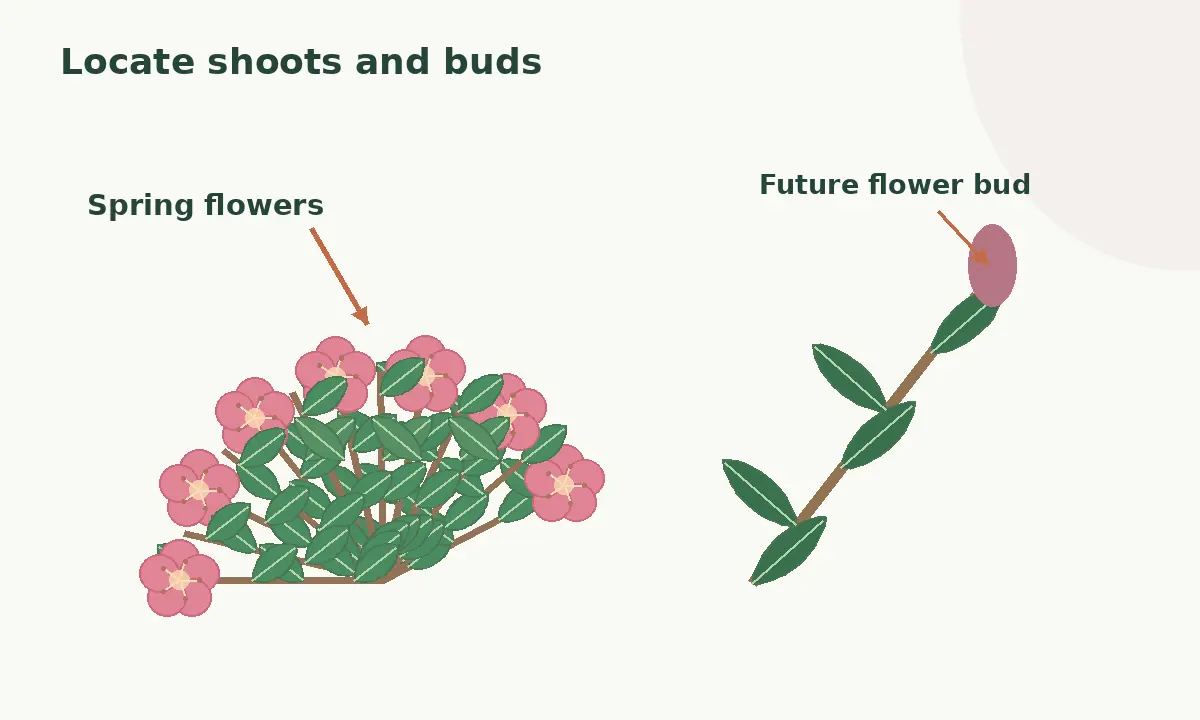
Use Thinning Cuts for Overlong Branches
Trace an excessively long branch inward until it joins a sound side branch or main stem. Cut near that junction without leaving a long stub or slicing through the adjoining branch collar. This removes the length naturally and opens small pockets of light in the shrub. Clemson describes thinning as the method for removing leggy or damaged branches and letting light into the canopy. Thin a few selected shoots, then pause to reassess. One cut deep inside may improve the outline more than clipping dozens of leafy tips. Clean sharp bypass pruners are preferable for small living branches; use more suitable tools when wood is thick.
Use Limited Heading Only Where Branching Is Needed
Heading removes the end of a shoot, encouraging growth from buds below the cut. It is useful for a sparse young plant or a specific projecting stem, but a hedge trimmer heading every shoot destroys many tips at once. UGA describes light post-bloom tip pruning as a way to encourage compact growth; it does not imply an azalea requires repeated topiary clipping. Cut just above a healthy leaf cluster or bud, avoiding a long naked stub. Keep the plant’s naturally mounded or arching shape in view. If no good bud or lateral is present where you planned a cut, move to another branch rather than forcing an arbitrary height.
Understand Why Late Pruning Removes Flower Buds
After flowering, azaleas develop new shoots that carry or later produce the buds for the following display. UGA warns that pruning after mid-summer may significantly reduce the next spring’s bloom, although exact timing depends on climate and selection. Fall trimming can also encourage growth vulnerable to cold conditions. Do not use a single fixed date nationwide; the safe principle is to prune promptly after that plant finishes its normal flowering and avoid casual late-season heading. An evergreen azalea with buds on its tips in autumn is not asking for a haircut. Those plump tips are often the next season’s flowers in waiting. If you are starting from scratch, read When to Prune Rhododendrons After Bloom Without Removing Next Spring’s Buds.

| What you see | What to do | Why it matters |
|---|---|---|
| Healthy shrub after spring bloom | Skip pruning or thin a few long stems | Keeps the natural form and future buds |
| Old and oversized shrub | Plan staged renovation, accepting fewer blooms | Recovery differs from light shaping |
| Flower buds visible in late season | Avoid heading live tips | Retains next spring’s floral display |
Distinguish Light Shaping From Renovation
A neglected, tall, woody azalea may require substantial cutting because light shaping no longer reaches the problem. Clemson explains that drastic heading to near the ground can renew an old shrub, but recovery and flowering will differ from ordinary maintenance. Major renovation is usually better scheduled before spring growth begins when necessary, with an understood sacrifice of the current spring display. Some old or stressed plants may not respond well, so evaluate root health and space first. Consider removing only a portion of the oldest stems in stages. A cautious multi-season plan leaves green foliage and living framework while the plant recovers. For the basics, see our guide: When to Prune Japanese Pieris Without Losing Next Spring’s Flowers.
Handle Dead, Broken, or Diseased Branches Separately
Dead shoots are not valuable flower-bearing wood. Remove them once identified, making a sound cut into healthy tissue where appropriate. For disease or winter injury, inspect discoloration along the stem and choose a cut that removes compromised material without shredding adjoining bark. Sterilize tools between suspect diseased cuts following Extension sanitation advice. If large areas collapse, do not assume pruning alone solves the problem: check drainage, roots, drought exposure, and disease symptoms before radically shortening the plant. Collect clearly diseased debris rather than scattering it beneath the shrub. Accurate diagnosis matters more than the season on the calendar.
Protect Shallow Roots After Pruning
Azalea roots are relatively shallow, so avoid hoeing deeply under the branches or piling mulch against the trunk. Maintain even, well-drained soil moisture and use a modest organic mulch layer kept clear of the main stems. Pruning removes foliage, not the need for water during new growth. Conversely, daily watering into saturated soil can weaken roots and mimic symptoms blamed on pruning. Check the root zone before making changes. Avoid an impulsive heavy fertilizer application to force replacement growth; apply nutrients only where soil conditions and Extension guidance justify them. New shoots should mature before severe winter weather.
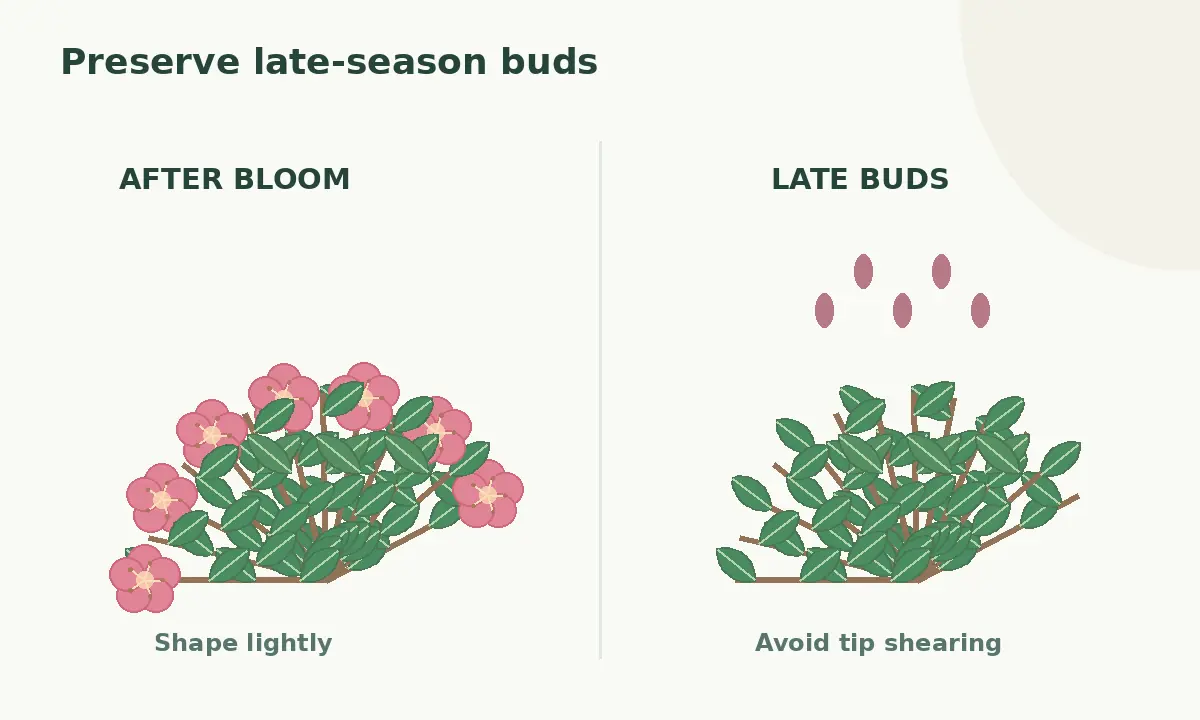
Check the Form Again After New Shoots Expand
A shrub may look open immediately after carefully thinning a few branches, then fill out naturally when post-bloom shoots extend. Recheck the structure after several weeks rather than returning every weekend to shear the fresh tips. If the plant grows into a sidewalk again, consider whether the variety is simply too large for the site. Ongoing pruning cannot permanently turn a vigorous large azalea into a tiny one without costs in flowers and plant vigor. Keep records of bloom date, pruning cuts, and where new growth appeared. These observations guide the following year much more accurately than a generic annual trimming calendar. If you are starting from scratch, read When to Prune Spring-flowering Viburnum Without Losing Next Year’s Flowers.
Adapt the Plan for Reblooming Cultivars
Reblooming azaleas may make flowers in more than one season and often need little pruning. Light shaping immediately after the main spring flowering is generally less disruptive than repeatedly clipping during a later bloom cycle. Read the cultivar information and observe which shoots bear flowers before removing them. Do not assume advice intended for a once-blooming spring shrub maps perfectly onto a plant flowering in summer or autumn. Avoid cutting all fresh tips late in the year simply to make a symmetrical dome. If uncertain, favor removal of clearly dead wood and postpone cosmetic shaping until the main bloom has finished. For the basics, see our guide: When to Prune Azaleas After Bloom Without Losing Next Spring’s Buds.
How We Research and Check Garden Advice
This guide was researched against identified Cooperative Extension and horticultural sources checked on 2026-10-25 (UTC): extension.uga.edu: UGA source; hgic.clemson.edu: Clemson source; extension.umd.edu: Maryland source. We matched each decision to the species, plant stage, and observable signs described in those references. Regional weather, cultivar behavior and home growing conditions may change timing or outcomes. Where university guidance differs in detail, we explain the distinction rather than turning one local schedule into a universal rule. These diagrams are educational illustrations; confirm unusual symptoms, live pests or damaged planting stock with your local Extension service before irreversible intervention.
Safety Notes and Editorial Disclosure
This is independent educational content, not a sponsored placement or a claim of an approved affiliate relationship. See the VegWin affiliate disclosure. Use potable water and clean equipment on edible crops. Azaleas are toxic if eaten and true Lilium lilies can cause severe, potentially fatal kidney injury in cats; seek prompt veterinary advice after suspected lily exposure. Keep plant material and garden tools away from children and pets where relevant. For any pesticide, use only a currently registered product labeled for the precise crop and pest, observe all directions and preharvest restrictions, and prefer nonchemical monitoring and prevention when suitable. Never apply a guessed fertilizer or pesticide dose from a generalized garden diagram.
Shortly after their spring flowers fade, before new shoots form next year’s flower buds.
Live tip pruning in fall commonly removes developing flower buds and can stimulate vulnerable new growth; avoid casual shaping.
No. Healthy shrubs with adequate space may need only occasional dead-wood removal or selective thinning.
Some can respond to renovation, but timing, plant health and loss of flowering matter; consider staged cuts.
Not exactly. Identify the cultivar and favor minimal shaping after its main spring bloom to avoid later flowers.