
Azaleas do not need an annual haircut just because the flowers have faded. Most spring-flowering azaleas set the buds for their next display during the following growing season. Pruning in autumn or winter can remove those already formed buds and leave the shrub leafy but disappointing next spring. Timing matters, but so does deciding whether a cut is necessary at all.
University of Georgia Extension advises pruning azaleas soon after flowering when shaping is needed, and prefers thinning cuts that keep the plant’s natural form. It also distinguishes light shaping from renovating a seriously overgrown plant. This guide begins with that choice, then explains how to select branches rather than clipping every shoot to the same length.
Identify the bloom pattern before scheduling cuts
Check the plant label or cultivar and observe when it actually blooms in your garden. Many azaleas flower in spring on wood that has already formed flower buds, while some selections bloom later or may rebloom under suitable conditions. A calendar rule based on another state can remove flowers on your shrub. The first reliable cue is that your plant has completed its main flush of flowers. If you are starting from scratch, read When to Prune Spring-blooming Azaleas Without Losing Next Year’s Flowers.
UGA Extension explains that azaleas form future flower buds during summer. Cutting them in late summer, fall or winter may remove part of the next display. If a late-blooming type has not finished yet, wait. If a shrub is healthy and fits its site, leaving it alone is a valid pruning decision. Routine clipping is not a requirement for healthy flowering.
Separate light shaping from heavy rejuvenation
Light shaping means removing a few long or awkward shoots, crossing twigs or damaged material. Rejuvenation means reducing a shrub that has become severely overgrown, and it can sacrifice flowers while the plant regrows. Those are different interventions, not different sizes of the same quick haircut. Do not attempt severe removal because a few branches protrude above the rest.
UGA notes that established azaleas may recover from substantial renewal cuts, but that does not make hard pruning appropriate for a stressed, recently transplanted or drought-affected plant. Assess root conditions, site light and overall vigor first. When the underlying problem is a shrub planted too close to a doorway, changing the planting design may be more effective than repeating drastic pruning every year.

Choose thinning cuts to preserve a natural outline
Find the branch that disrupts the shape and trace it inward to a sound side branch or suitable branching point. Removing that branch at its origin is a thinning cut. It opens space and retains the layered, natural appearance of the plant. Avoid random stubby cuts scattered along the outer shell of leaves. Use sharp hand pruners for small growth and an appropriate tool for thicker wood.
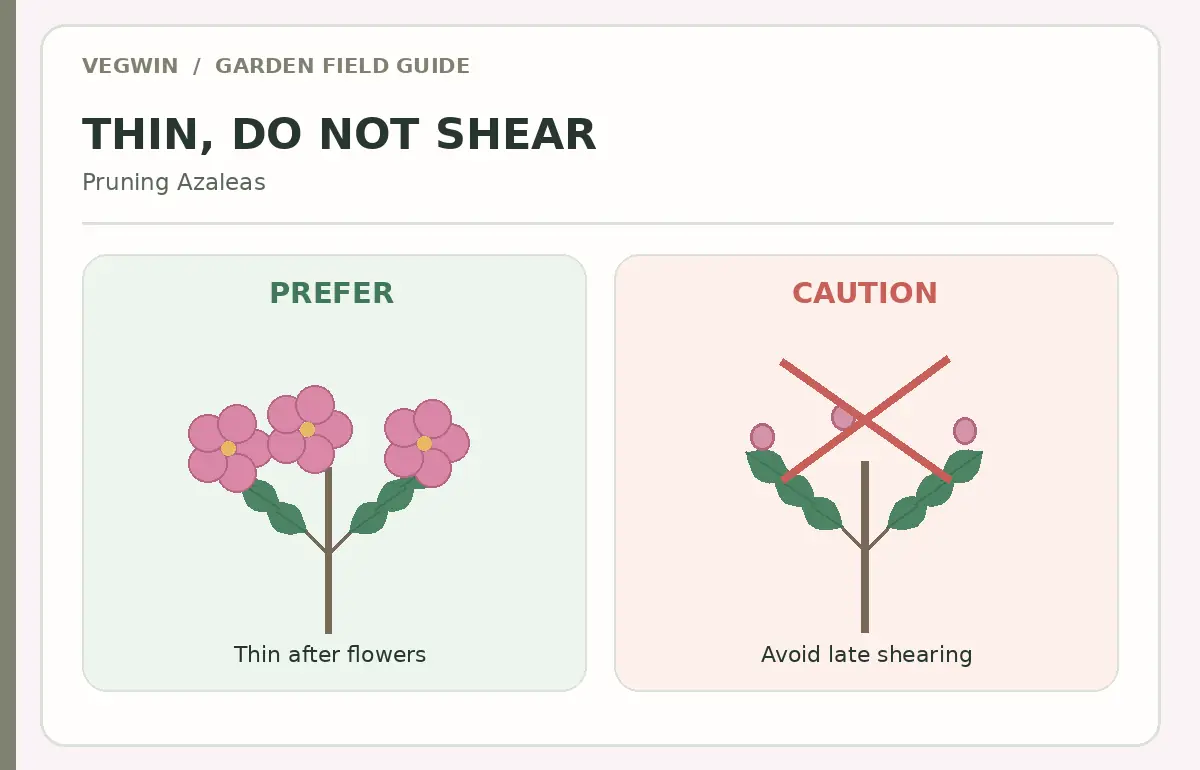
UGA distinguishes thinning from heading: heading shortens shoots and can stimulate dense new growth near the cut, while selective thinning reduces crowding without creating a clipped surface. If two branches rub, choose which to keep based on direction and health. Do not remove so many branches that a previously shaded interior suddenly receives extreme sun and wind exposure in one afternoon. For a step-by-step method, see how to grow a peach tree from a pit without expecting the same fruit.
Prune promptly after flowers fade when needed
Once the main bloom is finished, work on a dry day with clean, sharp tools. First remove clearly dead or broken twigs, then step back and decide whether any healthy branch truly needs adjustment. Finish shaping early enough that new growth can mature and set buds later in the season. There is no need to remove every spent flower with pruning shears. For a step-by-step method, see how to prune camellias by bloom season without losing buds.
Local conditions affect when buds are initiated, so avoid assuming the precise mid-summer date used in Georgia applies throughout the country. For most spring-flowering azaleas the safest shaping period is soon after bloom, not the fall cleanup season. If you missed the window and the shrub is healthy, waiting for the following bloom is often better than trimming flower-bearing wood now. For the basics, see our guide: When to Prune Rhododendrons After Bloom Without Removing Next Spring’s Buds.
Treat dead wood and damage as separate safety issues
Dead or broken branches can usually be removed as needed, provided the cuts can be made safely. Identify where living green tissue begins before removing a questionable twig. If dieback spreads rapidly or foliage shows unusual lesions, stop and seek a proper diagnosis; aggressive pruning is not a substitute for identifying a root, water or disease problem.
Keep debris out of the crown and inspect whether mulch is piled directly against trunks. A shrub growing in poorly drained soil or suffering drought stress may fail to fill in after cuts regardless of timing. Prioritize correcting the site limitation before blaming the bloom cycle. Avoid applying pesticides simply because a stem looks brown without a confirmed cause and local label guidance.
Handle a large overgrown azalea conservatively
An old azalea blocking a path may need a multi-season plan. UGA Extension describes renewal techniques, but response depends on shrub health, age, species and the amount removed. Work from the inside out, choose a few older or badly positioned stems, and reevaluate the remaining shape. Severe renovation is a planned tradeoff against flowers, not an invisible fix.
If a large shrub has not flowered for years, review light exposure and previous pruning dates before cutting harder. Repeated shearing during summer can remove developing flower buds season after season. For a valuable historic planting or a shrub close to power lines, consult a qualified local professional. Safe access and plant health are more important than achieving an exact shape this weekend.

Observe regrowth and protect the next bud cycle
After pruning, water based on soil moisture and rainfall rather than adding fertilizer to force rapid growth. A heavy feeding program can encourage soft shoots when the plant should be maturing for the next season. Watch where new branches emerge, whether they maintain an attractive outline and whether flower buds are visible as the season progresses. For the basics, see our guide: When to Prune Camellias After Bloom Without Removing Next Season’s Buds.
Photograph the plant immediately after bloom and again later in summer. Those images will show whether your cuts were truly selective and whether future buds formed. Mark the actual blooming month on the plant tag for next year. A well-pruned azalea often looks almost unpruned: fewer awkward stems, an open natural outline and plenty of flowering wood left in place. For the basics, see our guide: When to Prune Viburnum Shrubs Without Removing Next Year’s Flowers.
Choose Your Next Step From the Evidence
| What you notice | What it may mean | Reasonable next step |
|---|---|---|
| Azalea blooms beautifully and fits space | No structural problem | Skip pruning this year |
| One long branch after bloom | Minor shape issue | Trace inward and make a thinning cut |
| Fall, buds already formed | Pruning would sacrifice flowers | Wait until after next main bloom |
| Overgrown shrub blocks path | Renewal requires tradeoff | Plan staged pruning and accept bloom loss |
Related Guides
- How to Prune Flowering Quince After Bloom Without Losing Next Year’s Flowers
- How to Prune Weigela After Flowering Without Losing Next Spring’s Blooms
- When to Prune Mock Orange After Bloom Without Losing Next Year’s Flowers
- When to Prune Ninebark Without Losing Next Spring’s Flowers
- When to Prune Bridal Wreath Spirea and Keep Its Arching Spring Flowers
How We Research and Check These Recommendations
We reviewed the original institutional and specialist horticulture guidance listed below on October 22, 2026. These sources support the specific biological and practical distinctions discussed above; they cannot forecast conditions in every garden. This is not a claim to have inspected the full published text of every older article. The simplified illustrations show decisions and recognizable plant structures, not photographic proof of a diagnosis. Always account for local weather, plant identification and the recommendations of a nearby Extension office.
Sources checked October 22, 2026: Source 1 — University of Georgia Extension explains azalea summer bud formation and the difference between heading and thinning.; Source 2 — UGA Extension recommends pruning spring-blooming azaleas after flowering and making selective cuts.; Source 3 — UGA Extension provides a current practical reminder to finish spring-shrub pruning before next flower buds form.. No paid partnership or affiliate approval is being claimed. For more detail, read our affiliate disclosure. No product treatment or application rate is being prescribed without its appropriate label or local expert context.
No. A healthy shrub with good form often needs no pruning.
Usually soon after the main flowering period, before new flower buds develop.
You may remove buds already formed for the following spring.
Yes. Thinning removes selected branches inward; shearing shortens many tips to a uniform outline.
Some vigorous established shrubs can recover, but severe renovation reduces flowering and should be planned for the plant’s condition.