
Japanese pieris is a slow-growing broadleaf evergreen prized for drooping clusters of small bell-shaped flowers and bronze-red new leaves. Both effects can be lost from view if the shrub is sheared into a ball. Prune only when there is a reason: a broken shoot, a crowded crossing branch, or a small amount of size control. For ordinary shaping, the best window is shortly after spring flowering. That timing leaves the greatest opportunity for the shrub to produce the growth that carries a future display. This guide separates removing spent flower clusters from removing branches, explains why late clipping sacrifices buds, and shows when a neglected pieris needs a larger, carefully planned intervention.
Identify Pieris japonica and Its Flowering Wood
Japanese pieris bears evergreen, often glossy, lance-shaped leaves gathered near shoot tips. Its flowers hang in branching chains of small white or pinkish urns, and the new leaf flush may emerge conspicuously copper or red. NC State notes that the next flowering season depends on old growth, so a haircut after flower buds have developed can remove them. Distinguish Pieris japonica from other shrubs sold as andromeda and from azaleas that require different pruning decisions. Dwarf cultivars naturally remain small and usually need even less correction than a full-size pieris. Study the branching before you reach for shears: natural layered form is part of the ornamental value.
Wait Until the Current Flower Clusters Fade
Routine shaping belongs shortly after the main spring flowering display, not automatically on a fixed calendar day. Local climate and cultivar affect when flowers finish. An early-blooming pieris in one region may be nearly done while another is still providing nectar to pollinators. RHS lists Pieris among the early-flowering evergreen shrubs generally pruned after blooming. Avoid trimming heavily in late summer or fall because those shoots may already carry next season’s buds. You can remove clearly broken, dead or hazardous wood when it is identified, but ordinary size reduction can usually wait. Observe the actual flowering stage rather than relying on winter hardiness zones as dates.
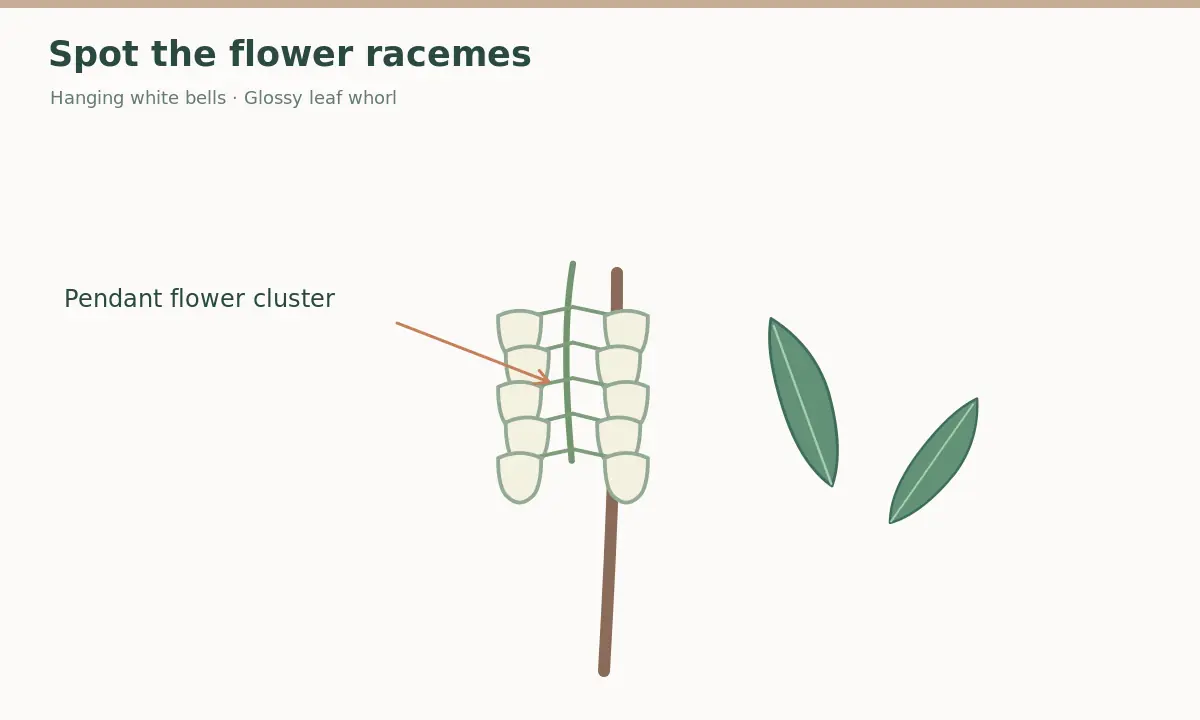
Recognize Old Flower Stalks and New Leaf Flush
A spent flower raceme is the pendant stalk that supported a chain of little urn-shaped flowers; it later dries and can develop seed capsules. New leaf growth emerges from shoot tips in a compact colored flush. Do not mistake the decorative red foliage for diseased leaves or cut it away as leftover bloom. Remove an old flower stalk with a small precise snip if it spoils the appearance, but do not assume every spent cluster must be removed for plant health. Because next year’s buds develop on mature growth, the amount of leafy twig removed matters more than the number of dead flower stalks collected. Use a close look rather than broad hedge shears.
Start by Removing Dead and Crossing Wood
Clean sharp bypass pruners are usually sufficient for small stems. Identify wood that is truly dead by following it back to living tissue and examining buds and bark rather than judging solely by faded leaves after winter. Cut dead branches back to their origin or to an appropriate healthy side shoot without leaving a long stub. A branch rubbing against another may be shortened selectively to reduce injury and improve light penetration. Disinfect tools as appropriate when working around suspected disease. If most of the plant is damaged, diagnose root problems and winter injury before attempting drastic top pruning; removing additional leafy growth from a stressed evergreen may worsen recovery.
Shorten Only the Shoots That Disrupt the Shape
To keep the shrub’s natural habit, choose individual overlong branches and follow each down to a lower side branch or a suitable leaf whorl. Make a clean cut without gouging the remaining stem or stripping all foliage from an area. Step back between cuts to judge the outline. A few unevenly spaced selective cuts generally look more natural than one even shave across all shoot tips. Do not cut indiscriminately into leafless interior wood unless you have deliberately chosen a renovation approach. Young pieris plants seldom need systematic pruning, and slow growth means recovery from excessive cutting can be frustratingly long.

| What you see | Action | Avoid |
|---|---|---|
| Spent flowers, tidy shrub | Snip old racemes if desired | Shear away red leaf flush |
| A few long branches after bloom | Cut selectively to a suitable side shoot | Flatten the whole evergreen canopy |
| Overgrown stressed plant | Assess vigor and staged renovation | Assume hard pruning is harmless |
Understand Why Late Summer Shearing Costs Flowers
The important timing issue is not that an August cut is magically harmful; it is that removing shoot tips after floral buds have formed may remove the next bloom. A lightly clipped shrub can remain healthy yet produce noticeably fewer racemes. Where neatness is your highest priority, accept that trade-off explicitly rather than assuming flowering will be unaffected. Pieris is not a generic hedge with fast repeat flushes. Keeping lower and interior leaves also helps the plant remain attractive year-round. If shoots appear leggy, examine shade, crowding, and cultivar form before responding with repeated tight clipping. The best structural correction often requires just a few selective cuts immediately after flowering.
Use Caution With an Old, Oversized Plant
RHS describes possibilities for renovating some well-established evergreen shrubs, including Pieris, but severe pruning is a separate project with different risks from annual maintenance. A healthy overgrown plant may make new growth after carefully timed renovation, while a weak shrub with poor roots may fail to recover. Hard renovation can remove much of the flower display for a period. Consider staging changes over more than one growing season or replacing a shrub planted too close to a path instead of cutting it drastically every year. If the goal is reliable flowers, preserve healthy leafy branches. Local Extension advice and the cultivar’s vigor should guide any major work. Our walkthrough on how to grow bay laurel in a container and protect it through winter sets out each step.
Protect the Roots and Avoid Unnecessary Feeding
Pieris generally prefers an acidic, well-drained root zone with enough moisture to avoid drought stress. It does not benefit from a routine deep haircut followed by arbitrary fertilizer quantities. Mulch around but not against the stem base, and check watering during dry weather after any substantial pruning. Soil that stays saturated can contribute to root decline, making an apparently pruning-related yellowing problem worse. If the plant has pale new growth or persistently poor vigor, obtain appropriate local soil assessment before adding lime or nutrients. Good root conditions support the replacement leaves that make a selectively pruned shrub look natural again. Avoid a watering schedule copied from another climate.

Consider Safety Around Children and Pets
Pieris japonica contains toxic compounds; leaves, flowers and other plant parts should not be treated as food or decorative garnish. Keep removed branches away from pets or livestock that may chew them, and supervise young children around ornamental planting beds. The plant’s pretty pendant blossoms do not indicate edibility. Wear gloves for pruning, wash up afterward, and keep clean-up material out of feed and grazing areas. Where local regulations or the household’s animals make planting unsuitable, choose another shrub rather than relying on pruning to make it safe. The pruning method is about maintaining the garden display, not changing the plant’s toxicity.
Check Results Before Picking Up the Pruners Again
After flowering and a few carefully chosen cuts, inspect the remaining leaf whorls and live buds. Look for an open but not stripped interior, a balanced overall outline, and intact healthy shoot tips that can mature into flowering wood. Photograph the plant from one spot so next year’s growth can be compared. If new red leaves emerge, allow them to expand rather than repeatedly pinching them for a smaller silhouette. When the plant flowers next spring, compare flowering density between untouched shoots and trimmed areas. This simple evidence helps you decide whether any future pruning is necessary at all. An established pieris often looks best when you do less.
Related Guides
- How to Prune Flowering Quince After Bloom Without Losing Next Year’s Flowers
- When to Prune Rhododendrons After Bloom Without Removing Next Spring’s Buds
- How to Prune Weigela After Flowering Without Losing Next Spring’s Blooms
- When to Prune Azaleas After Bloom Without Losing Next Spring’s Buds
- When to Prune Mock Orange After Bloom Without Losing Next Year’s Flowers
How We Research and Check These Steps
Source pages were read and cross-checked on 2026-10-24: plants.ces.ncsu.edu — NC State Extension: Pieris japonica has urn-shaped spring flowers and forms subsequent flowers on old growth; www.rhs.org.uk — RHS: spring-blooming evergreen shrubs including Pieris are normally lightly pruned after flowering; www.rhs.org.uk — RHS: substantial evergreen shrub renovation can sacrifice flowers and requires aftercare. We checked the exact plant or pest identity and compared timing, recommended action, and regional or cultivar exceptions before developing the diagrams. Botanical simplifications in our drawings show relevant structures and positions but are not to scale. Local Cooperative Extension advice and specific packet or cultivar guidance should override generic schedules where they differ.
Disclosures, Safety, and Regional Differences
This is educational gardening information, not a personalized agricultural, health, or pesticide consultation. No partnership or sponsorship is claimed for these recommendations. See VegWin’s affiliate disclosure. Follow local plant regulations and all current product labels. USDA hardiness zones describe winter low-temperature patterns, not exact planting dates or insect-activity calendars. No unsupported fertilizer or pesticide rates are supplied.
Routine shaping is better immediately after its spring flowers fade. Winter or late pruning may remove old-wood flower buds.
NC State describes its next-season blooms as borne on old growth; protect maturing shoots when pruning.
No. Light deadheading is primarily a tidy-up choice, not a requirement to keep a healthy shrub alive.
Some established shrubs tolerate renovation, but major cutting is risky and can sacrifice bloom. Assess vigor and consider staged work.
No. Pieris is poisonous if eaten, so keep foliage and pruning debris away from children, pets and grazing animals.