
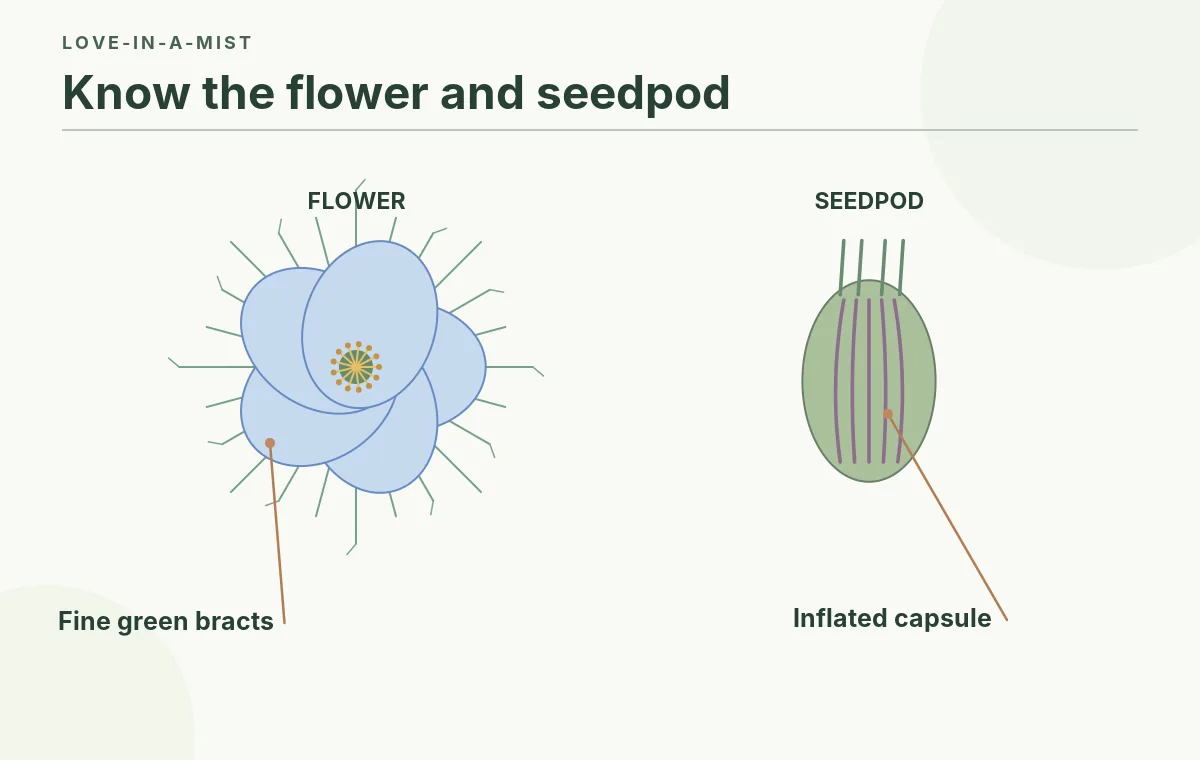
Love-in-a-mist, usually Nigella damascena, makes a remarkable annual flower: blue, white, pink, or lavender blooms appear to float above a cloud of very fine green bracts. After flowering, inflated striped seed capsules provide a second ornamental season. The simplest way to start it is usually to sow seeds where the plants will bloom. That avoids disturbing a long taproot and makes it easy to grow loose drifts through an open border. Success depends more on cool-weather timing, shallow sowing, and thinning than on elaborate seed-starting gear. Use the choices below to grow flowers without accidentally letting every capsule become a permanent seed bank.
Choose Nigella damascena, not black cumin
Garden seed packets labeled love-in-a-mist generally refer to Nigella damascena, the ornamental species with large jewel-colored flowers and puffy seedpods. Nigella sativa is a different species associated with the culinary spice commonly called black cumin. Both belong to the genus Nigella; their seeds are not interchangeable for a recipe or a planting plan. Examine the Latin name before buying, especially when a shop advertises edible seeds. For a flower border, choose a reputable packet of N. damascena and note whether it is a named color strain or a mixture. Seed-grown offspring from mixed or hybrid selections may not all match the parent plant’s exact flower color.
Find sun and a bed that drains well
RHS describes love-in-a-mist as happiest in a sunny position with well-drained soil. A bed that stays soggy is a poor place for its delicate roots; deep shade also reduces the floral display. Prepare a fine but not powdery surface by removing weeds, loosening only compacted topsoil, and raking out large clods. A moderately fertile border is enough. Rich soil does not justify heavy fertilizer, and excessive feeding may favor leaves instead of the airy flowers you want. Plan the planting area among lower companions where the stems can stand without constant contact with heavier leaves. Mark its approximate location so later weeding does not remove the first emerging seedlings.
Sow shallowly when conditions are cool
University of Wisconsin–Madison Extension advises sowing Nigella damascena about 1/8 inch deep directly in the final location, beginning as soon as soil can be worked in early spring. Scatter small batches thinly, press seeds onto the prepared surface, and dust with a very light layer of fine soil. Water with a gentle rose rather than a hard jet that washes seed into piles. In mild-winter climates an autumn sowing may also work; in severe-winter or very wet regions it may fail. Local frost patterns and the weather during establishment matter more than USDA cold-hardiness zones, which describe perennials, not a fixed annual-sowing calendar.
Recognize seedlings and protect their taproots
The first tiny leaves are not the final lacy foliage. As true leaves form, the plant develops finely divided segments resembling fine threads. That airy green growth is normal, not evidence of chewing damage. Wisconsin Extension notes that the species develops a long taproot and dislikes transplanting. For that reason, avoid routinely pulling established seedlings up to shift them around the bed. If you have to start in a container, use individual deep pots and move plants while very young without breaking the root column. Early direct seeding is generally easier, and one uncomplicated sowing can teach you the plant’s emergence pattern for future seasons.
Thin crowded seedlings before roots tangle
Once seedlings are sturdy enough to distinguish from weeds, thin them to approximately 8–10 inches apart, as suggested by Wisconsin Extension. This is not a promise that every cultivar will reach an identical width; it is a practical starting point for light and airflow. Snip surplus plants at soil level rather than tugging hard on neighbors’ roots. Thin in stages if germination has been uneven, keeping healthy well-positioned plants. A dense accidental lawn of seedlings may seem like a quick route to more flowers, but crowding gives slender stems less space and makes weeding and watering more awkward. Use empty spots for later small succession sowings instead.
Water to establish plants without saturating soil
Keep the top layer lightly and consistently moist during germination, which Wisconsin Extension says commonly takes about two to three weeks under suitable conditions. Once roots are established, reduce frequency based on weather and actual soil moisture rather than maintaining a wet seedbed indefinitely. Water near the base to avoid dislodging young plants. If heavy rain crusts the soil, carefully break the surface only where no seedlings are growing. Mulch can help in a dry border after plants have emerged, but do not bury very small seedlings. Note what succeeds in your microclimate: in warm districts the crop is often a cool-season display, not a reliable midsummer annual. For a step-by-step method, see how to direct-sow annual larkspur seeds in cool weather.

Plan for the short but striking flowering period
Individual Nigella plantings do not bloom forever. Wisconsin Extension describes a relatively brief flowering season and suggests fresh sowings spaced roughly three weeks apart where weather allows. That technique helps extend the visual season, although very hot weather can halt the expected response. Set a small patch of seed into open ground rather than oversowing the entire border at once. Plants typically carry single or double flowers, with colored petal-like sepals above a collar of threadlike bracts. Let them lean naturally through low neighbors, but remove surrounding competition if the fine stems disappear under vigorous foliage.
Decide between deadheading and decorative capsules
After pollination, the flower changes into a swollen, balloon-like capsule, often decorated with dark purple or bronze striping. It is not a disease symptom: the inflated seed head is one of the plant’s main attractions. Deadheading spent blooms can prolong flowering, but it removes these pods and reduces seed supply. You can compromise by trimming the earliest finished flowers while leaving selected late capsules to mature. For dried arrangements, harvest attractive capsules and hang bunches in a well-ventilated area out of direct sun. Use a paper bag where mature pods may shed seeds. Handle all harvested material as ornamental unless the botanical identity and food use are independently established. For a step-by-step method, see how to direct-sow California poppy seeds without disturbing taproots.
Manage self-sowing before it surprises you
Love-in-a-mist can reseed generously. On suitable soil, volunteers may appear in spring or autumn without any new packet being opened. This is useful in an informal cottage border but unwelcome in tightly managed beds or where the plant may naturalize beyond the intended area. Check the seedpods while still green and remove most before they open if you do not want a large seed bank. Leave a few on plants only where volunteers are permitted; then thin them next season. Do not dump mature seed-filled stems in natural areas. Check local invasive-plant resources if planning to allow extensive reseeding outside a cultivated garden.

Diagnose poor germination without guessing
If seeds fail to emerge, check first whether the bed was too hot, waterlogged, allowed to crust, or disturbed by birds and heavy watering. Do not assume a packet failed simply because nothing appeared in one week. If seedlings vanish later, inspect for foot traffic, uprooting, or poor drainage before applying a product. A thick blanket of mulch can also prevent shallowly planted seeds from reaching light. Compare several small test patches with different exposure or sowing dates rather than changing five variables at once. Keeping a note of the seed lot, sowing day, and first emergence can turn the next sowing into a predictable annual routine. Our walkthrough on how to direct-sow cosmos seeds and thin seedlings for strong summer flowers sets out each step.
How We Research and Check Recommendations
Research checked October 23, 2026. We compared species-specific or safety guidance from the institutional sources listed below, cross-checked planting or action timing against plant biology, and distinguished evidence from reasonable garden practice. The information is for home gardening, not a site inspection or substitute for local soil tests, plant diagnosis, or food-safety rules. Local climate, cultivars, and current Extension recommendations can change the appropriate decision.
Sources reviewed: University of Wisconsin–Madison Extension (Direct seeding 1/8 inch, taproot, 8–10 inch thinning, short bloom and seedpods.); Royal Horticultural Society (Appearance, sunny well-drained sites, seed collection and self-seeding.); RHS Nigella growing activity (Thin soil covering and context-dependent spring and fall sowing.). This article does not claim a sponsorship, compensation, product endorsement, or verified affiliate relationship. Review our affiliate disclosure for site-wide policy.
Yes, but the long taproot makes disturbance risky. Direct sowing is easier; if starting indoors, use individual pots and transplant very young plants carefully.
University of Wisconsin–Madison Extension recommends roughly 1/8 inch deep, with fine soil and gentle moisture.
A short bloom period is normal, especially with warming weather. Small successive direct sowings may extend the display where temperatures permit.
No. Ornamental Nigella damascena and the spice Nigella sativa are different species; do not assume seed uses are interchangeable.
It can reseed readily in suitable conditions. Remove maturing pods if you do not want volunteer seedlings.