
Ragged holes in a dahlia bloom do not automatically prove that earwigs are responsible. Slugs, caterpillars and other insects can also chew soft petals. Earwigs are night-active insects with obvious pincers at the rear of the body; they hide in cool tight spaces during the day and can chew flowers, including dahlias. Yet they also eat aphids and insect eggs. Both University of Minnesota Extension and UC IPM recommend confirming the pest and using sanitation or traps before reaching for pesticides. This guide shows how to connect damage to an actual nighttime observation, manage hiding places, and use simple rolled-paper refuges where earwig numbers are high enough to matter.
Look for Ragged Flower and Leaf Chewing
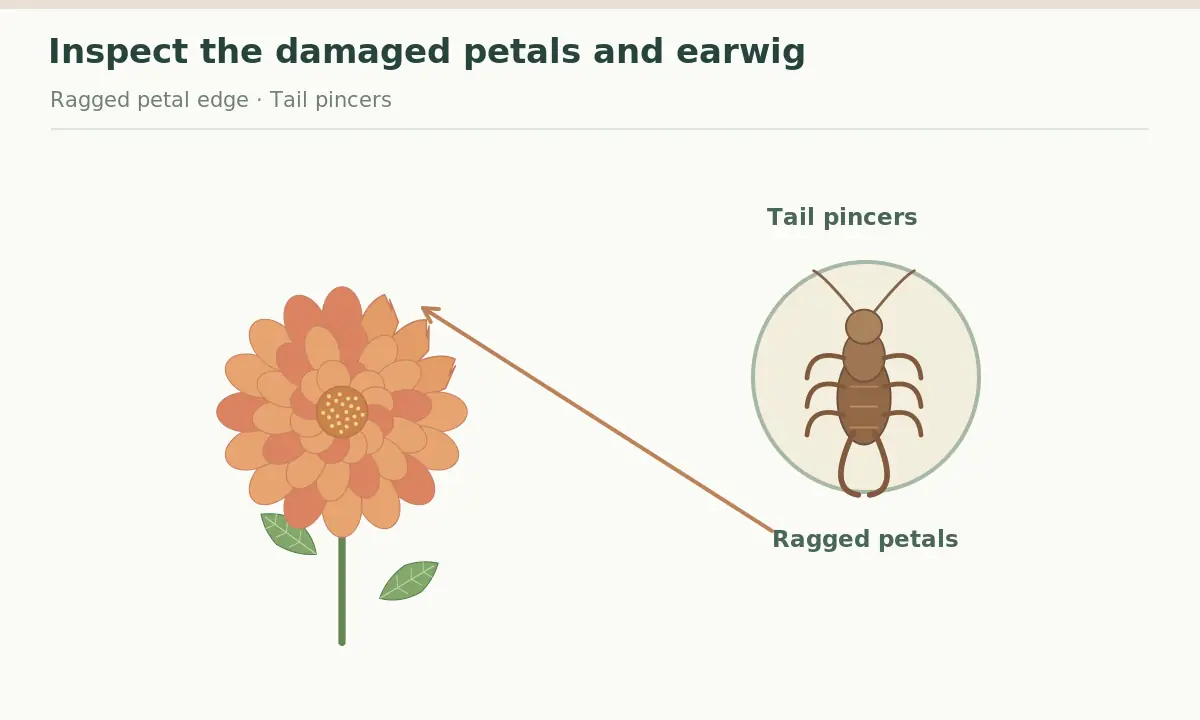
Earwigs can leave irregular holes or ragged edges on tender dahlia petals, flower buds and sometimes leaves. The shape of a damaged petal alone is not diagnostic. Compare newly opening blooms with older weather-beaten ones: wind, rain and natural aging can also tear delicate tissue. UC IPM specifically names dahlias among ornamental flowers that earwigs can injure, while Minnesota Extension notes holes in flowers and foliage. Mark one recently affected bloom and look again after the next night. Fresh damage over a short period is a stronger reason to scout than several old holes on a fading flower.
Recognize Earwigs Without Fear of the Pincers
An earwig has a flattened elongated body, six legs, two antennae and conspicuous paired forceps at the tail end. Color and size vary with age and species. The tail pincers are used in defense and other behavior, but common garden earwigs are not venomous and typically pose little danger to people. UC IPM describes their role as both consumers of plant material and predators of aphids and other small prey. Resist identifying them as a serious pest simply because several are sheltering nearby. What matters is whether they are actively damaging a dahlia bloom in numbers that justify intervention.
Confirm the Culprit at Night
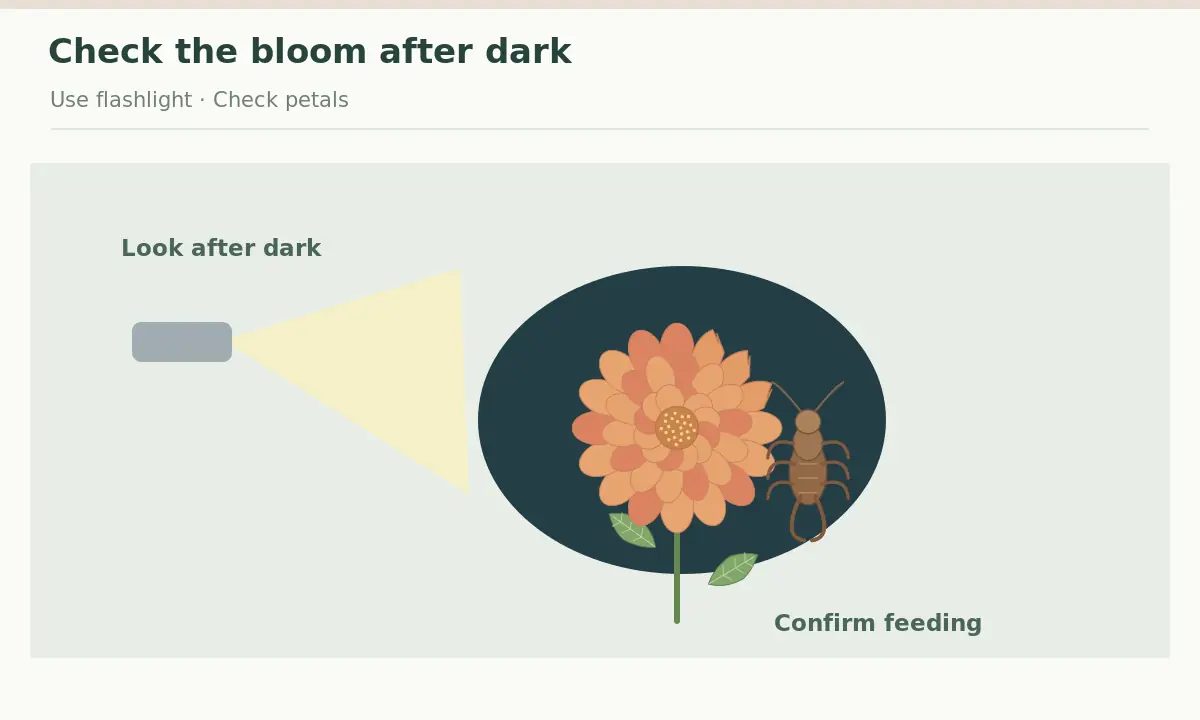
Take a flashlight into the dahlia bed after dark and inspect damaged flowers, folded petals and the junctions between stems and blooms. Earwigs tend to feed at night, according to both Extension and UC IPM. Observe an actual insect feeding before assuming that one hiding in the mulch made every hole. Check a few blooms, including an undamaged comparison flower. Avoid strong handling that knocks the insects off before you can identify them. A quick photo can help with later identification. If no earwigs appear, repeat the check and consider slugs, caterpillars or nonpest damage instead.
Separate Earwig Signs From Slug Injury
Slugs also feed at night and leave irregular holes on petals, often with visible slime trails. Minnesota Extension notes that earwigs do not leave the characteristic slug trail. Look around the base of the plant, beneath broad leaves and on the pot rim; conditions may support both pests at once. Caterpillars may leave droppings, webbing or visible larvae. A single dahlia can suffer more than one problem, so inspection beats a photograph of a hole with no pest. Do not apply slug bait because you saw an earwig, or spray insecticide because you saw a slug. Match every action to what is actually present.
| Garden observation | Practical choice | What not to assume |
|---|---|---|
| Recognize Earwigs Without Fear of the Pincers | An earwig has a flattened elongated body, six legs, two antennae and conspicuous paired forceps at the tail end. | A single schedule applies everywhere |
| Separate Earwig Signs From Slug Injury | Slugs also feed at night and leave irregular holes on petals, often with visible slime trails. | One diagram fits all specimens |
| Set a Rolled-Cardboard or Paper Refuge Trap | Roll corrugated cardboard, newspaper or a short piece of flexible tube and place it near the base of an affected dahlia before evening. | More aggressive action always works better |
Reduce Comfortable Daytime Hiding Places
Earwigs seek cool, damp shelter beneath boards, thick plant debris, pots and dense ground cover. Remove unnecessary objects and decaying piles immediately beside damaged dahlias while preserving sensible mulch needed for soil care. UC IPM and Minnesota Extension both recommend sanitation as one part of managing high populations. Avoid stripping every bit of organic matter from the garden: ground cover supports other organisms and limits water loss. Instead, reduce concentrated refuges close to buds with repeated damage. Water the root zone appropriately rather than keeping the soil surface wet every evening just to make the flower bed look freshly watered. If you want the full process, read how to stop slugs on lettuce with scouting, shelter traps, and safe decisions.
Set a Rolled-Cardboard or Paper Refuge Trap
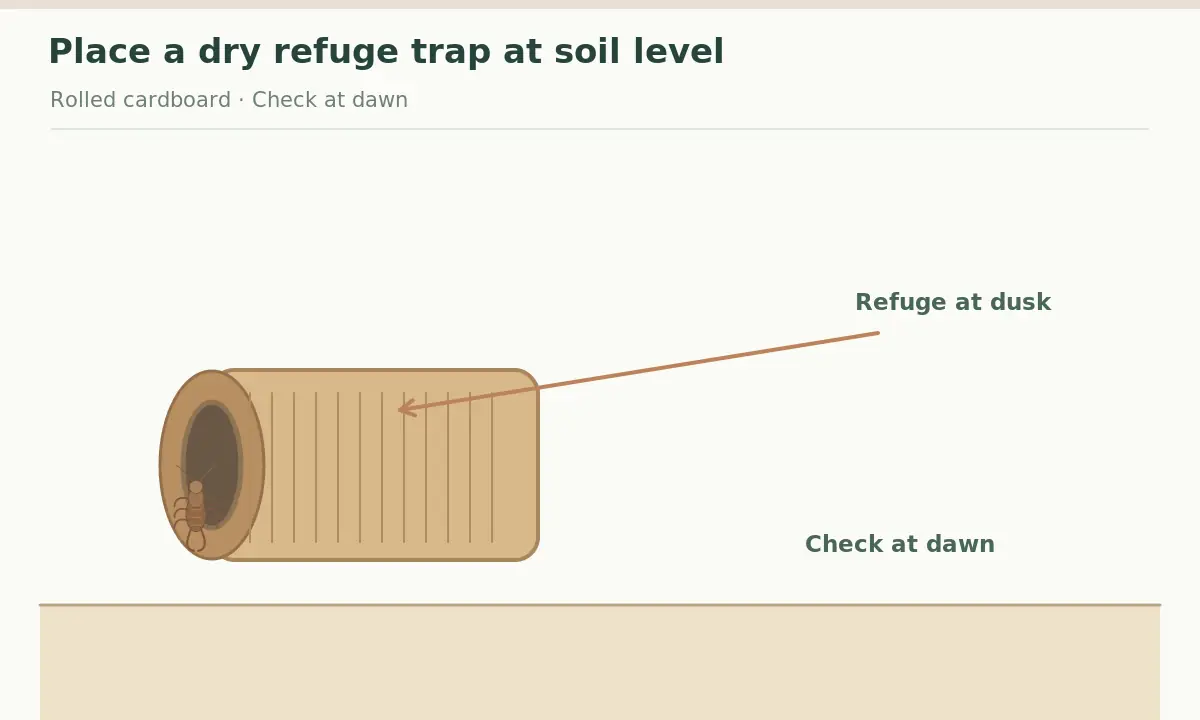
Roll corrugated cardboard, newspaper or a short piece of flexible tube and place it near the base of an affected dahlia before evening. Earwigs searching for daytime shelter may collect inside by morning. UC IPM lists rolled paper, bamboo tubes and pieces of hose as simple traps. Position the refuge where it will not blow away or become a trip hazard, and keep it out of reach of curious pets when practical. This is not a barrier around a flower and does not prevent night feeding by itself. It is a monitoring and removal tool that works best when checked routinely.
Check and Empty Traps Every Morning
Lift the rolled material over a container in the morning and shake out captured insects. Repeat daily while fresh bloom damage is occurring and evaluate whether captures decline. Follow safe disposal methods appropriate to your garden and local guidance; UC IPM describes dropping earwigs into soapy water for removal. Do not leave a full trap in place for a week and assume it solved the issue; it may simply become another convenient shelter. Record approximate catches along with the number of newly chewed blooms. If no earwigs are caught, revisit the diagnosis rather than endlessly adding more traps. To go further, our guide to earwigs in vegetable gardens shows how to decide when to trap and when to leave them.
Protect Useful Natural Enemies
Earwigs are not exclusively plant-eaters. In a mixed garden they may reduce some aphids and other small soft-bodied pests. UC IPM warns that broad insecticides can disrupt beneficial organisms and usually are not the first answer for earwigs. Keep intervention proportional to actual flower injury. A dahlia losing one aging petal is different from a series of fresh blooms badly shredded each night. Prefer monitoring, limited refuge management and selective trapping where possible. If considering a chemical product, verify the local registration for the site and plant, read all label directions and avoid untested homemade mixtures. Our guide to cutworms in vegetable beds goes into more detail.
Use Pots and Containers as Inspection Clues
Potted dahlias offer extra earwig hiding places beneath saucers, between stacked containers and along damp rims. Lift empty pots and look under supports, making sure the drainage holes still work and roots are not standing in water. A container on a dry patio can still harbor earwigs in sheltered crevices. Inspect nearby plants as well: the insects may move among flowers at night rather than live exclusively on the most visibly damaged dahlia. Simple adjustments to saucers and debris can change their refuge options without disrupting root-zone moisture. Keep traps close to the actual feeding area, not randomly scattered across the garden.
Decide Whether the Problem Is Improving
After several nights, compare the original marked flowers with new buds opening under the same conditions. If earwig sightings, trap catches and fresh chewing decline, continue gentle maintenance and stop escalating treatment. If petals remain badly damaged but traps catch little, repeat nighttime scouting for an alternative cause. If damage is heavy and nonchemical measures have not worked, seek local Cooperative Extension guidance for any legally registered options. Never treat all insects with pincers as automatically harmful. A successful IPM decision protects the dahlia bloom while leaving the rest of the garden’s ecological balance as intact as practical. Our guide “Identify Slug Damage and Reduce Losses in Vegetable Gardens” adds more detail on this.
Related Guides
- How to Spot Thrips on Dahlias and Separate Their Damage From Chewing Pests
- How to Divide Dahlia Tubers Without Losing the Crown and Growth Eyes
- When to Plant Dahlia Tubers: Identify the Eye and Avoid Cold Wet Soil
- When to Dig Dahlia Tubers and Store Healthy Clumps Through Winter
How We Research and Verify This Guidance
Sources checked on 2026-10-24. We reviewed the following university Extension, governmental or horticultural research guidance for the specific recommendations in this article: ipm.ucanr.edu — Earwig identification, dahlia feeding, night confirmation, daily refuge traps and beneficial predation; extension.umn.edu — Irregular damage to dahlia flowers, distinguishing slugs, cleanup and trapping; ipm.ucanr.edu — Earwig shelters, night feeding ambiguity, and traps for monitoring. The article emphasizes visible plant stages and cultivar or species differences instead of treating hardiness zones as planting calendars. Drawings are intentionally simplified instructional schematics, not scale botanical plates. Adjust actions to local temperature, precipitation, site conditions, plant identity and the instructions provided with seed or plants.
Disclosures, Safety and Regional Differences
This VegWin guide is general gardening education and does not claim a paid endorsement, sponsorship or confirmed affiliate relationship. See the affiliate disclosure. Regional restrictions on plants or pesticides may apply. Check the appropriate local Extension program and current product label when making a high-stakes decision. The article does not recommend unverified pesticide recipes or invented fertilizer rates.
Yes. UC IPM and University of Minnesota Extension identify dahlias among plants that can suffer earwig feeding injury.
Look for an earwig feeding at night; slugs may leave a shiny slime trail, while earwigs do not.
Common garden earwigs are not venomous and are generally not a serious human hazard despite their conspicuous rear pincers.
Place rolled newspaper, corrugated cardboard or a short tube nearby in the evening and check it in the morning.
No. They also eat other pests. Confirm meaningful damage and try scouting, refuge reduction and trapping before considering a labeled treatment.