
A dahlia plant can look finished above ground while the real survival decision is happening below it. The fleshy tubers are vulnerable to freezing and storage rot, but digging too roughly can break the narrow necks or separate tubers from the crown that bears new growth buds. The job is not simply to lift every swollen root: it is to preserve an intact, labeled clump that can start again in spring.
University of Wisconsin, New Hampshire and Georgia Extension agree on the main risks: frost, physical damage, disease and unsuitable storage conditions. Their regional timing and details differ, so this guide uses a decision process rather than promising one digging date. It also addresses a common source of waste: saving apparently plump roots that have no viable crown or eye.
Decide whether winter conditions require lifting
In areas where the ground freezes or long cold, wet weather persists, lifting dahlias is a common protective practice. Wisconsin Extension describes digging after the foliage is killed by a light frost, but before a destructive hard freeze. A light frost that damages leaves is different from cold that penetrates deeply into the soil. If severe freezing is forecast immediately, prioritize protecting or lifting tubers over waiting for a calendar milestone.
In mild, reliably well-drained places, some growers leave tubers in the ground under protection, accepting a risk of winter losses. Do not interpret a USDA hardiness zone as a guarantee that every garden bed will stay frost-free at tuber depth. Drainage, rainfall, exposure, soil texture and abrupt weather changes matter. Assess the specific site and local guidance before deciding that in-ground storage is safe.
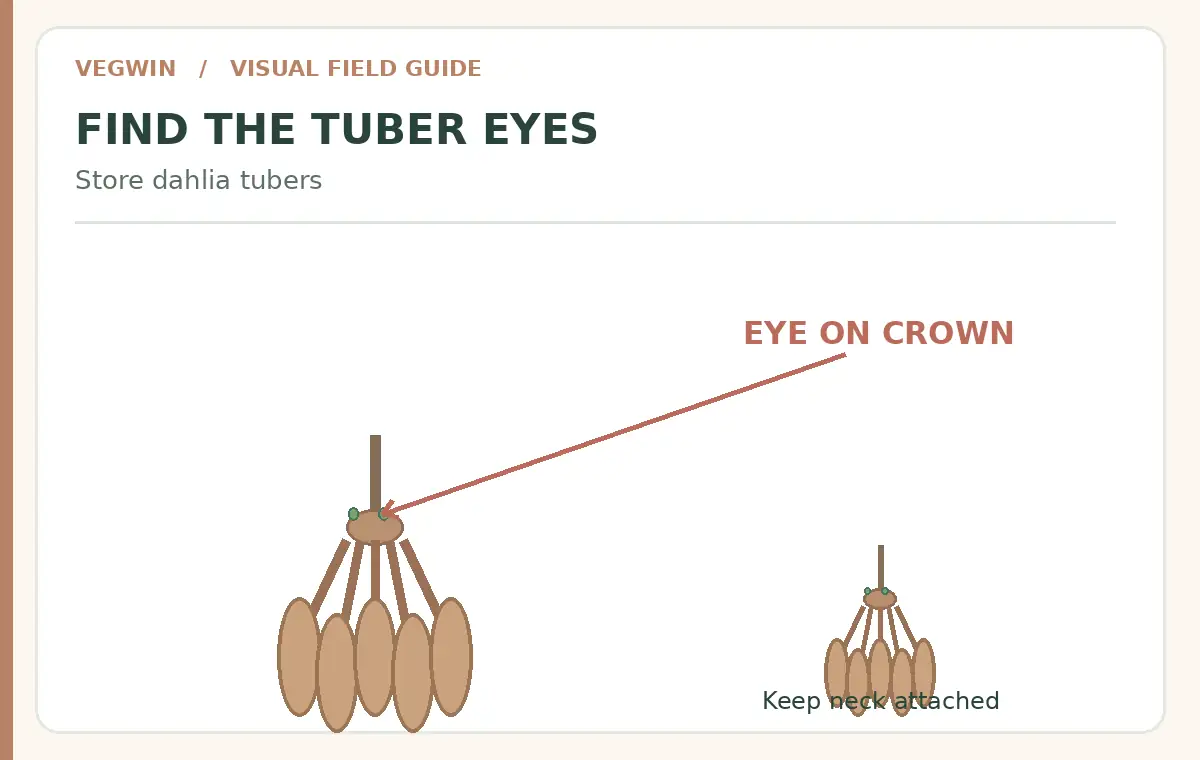
Identify crown, neck and growing eyes first
Dahlia tubers are not the same as ordinary seed potatoes. The swollen root stores energy, but next season’s shoot emerges from eyes at the crown near the underground stem. Georgia Extension emphasizes that detached roots lacking a piece of crown with a viable eye generally will not produce a plant. Learn the arrangement before you dig so you can protect the joints rather than gripping the clump by individual tubers.
Mark each cultivar while flowers or labels still make identification possible. Tie a durable tag to a stem or stake and record bloom color and plant health. If a plant showed concerning mosaic, distortion or persistent decline, investigate before saving propagation material; do not automatically store sick plants beside healthy clumps. Photograph the crown if it will help you recognize eyes later. Labels are part of quality control, not merely a convenience.
Lift the clump without snapping tuber necks
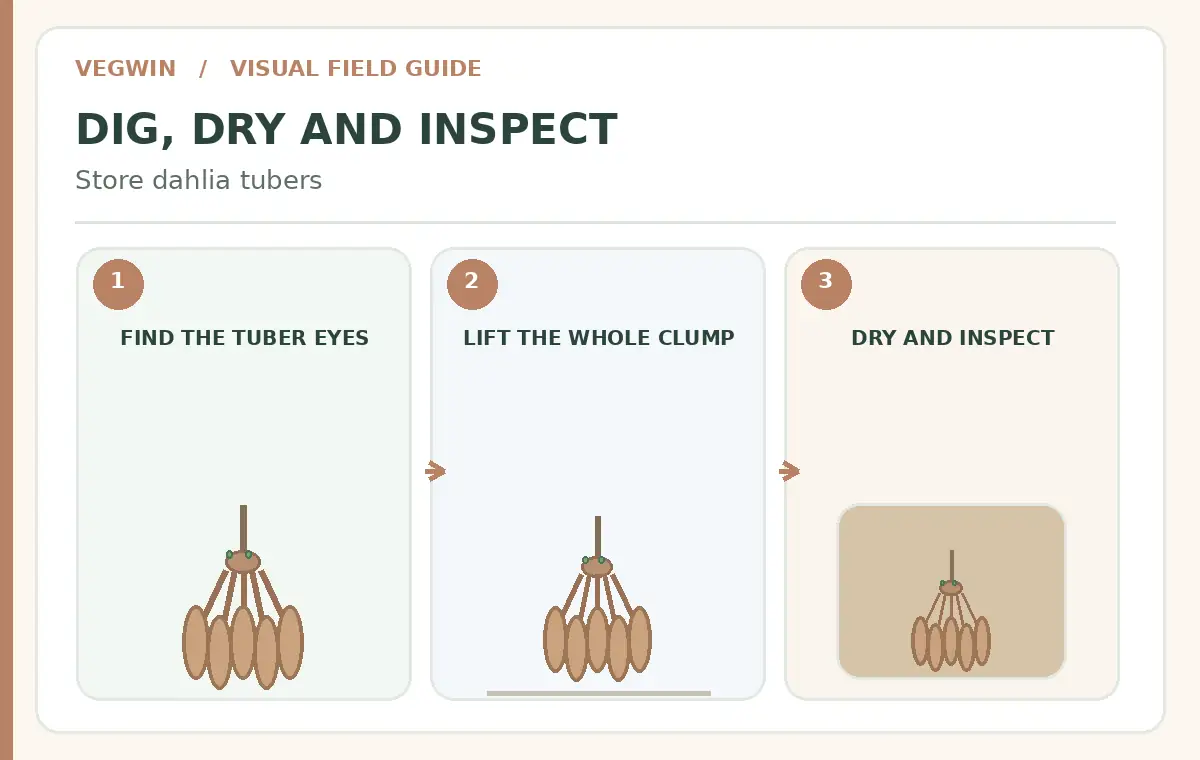
After appropriate dieback, trim the tops in a way that leaves a short handle for moving the clump; avoid letting water collect in hollow stems. Work around the plant with a fork or spade set well back from the base. Loosen soil on several sides before attempting to lift. New Hampshire Extension cautions that the narrow neck is easily broken and that wounds invite storage decay.
Lift from beneath the root mass instead of pulling on a single stalk or tugging loose roots apart. Support the whole clump in your hands or on a tray. If soil is heavy, ease it off gently instead of striking tubers against the ground. A small accidental cut does not automatically ruin every part of the plant, but it should be noted and inspected as a possible decay point. Keep clumps sorted by cultivar during cleaning. For the basics, see our guide: When to Plant Coral Bells and Keep Heuchera Crowns Above Wet Soil.
Dry and inspect before choosing a storage method
Soil removal and curing practices vary with climate and storage setup. New Hampshire Extension describes cleaning, drying and curing, while Wisconsin gives a concise approach for drying tubers before storage. The shared objective is to avoid packing wet, wounded tissue in a stagnant container. Work in a frost-free, sheltered, ventilated space and protect the clumps from direct baking sun or extreme drying.
Look for soft mushy areas, extensive rot, damaged necks and suspicious discoloration. Keep only healthy material and follow local Extension guidance on whether to divide now or in spring. Many gardeners prefer spring division because growing eyes are easier to recognize and autumn wounds can be vulnerable in storage. Never assume each plump detached root contains a growth point. A clearly labeled intact clump is often easier for beginners to assess.

Balance cool storage with moderate moisture
Dahlia storage must remain above freezing but sufficiently cool to limit premature growth and decay. Wisconsin and New Hampshire Extension discuss conditions and packing materials such as vermiculite, shavings or other appropriate media. Exact temperature targets and humidity recommendations differ by storage method, so rely on an institutional method suitable for your actual storage space instead of combining unrelated recipes.
A completely wet container can promote rot, while a dry heated room can shrivel tubers. Packing material should buffer moisture without holding standing water against crowns. Do not seal a container blindly and forget it for months. Use breathable or appropriately managed storage as described by a credible protocol, keeping labeled groups separate. A garage that freezes at night is unsafe despite seeming cool on average; verify its coldest conditions.
Inspect stored clumps during winter dormancy
Check periodically for softened patches, visible mold, unpleasant odor and excessive shriveling. Remove rotting material so the problem does not spread. If storage is too warm, shoots may begin to elongate well before planting time; if too cold, freezing damage may appear as softened tissue after thawing. New Hampshire Extension recommends checking tubers rather than assuming the initial setup will remain stable.
If several clumps shrivel, review temperature, humidity, packing and ventilation as a system rather than soaking roots arbitrarily. If several clumps rot, examine whether material went into storage wet or whether the packing became saturated. Keep a simple log of the storage site and each inspection. Those notes make next year’s preparation more reliable than switching to a new technique without understanding what failed.
Bring viable crowns back to growth in spring
When the local danger of frost is passing, inspect saved clumps for sound crown tissue and viable eyes. Divide only with a properly identified growth point included in each piece, using clean tools and sensible wound management. A root without an eye is not a complete planting unit. Consult the separate VegWin guide on planting dahlia tubers for eye orientation and soil warmth; this article addresses the previous season’s lifting and dormancy.
Transition tubers to conditions appropriate for starting growth rather than planting into cold saturated soil. Label each container and compare storage outcomes by cultivar. A successful season includes not only good blooms but intact tubers next spring. By recording frost damage, digging date, cleaning approach, storage location and survival rate, you can refine a method appropriate to your climate and equipment.
Choose the Next Action From Your Observations
| What you observe | What it may mean | Your reasonable next step |
|---|---|---|
| Light frost damaged leaves; soil not frozen | Common time to consider lifting | Prepare to dig while ground is workable |
| Hard freeze imminent | Tuber loss risk increasing | Protect or lift promptly |
| Detached fleshy root without crown eye | May not regrow | Do not count as a viable division |
| Stored clump soft or visibly rotting | Possible storage decay | Isolate and reassess conditions |
Related Guides
- How to Divide Dahlia Tubers Without Losing the Crown and Growth Eyes
- How to Identify Earwig Damage on Dahlias and Reduce Night Feeding
- How to Spot Thrips on Dahlias and Separate Their Damage From Chewing Pests
- How to Plant Crocus Corms in Pots Without Winter Waterlogging
- How to Plant Anemone Coronaria Corms Without Wet-Soil Rot
How We Research and Check These Recommendations
This article was researched against the original institutional gardening resources linked below on October 22, 2026. We identified the growing stage or plant structure relevant to each decision, distinguished regional examples from universal biological needs, and checked safety where edible and ornamental species might be confused. This does not amount to an independent full-text audit of every older published page. These simplified illustrations explain an action and are not diagnostic photographs. Consult local Extension recommendations and the actual label for any regulated garden product.
Sources reviewed October 22, 2026: Institutional source 1 — Wisconsin Extension discusses digging dahlia tubers after leaf damage and protecting them from hard freeze, rot and dehydration.; Institutional source 2 — University of New Hampshire Extension explains crown neck fragility and the balance between cool storage, air and moisture.; Institutional source 3 — University of Georgia Extension identifies tuber eyes near the stem and why detached individual roots may not regrow.. We have not asserted any approved affiliate partnership or paid endorsement. Please read the VegWin affiliate disclosure for the site policy.
Not always, but many Extension methods use foliage dieback or a light frost as a cue; do not wait through a hard soil freeze.
They connect storage roots to the crown where viable growth eyes occur; a broken detached root often cannot sprout.
Some mild, well-drained sites may permit it, but freezes and wet soil can cause substantial losses.
Both methods are used. Spring often makes eyes easier to identify and may reduce autumn wound exposure.
Review moisture, temperature and storage medium; overly dry conditions can dehydrate them, while excess moisture risks rot.