
An earwig under a lettuce leaf can be alarming because its tail pincers are conspicuous. But finding one is not the same as proving that it is destroying your garden. Earwigs can chew seedlings, flowers and soft plant parts, yet they also scavenge debris and eat aphids or other small insects. Removing every earwig could eliminate a useful predator while leaving the real culprit, such as slugs, untouched.
This is a decision guide rather than a blanket eradication plan. Check the damage, look at night, monitor with a shelter trap and act only where the feeding loss is unacceptable. The unique value is knowing when to leave an earwig alone and when targeted trapping is worth the effort. Your crop stage and the location of actual injury matter more than the insect’s reputation. For a step-by-step method, see how to identify earwig damage on dahlias and reduce night feeding.
Recognize the insect before judging its effect
Earwigs have elongated flattened bodies and a visible pair of forceps-like appendages at the end of the abdomen. University of Minnesota Extension describes these features and notes that earwigs prefer protected damp hiding places by day. They are not the same as beetle larvae, caterpillars or slugs. Photograph a specimen when possible and look for its distinctive tail shape before taking management action.
The large tail pincers are used for defense and handling prey, not as evidence that the insect is dangerous to people. Earwigs may appear under pots, boards, mulch and folded leaves. Their presence can be seasonal and concentrated in irrigated areas. A garden may support many earwigs with almost no significant crop damage, especially when mature plants tolerate a few chewed edges.

Distinguish feeding damage from an innocent visitor
Earwigs may make irregular holes in leaves, injure tender seedlings, affect corn silks or feed on soft fruits. That pattern overlaps with slugs, caterpillars and other night feeders. Minnesota Extension notes that slug damage may leave slime while earwigs do not. Begin with an affected plant and look for fresh feeding at night rather than blaming any insect you find beneath nearby mulch. For the fuller picture, see our guide “Identify Slug Damage and Reduce Losses in Vegetable Gardens”.
Keep photographs of damaged tissue, crop stage and the exact spot where the insect was present. A single earwig on an already torn leaf is not a diagnosis. Check adjacent undamaged plants and note whether damage clusters at seedlings or on older foliage. If a plant was cut off cleanly at soil level, the cutworm identification route may fit better than an earwig explanation.
Use a night check to prove the target
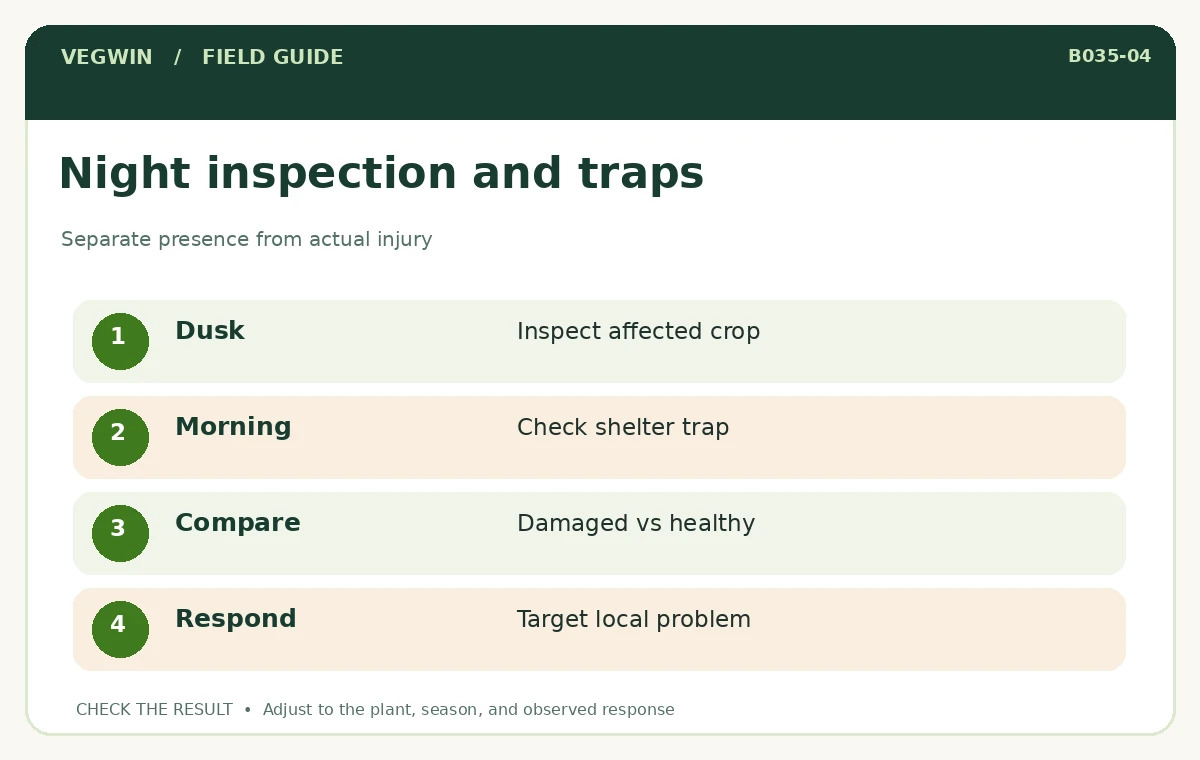
Earwigs usually feed at night and shelter during daylight. Visit the affected crop after dusk with a flashlight and inspect the undersides of leaves, folded foliage and edges of containers. Compare the live insects with the fresh bite marks. University of Connecticut Extension describes their broad diet, including decaying matter and other insects, so a nighttime observation should record actual feeding behavior when it can be seen.
Two or three checks on different nights can be more revealing than a single snapshot. Write down approximate counts near damaged plants and near unaffected plants, alongside rainfall and irrigation. If no clear association appears, avoid irreversible management based on fear. Garden symptoms can have multiple causes, and a changing population may reflect moisture conditions rather than a worsening plant problem.
| Observed situation | What it may indicate | Best next step |
|---|---|---|
| A few earwigs under mulch | Presence is not proof of injury | Observe crop before acting |
| Fresh irregular holes on seedlings | Night feeder may be responsible | Inspect with flashlight after dusk |
| Slime trail present | Slug is a strong alternative | Use slug-specific diagnosis |
| Earwigs caught beside damaged row | Local activity confirmed | Trap and compare new injury |
| Healthy new growth despite earwigs | Damage is tolerable or unrelated | Avoid broad control |
Set a shelter trap as a monitoring instrument
UC IPM describes rolled-up newspaper, cardboard or short sections of hose as shelter traps placed near plants late in the day and checked the next morning. These give earwigs a refuge and can provide useful evidence about their local activity. Put traps beside the crops of concern, not across the whole garden, and label locations so you can compare them. Empty and refresh traps as needed.
A trap count is not a universal threshold for treatment. Ten earwigs in a moist shelter far from damage may be less concerning than a few repeatedly feeding on new transplants. If plants are suffering, targeted trapping can reduce local numbers without spraying. Keep any baited or liquid traps safe from children, pets and wildlife, and prefer simple dry shelter methods when monitoring alone is the goal. If you want the full process, read how to stop slugs on lettuce with scouting, shelter traps, and safe decisions.
Reduce hiding places only where crops need protection
UC IPM recommends removing dense weed growth, unnecessary boards and excess debris that provide earwig shelters around vulnerable vegetables. Excessively wet surfaces can favor their daytime refuge, so inspect irrigation and drainage. Do not strip every bed of mulch just to remove earwigs: organic mulch also protects soil and can support beneficial organisms. Focus cleanup near damaged seedlings and keep healthy soil management intact.
For potted vegetables, lift unused trays and pots, move clutter away from tender plants and examine drainage. If using drip irrigation reduces persistent wet surfaces without harming the crop, it may also make the environment less attractive to earwigs. The objective is to remove avoidable concentration points, not to create a dry stressed garden. Recheck damage after these modest changes.
Protect seedlings while tolerating harmless adults
A few leaf notches on a vigorous established plant seldom justify aggressive action. The equation changes if many tender seedlings are disappearing or earwigs are repeatedly seen feeding on edible soft tissue. University of Connecticut Extension advises recognizing both the potential injury and predator benefits. Choose the smallest adequate response: protect the planting, remove nearby refuge and monitor or trap where the injury happens.
Avoid spraying simply because earwigs are visible on the path. Any pesticide consideration requires local Extension IPM advice, a correctly identified problem and a legal label for the exact use. Do not assume that a product advertised as natural is harmless to pollinators or aquatic systems. Reassess crop recovery and new damage before moving to a more intensive step.

Keep a benefit-versus-damage log for future decisions
Record the plants affected, nightly feeding observations, shelter-trap counts and responses to targeted cleanup. Note whether aphids or other soft-bodied pests are also present. This helps distinguish a garden where earwigs are mostly scavengers or predators from one where a concentrated population harms a newly planted crop. The same insect can play a different role in two beds. For the fuller picture, see our guide to cutworms in vegetable beds.
Treat the record as a feedback loop: observe, intervene sparingly, observe again. If damage remains stable and new growth is healthy, leave the insects to perform their wider ecological roles. If a crop has unacceptable losses despite targeted trapping, seek local diagnosis for all possible pests. IPM is based on meaningful harm and identification, not the elimination of every unusual-looking garden resident.
How We Research and Verify Garden Advice
We compare the practical claims in this guide with the primary university Extension, IPM, and established horticultural sources linked below. Sources were checked on October 21, 2026. Where recommendations depend on location, crop type, soil conditions, weather or pest identification, we explicitly state what to verify locally rather than inventing universal dates, rates or outcomes. This article is written for home-garden decisions, not for medical use or a pesticide application prescription.
Reference Sources and Editorial Disclosure
UC IPM on earwigs as both pests and predators, night habits, shelter removal and rolled-paper monitoring traps. University of Minnesota Extension on earwig identification, feeding signs, lookalikes and monitoring at night. University of Connecticut Extension on earwig scavenging, predation, plant injury and tolerance thresholds. University of California 2026 update discussing earwig benefits, damage, moisture and practical trapping. This article contains no approved affiliate placements or sponsored product claims. Read the VegWin affiliate disclosure; the availability of that site page requires verification before publication.
No. They can eat tender crops but also feed on aphids, other insects and decaying material. Confirm damaging activity before acting.
Their forceps are conspicuous but earwigs generally are not a danger to people. The gardening concern is crop feeding.
Check fresh injury at night with a flashlight and distinguish it from slug slime trails or other chewing pests.
Place rolled newspaper or corrugated cardboard near affected plants and inspect it the next morning, as UC IPM describes.
Not on sight alone. Assess actual crop loss and use targeted trapping or habitat changes first; products require local label checks.