
Mizuna is a fast-growing, feathery-leaved mustard green that can deliver several small harvests from one planting. The difference between another flush of leaves and an exhausted plant is often where you cut. Penn State Extension describes both whole-plant harvesting and a raised cut that allows regrowth; the Royal Horticultural Society also recommends taking outer leaves while letting the rosette center continue to grow. Neither method is a guarantee of endless harvests, especially in heat. Use this field guide to recognize good leaf texture, decide when to pick a few outer leaves or cut a stand, and know when a bolting crop should be replaced instead of repeatedly trimmed.
Recognize Mizuna Before You Reach for Scissors
Mizuna usually forms a low rosette with deeply cut, slender leaf lobes on distinct stalks. It is a brassica, not a tender lettuce, even when sold in a salad mix. Find the small crowded cluster of emerging leaves at the center; that growing point is what supports another harvest. Broader or red-tinged cultivars can look different, so identify the plant from your seed packet and mature foliage rather than insisting on one leaf color. Check that leaves are clean, springy and free of extensive yellowing, unexplained spots or insect contamination. A visibly elongating central stalk signals that the plant is shifting toward flowering. Our walkthrough on how to harvest arugula leaves for repeated tender cuttings sets out each step.
Decide Between Baby Leaves and Mature Rosettes
For a mild salad texture, pick young, sound leaves while they are still flexible and easy to chew. More mature foliage can be excellent cooked, but thick stalks or weathered blades may be tougher. Penn State notes that mizuna can be harvested from baby-leaf stage onward; there is no single calendar day when every planting becomes ready. In a cool spring a shaded bed may grow differently from a summer container. Look at the actual leaf and intended recipe. Do not cut a tray of tiny seedlings so low that the central shoot is lost; young plants need enough remaining foliage to recover.

Pick Outer Leaves for the Longest Sequence
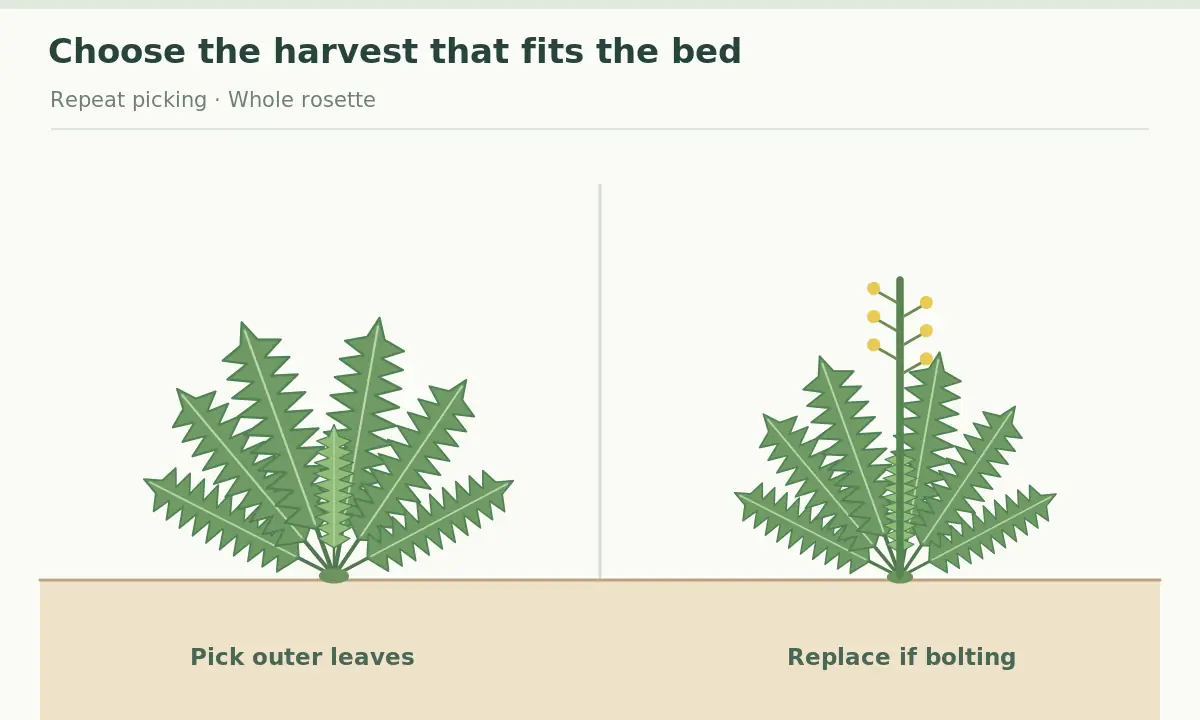
Hold a mature outside leaf where its stem joins the rosette and snip the stem without slicing through the central cluster. Move around several plants rather than stripping one completely. The small upright leaves in the middle should remain visibly intact after the harvest. RHS specifically recommends taking outer leaves for cut-and-come-again crops, including mizuna, so new foliage can replace them. Leave enough healthy green surface to capture light, especially when days are short. Do not tug hard on a stalk in a crowded row: shallow roots can loosen neighboring plants and slow their recovery. For the basics, see our guide: When to Harvest Tatsoi.
Use a Higher Cut for a Dense Salad Patch
If mizuna is grown close together for a single swath of greens, a careful high cut may be easier than individual stalk clipping. Penn State gives a cut-and-come-again approach of cutting greens about two inches or more above the ground; the key is to avoid removing the living growth center. Observe your particular rosettes first rather than treating that figure as a blind scissors setting. Make a level cut with a clean sharp blade, then inspect what remains. Any stand in which nearly all centers were severed should be treated as a final harvest, not promised a quick second crop. For a step-by-step method, see how to harvest collard greens repeatedly without cutting the growing crown.

| Garden observation | Practical choice | What not to assume |
|---|---|---|
| Decide Between Baby Leaves and Mature Rosettes | For a mild salad texture, pick young, sound leaves while they are still flexible and easy to chew. | A single schedule applies everywhere |
| Use a Higher Cut for a Dense Salad Patch | If mizuna is grown close together for a single swath of greens, a careful high cut may be easier than individual stalk clipping. | One diagram fits all specimens |
| Read Heat and Bolting Signals Early | Mizuna commonly does best in cool growing intervals. | More aggressive action always works better |
Know When a Whole-Rosette Harvest Is Better
A heading mizuna plant, an overcrowded bed that needs clearing, or a crop already stretching into flowering may make a final whole-rosette cut sensible. RHS describes harvesting entire rosettes as an alternative to repeated outer-leaf picking. If you remove the whole rosette at the base, do not expect reliable regrowth from what is left. Whole-plant harvest can also simplify a succession planting: clear the row, remove unwanted roots, amend or prepare the bed if needed and sow a small replacement batch during suitable cool weather. Choose this deliberately instead of accidentally decapitating crowns in the hope of repeated harvests.
Read Heat and Bolting Signals Early
Mizuna commonly does best in cool growing intervals. Heat, water stress and increasing day length can encourage an upright flowering stalk, sharper flavor or tired leaves. A few edible buds do not necessarily make a plant unsafe, but the harvesting goal has shifted from tender foliage toward flowers and seed. RHS recommends adequate moisture and attention to heat stress, while Penn State frames the crop as suitable for spring or fall conditions. Do not use USDA hardiness zones as a sowing calendar. Plan planting windows around the temperatures and first or last frost pattern where you actually grow. If you want the full process, read how to grow mizuna for tender baby leaves and repeat harvests.
Keep the Bed Moist Without Saturating It
New leaves cost the plant water. Check below the soil surface rather than watering by habit: dry mix in a raised bed may require a different response from heavy clay after rain. Water the root zone sufficiently for even growth, then allow drainage instead of leaving roots submerged. Mulch around well-spaced mature plants can moderate drying, but thick mulch pressed against a tight baby-leaf sowing makes inspection and harvesting harder. Watch the newest leaves after each cut; quick, healthy expansion is more informative than whether the older cut stubs look neat. Pause heavy harvesting on plants clearly struggling to recover.
Scout Brassica Pests Before Picking
As with other mustard-family crops, mizuna may be visited by flea beetles, leaf-feeding caterpillars, aphids and slugs. Small round shot holes, chewed edges and colonies beneath leaves call for different responses. Look under blades and into the crown; discard heavily fouled foliage rather than hiding defects by mixing leaves together. Physical row covers can sometimes reduce insect access when installed appropriately before pests arrive, but covers must not shelter an infestation already inside. If any pesticide has been applied, check its actual crop authorization and preharvest interval before gathering food. General gardening tips are not substitutes for product labels. For a step-by-step method, see how to harvest spinach leaves repeatedly before plants bolt.
Handle Harvested Leaves Like Perishable Greens
Gather mizuna during a cool part of the day and move leaves promptly out of direct sun. Penn State recommends harvesting in the morning after dew dries but before heat softens the crop. Keep soil-covered tools and dirty baskets away from clean greens. Trim away damaged tissue and refrigerate the harvest promptly; wash with potable running water before eating, including when plants were grown at home. Do not assume that a leaf is safe simply because it looks organic or was grown without pesticides. Use sound produce-handling habits and avoid leaving cut leaves in a warm car or on a sunny bench. If you are starting from scratch, read When to Harvest Mustard Greens and Keep Tender Leaves Coming Back.
Make a Repeat-Harvest Decision Each Week
At every visit, ask three questions: is the foliage healthy, is the center still making new leaves, and is this crop in a favorable growing interval? If all three are yes, remove a modest number of outside leaves. If the bed is crowded but sound, consider a carefully placed high cut. Also, if the flower stalk has taken over or regrowth is disappointing, take any usable final greens and restart in the next suitable season. Record how long each method lasted in your own site. This comparison is more transferable than a claimed fixed number of harvests because cultivar, watering and weather vary so much.
Related Guides
How We Research and Verify This Guidance
Sources checked on 2026-10-24. We reviewed the following university Extension, governmental or horticultural research guidance for the specific recommendations in this article: extension.psu.edu — Harvest stage, cut-and-come-again height, cool-weather quality and handling; www.rhs.org.uk — Outer leaf versus full rosette harvest, bolting stress and repeated pickings; www.rhs.org.uk — Repeated outer leaf harvesting and timing of small sowings. The article emphasizes visible plant stages and cultivar or species differences instead of treating hardiness zones as planting calendars. Drawings are intentionally simplified instructional schematics, not scale botanical plates. Adjust actions to local temperature, precipitation, site conditions, plant identity and the instructions provided with seed or plants.
Disclosures, Safety and Regional Differences
This VegWin guide is general gardening education and does not claim a paid endorsement, sponsorship or confirmed affiliate relationship. See the affiliate disclosure. Regional restrictions on plants or pesticides may apply. Check the appropriate local Extension program and current product label when making a high-stakes decision. The article does not recommend unverified pesticide recipes or invented fertilizer rates.
Yes, if enough living crown and foliage remain. A high cut or selective outer-leaf harvest is more likely to regrow than removing the whole rosette.
Look at the compact cluster of small new leaves in the middle of the rosette, above the root. Keep scissors clear of it.
Buds and flowers can be edible, but the leaves often grow stronger or less tender as bolting advances; use only clean, sound plant parts.
No. Mizuna belongs to the mustard family, Brassicaceae, though gardeners often use it as a salad green.
Choose sound, tender foliage during the cool part of the day; local weather and planting season matter more than one fixed day count.