
A row of lettuce can look healthy at sunset and show ragged holes the next morning. Slugs are common suspects in wet, sheltered beds, but caterpillars and beetles can also chew leaves. Before spreading any bait, confirm the pest with an after-dark inspection, then make the habitat less inviting and remove slugs you can reach. This guide emphasizes food-crop hygiene, repeated scouting and safer decisions about labeled products, rather than miracle household remedies that can damage soil, lettuce or wildlife.
Look for Ragged Holes and Slime Trails Together
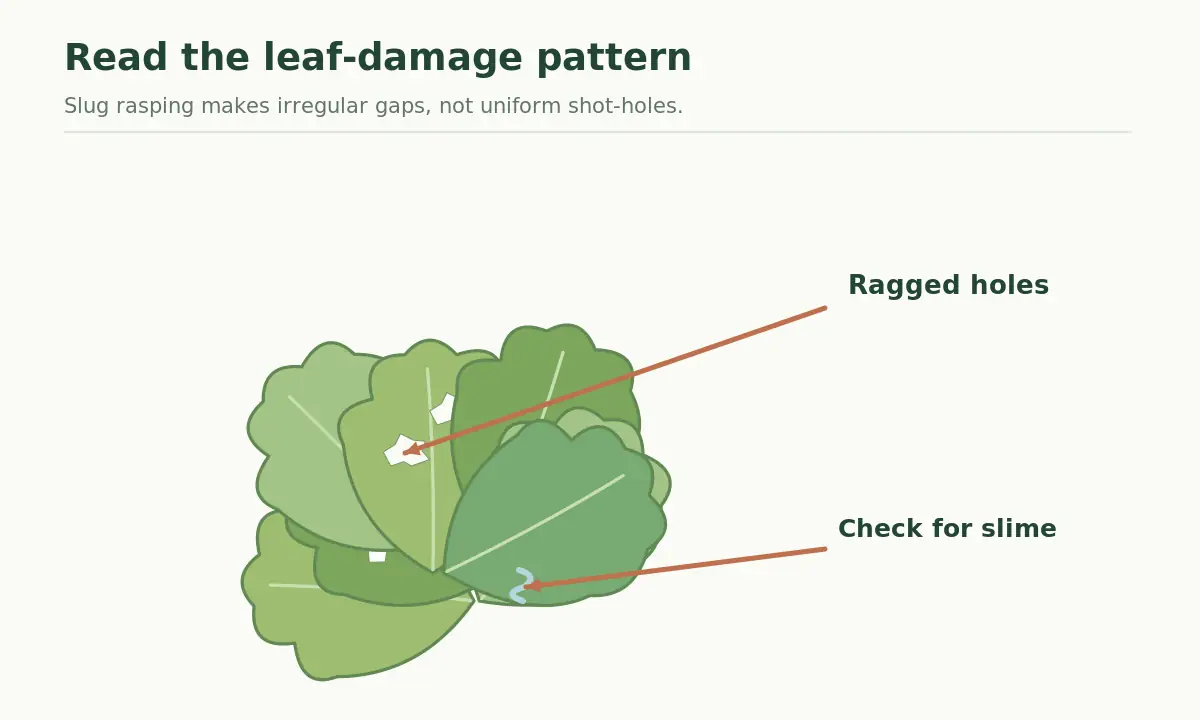
Slugs feed by rasping plant surfaces with a toothed mouthpart called a radula. On lettuce, feeding often creates irregular holes or scraped patches, sometimes near the leaf edge and sometimes inside it. A silvery slime trail on the underside of a leaf or across nearby soil strengthens the diagnosis. University of Minnesota Extension lists lettuce among plants that slugs commonly damage. The pattern alone is not conclusive, because several caterpillars also make large ragged holes. Hold a leaf up to the light, examine the undersides and inspect moist cracks around the growing point. Confirm both the damage and an actual slug before investing in slug-specific treatment.
Distinguish Slugs From Beetles and Caterpillars
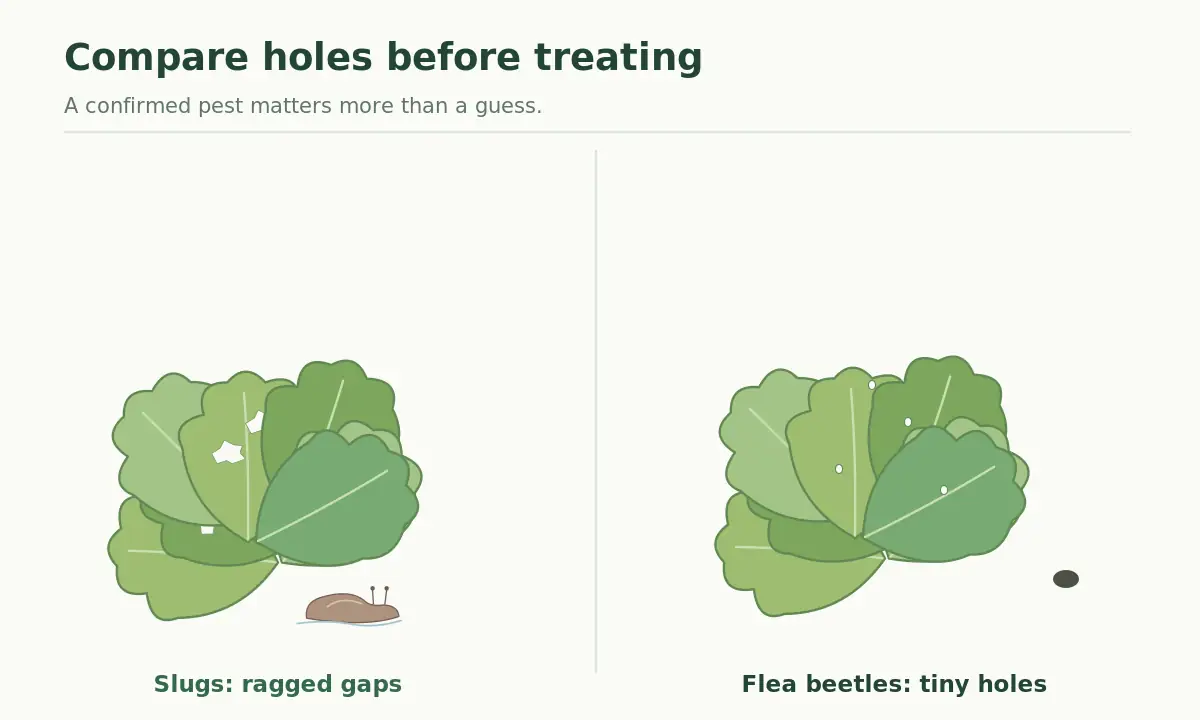
Tiny round shot-holes are more suggestive of flea beetles than of a slug’s rasped irregular damage. Green caterpillars may leave larger chewed sections and droppings and can remain visible by day. Minnesota’s lettuce problem guide distinguishes these causes. A slug is soft-bodied, legless, often gray or brown, and usually hides during the day. Snails have a shell and can create similar feeding injury, so check for both. Aphids are sap-feeding insects that produce different symptoms, not chewing holes of this kind. If you find no slugs on repeated suitable nights, reconsider the diagnosis instead of increasing treatment rates.
Scout After Dusk and Early in the Morning
Slugs become active in moist, mild conditions and often feed after dark. Use a flashlight to check the soil surface, leaf undersides and folds near the lettuce crown. Oregon State Extension advises inspection at night or early morning while pests are out rather than waiting for full daylight. A survey after rain or irrigation may reveal more activity than one during a dry spell. Look beneath pots, stones and the edges of mulch near the bed. Keep a short record of which rows have live slugs rather than assuming equal pressure everywhere. Repeated observations tell you whether the problem is continuing or was caused by a brief weather event. If you want the full process, read how to identify earwig damage on dahlias and reduce night feeding.
Remove Live Slugs Without Spraying Leaves
For a small lettuce bed, hand-picking is a practical first response. Wear gloves, collect slugs into a secure container and dispose of them appropriately; some gardeners drop them into a bucket of soapy water away from crop leaves. Avoid spraying dishwashing detergent onto edible foliage as an improvised pesticide. Physical collection is especially useful early, before high numbers build up. Reinspect several evenings because hidden slugs and eggs can remain. Picking does not guarantee eradication, but it immediately removes pests that you have positively identified and avoids exposing lettuce and beneficial insects to unnecessary chemicals. Our guide to earwigs in vegetable gardens shows how to decide when to trap and when to leave them.
Use Shelter Boards as an Inspection Tool
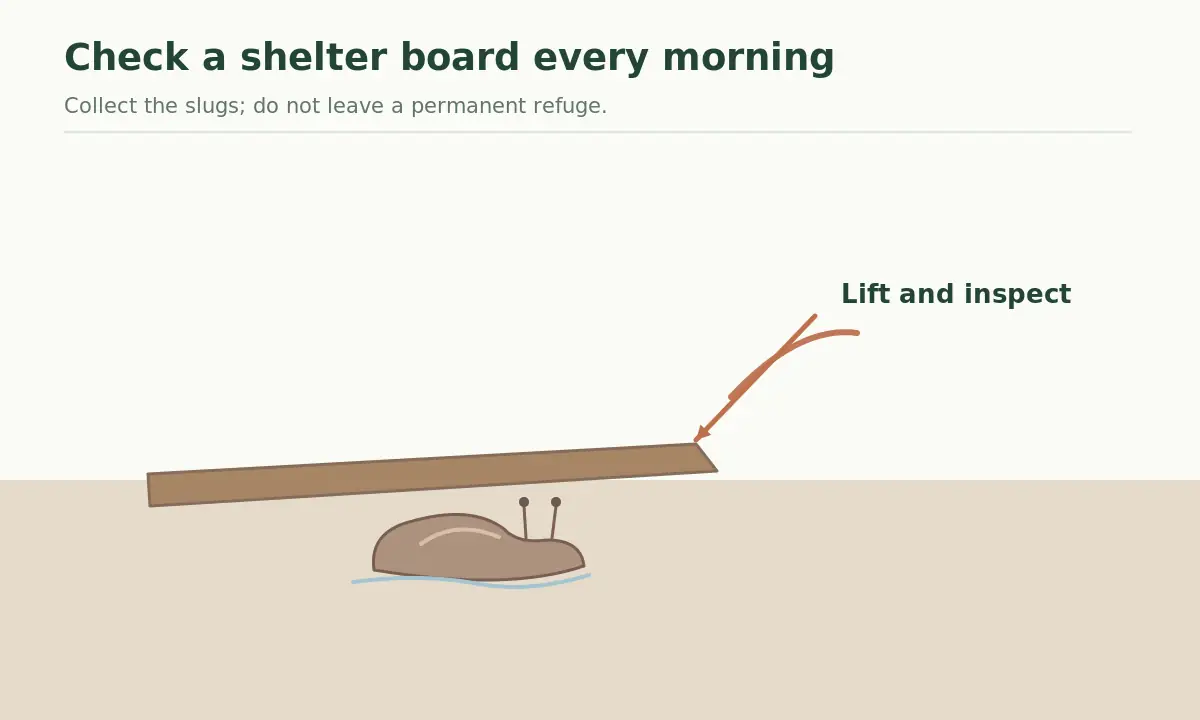
A short board, tile or flat shingle laid near the crop creates a dark daytime refuge that some slugs will use. Lift it in the morning, inspect underneath and collect any slugs found. Oregon State Extension recommends this kind of shelter trap, but it only works as management if you empty it regularly. Leaving unchecked boards, pots and dense wet debris indefinitely can increase hiding places instead. Position traps where you can reach them without crushing lettuce plants or walking on soil when it is saturated. Keep trap records for several days; they help identify hot spots and show whether the population is declining after hand collection.
| Observation | Likely cause | First action |
|---|---|---|
| Irregular holes and slime trail | Slugs or snails | Scout after dark |
| Tiny round shot-holes | Often flea beetles | Inspect for jumping beetles |
| Ragged holes and green larvae | Caterpillars possible | Look under leaves for larvae |
Reduce Excess Shelter While Protecting Soil
Slugs favor cool damp refuges beneath weedy cover, rotting plant debris and dense mulch. Pull weeds near lettuce, remove accumulated boards or plant litter that serves no purpose, and thin excess growth where appropriate for crop spacing. This does not mean stripping every garden of organic material or allowing lettuce roots to dry out. Mulches help conserve soil moisture and suppress weeds, so manage their placement and depth thoughtfully rather than claiming mulch is universally bad. Water the root zone as needed for healthy lettuce, ideally with enough daylight for surrounding surfaces to dry when local conditions permit. Soil should be moist for crops, not constantly saturated solely to suit slugs.
Protect Seedlings Before Losing the Growing Point
A mature lettuce plant may tolerate some damaged outer leaves, but a small seedling can lose most of its photosynthetic area from only a few feeding events. Check transplants and newly emerged rows particularly carefully during damp weather. Start with clean growing space, scouting and hand removal. If the center of a young lettuce plant has been destroyed, do not assume it will regrow normally after you remove the slug. Protect the next set of seedlings by correcting shelters and monitoring the bed before planting. Temporary barriers and traps work differently under different weather conditions; inspect results rather than treating any technique as a guaranteed cure.
Treat Baits as Pesticides With Real Risks
If repeated physical and habitat steps are insufficient, review locally registered slug baits for the exact garden situation. University of Minnesota and Oregon State Extension discuss iron phosphate and other active ingredients but caution that product labels must be followed. Metaldehyde can be highly dangerous to pets and wildlife; even products considered lower risk should be kept out of reach and used according to their labels. Do not invent a pellet amount or put bait directly on lettuce leaves. Check the label for permitted uses, placement, restrictions and any applicable harvest intervals. Avoid mixing homemade concentrations of salt, bleach or cleaners; these can harm soil and plants.
Avoid Salt and Unproven Kitchen Remedies
Pouring salt on a lettuce bed can damage plants and increase soil salinity. A copper band may help in suitable raised-bed arrangements but is not a substitute for removing slugs already inside the protected area. Beer traps may attract some pests but require maintenance and can also create an inviting wet container near crops; do not assume they eliminate a broader population. Oregon State notes that numerous predator species can contribute to slug suppression. Preserve beneficial habitat without leaving an unmanaged slug refuge pressed against lettuce. Methods with dramatic online demonstrations are not automatically effective under outdoor rain, soil and crop conditions. Our guide “Identify Slug Damage and Reduce Losses in Vegetable Gardens” goes into more detail.
Harvest Lettuce With Food Hygiene in Mind
Remove badly damaged, soiled or rotting lettuce leaves and inspect between the layers for live slugs before washing. Use clean potable water, clean hands and separate equipment from garden soil. Do not claim that a quick rinse makes every possible contamination harmless; slugs can move through unclean surfaces and edible leaves require normal produce-safety care. Refrigerate clean harvested lettuce promptly. If bait was used, follow every label instruction for food crops, including any harvest restrictions. Continue checks for a few nights after control: fewer new holes and fewer live slugs are more useful measures than a pile of dead pests you may never see under the soil.
Related Guides
- Growing Lettuce: Choose the Right Type and Harvest Before Bolting
- How to Save Lettuce Seeds From Flowering to Clean Storage
- How to Grow Romaine Lettuce for Crisp, Upright Hearts
How We Research and Verify This Guidance
Checked on 2026-10-24, this guide combines botanical and garden-specific recommendations from University of Minnesota Extension; Oregon State University Extension; University of Minnesota plant diagnostic guide. We compared their supported claims with the named plant or pest and avoided turning region-specific seasons into universal dates. These are simplified teaching illustrations, not photographs or product labels. Consult your county Extension office where climate, cultivar, regulation or site drainage changes the best decision.
Sources, Disclosure, and Local Considerations
Each source and its factual scope are recorded in the article metadata and linked above. We did not run a site-specific cultivation trial, promise a particular outcome, or claim a paid sponsorship. See the site-wide affiliate disclosure. Never apply household salt or unlabelled chemicals to edible beds. Choose any registered molluscicide only after checking the label, pets and harvest restrictions.
Look for irregular ragged holes plus slime trails and confirm by finding slugs during a moist night or early morning.
Older plants may replace some leaves if the growing point is intact; badly damaged seedlings may fail.
No. Salt can harm soil and plant roots, so it is not a recommended bed treatment.
No pesticide should be considered risk-free. Use only a locally registered product exactly as labeled and prevent pet access.
Check them in the morning, collect slugs and repeat regularly; an unchecked board merely adds a hiding place.