
A healthy dahlia storage tuber can look plump and promising yet fail to sprout after separation. The missing part is often the crown: new shoots originate from an eye on crown tissue near the junction with the old stem, not randomly from the middle of every swollen tuber. Each division needs a viable eye, some crown, an intact neck and a sound storage body. Before you cut anything, learn these connected structures and why careless trimming turns living divisions into tubers that cannot grow.
Identify the Old Stem, Crown, Neck and Tuber Body
At the center of a dug dahlia clump is the old stem base and the crown, a short compact region where several storage roots meet. Individual fleshy storage tubers hang from narrow necks connected to that crown. The smooth swollen body stores reserves, but it is not covered in potato-like eyes. A viable growth eye appears on the crown or very near its junction with the neck. In the drawing, follow the path from the tiny pink-green eye through living crown tissue, the narrow neck, and finally the tan swollen body. All these pieces work together as a planting unit.
Decide Whether to Divide in Fall or Spring
Dahlias are commonly lifted where soil freezing would damage tubers. The American Dahlia Society describes fall and spring division, while University of Georgia Extension notes that eyes are often easier to find once they swell before spring planting. In a mild location with protected tubers, the timing can differ. Do not dig in wet, sloppy soil just because a fixed calendar date arrived. If you are new to dahlias and cannot confidently see the eyes in fall, keeping a clump intact until buds become visible can prevent waste. Never claim that a USDA zone alone specifies a safe digging day.
Clean the Clump Gently Before Looking for Eyes
Lift well outside the stems with a fork and support the whole clump rather than pulling on one narrow neck. Brush or rinse off enough soil to inspect the crown and connecting points, then allow the exterior to dry as appropriate for your storage and division method. Remove clearly damaged or rotted tissue with clean tools. A hard tug on a swollen storage tuber can snap its thin neck even while the body remains firm. Set the clump on a clean work surface so the stem stump and each attached tuber are easy to trace before making cuts.

Locate a Real Eye Before Assigning a Division
Look near the crown at the base of the old stem for small buds, often like tiny pale or pink nubs; their visibility depends on dormancy and cultivar. An eye should be connected to living crown tissue leading down an intact neck to a storage tuber. Do not label random surface blemishes, thin side roots or a rough corky scar halfway down a tuber as eyes. If you cannot identify one confidently, leave a generous piece of crown attached or wait for it to swell. The enlarged diagram uses a real small bud at the crown, not a green dot pasted on the tuber body.
Plan Cuts Through the Crown, Not the Neck
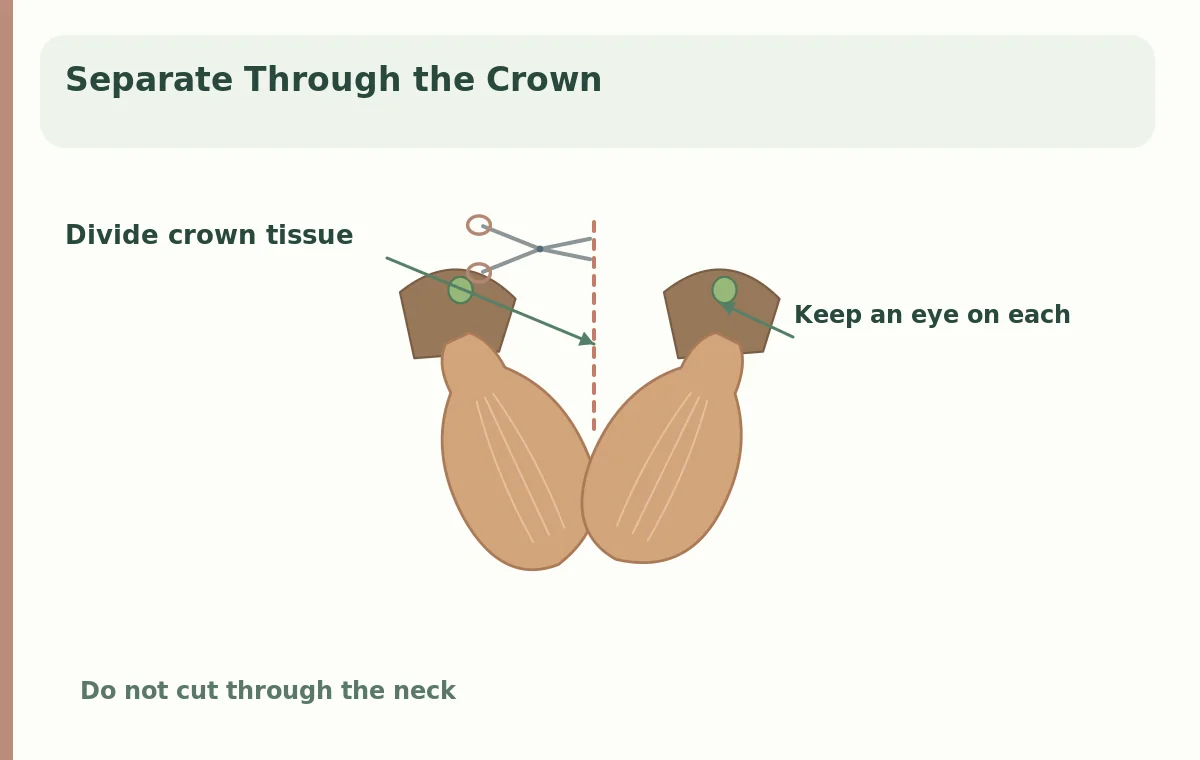
Work out which attached tubers can each receive a piece of crown bearing at least one eye. Use a clean sharp knife to divide through suitable crown tissue between those attachment points. Avoid slicing through the narrow neck of a candidate division or shearing off the eye with the stem stump. The action diagram shows two intact necks and their storage bodies below separated crown portions. If an awkward clump makes precise division unsafe, keep more than one tuber joined to one crown section. A slightly larger sound division is better than a tidy-looking broken one.
Reject Divisions That Cannot Regrow
A free-floating swollen tuber body without a crown is generally not a viable dahlia division. A tuber whose neck has snapped fully away from its crown eye may likewise fail even if both pieces look fresh. Soft, foul-smelling, rotted or badly shriveled pieces also need careful rejection. Do not attempt to fix a broken neck by taping two separate tissues together. Use the correct-versus-avoid illustration to compare living connected anatomy with a detached storage root. When uncertain, set questionable pieces aside for further observation rather than mixing them with proven material.
Dry and Store Divisions Without Damage
After cutting, allow cut surfaces to dry according to local dahlia guidance before packing; never seal freshly wet, damaged pieces in an airtight bag. Label each cultivar and inspect during storage for rot or excessive shriveling. Appropriate storage temperature and medium depend on the setup and local conditions, so follow a regional Extension or American Dahlia Society method rather than applying one number everywhere. Avoid leaving clumps in direct heat or a freezing shed. Ensure each saved division still has a recognizable crown end so spring planting orientation will be clear.

Plant the Crown Up When Growth Resumes
When planting conditions are suitable, arrange the tuber horizontally or gently angled with its crown eye aimed upward and its swollen body below or beside it in the soil. Cover according to locally recommended depth, leaving the young shoot room to emerge. Never invert a neckless tuber and expect a new plant from the large storage body alone. Dahlia foliage is sensitive to frost; let soil conditions and actual local freeze risk govern planting. New growth should emerge from the crown eye, not from a scar on the tip of a storage tuber.
Prevent the Most Common Division Mistakes
The most consequential mistakes are mistaking a body scar for an eye, breaking the narrow neck while handling a heavy clump, cutting away the only eye, and storing wet damaged tubers. Solve them in that order: look first, trace the connection second, choose the crown cut third, and keep storage and labeling consistent. Clean tools between suspect plants because plant pathogens can move on blades. If a plant showed distortion or unusual mottling during the season, consult local diagnostic help before sharing divided material. Botanical correctness matters more than achieving many tiny divisions from one clump.
Related Guides
- When to Plant Dahlia Tubers: Identify the Eye and Avoid Cold Wet Soil
- When to Dig Dahlia Tubers and Store Healthy Clumps Through Winter
- How to Identify Earwig Damage on Dahlias and Reduce Night Feeding
- How to Spot Thrips on Dahlias and Separate Their Damage From Chewing Pests
How We Research and Verify Botanical Details
The referenced university Extension and specialist horticulture guides were checked on October 28, 2026, for the particular plant anatomy, harvest or planting action discussed here. extension.uga.edu horticultural guide explains university of Georgia Cooperative Extension explains dividing dahlia tubers with a portion of the crown containing a growth eye. www.dahlia.org horticultural guide explains american Dahlia Society documents locating eyes, protecting necks and checking viable tuber divisions. www.rhs.org.uk horticultural guide explains rHS explains dahlia tubers, care and seasonal lifting or protection according to climate. The drawings illustrate crop features and techniques, rather than documenting the appearance of every cultivar. Adapt local timing to your weather, actual growth stage and regional growing advice.
Disclosure and Important Local Limitations
This educational article has no confirmed affiliate arrangements, sponsored endorsements or chemical treatment instructions. See the VegWin affiliate disclosure. When a root, tuber, seed or plant is not positively identified, do not eat it. For unexplained rots, insects or widespread symptoms, seek a diagnosis from your local Cooperative Extension or qualified plant specialist before applying products.
On or near the crown at the old stem base, where the tuber neck connects; not randomly over the swollen body.
Usually not. It needs a viable growth eye connected through crown tissue and an intact neck.
Yes, but eyes may be easier to identify in spring after they swell.
No. Each successful division needs a piece of crown with a living eye and an intact neck.
A detached storage body generally cannot replace a lost crown connection; reject it as a reliable planting division.