
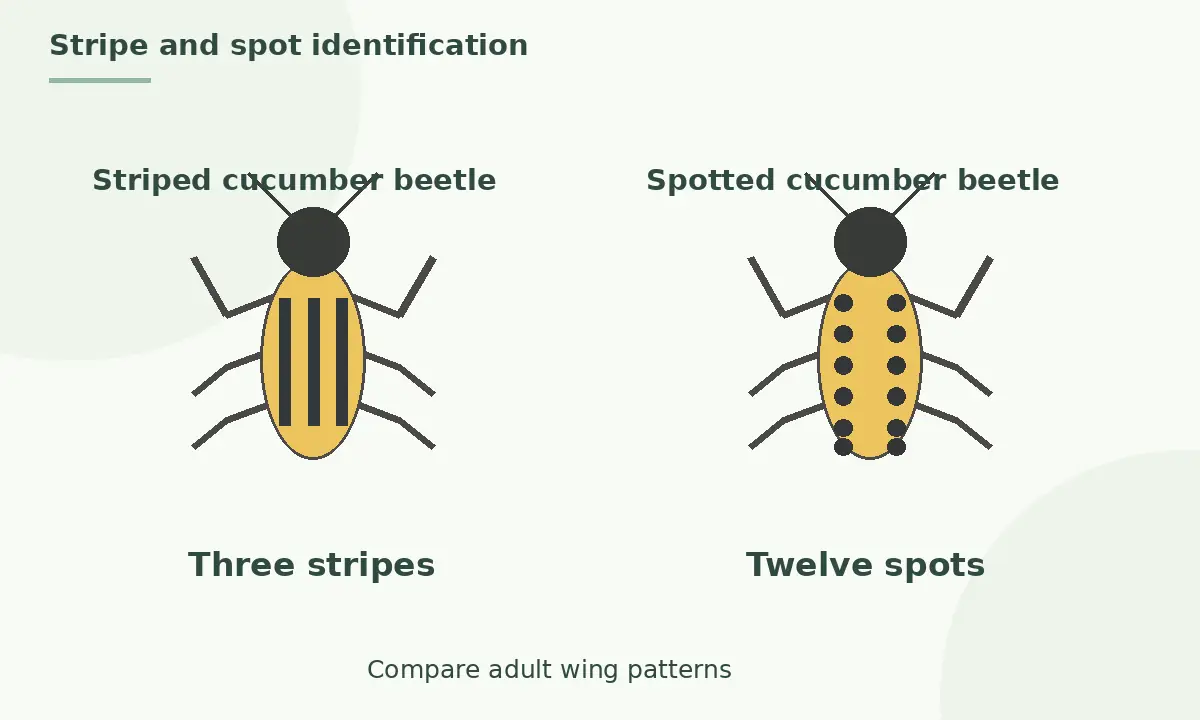
Not every small yellow insect in a vegetable bed is a cucumber beetle, and not every hole in a cucumber leaf means plants must be sprayed. Two common adult types have clear patterns: the striped cucumber beetle carries three dark lengthwise stripes, while the spotted beetle has a pattern of black spots. Both can feed on cucurbits, especially tender seedlings, but the most serious extra concern is transmission of bacterial wilt in susceptible cucumbers and muskmelons. University of Minnesota Extension recommends identifying the beetle, checking plant stage and monitoring damage before choosing a response. The first flower also matters because protective covers can shut pollinators out.
Compare the Striped and Spotted Adult Beetles
The striped cucumber beetle (Acalymma vittatum) is small, yellowish and marked with three dark lengthwise stripes on its wing covers. The spotted cucumber beetle (Diabrotica undecimpunctata howardi) is similar in size but carries twelve dark wing-cover spots. Minnesota Extension provides both identification patterns. Look for the beetle itself near leaf undersides, new growth and flowers rather than assuming any yellow beetle is harmful. Close-up images should show the stripes and spots on the wing covers, a separate dark head and six legs. These insects are not squash bugs, which are broader flattened brown true bugs with different feeding signs.
Check Cotyledons and the First True Leaves First
The worst direct feeding often happens when cucurbit plants are small and have only seed leaves or the first few true leaves. A handful of beetles can scar foliage or damage growing points on a tiny plant. As a squash or pumpkin gets several healthy leaves, some feeding may be tolerated without major loss; cucumbers and muskmelons remain more sensitive because of bacterial wilt. Minnesota Extension advises concentrating monitoring effort on susceptible seedling stages. Inspect both sides of leaves and growing tips rather than taking one photograph of a random hole. Recording the number of beetles and changes over several days is more informative than reacting to one insect.
Distinguish Chewing Injury From Wilt Symptoms
Cucumber beetles chew irregular holes and may feed on flowers or young fruit. Bacterial wilt behaves differently: leaves can droop in daytime, temporarily recover overnight, then wilt progressively as plant vascular tissue becomes blocked. The bacterium can be moved by beetles, but not every beetle carries it. Heat and dry soil, vine borer damage and root problems can mimic wilting, so investigate those conditions too. Minnesota Extension warns that no pesticide cures a plant once bacterial wilt is established. A sick cucumber vine needs a realistic diagnosis, not repeated sprays advertised as a cure for an internal infection. If you want the full process, read how to identify bean leaf beetles on snap beans and limit damage.
Exclude Beetles Before They Find Small Seedlings
A floating row cover placed immediately after seeding or transplanting can physically exclude adult beetles. Bury or fasten edges tightly because open corners are entrances. Check underneath that no beetles were trapped within the cover at installation. Covering works best before feeding is widespread, not as a rescue after a heavily infested plant is already inside. Remember that covers can also alter temperature and humidity. Inspect plants and soil moisture periodically under the fabric, particularly in hot weather. Minnesota Extension identifies early exclusion as a useful control, but its value depends on proper timing, sealed edges and eventual pollinator access. For a step-by-step method, see how to identify common and spotted asparagus beetles before treating plants.
Remove Flower Covers to Permit Pollination
Most conventional cucumbers, melons and squash need insects to carry pollen between flowers. An intact row cover prevents both cucumber beetles and bees from reaching the crop, so take the cover off as flowering begins. This is an essential tradeoff, not a technicality. Minnesota Extension’s cucumber guidance likewise tells gardeners to remove row covers at flowering unless growing a suitable seedless cultivar under a special system. Do not leave covers closed indefinitely because the seedlings look beautifully protected. Once blossoms open, shift to scouting and nonchemical actions instead of sacrificing pollination. Mark your cover-removal date on a garden calendar and inspect the first female flowers.
Scout More Frequently If Beetles Start Appearing
Walk the planting at least weekly, then every few days when beetles appear. Look at new leaves, growing points and flowers and count how many beetles occupy representative plants. Minnesota Extension uses crop and stage-specific thresholds in its guidance; these are based on regional field observations and are not blanket instructions for every garden or treatment product. A tiny cucumber or muskmelon is more vulnerable to bacterial wilt than a vigorous older pumpkin. Focus on both insect numbers and plant condition rather than applying one simplistic beetle count across all cucurbits. If uncertain, ask the local Extension office for a locally appropriate action threshold.
Try Hand Removal and Sanitation Before Spraying
On a small number of plants, handpicking or knocking beetles into a container of soapy water can remove visible adults. Work carefully so you do not break young shoots or squash blossoms. Reduce nearby weeds and remove crop residues at season end as Minnesota Extension recommends, while recognizing that beetles can fly in from outside your garden. Some growers use attractive trap crops, but that strategy needs deliberate planning: concentrating beetles without follow-up can create a pest reservoir. Reflective barriers and mulch may help in some settings, but none is a guaranteed cure for disease. Avoid unverified home pesticide mixtures that may burn leaves or harm pollinators.

Treat Chemical Options as a Label-Driven Last Step
A product that kills a garden insect is not automatically legal or suitable for cucumber beetles on edible cucumbers. If local monitoring indicates intervention is justified, check the current pesticide label for the exact crop, pest, application directions, harvest interval and pollinator cautions. Never invent a dilution rate or spray open flowers simply because beetles are visible. Minnesota Extension specifically warns that pesticide labels are the law and that botanical or organic names do not substitute for crop-specific directions. An insecticide cannot cure bacterial wilt after it is present. If you are uncertain about treatment necessity, consult local IPM guidance rather than escalating after one chewed leaf.
Respond Carefully to Suspected Bacterial Wilt
A vine that continues wilting despite adequate soil moisture may be infected, especially if beetle activity was observed earlier. Examine whether there is stem damage from squash vine borers, root injury or severe drought. Minnesota Extension advises removing plants with confirmed bacterial wilt to reduce opportunities for further beetle transmission, and emphasizes the limits of visual diagnosis. Do not compost obviously diseased vines as though they were clean plant material without considering local guidance. Do not expect nearby healthy plants to recover just because an infected vine is sprayed. Concentrate on protecting still-healthy cucurbit plants and documenting when symptoms began.
Build a Next-Year Prevention Plan Around Plant Stage
At season’s end, record the first beetle sighting, crop, number of true leaves, damage and flower start date. Clear appropriate old debris and weeds, rotate the growing area where practical, and prepare row covers before the next sowing rather than looking for them after damage starts. If cucumbers repeatedly wilt, look for locally recommended resistant cultivars and ask Extension about disease pressure. A helpful illustration of the seasonal sequence shows a protected seedling, a flowering vine with cover removed, and ongoing scouting after flowering. Prevention is not total eradication: the goal is to avoid severe seedling injury and reduce bacterial wilt transmission while preserving pollination.

Related Guides
- How to Identify Striped Cucumber Beetles and Protect Young Cucumber Plants
- How to Identify Spider Mites on Cucumber Leaves Before Webbing Spreads
- How to Recognize Downy Mildew on Cucumber Leaves Before Vines Collapse
- Cucumber Trellis Guide: Choose Support, Train Vines, and Harvest
- Container Cucumbers: Choose the Pot, Vine Support, and Fruit-Set Plan
How We Research and Verify Garden Recommendations
Our editorial review compared the listed university Extension and specialist horticultural guidance for the identified species, growing stage and practical question. We checked the source pages on October 24, 2026, distinguished field trial results from universal instructions and noted when cultivar or local weather may change an outcome. The instructional artwork was created to explain morphology and gardening actions, not copied from published photos or presented as evidence of a particular experiment. We have not run a controlled garden trial for this specific article; readers should use local Cooperative Extension assistance for uncertain symptoms or regional restrictions.
Sources and Editorial Disclosure
Sources reviewed October 24, 2026: University of Minnesota Extension — University of Minnesota Extension: identification, early feeding risk, monitoring and row-cover strategy.; University of Minnesota Extension — University of Minnesota Extension: beetle-transmitted bacterial wilt, susceptible crops and no curative pesticide.; University of Minnesota Extension — University of Minnesota Extension: remove barriers at flowering so pollinators reach cucurbit flowers.. Source links do not mean these organizations endorse VegWin.
Disclosure: No sponsorship or affiliate payment for a specific product has been verified for this article. Site information is available at VegWin Affiliate Disclosure. Follow current local regulations and the instructions for your cultivar or any registered product.
A small yellow beetle with three dark lengthwise stripes along the wing covers and a darker head.
No. They are a separate species and generally show twelve dark spots on the wing covers.
At flowering for insect-pollinated cucurbit varieties, so pollinators can access the blossoms.
No. Once bacteria infect a plant, pesticides cannot cure the internal disease.
No. Identify the cause, assess plant stage, scout populations, and follow local thresholds and labels before treating.