
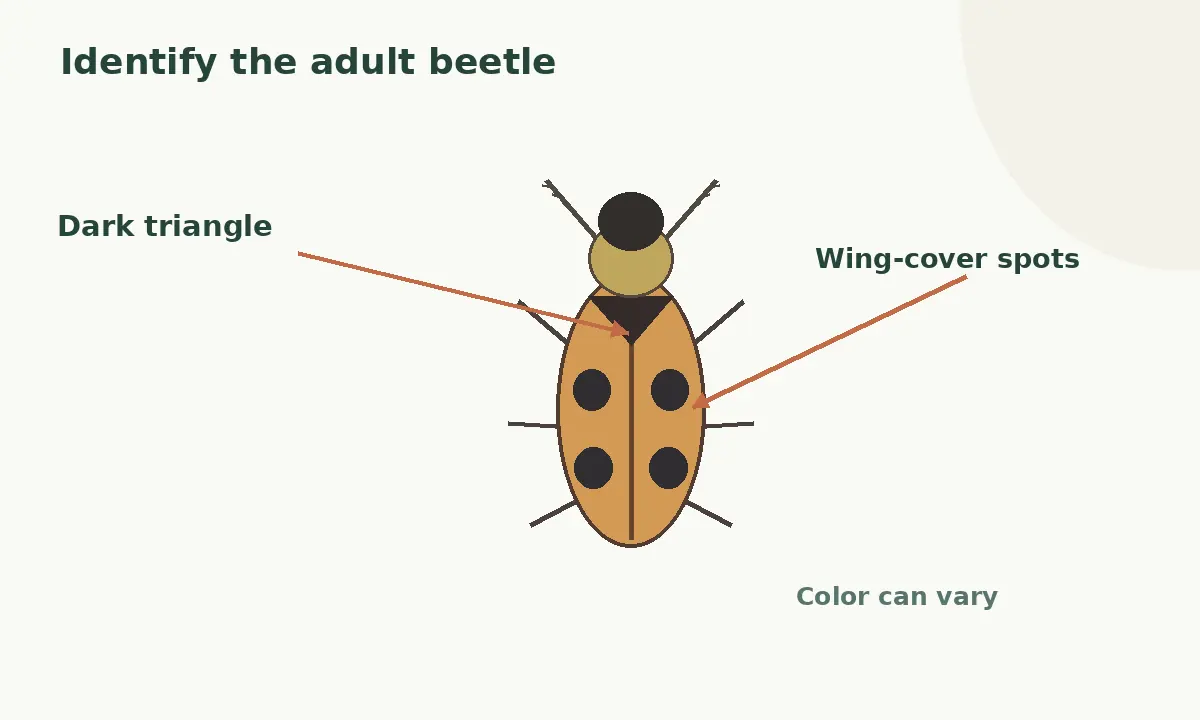
Round holes in a snap-bean leaf do not tell the whole story. An adult bean leaf beetle is a small oval beetle, sometimes tan, yellowish, orange, or red, with a characteristic black triangular mark where the wing covers meet just behind the head. The number of dark spots can vary, so color alone is not enough for identification. University of Minnesota Extension describes adults chewing small rounded leaf holes and sometimes scraping or pitting young pods. It also emphasizes that older healthy plants tolerate much more leaf injury than tiny seedlings. Before considering treatment, look for the insect itself, identify the feeding pattern, and decide whether damage is continuing or has already stopped.
Identify the Beetle Rather Than Guessing From Holes
Adult bean leaf beetles, Cerotoma trifurcata, are roughly one-quarter inch long and oval. Color is highly variable, from yellow-green through orange-red. Four black spots are common but not universal, while the dark triangle at the top of the wing covers behind the head is especially useful. The beetle also has a visible dark head, six legs, and slender antennae. Minnesota Extension describes these features in its garden identification guide. Do not confuse this small beetle with a much larger Japanese beetle with metallic copper wings and white side tufts. A pocket photograph showing the back and the beetle on the leaf can help local Extension make a confident identification.
Look for Round Holes and Inspect Leaf Undersides
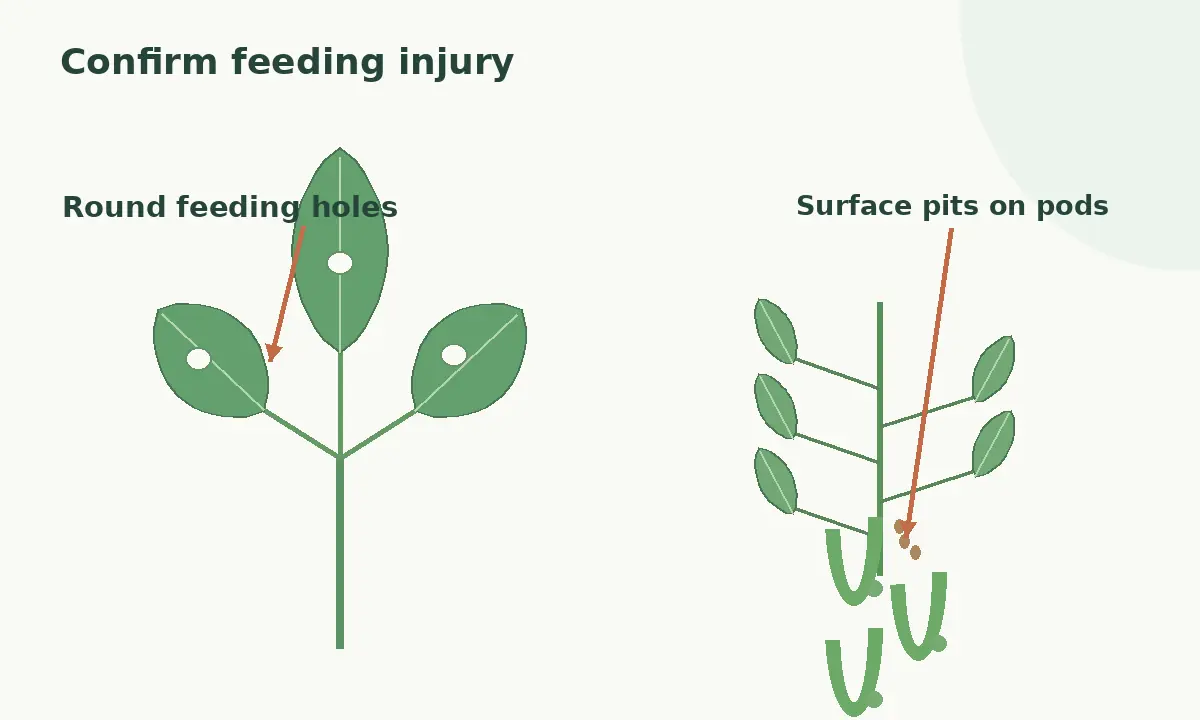
Feeding adults commonly chew small circular to irregular round holes through snap-bean leaf tissue, especially on the underside. The veins may remain around the holes. A young seedling with two or three heavily damaged leaves can be much more vulnerable than a full-size plant with dozens of functioning leaves. Minnesota Extension’s diagnostic guide also lists bacterial brown spot, where damaged tissue can later fall out, and caterpillar feeding. Look at the shape of injury, any water-soaked or brown margins, and whether an actual beetle is present. Do not spray simply because a leaf has holes left from an old infestation.
Check Bean Pods for Fresh Surface Pitting
Adults may also feed on developing snap-bean pods, leaving small pits or superficial surface damage. A few scarred pods are not the same as larvae tunneling inside beans. Minnesota Extension lists bean leaf beetles among pod-feeding insects, but other pests and disorders can also mark the pod surface. Inspect a representative group of pods on several plants and compare them with undamaged ones. If insects are present, photograph them before harvesting so you can distinguish fresh feeding from cosmetic marks that formed earlier. Discard pods with signs of rot or other food-safety concerns; a clean blemish alone does not identify a particular pest. For a step-by-step method, see how to identify lily leaf beetles and remove eggs, larvae, and adults.
Scout Early When Seedlings Are Most Vulnerable
Start checking when the first true leaves unfold and repeat inspection during beetle activity rather than waiting for heavy defoliation. Check both the tops and undersides of leaves and look for adults near the base, where they may drop when disturbed. Minnesota Extension recommends monitoring early in the season, since a small plant has little spare leaf area. Examine several plants throughout the row rather than one severely affected edge plant. Record whether you see live beetles, new holes, and whether the crop is growing vigorously. Local populations and seasonal timing differ; a region-specific advisory is more useful than importing a calendar from another state.
Use the Plant Stage to Decide Whether Action Matters
Mature vigorous snap beans can often continue growing despite a modest number of holes. Cotyledon and first-trifoliate seedlings need more protection because each damaged leaf represents a large fraction of their photosynthetic area. Minnesota Extension provides monitoring and defoliation benchmarks for gardeners and crop producers, but a home gardener should not blindly copy field-treatment thresholds from soybeans. Count affected seedlings, estimate fresh damage, and check for ongoing beetles. One beetle on a mature plant is not a crisis, while repeated losses of expanding seedling leaves deserve a faster response. Recheck after any intervention before deciding more is needed.
| What you see | What to do | Why it matters |
|---|---|---|
| Small round holes on true leaves | Inspect underside for adult beetles | Injury alone does not prove the pest |
| Small oval insect with dark triangle | Confirm bean leaf beetle identity | Adult color and spots can vary |
| Young seedlings losing many leaves | Handpick or exclude beetles promptly | Seedlings tolerate less leaf loss |
Handpick Beetles Without Shaking the Entire Row
For a small garden, place a container with soapy water beneath a damaged plant and gently dislodge visible adult beetles into it. Minnesota Extension notes that the beetles often drop to the ground when disturbed. Work carefully around young bean roots and stems. Handpicking is most practical when the number of adults is modest and scouting is frequent. Avoid crushing bugs directly over harvested pods or contaminating produce with soapy water. Return after several days because more mobile adults may arrive. This method does not require assigning a chemical treatment to a pest that may no longer be causing meaningful damage.
Install a Fine Row Cover Before Beetles Arrive
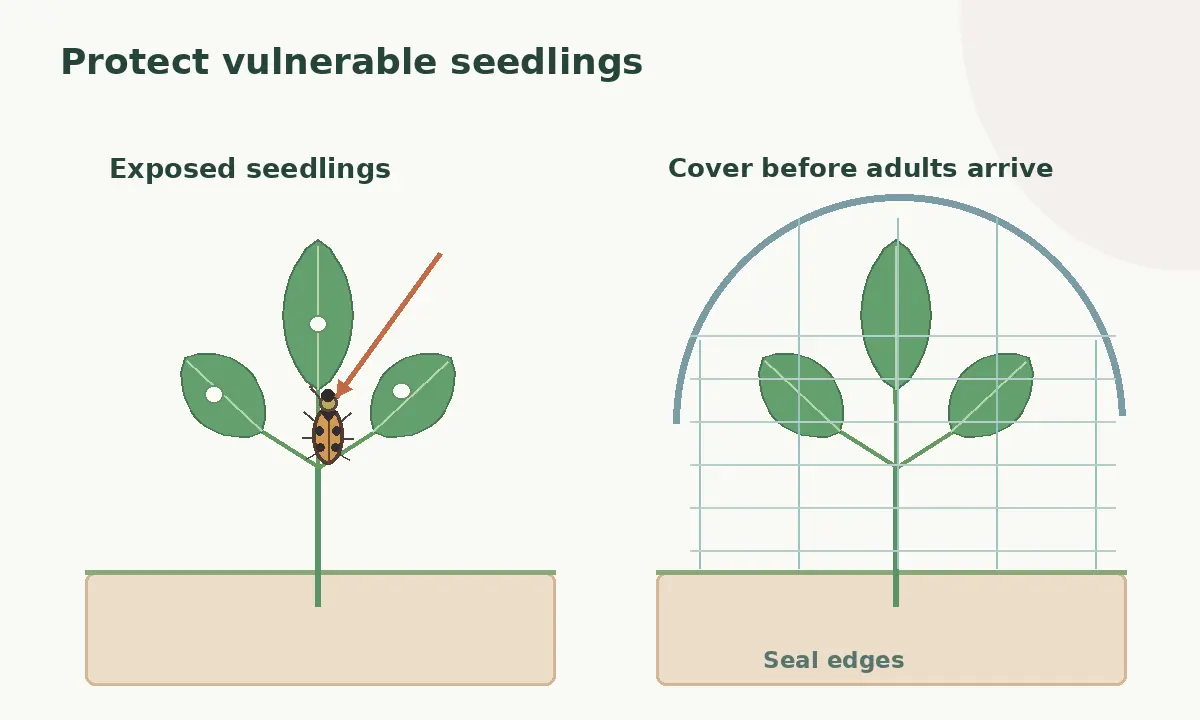
A well-secured floating row cover can exclude adults from young snap-bean plants, according to Minnesota Extension. Install it before beetles get underneath, leave space for growth, and anchor the entire perimeter so wind or insects cannot lift the fabric. Inspect plants for beetles before sealing the cover. If the variety depends on insect visitation for related garden crops, avoid broadly covering neighboring flowers; common snap beans largely self-pollinate. Remove or adjust material as plants outgrow it, and check for heat buildup under hot conditions. A cover that traps pests inside the row is worse than one installed thoughtfully. For a step-by-step method, see how to identify common and spotted asparagus beetles before treating plants.
Limit Overwintering Shelter and Repeat Damage
Adults may overwinter in leaf litter, grassy shelter, and adjacent vegetation, so basic bed cleanup can reduce some nearby refuge without promising total control. Minnesota Extension also discusses later planting of snap beans in certain northern locations to avoid early flights, but this is climate-specific advice rather than a universal delay date. Rotate plantings as practical and keep young crops growing vigorously with even irrigation. Avoid removing every piece of habitat for beneficial insects across the property; focus on pest shelter immediately around the bean bed. Keep notes on where spring damage began so next year’s protective cover is placed before the first holes appear.
Do Not Confuse Bean Beetles With Other Pests
Japanese beetles are larger and often skeletonize foliage, while Mexican bean beetles have a different body pattern and their larvae may look spiny and yellow. Caterpillars leave other feeding patterns, and some bacterial leaf spots produce dead tissue that breaks away. No single hole is diagnostic. Photographs of the insect’s back, side and the underside of damaged leaves can help sort the possibilities. If an insect is not found, monitor fresh growth before assigning a species name. Correct identification matters because each pest has different biology and a pesticide chosen for an unrelated beetle may be ineffective, harmful, or not labeled for snap beans. Our guide “Cucumber Beetles” goes into more detail.
Reserve Pesticide Decisions for Confirmed Serious Injury
If beetle populations persist and young plants are losing substantial functional leaf area, consult current local Extension IPM information and the legally registered product label for beans and this pest. Do not copy an insecticide dose, homemade detergent recipe, or timing intended for commercial soybean fields. Labels specify crops, pests, application conditions, protective measures, and harvest restrictions. Protect pollinators and nearby flowering plants from any unnecessary exposure. The first choices in a small garden are correct identification, scouting, physical exclusion, and hand removal. Record the result rather than using a product preventively when injury is minimal.
Related Guides
- How to Identify Potato Leafhoppers and Hopperburn on Snap Beans
- Growing Green Beans: Bush or Pole, Planting, Picking, and Problems
- How to Direct Sow Bush Green Beans Without Building a Trellis
- How to Grow Rattlesnake Pole Beans and Pick Purple-Streaked Pods
How We Research and Check Garden Advice
This guide was researched against identified Cooperative Extension and horticultural sources checked on 2026-10-25 (UTC): extension.umn.edu: Minnesota source; apps.extension.umn.edu: Minnesota source; ag.purdue.edu: Purdue source. We matched each decision to the species, plant stage, and observable signs described in those references. Regional weather, cultivar behavior and home growing conditions may change timing or outcomes. Where university guidance differs in detail, we explain the distinction rather than turning one local schedule into a universal rule. These diagrams are educational illustrations; confirm unusual symptoms, live pests or damaged planting stock with your local Extension service before irreversible intervention.
Safety Notes and Editorial Disclosure
This is independent educational content, not a sponsored placement or a claim of an approved affiliate relationship. See the VegWin affiliate disclosure. Use potable water and clean equipment on edible crops. Azaleas are toxic if eaten and true Lilium lilies can cause severe, potentially fatal kidney injury in cats; seek prompt veterinary advice after suspected lily exposure. Keep plant material and garden tools away from children and pets where relevant. For any pesticide, use only a currently registered product labeled for the precise crop and pest, observe all directions and preharvest restrictions, and prefer nonchemical monitoring and prevention when suitable. Never apply a guessed fertilizer or pesticide dose from a generalized garden diagram.
No. Spot pattern and color vary; the dark triangular mark behind the head is particularly useful.
Yes. Adults can make small surface pits as well as holes in leaves.
No. Inspect for active beetles and assess plant stage and fresh injury before acting.
Yes. Secure a fine cover before beetles arrive and inspect for pests trapped beneath it.
No. They differ in size, markings and typical feeding patterns; identify the insect first.