
A large brown insect walking across a tomato does not automatically mean a stink bug. Leaffooted bugs have long legs, narrow bodies, piercing-sucking mouthparts and—in many common species—a widened segment on the hind leg that resembles a small leaf. Adults, reddish nymphs and chains of eggs may appear in the same planting. UC Statewide IPM explains that these insects can blemish developing fruit, but identification matters because young stages can resemble helpful predatory bugs. This guide shows where to look on tomatoes, how to distinguish the major look-alikes and which nonchemical decisions are practical before infestations grow. It does not promise a one-spray cure: targeted scouting, timing and the presence of beneficial insects determine whether action is justified.
Identify the Adult Before Blaming Fruit Spots
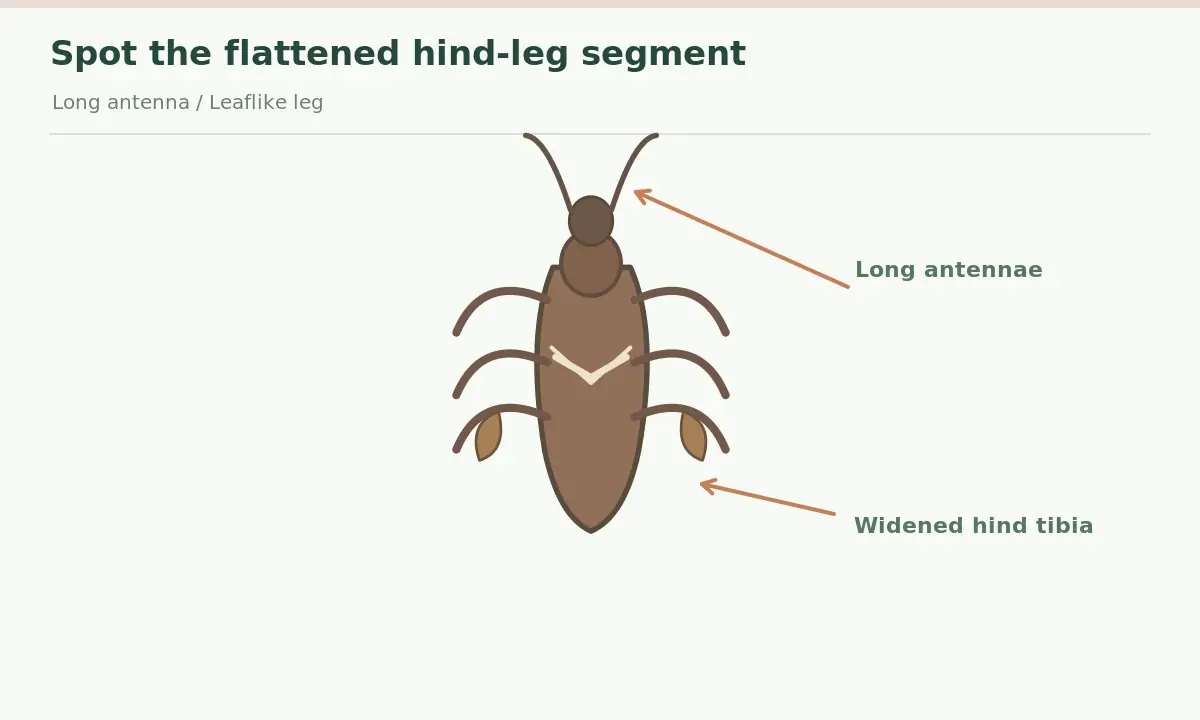
Leaffooted bugs in the genus Leptoglossus are relatively large true bugs with long antennae and elongated brownish bodies. Many show a zigzag pale band across the folded wings and an expanded, leaflike section on each hind leg. UC IPM describes several species with differences in markings, so absence of one particular stripe does not exclude the group. A typical shield-shaped stink bug instead has a wider body outline with prominent shoulders, as University of Georgia Extension notes. Look at the insect’s actual hind legs and silhouette rather than identifying from a fruit blemish alone. Use a clear photo from the side or slightly behind if it is moving quickly. An accurate identification comes before deciding whether numbers warrant removal.
Find the Eggs Before Nymphs Spread
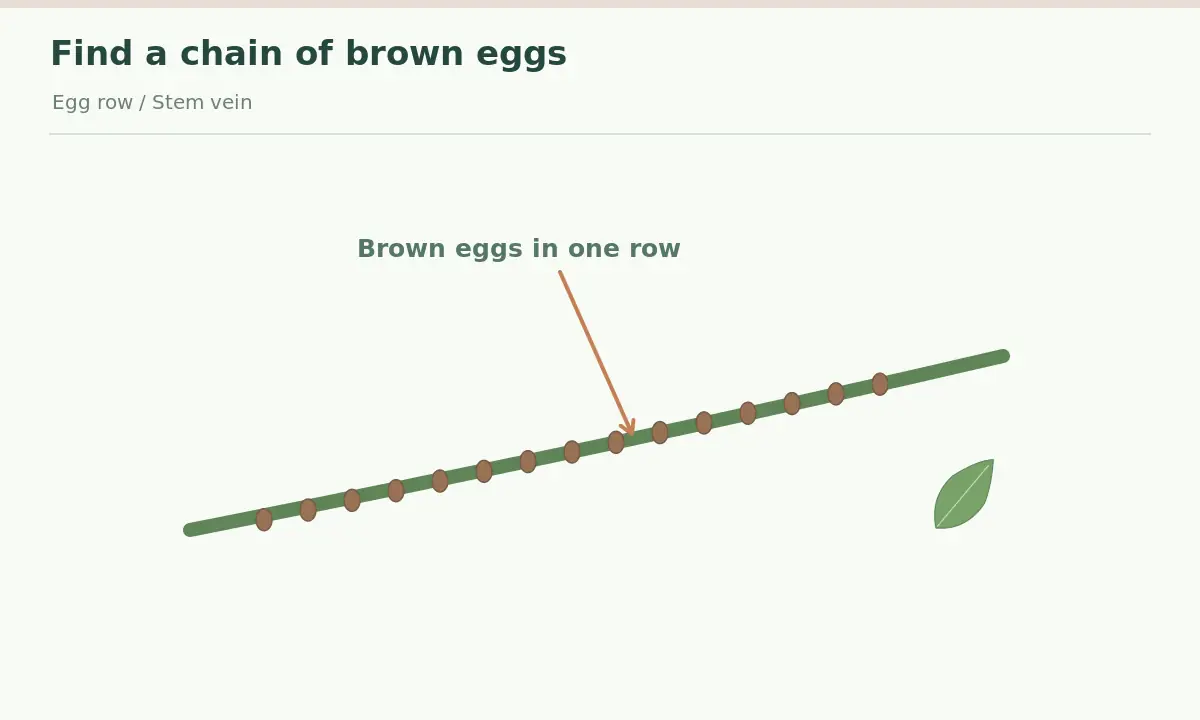
UC IPM describes leaffooted bug eggs as brown, cylindrical units often attached end to end in a line along a leaf midrib or stem. They are not random beads scattered across the soil. Inspect the underside of tomato leaves, the main vein, branch junctions and nearby fruit clusters during regular scouting. Handle leaves gently to avoid breaking flowering trusses. Newly hatched nymphs often remain together long enough to make a small early colony easier to manage than flying adults. An apparent line of brown eggs may be worth photographing before removal because harmless or beneficial insect eggs can look superficially similar. Compare their arrangement with reliable Extension identification images and consult local advice if uncertain.
Recognize Red Nymphs Without Harming Allies
Young leaffooted bug nymphs can be orange to red with darker legs and may occur in groups. Their leg expansions are less obvious until later stages. UC IPM warns that they can be confused with the young of certain assassin bugs, which prey on other insects. Assassin bug eggs are arranged differently and nymph leg color can help distinguish them, but use several traits together, not color alone. A red bug near tomatoes is not always a pest. If you cannot identify it, watch where it feeds or take a focused photograph before crushing it. Rushing to remove every beneficial predator may worsen other pest outbreaks. Finding both the egg line and feeding nymphs on the tomato is stronger evidence than spotting an isolated red insect nearby. For a step-by-step method, see how to identify squash bugs and check eggs before control.
Connect Piercing Feeding to Real Tomato Damage
Leaffooted bugs insert a slender mouthpart into plant tissue. On developing tomato fruit, feeding can produce small sunken, discolored or hard spots, and early injuries may interfere with normal development. Stink bugs can produce similar symptoms. University of Georgia Extension notes that the severity depends partly on the fruit’s stage, which means a late minor blemish is not the same problem as repeated feeding on tiny newly set fruit. Inspect the fruit skin closely and check whether an actual bug or colony is present. Do not label every distorted tomato as insect damage: irregular watering, temperature stress, blossom-end rot and disease have other causes. Damage already embedded in a fruit will not be reversed by removing insects afterward, so focus on protecting new developing fruit.
| Observation | Useful next step | Common mistake |
|---|---|---|
| Long antenna | Find the Eggs Before Nymphs Spread | Acting before checking the plant |
| Egg row | Connect Piercing Feeding to Real Tomato Damage | Copying one method without context |
| Shield stink bug | Protect Beneficial Predators and Pollinators | Assuming a single sign proves the diagnosis |
Scout the Plant in a Repeatable Pattern
Inspect the same representative plants several times a week when fruits are setting, looking first underneath foliage, then on stems and green fruit clusters. UC IPM advises repeated monitoring because adults move readily and can shelter deep inside vegetation. Count egg strings, early nymph clusters and adult sightings separately. Note which clusters are next to tiny fruit that could still be damaged. The morning may make adults less mobile, but do not assume they stay visible throughout the day. A short written log helps you distinguish one wandering bug from a sustained infestation. When the plants are very dense, carefully part foliage rather than pruning away healthy leaves merely for inspection. Scouting provides the decision point that routine spraying lacks.
Remove Small Colonies With Minimal Disruption
For an accessible home-garden infestation, UC IPM recommends handpicking, collecting eggs and knocking early nymphs into a container of soapy water. Wear gloves and avoid crushing bugs directly on edible fruit. Start when small nymphs are clustered and move carefully among stems to avoid knocking off tomatoes. Do not mix soap concentrates as a homemade foliar spray; using a bowl to contain removed bugs is a different practice from spraying an unregistered mixture on plants. Regular removal is usually more productive than a single intense session because adults can return from surrounding vegetation. Destroy identified egg rows by removing the affected piece if feasible, while retaining most healthy leaf tissue. Keep your observations so you can judge whether fresh egg laying is falling. For a step-by-step method, see how to Find squash bug eggs and protect zucchini before wilt.
Know the Limits of Row Covers and Barriers
Physical row covers may exclude bugs if placed before the infestation arrives and correctly sealed around the crop, but they can also trap insects already present. UC IPM cautions that covers may exclude pollinators and predators while encouraging some other pests. Tomatoes are generally self-pollinating, yet shaking or wind movement can assist pollen release; a cover arrangement must also be compatible with airflow, plant support and access. A mesh draped over an already fruiting tall vine can be impractical and may abrade stems in wind. For a few potted tomatoes, repeated hand removal may be simpler. For larger planting blocks, ask local Extension about suitable netting and management. Do not install a cover merely because one adult flew through the yard.

Protect Beneficial Predators and Pollinators
Natural enemies include egg-parasitic wasps and other organisms described by UC IPM. Their presence does not make every infestation harmless, but broad-spectrum sprays can remove them along with the target pest. Avoid routine applications without confirming the insect, the level of injury and a legally labeled option for tomatoes. Many insecticide labels limit crops, application frequency, harvest intervals and pollinator exposure; these rules vary by jurisdiction and product. A university page mentioning an active ingredient is not a substitute for today’s legal label. Safer management begins with keeping plants accessible for scouting, removing concentrated young stages and choosing action only when damage is recurring. Protecting natural enemies helps avoid exchanging a modest bug problem for a larger outbreak of mites or aphids. For a step-by-step method, see how to identify tomato hornworms and protect beneficial parasitic wasps.
Clean Up Refuge Sites at the Right Time
Some leaffooted bugs overwinter in sheltered debris or unmanaged vegetation and later move into gardens as fruit becomes available. UC IPM recommends reducing weedy refuge around plantings where practical. This is not a call to strip all leaf litter from an entire ecological garden. Focus on piles immediately adjacent to tomato beds, volunteer host plants carrying visible pests, and inaccessible dense areas that keep insects close to fruit. Remove diseased tomato debris at season’s end following local plant-waste recommendations. Rotate edible crops when practical, although flying adult bugs can arrive from outside any one bed. Habitat management complements—not replaces—scouting during the fruiting period. If a neighbor grows other host plants, expect movement to depend on weather and seasonal food supply. For a step-by-step method, see how to identify lily leaf beetles and remove eggs, larvae, and adults.
Decide When Damage Justifies Escalation
One adult and an unblemished crop usually call for closer observation, not an emergency spray. Repeated clusters of nymphs, fresh egg strings and expanding fruit injury support more active removal or a discussion with local Extension. Photograph the insect, the egg pattern and the type of tomato injury before asking for diagnosis. If a registered product is considered after nonchemical steps fail, use its complete current label for tomatoes, personal protection and preharvest interval; never invent a dilution or mix several sprays. Reassess the plant after each action rather than assuming last week’s insects remain the cause of today’s spots. An effective response preserves edible fruit quality while causing as little harm as practical to other insects in the garden.
Related Guides
- Growing Tomatoes: A Step-by-Step Plan from Transplant to Harvest
- Aphids on Tomato Plants: Identify Colonies and Choose IPM First
- Spider Mites on Tomato Plants: Confirm the Pest Before Taking Action
- How to Identify Whiteflies on Tomatoes and Reduce Their Damage
- How to Identify Stink Bug Feeding Spots on Tomatoes Without Guessing
How We Research and Verify This Guidance
Sources checked on 2026-10-24. This article compares plant-stage or pest-stage guidance from ipm.ucanr.edu — Adult and nymph identification, egg-row arrangement, scouting and IPM practices; extension.uga.edu — Tomato leaffooted versus shield-shaped stink bugs and feeding injury. We reviewed practical identification, growth and safety details and separated specific recommendations from widely varying local climates. The learning illustrations simplify appearance to make distinctions legible; they are not to botanical scale. The best action still depends on the named species or cultivar, current weather and observed plant condition.
Disclosures, Safety and Regional Differences
This is general gardening education; VegWin does not claim an invented endorsement or affiliate arrangement. See the affiliate disclosure. Where food safety, toxic plant parts or pest controls are involved, follow local Extension guidance and applicable registered product labels. No unverified pesticide formulas, fertilizer dosing, or zone-only planting schedules are recommended.
Many adults are elongated brown bugs with long antennae, pale wing markings and leaflike widening on the hind legs.
Often a straight chain of brown cylindrical eggs laid end to end along a stem or leaf vein.
No. Some beneficial assassin bug nymphs can look similar; examine egg patterns, legs and feeding behavior.
Existing feeding blemishes generally remain; management aims to prevent additional injury on developing fruit.
Not automatically. Confirm the insect, scout for egg strings and nymph clusters, assess damage and favor targeted methods first.