
A tomato that ripens with cloudy yellowish patches or tiny pale-ringed punctures may have been visited by a stink bug, but these blemishes are not a stand-alone species diagnosis. Shield-shaped true bugs pierce developing fruit with mouthparts and can produce a firm, pale or corky area under the skin. Other insects and some diseases make overlapping marks. Before spraying or removing fruit, inspect the plant for living bugs, their clusters of eggs and the exact pattern of injury. The steps below link the insect’s body and life stages to the fruit symptoms while preserving beneficial insects and avoiding unwarranted treatment.
Learn the Shield-Shaped Adult Outline
Adult stink bugs are usually broader than leafhoppers, with a roughly five-sided shield silhouette when viewed from above. UC IPM describes green and brown species, and some bear contrasting markings; color alone cannot establish the species. They have six legs, antennae and a piercing mouthpart tucked below the head rather than chewing jaws. The young wingless nymphs are more rounded and differently colored but still belong to the same true-bug group. Observe them carefully before classifying every garden bug as a pest: predatory true bugs may be present too. A clear photo of dorsal pattern and body shape improves identification.
Search Leaves for Barrel-Shaped Egg Clusters
Stink bug eggs are often arranged in tight groups on foliage. UC IPM calls them drum- or barrel-shaped, with a circular cap or lid that opens during hatching. Eggs are not the long oblong yellow eggs of every tomato pest, and a single round object cannot prove a stink bug infestation. Look at both surfaces of representative leaves, especially near fruiting branches. Some egg clusters turn darker when parasitized by tiny beneficial wasps; do not reflexively scrape away every cluster before looking closely. Photograph the arrangement and compare with regional diagnostic resources if species-level identification matters.

Connect Feeding to Pale Tomato Fruit Spots
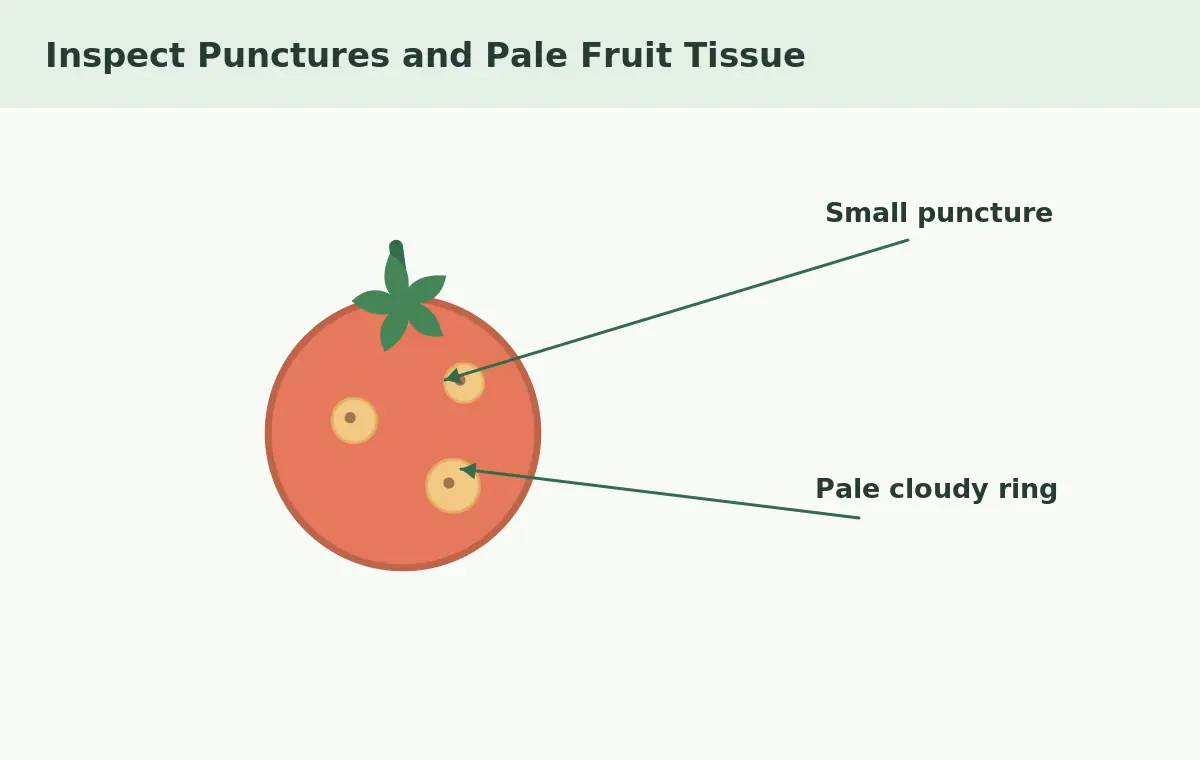
On green tomatoes, stink bug feeding may leave a small dark puncture surrounded by a paler discolored ring. As fruit ripens, light green or yellow cloudy blotches may persist instead of coloring evenly. UC IPM also describes firm pale or corky tissue immediately beneath a feeding mark. The lesion is created by piercing-sucking injury, not a large bite hole. Cut an already blemished fruit to inspect the texture if appropriate, but do not use one cut fruit to diagnose an entire planting. Combine fruit signs with actual insects or eggs on nearby vines.
Distinguish Cloudy Spot From Other Tomato Problems
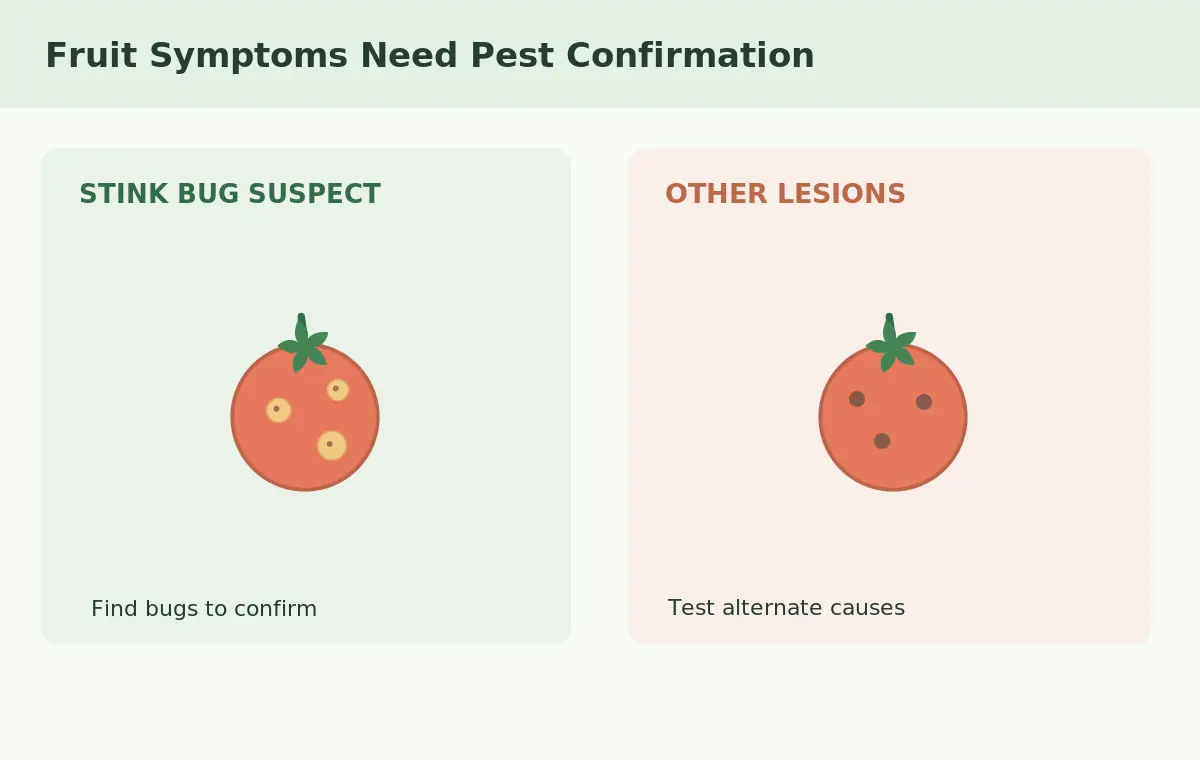
Bacterial spot or speck can create numerous small dark scabby lesions, while fruitworms often leave substantial entry wounds and internal feeding galleries. Uneven ripening also occurs from weather and physiology, so yellow patches without punctures are not conclusive. UC IPM notes that lygus bugs can produce very similar fruit injury. This is why the presence of a shield-shaped bug, the exact wound pattern and the plant history should be evaluated together. Do not label every discolored fruit a stink bug case or claim a guaranteed diagnosis from a diagram. Consult local diagnostic help if severe damage occurs without observed insects.
Scout the Canopy and Nearby Ground
Stink bugs may move quickly or hide low in dense tomato foliage, especially during heat. Examine stems, leaf surfaces and fruit clusters while avoiding unnecessary damage to branches. UC IPM describes shaking or tapping plants over a tray as one monitoring method; backyard gardeners can gently inspect a few marked plants repeatedly. A light-colored tray makes a fallen insect easier to see and photograph. Sample more than a single branch, since pests can be patchy across a planting. Record whether adults, nymphs and egg clusters are actually present, and whether new fruit has fresh punctures over time.
Understand Why Old Spots Do Not Heal
Feeding punctures and the resulting internal discoloration do not reverse after a bug leaves. A treatment or successful removal today cannot restore an already corky section of fruit. Instead, compare new fruit developing after the intervention with the previously marked tomatoes. Monitor for ongoing insects, fresh punctures and the number of newly damaged clusters. Some fruits with superficial spots may still have usable areas when otherwise sound, but discard produce that is decaying, moldy or otherwise unfit. Good records prevent repeated treatments merely because old scars remain visible at every harvest.
Protect Predators and Parasitoids While Scouting
Egg parasitoids, spiders and other beneficial arthropods can contribute to natural regulation. UC IPM discusses parasitized stink bug eggs, which may appear darkened. Distinguish a beneficial insect from the pest before removing it, and avoid broad-spectrum sprays used only because of one adult on a leaf. Mixed flowering resources may help some natural enemies, but do not guarantee complete control. Garden hygiene can also reduce some nearby shelter where pests aggregate without turning a garden into bare soil. A resilient approach combines observation, physical management where appropriate and targeted local advice when injury is genuinely increasing.
Try Physical Removal in a Small Garden
When only a few stink bugs are present and can be accurately identified, hand collection or a gentle tap into a collection container may be practical. Work carefully around tender fruit trusses and do not shake heavily enough to break branches. Check egg clusters, but use restraint where they may be parasitized or where insect identity is uncertain. Fine insect netting has limits around large fruiting tomato plants that require maintenance and airflow. Homemade sprays are not automatically safer just because ingredients sound familiar; even soap products can injure foliage when misused. Scale the action to the actual number of pests and developing damage.
Treat Only With Regional Crop-Specific Guidance
A commercial farm threshold is not automatically valid for a home container tomato. UC IPM provides monitoring and treatment guidance that depends on crop use, location and pest pressure. If repeated scouting finds damaging numbers and fresh injury, consult your local Extension service for practical choices. Use only a legally registered pesticide specifically labeled for tomatoes and the target situation, following the label including application limits and preharvest interval. Do not invent a dosage or recommend repeated blanket spraying against an insect not yet verified. Check pollinator presence and nearby sensitive plants before any permitted intervention.
Evaluate Fresh Fruit and Refine Prevention
At the next picking, separate old feeding scars from newly expanding blemishes and compare them with your scouting notes. If new growth is clean and bugs are scarce, continue monitoring rather than escalating. If a different symptom emerges, such as rotten patches or large bore holes, reconsider the diagnosis. Maintain plant vigor with steady watering, good spacing and routine weed care without claiming those steps alone eliminate stink bugs. A picture of the egg mass, an adult on the same plant and the damaged fruit gives a local diagnostic office much better evidence than a description such as yellow spots on tomatoes.
Authoritative Sources and Further Reading
Recommendations were checked against these resources: ipm.ucanr.edu guidance (UC IPM: adult and egg identification, fruit discoloration, scouting and natural enemies.). ipm.ucanr.edu guidance (UC IPM home landscape: feeding punctures and pithy white tissue plus diagnostic limitations.). ipm.ucanr.edu guidance (UC IPM: distinguishing stink bug damage from fruitworms, bacterial spots, speck and other tomato fruit symptoms.).
Related Guides
- Growing Tomatoes: A Step-by-Step Plan from Transplant to Harvest
- Tomato Hornworm: Identify the Caterpillar and Choose an IPM Response
- Aphids on Tomato Plants: Identify Colonies and Choose IPM First
- Spider Mites on Tomato Plants: Confirm the Pest Before Taking Action
- How to Identify Whiteflies on Tomatoes and Reduce Their Damage
How We Research Plant-Care Instructions
We compared the stated plant species and growth stage with the linked Extension, university and RHS sources, distinguished observed facts from practical judgment, and reviewed the botanical structures depicted in this guide. Sources checked October 27, 2026. This intent was screened against 145 available B097–B125 titles; earlier B001–B096 full production files are unavailable, so a complete historical duplication audit is not claimed.
Safety, Climate and Editorial Disclosures
This is educational gardening information, not individualized pesticide, veterinary or medical advice. Recommendations depend on cultivar, local climate, soil and plant condition. No commercial endorsement or paid partnership is implied. Follow legally applicable labels and local guidance whenever products are considered. Read the site’s general affiliate disclosure for related policies.
Small punctures with pale rings and cloudy yellow or light-green blotches can remain after fruit ripens; the flesh below may be firm and corky.
Look for a broad shield-shaped adult with six legs and antennae, and compare with local species guides.
Often in clusters on foliage; the eggs resemble little barrels or drums with circular caps.
No. Other true bugs, diseases and ripening problems can overlap; observe the insects and wounds together.
No. Scout repeatedly and follow local IPM and labeled crop guidance only when justified.