
A leek is not an onion that failed to make a bulb. It grows a substantial cylinder of overlapping leaf sheaths, often called the shank, rather than the rounded storage bulb typical of many onions. This distinction changes planting depth, harvest timing and kitchen preparation. The most prized white lower shank forms where light is excluded. Decide whether you want slim baby leeks for quick cooking or larger shanks for roasting and soup, then select a cultivar and spacing suited to that size.
Maryland Extension distinguishes summer types from varieties intended for longer or overwintering production. Do not assume every named winter leek is hardy everywhere; Wisconsin Extension notes that even designated winter-hardy varieties may not survive severe winter conditions. Choose the season based on local weather, expected soil accessibility and cultivar information. As with other vegetables, USDA cold-hardiness zones alone do not give a direct-sowing or transplanting date.
Plan for a Non-Bulbing Member of the Onion Family
For foundational crop recommendations, consult University of Maryland Extension. Its local conditions are a research reference, not a universal planting-date rule. This page focuses on the specific decisions below; keep your seed packet and local Extension information close when making a regional plan.
Raise Transplants Without Confusing Them With Onions
Leeks are commonly started as seedlings and set into the garden. Their narrow blades and clustered roots can make small plants look less substantial than a tomato transplant, but give them a sound start with adequate light, clean medium and moderate moisture. Count backward from the local transplant window using the seed packet and regional Extension recommendations. Avoid a late rush: an underdeveloped seedling placed outdoors may remain small through a considerable part of the season.
Harden seedlings gradually to sunlight and wind and inspect roots before planting. The choice of a dibble hole or trench should be made before the bed is filled, because each method relies on space for soil to settle or be moved later. Mark rows or small blocks clearly; narrow leaves can be hidden by weeds. Any soil preparation should preserve drainage and avoid forcing wet clay into a compact trench that stays saturated.
Choose a Dibble Hole or a Gradual Hilling Plan
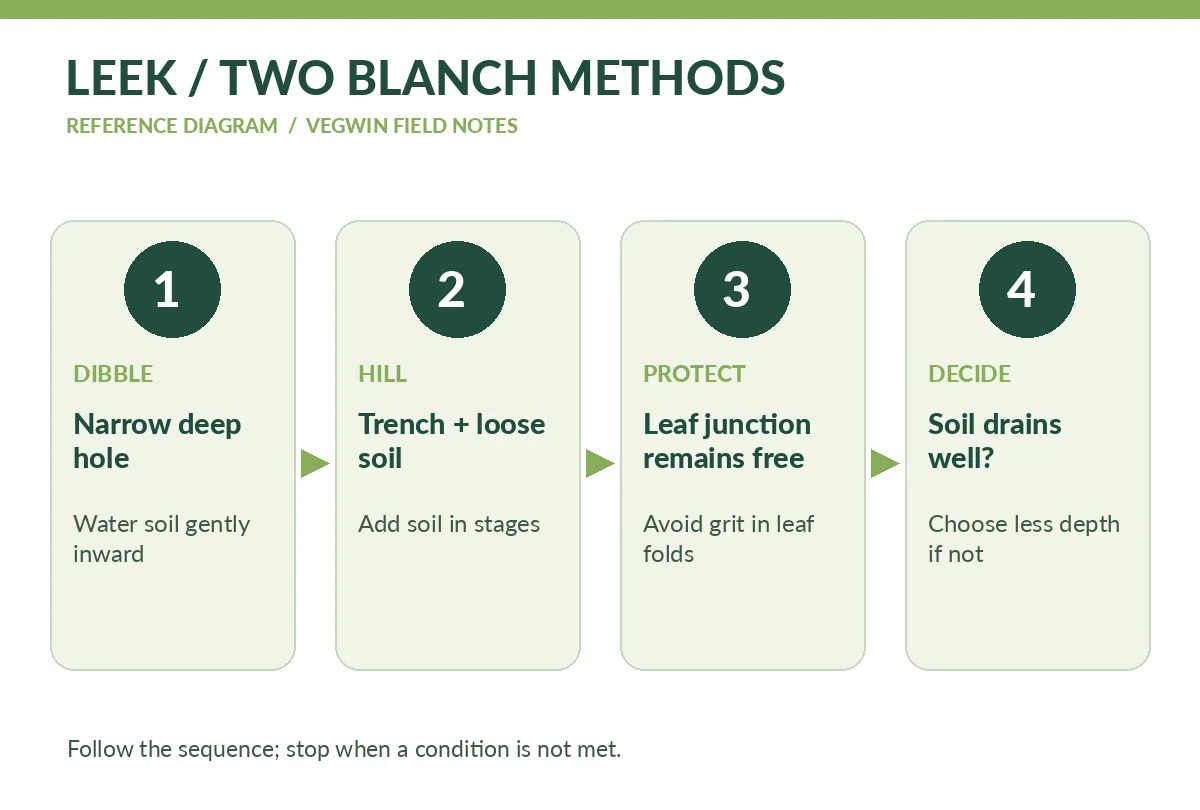
For one method described by Maryland Extension, gardeners make a narrow hole several inches deep, drop a transplant into it and water gently so the soil settles over time. This exposes less of the shank to light as the plant grows. An alternative is to plant in a trench or furrow and add loose soil around the lower stems in stages. Wisconsin Extension discusses both methods. Neither creates a longer shank by magic: cultivar form, plant vigor, available soil and growing time remain important.
Keep soil below the leaf junctions and avoid filling the heart or fold of growing leaves, where grit and moisture can collect. Work gradually and use clean loose soil rather than pressing heavy clods against the stem. Gardeners with rocky or very shallow soil may choose less extreme blanching rather than risking damage. A little green above the white shank is normal and edible. The target is healthy leaf growth plus a mild, usable stem, not maximum buried length at any cost.
For a second independent view of the underlying horticulture, see Wisconsin Horticulture Extension. Pay attention to the specific cultivar, symptom, or growing condition discussed rather than copying any regional calendar literally.
Prevent Competition for Leek Water and Nutrients
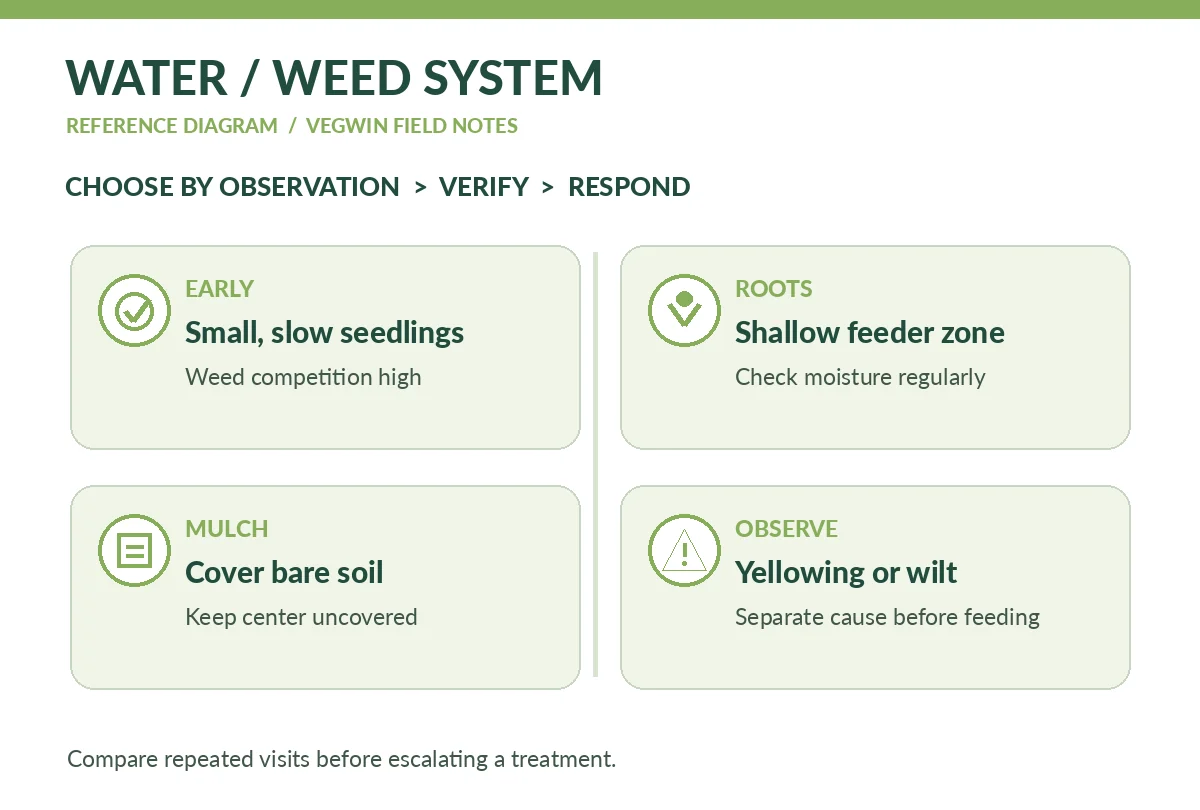
Leeks develop comparatively shallow roots and grow slowly enough early on that weeds can overtake them. Maryland Extension emphasizes weed control during the first months, careful cultivation and regular moisture. Water the root zone deeply enough to reach its active roots, then let the soil drain appropriately before watering again. A clean mulch helps suppress weed seedlings and reduces evaporation, but should not bury the growing point or turn the planting furrow into a water-filled trough.
Use a soil test and local recommendations to evaluate fertility rather than applying an identical amount of nitrogen to every leek bed. Yellowing leaves may reflect normal aging, waterlogging, root damage, low nutrients or disease. Observe which leaves are affected and whether the entire row shares the problem. If the bed has uneven growth, compare light exposure and weed competition before assuming the crop needs more fertilizer. Maintain enough access to check moisture after hilling.
Watch for Allium Pests With an Identification First
Leeks share some pest concerns with onions and garlic, including thrips and, where present, allium leafminer. Their symptoms are not interchangeable. Silvery feeding scars, mined or distorted leaves, and damaged internal tissue require different investigations. Maryland and Delaware Extension list these pests among possible challenges. Check local occurrence because not every region faces the same pressure. Photograph the leaf injury and examine multiple plants, avoiding a diagnosis based on one discolored tip.
Remove and dispose of badly infested material according to local Extension recommendations, and avoid moving suspect plant material to new beds. Physical barriers can be useful at appropriate stages in regions with known pest pressure, but confirm timing so you do not trap pests or block maintenance. This article does not recommend pesticide recipes or application rates. If chemical control is contemplated, identify the problem accurately and follow the current label and local rules.
| Bed situation | Method to consider | What to watch |
|---|---|---|
| Loose deep soil; want longer white shank | Dibble or narrow deep hole | Let soil settle; keep leaf junction free |
| Room to move soil during growth | Shallow trench and gradual hilling | Avoid burying leaf folds and trapping grit |
| Heavy compact soil prone to pooling | Conservative depth + good drainage | Do not create a permanently wet trench |
| Small baby-leek harvest | Simpler transplanting, closer per packet | Stop growing when desired size is reached |
| Cold winter soil freezes solid | Harvest before inaccessibility | Do not assume overwintering will work |
Lift Leeks and Remove the Trapped Soil
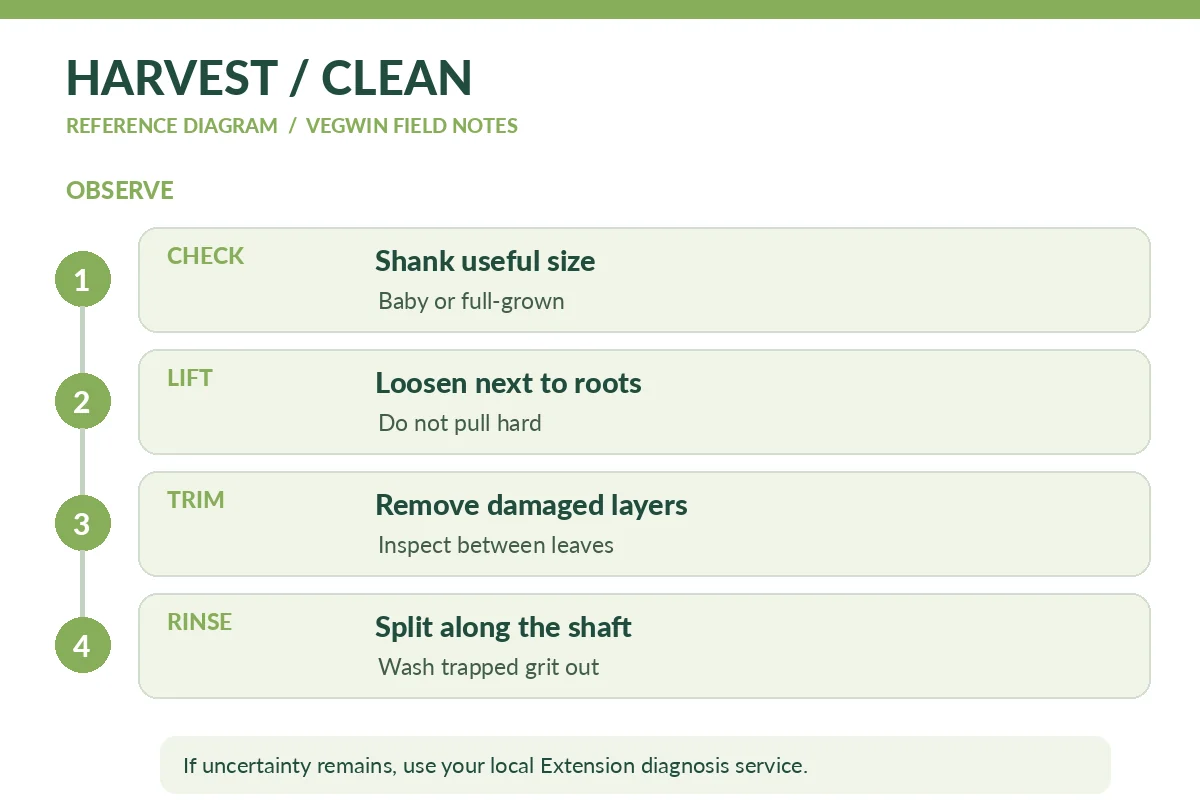
Leeks can be harvested at different sizes rather than waiting for a dramatic bulb. Test the thickness of the usable sheath and compare it with the cultivar description. Maryland Extension notes that the large root system often makes lifting with a fork easier than forceful pulling. Loosen the soil to one side to avoid snapping the white shaft. If the ground is dry and hard, lightly moisten ahead of harvest or work carefully with a fork.
The distinctive cleaning task is removing grit held between layers. Trim damaged outer material, split the sheath when preparing food if necessary, and rinse between leaves under clean running water. A beautiful white shank can still contain soil from hilling. Harvest only as much as can be handled and refrigerated promptly. For winter harvesting in suitable climates, mulch can keep ground workable, but winter access and survival depend on local weather; plan a backup harvest rather than guaranteeing leeks will stay in the bed indefinitely.
Use a Leek Bed Checklist Before the Next Season
After harvest, note the transplant method, length of usable white shank, amount of grit, damage symptoms and ease of pulling. This record tests whether deeper planting truly improved eating quality in your soil. For instance, a shallow sandy bed might produce clean, moderately blanched leeks more reliably than an excessively deep trench. If plants split or are buried in leaf folds, reduce the amount of soil moved upward during hilling next time. For the basics, see our guide: When to Harvest Leeks and Lift Their Tender Shanks Without Damage.
Separate cultivar behavior from weather. One cold winter is not evidence that a selection will always survive. One pest outbreak does not prove every brown leaf was caused by the same pest. A simple map of allium beds also helps avoid immediately following leeks with another close allium crop in the same place when local rotation advice suggests otherwise. These decisions make the next planting measurably better than blindly repeating a schedule.
Related Guides
- How to Blanch Leeks by Hilling Soil Without Burying the Leaves
- How to Transplant Leeks Into Dibber Holes for Long White Shanks
How We Research and Update This Guide
Research checked on October 20, 2026: Maryland Extension, updated March 2026; University of Wisconsin Extension; University of Delaware Extension. We compare university Extension and IPM advice, prioritize observable crop-specific decisions, and avoid giving universal pesticide doses, fertilizer rates or nationwide transplant dates. Recommendations that depend on soil, cultivar, weather and local regulations must be rechecked for your location.
For the site-wide policy, see VegWin affiliate disclosure. The status and availability of that page should be verified in WordPress. Information here does not replace local Extension diagnosis, an approved pesticide label, or tested food-preservation instructions.
No. They form elongated overlapping leaf sheaths, which are the principal edible shank.
No, but excluding light from the lower sheaths can make a longer pale, mild section. The green portions are also usable.
Avoid burying the leaf junctions or growing center; fill holes or hill soil gradually around the lower shank.
Soil introduced during hilling may lodge between leaf layers. Split and rinse the shank carefully during preparation.
No. Overwintering success depends on cultivar, climate, mulch and soil accessibility. Check local Extension advice.