
Eggplant gardening is easiest when the shape of the eventual fruit drives the plan instead of a generic calendar. Round, globe-shaped, slender and small-fruited selections occupy different space and reach eating quality at different sizes. Read the packet or plant label for the particular cultivar, then set a realistic goal: perhaps several small fruit for quick meals or fewer large fruit for grilling. Fruit color alone cannot tell you whether an unfamiliar variety is ready. Record its intended mature size before the first blossom opens.
A productive plant also needs a position where you can see leaves and fruits without damaging neighboring vines. Eggplant is a warm-season member of the tomato family, but a tomato transplant date is not automatically safe for eggplant. Consider how much direct sun the bed receives and whether you can inspect undersides of leaves during early establishment. If the site has repeated soilborne wilt history in related crops, consider a different bed rather than assuming fertilizer will solve it.
Decide Which Eggplant Form Fits Your Harvest
For foundational crop recommendations, consult University of Maryland Extension. Its local conditions are a research reference, not a universal planting-date rule. This page focuses on the specific decisions below; keep your seed packet and local Extension information close when making a regional plan.
Wait for Warm Soil Before Transplanting Outdoors
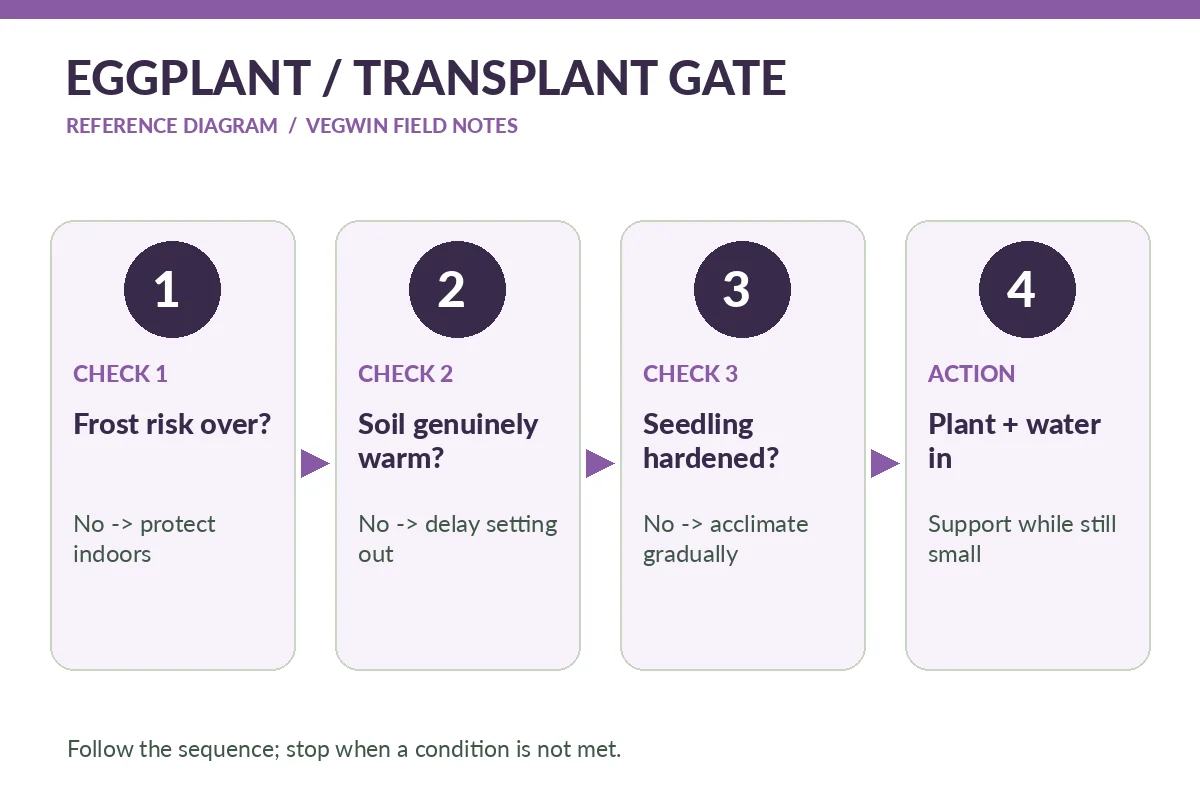
Maryland Extension describes eggplant as very tender and advises transplanting only after frost risk has passed and the soil is thoroughly warm. Cold conditions can stall roots and delay top growth even when leaves remain green. Use local frost information, observed soil warmth and a forecast for the next several nights. USDA hardiness zones summarize historical winter minimums for perennials; they do not provide an eggplant planting date. In a short season, choose a cultivar with a maturity window suited to the available warm period.
Start with healthy, sturdy transplants and harden them to outdoor sunlight and wind gradually. Avoid planting a stressed, root-bound specimen just because a calendar says spring has arrived. Water the root ball before transplanting, set it into prepared soil without breaking the stem, and water in thoroughly. Watch for several days before adding further inputs. A transplant that makes little growth in cold ground usually needs better weather, not a large nitrogen dose.
Set Up Support, Airflow, and Consistent Moisture
Full sun and well-drained, fertile soil support vigorous eggplant, and a soil test is the best basis for fertilizer recommendations. Maryland Extension lists in-row spacing in the neighborhood of eighteen to twenty-four inches for its home-garden system, but the cultivar size, support and growing method should determine the final layout. Avoid squeezing broad-leaved plants into a permanently shaded strip. Install a strong cage or stake while the plant is small so later fruit-laden branches do not split or topple. For the fuller picture, see our guide to growing cucumbers in garden beds.
Water the soil rather than routinely wetting foliage. Check moisture several inches below the surface and look for effective drainage; the top crust may be dry while the root zone is still adequately moist. A clean organic mulch can moderate fluctuations after soil has warmed, while also limiting weeds. Do not apply universal irrigation minutes or fertilizer rates: sandy and clay soils behave differently, and heat, rain, plant size and soil test results change the right response. Keep mulch away from stems.
For a second independent view of the underlying horticulture, see University of Minnesota Extension. Pay attention to the specific cultivar, symptom, or growing condition discussed rather than copying any regional calendar literally.
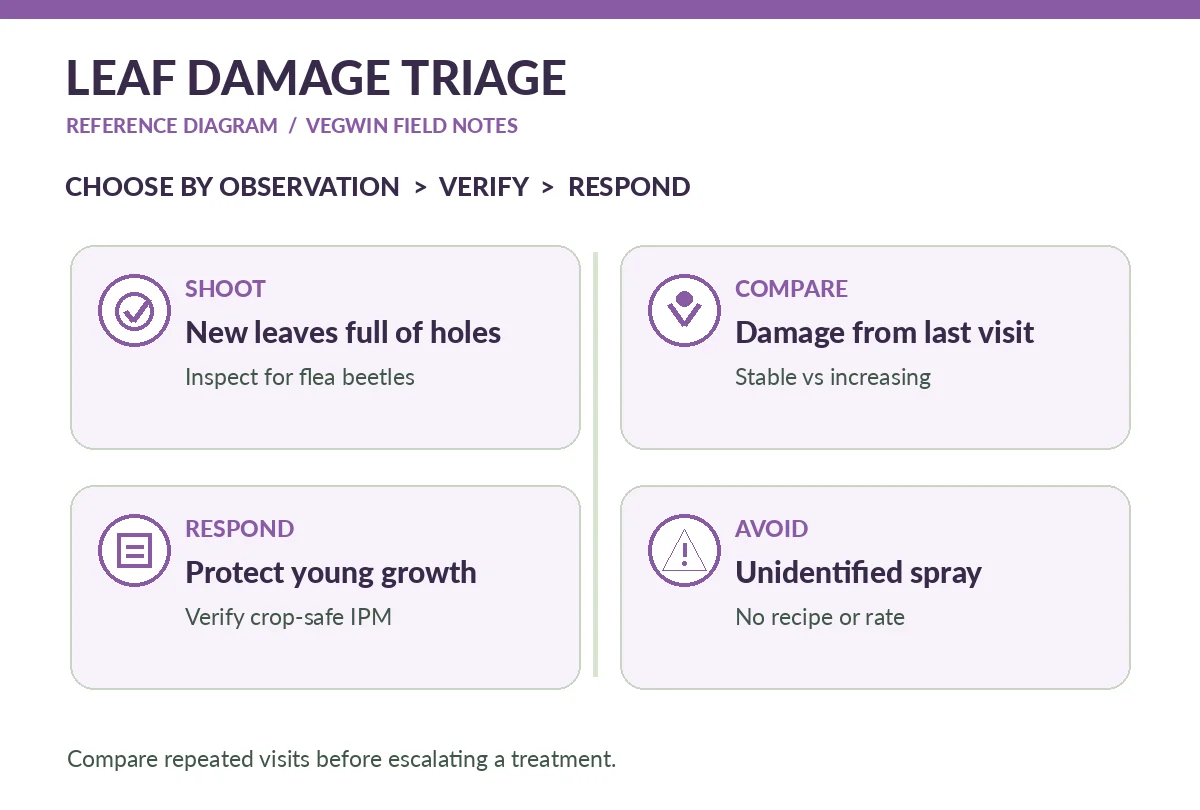
Recognize Flea Beetle Shot Holes Before Treating
Many small, nearly round holes in young eggplant leaves can signal flea beetle feeding. The adults are tiny and may jump away when disturbed. Fresh damage on new transplants is more consequential than the same pattern on an otherwise thriving mature plant. Inspect several leaves, including new growth, and try to confirm the insect before naming the problem. Hail, slugs, caterpillars and other insects leave different patterns; photographs taken over several days can help local Extension staff compare clues.
Use integrated pest management: strengthen establishment, reduce weeds and check whether a suitable physical row cover is feasible before flowering. Covers should be managed so that pollination and plant overheating are not ignored. Remove or adjust a cover when flowering and access require it. If the damage accelerates, seek an accurate diagnosis and local Extension advice. Any pesticide decision requires current product labeling, crop approval and applicable rules; this guide deliberately supplies no home-mixed spray formula or dose.
Choose the Harvest Stage From the Fruit Surface
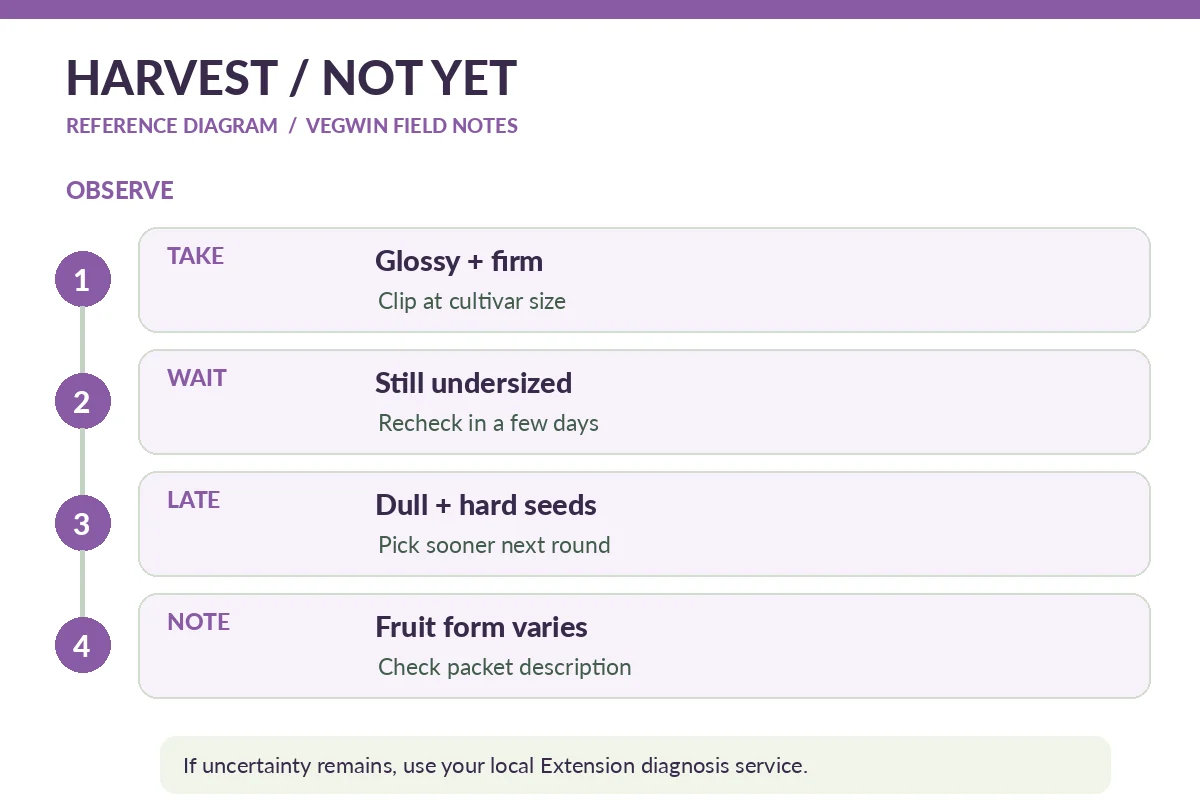
Eggplant is harvested for eating before the fruit reaches biological seed maturity. According to Maryland and Minnesota Extension, fruit is usually at its best when the surface remains glossy and the flesh is firm; dull skin and hardened or brown seeds can be signs it has been left too long. Mature size varies dramatically by variety. Compare each fruit against the packet description and the appearance of others on that same plant rather than holding every eggplant until it is very large. For the basics, see our guide: When to Harvest Eggplant.
Cut the tough stem with clean pruners or a knife rather than pulling or twisting the fruit. Some varieties have prickly calyxes, so gloves may be helpful. Inspect fruit every few days when production is strong; leaving overmature fruit can lower plant productivity. Eggplants are sensitive to chilling during extended storage, so plan to use fresh fruit reasonably promptly. Home-canned plain eggplant must not be improvised: use only tested preservation processes, and treat canning as a separate food-safety topic.
| What you observe | Check first | Reasonable next step |
|---|---|---|
| New plant stops growing after cool nights | Soil warmth and recent forecast | Wait for sustained warmth; avoid reflex feeding |
| Tiny round holes on young foliage | Look for jumping flea beetles | Confirm pest, protect new growth through IPM |
| Loaded stems leaning or splitting | Support and tie placement | Support branches gently before fruits enlarge |
| Large fruit looks dull or seedy | Cultivar maturity and skin gloss | Harvest younger glossy fruit next round |
| Yellowing with wilt | Soil moisture, drainage, and branch pattern | Seek diagnosis before any treatment |
Troubleshoot Fruit Set and Sudden Plant Decline
If flowers form but few usable fruit follow, consider weather stress, plant vigor, watering changes and cultivar behavior before concluding that the plant has a disease. Record whether buds fall during a cool spell or unusual heat and whether the plant resumes setting fruit after conditions stabilize. Large quantities of nitrogen can stimulate lush leaves without necessarily improving fruiting; fertilize from evidence and recommendations for the soil, not as a reflex to dropped blossoms. For more detail, our guide “Tomato Plants Care” looks at a weekly checklist for water, leaves, and fruit.
Yellowing or wilting needs a different investigation. Check the root-zone moisture and drainage, then look for stem damage and a pattern of affected branches. Minnesota Extension identifies Verticillium wilt as one possible soilborne concern in eggplant, but wilting alone cannot diagnose it. Do not automatically carry over treatments used on tomatoes or peppers. With persistent decline, photograph whole-plant and close-up symptoms and ask a local diagnostic service before treating.
Keep a Repeatable Weekly Eggplant Check
A ten-minute check can be more valuable than an elaborate one-time treatment. On each visit, note soil moisture below the mulch, the most recent new leaves, whether shot holes are increasing, the position of loaded branches, and the number of fruits approaching harvest size. This simple record separates slow but healthy growth from a worsening problem. It also reveals whether the support is still protecting heavy branches and whether nearby crops are blocking sunlight.
Use the same sequence after a disturbance: first describe what changed, then identify a likely cause, then choose the least disruptive response and review the result. If one plant alone is failing, compare its soil and stem conditions with healthy neighbors. If many plants stall simultaneously after cold weather, investigate climate before applying a product. Crop-specific diagnosis and local observations prevent guesswork from turning into an unnecessary treatment. Our guide to growing celery covers a moisture-first plan for crisp stalks.
Related Guides
- How to Spot Flea Beetle Damage on Eggplant and Protect Young Plants
- How to Grow White Eggplant and Pick Glossy Tender Fruits
- When to Pick White Eggplants Before Glossy Skin Turns Dull and Seedy
How We Research and Update This Guide
Research checked on October 20, 2026: Maryland Extension; Minnesota Extension; UC IPM. We compare university Extension and IPM advice, prioritize observable crop-specific decisions, and avoid giving universal pesticide doses, fertilizer rates or nationwide transplant dates. Recommendations that depend on soil, cultivar, weather and local regulations must be rechecked for your location.
For the site-wide policy, see VegWin affiliate disclosure. The status and availability of that page should be verified in WordPress. Information here does not replace local Extension diagnosis, an approved pesticide label, or tested food-preservation instructions.
Not necessarily. Eggplant is especially sensitive to cold. Wait for frost-free, thoroughly warmed soil and follow local weather guidance.
Flea beetles are a common cause of small shot holes, especially on transplants, but identify the insect and damage pattern before choosing management.
A stake or cage can protect branches when fruit become heavy. Install support early and size it to your cultivar.
No. Harvest size is variety-specific; shiny, firm fruit often offers better eating quality than a dull, overmature fruit.
No. First examine moisture, drainage, stem injury and the pattern of symptoms. Seek an accurate diagnosis and follow labels and local rules if treatment is warranted.