
Cilantro is a cool-season annual grown for its fragrant green leaves, while the mature dry seeds are called coriander. That double use is the key to planning a successful cilantro garden. When hot weather and longer days encourage flowering, repeatedly cutting off flower stems cannot always turn an aging plant back into a lush leaf producer. Instead, plan several small sowings for leaves and decide intentionally whether to let selected plants flower and develop coriander. This guide is about cilantro’s short production cycle, not a repeat of the broad herb-garden article or the basil-pruning guide. US planting dates vary by region and season.
Choose Leaves or Coriander Seed as Your Goal
Write the harvest objective on the row label before sowing. For cilantro leaves, prioritize cooler growing periods and small repeat sowings so new plants are coming along while older plants bolt. For coriander seed, allow selected healthy plants to complete flowering and seed maturation rather than cutting every stalk. Oregon State University Extension explains that heat and daylength both influence cilantro bolting; warm long days may quickly shift the crop from leafy growth to flowers and seed. Our guide to growing basil for repeat harvests adds more detail on this.
These are different harvest targets. If you want a garnish every week, one big sowing is less flexible than small repeated plantings in appropriate weather. If you want aromatic mature coriander seeds, reserve space and time for flower and seed stalks, and plan to catch seeds before they shed. A mixed garden can include a leaf-focused short row and a separate seed-focused row. Do not assume the seed crop will finish in the same number of days as a leafy cutting.
Time Sowing for Cool Conditions
Cilantro performs best as a cool-season herb; regional guidance commonly favors spring and fall windows rather than the hottest midsummer period. Oregon State notes that daylength and high temperature encourage bolting and that summer plantings can flower quickly. In hot regions, afternoon shade may extend useful leaf production but cannot eliminate the plant’s normal reproductive cycle. In cooler regions, full sun can be suitable. Use your local Extension planting calendar and observe daytime conditions rather than translating a USDA hardiness zone into planting dates.
A light frost tolerance does not make cilantro immune to all winter weather. Young plants, exposed containers and sudden severe cold have different risks from established foliage in a mild spell. Wisconsin Extension describes cilantro as a cool-season crop that may not survive a hard freeze. A tiny well-timed sowing can be more useful than filling a large bed when conditions almost guarantee premature seed stalks.

Direct-Sow Into Well-Drained Soil
Cilantro develops a taproot, so direct sowing is often easier than moving established seedlings. Choose workable, reasonably fertile, well-drained soil or a draining container. Wisconsin Extension advises shallow sowing and thinning according to the harvest goal; check the seed packet and regional recommendations for suitable depth and plant spacing. Avoid dense clumps that deny every plant air and light. Mark the row so you can distinguish cilantro seedlings from emerging weeds while they are small. If you want the full process, read how to grow dill in a pot.
Water gently after sowing, keeping the seedbed adequately moist for germination without saturating it continuously. Once established, keep moisture reasonably even; drought stress can further reduce leaf quality. Avoid unnecessarily disturbing roots while thinning, and do not assume cilantro transplants behave like basil seedlings. Where the bed has a history of disease or poor drainage, remedy site conditions before planting a new herb crop. Do not invent fertilizer rates; use a relevant soil test where amendment decisions are needed.
Maintain a Succession Plan for Tender Leaves
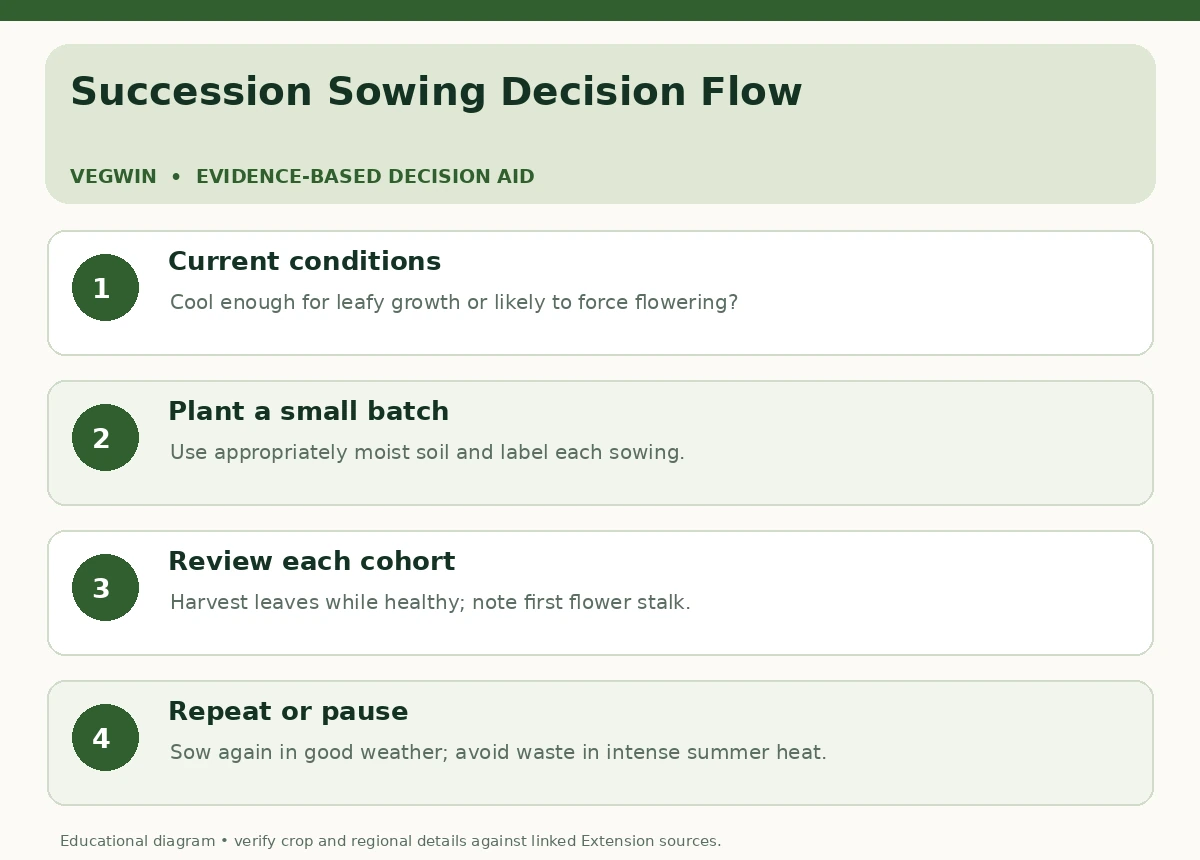
University of Wisconsin and Maryland Extension suggest sowing at intervals of about two to three weeks during suitable conditions for repeated leafy harvest. Treat that as a planning concept, not a promise of year-round supply. A sequence of plantings can overlap so young foliage is available while older stems turn feathery and begin to flower. During a spell of intense summer heat, skipping or reducing sowings can be more efficient than repeatedly planting seed that bolts before much harvest.
Use small labeled areas or separate containers with dates on each planting. Watch each cohort for leaf size and flowering rather than harvest according to a single maturity number copied from another climate. For salads and garnish, harvest from healthy young growth while leaving enough foliage for further growth if repeated picking is planned. When plants initiate flowering and leaves become sparse, decide whether to pull them, keep them for beneficial flowers or retain a seed crop instead of fighting the natural transition.
Harvest Leaf Cilantro Without Exhausting the Bed
Cut usable leaves or leafy stems from clean vigorous plants, favoring new healthy growth and avoiding excessively hard stripping of the same small plant. Maryland Extension describes harvesting once plants have developed sufficient foliage. Use clean tools when clipping multiple crops. Do not confuse fragrant young cilantro leaves with the finer divided leaves that appear on developing flower stalks; both relate to the same plant, but the leafy-harvest target is usually before flowering dominates.
Rinse produce using appropriate food-handling guidance and refrigerate as needed for culinary use; short shelf life makes successive small harvests especially practical. If the plants are stunted or yellowing, check moisture and light first and consider pest or disease identification if symptoms persist. Repeated heavy fertilization is not an evidence-based fix for bolting. The gardener’s main lever for ongoing leaf harvest is seasonally sensible succession sowing, not pretending one cilantro plant will remain vegetative indefinitely. If you want the full process, read how to sow chervil seeds for tender leaves before heat causes bolting.
| Garden observation | What it means | Next step |
|---|---|---|
| Cool growing window, young leaves | Good leaf-harvest opportunity | Sow another small batch if season remains suitable |
| Long flower stalk emerging | Plant entering reproductive stage | Harvest leaves now or designate for seed |
| Rapid bolting during hot weather | Normal heat/daylength response possible | Shift sowing to a cooler window |
| Rounded seed heads turning brown | Potential coriander harvest | Collect before seed drop; dry appropriately |
Let Selected Plants Mature for Coriander
For seed harvest, allow flower stems to develop. White to pale flowers give way to small rounded fruits commonly called coriander seeds. As heads ripen and begin to dry and brown, watch closely for natural shattering that can spill the harvest into the bed. Maryland Extension recommends gathering seeds as they mature. Harvest timing will vary with local weather, and moist conditions can affect drying. Keep a dedicated seed row marked so it is not accidentally cut during leaf harvesting. If you want the full process, read how to grow fenugreek for tender leaves or mature spice seeds.
Dry collected material in a clean, well-ventilated way until suitable for storage, then remove debris and place fully dry seeds in a labeled airtight container. Do not give an invented drying time or claim a particular moisture content without a tested process. If saving seed for future planting rather than culinary use, note that varietal identity and pollination can affect the outcome, and select healthy mother plants. Seed production deliberately sacrifices some leaf production; that trade-off should be planned rather than treated as a crop failure.

Recognize Bolting and Adjust the Next Sowing
The transition from broad leafy growth to taller stalks and fine divided foliage signals that the plant is shifting toward flowering. When this follows hot or long-day conditions, it is generally normal development rather than evidence of a pest attack. Pinching a flower stalk may delay some flowering on a plant, but it cannot change the seasonal biology of an annual indefinitely. If leaf yield is your priority, focus attention on the younger sowings and reserve mature plants for seed or beneficial blooms.
This page differs from a general herb-garden layout: cilantro needs a crop schedule, a direct-sowing method, and a deliberate leaf-or-seed harvest choice. It also differs from basil, where repeated stem-tip pruning can more effectively maintain branching leaf growth under suitable conditions. Keep a record of each cilantro planting’s date, leaf harvest and first flower, then compare which periods gave you the best results locally. Replace myths about companion planting with observation and genuine local Extension evidence. If you want the full process, read how to grow dill for fresh leaves and seed without losing the harvest.
Related Guides
- Growing Herbs by Type: Water, Harvest, and Winter Survival Guide
- How to Harvest Coriander Seeds From Cilantro Before the Round Fruits Drop
- How to Harvest Cilantro Leaves and Keep Plants Productive Longer
How We Research and Maintain This Guide
We checked the linked sources on October 19, 2026. Claims below are tied to specific university Extension or National Center for Home Food Preservation guidance, not to invented trials, a product endorsement, or universal regional conditions. These original graphics are simplified decision aids, not diagnostic photographs. The site owner should check local Extension recommendations, crop identity, packaging instructions and WordPress overlap before manually publishing. Sowing windows and frost risk must be locally adjusted; no universal dates or guarantees of continuous production are implied. Variety identity and culinary seed storage need proper care.
Evidence and further reading: [1] Oregon State University Extension [2] University of Wisconsin Extension [3] University of Maryland Extension
All three buttons lead to independent educational sources and are not paid recommendations. We checked sources including affiliate disclosure.
Yes. Cilantro usually refers to its fresh leaves, while coriander refers to the mature seeds of Coriandrum sativum.
Warm temperatures and longer days promote flowering. Choose cooler planting windows and succession sowing for leafy harvest.
Yes, if the container provides drainage and adequate rooting volume. Monitor moisture closely, especially during hot weather.
It may delay visible flowering briefly but cannot reliably stop the plant’s seasonal transition. Plant successive batches for continuing leaves.
Allow seed heads to mature and turn brown, then collect before the seeds fall. Dry thoroughly before storage and follow local food-handling guidance.