
Cilantro and coriander are two harvests from the same plant, Coriandrum sativum. Its broad young leaves make a fresh herb, but once it bolts the plant produces finely divided upper foliage, small white flowers in umbels and eventually nearly round aromatic fruits commonly called coriander seeds. Capturing those fruits is a timing and handling task, not a matter of collecting flower petals. Use the botanical drawings alongside the actual specimen in the garden, and check your local climate, cultivar and current conditions before making cuts or planting decisions.
Recognize the Real Coriander Seed Head
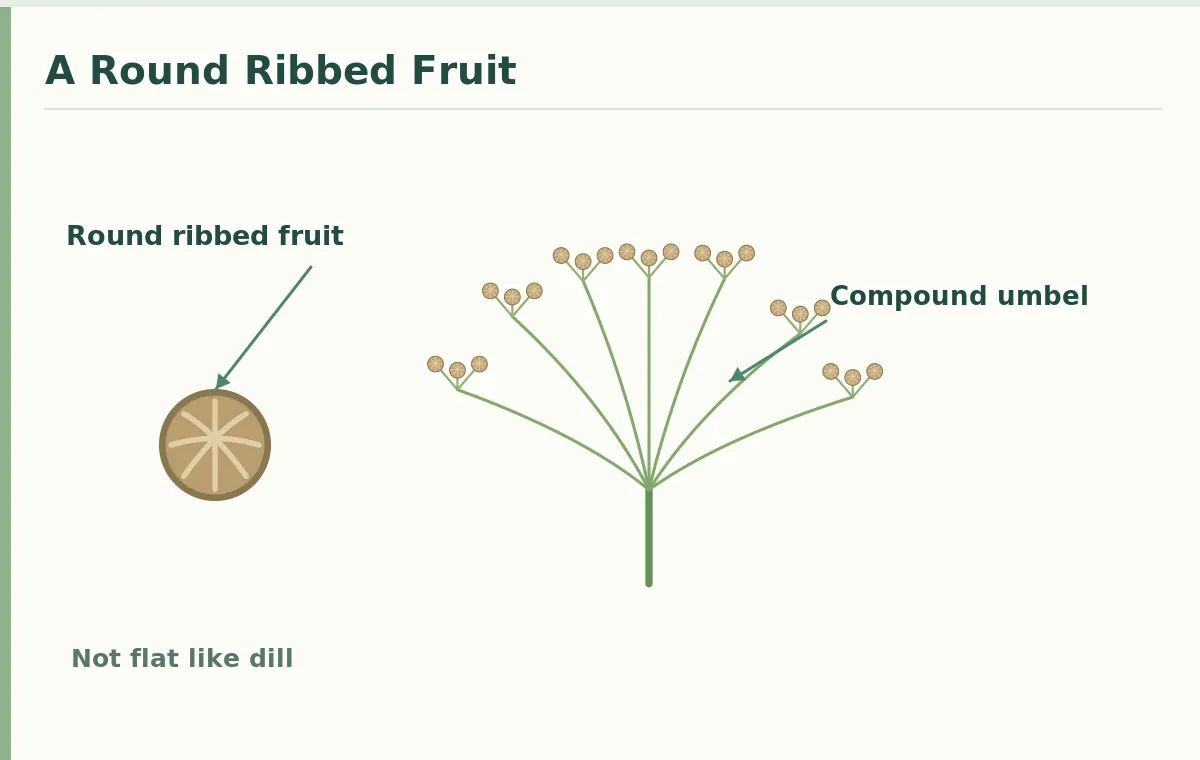
After bolting, a cilantro plant grows taller and its upper leaves become much finer than the parsley-like leaves near the base. Small white to pale pink flowers are held on separate slender rays in compound umbels. Each fertilized flower can develop a rounded fruit. The recognizable dry spice is not an angular black onion seed or the flat, winged fruit of dill. Inspect the fruit shapes closely rather than judging readiness by the color of the lower leaves alone.
Compare the plant in front of you with the close-up rather than treating an illustration as a substitute for species identification. If a familiar-looking leaf, root or flower has a different attachment, stop and confirm the plant. The difference matters for this specific task and for avoiding damage.
Wait for Fruits to Turn Tan
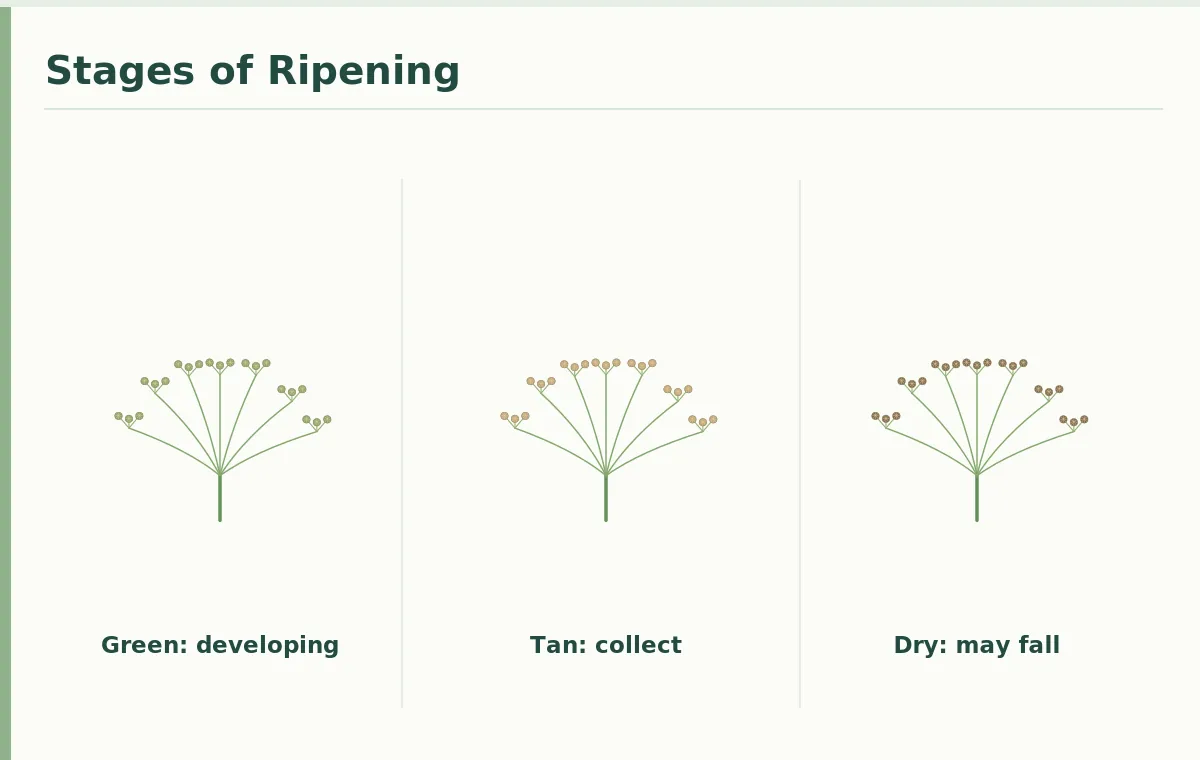
Look for firm, fully formed nearly spherical fruits changing from green to tan or light brown. Wisconsin Extension recommends harvesting after the seed heads mature and the plant dries, before significant shattering. Green clusters will still be developing and may dry poorly; very brittle brown clusters can drop fruits as you touch them. Fruit maturity across an individual plant may be uneven, so gather the ripest heads first and return later for younger clusters instead of treating the whole patch as a single harvest.
Choose a Dry Collection Window
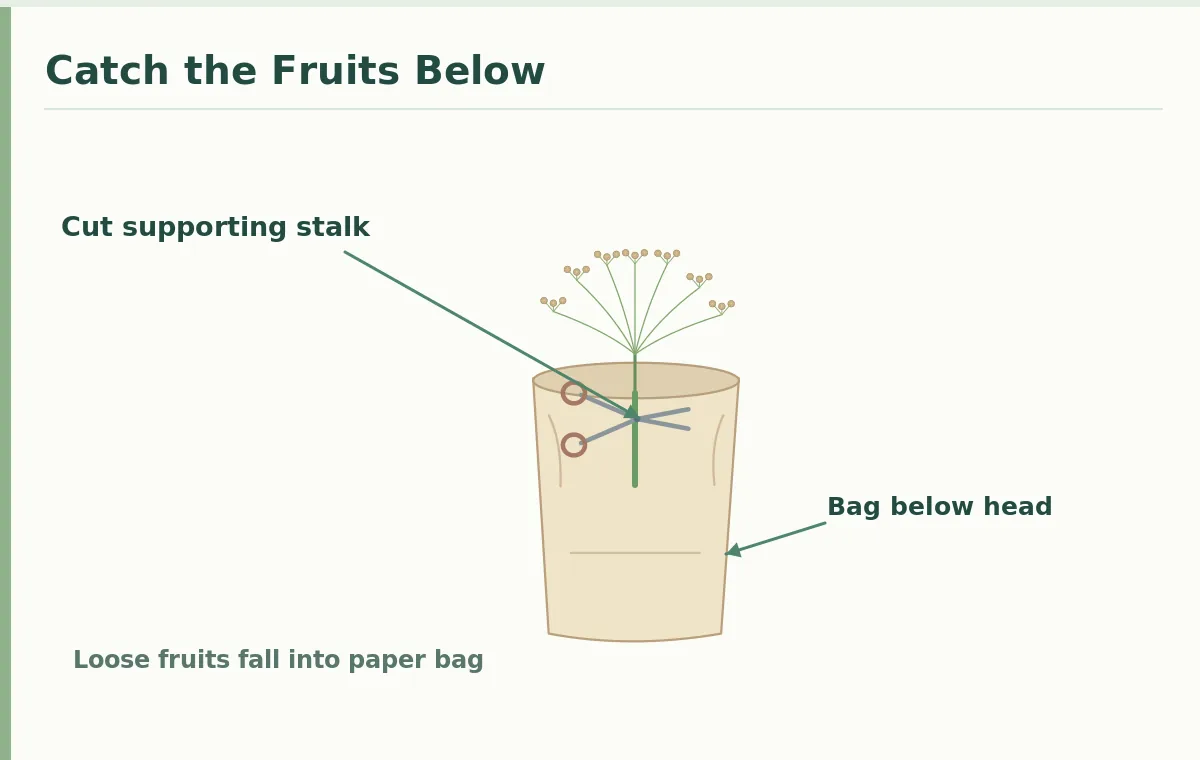
Visit the patch when rain or irrigation has dried from the umbels. Moist heads inside a closed container may mold before their fruits dry properly. Position a clean paper bag or spread cloth underneath the ripest branch before you cut it. Do not swing the branch across a path or over bare ground, where loose coriander fruits disappear into mulch. A breeze can dislodge them; on a windy day, collect carefully in small batches or choose a calmer time.
Prepare materials before you start, then work on a small test area. Record what the soil and weather were like, and adjust cautiously for the variety in your garden. It is easier to correct one shallow planting or misplaced support than an entire row after plants begin actively growing.
Cut Below the Umbel Into a Paper Bag
Hold the dry branching head above a wide paper bag, then cut the supporting stalk below the entire seed-bearing umbel. The blade should contact the stalk, not the fruits or the tiny lateral rays. Lower the stalk into the bag so shaken fruits collect at its bottom. Utah State University Extension describes cutting brown seedheads and hanging them in paper bags. The illustration shows this physical order: seedhead above, cutting point on its stalk, bag opening under the seedhead.
Dry the Collected Heads With Airflow
Keep the cut heads in a warm, sheltered, well-ventilated place while the remaining fruits finish drying. A paper bag can catch released fruits, but do not fold it airtight around wet foliage. If plants are still damp, spread heads thinly on a clean screen or paper until visibly dry before enclosing them loosely. Avoid sun-heated sealed plastic bags. When the rays and fruits are crisp rather than pliable, gently rub or shake to release the round fruits. Remove the spent stems afterward.
Look again at the actual living growing point or fruit attachment before cutting or moving anything. In the diagram, arrows mark plant parts rather than arbitrary positions in the frame. Keep roots and healthy crown tissue wherever the job depends on regrowth, and leave damaged plant parts out of stored harvests.
Separate Fruits From Stems and Chaff
Pour the collected material onto a pale tray and pick out thick stems, leaf fragments and any visibly damaged material. The fruits should be consistently dry and recognizable as small rounded coriander pods. A kitchen strainer may help separate differently sized stem pieces, but avoid aggressive crushing if saving whole viable seed for planting. Culinary coriander may be cracked for recipes later; the whole fruits generally store more neatly. Discard moldy or discolored lots instead of mixing them into a sound harvest.
Store and Label the Finished Seed
Transfer completely dry round fruits to a clean container with the plant name and harvest year. Store in a cool, dark and dry location away from steam and condensation. A sealed jar is appropriate only after the material has dried; moisture trapped inside undermines storage. If you intend to replant, keep lots separated by cultivar or collection location, and be aware that nearby flowering coriander may cross-pollinate. Germination performance depends on the age and storage history of the seed.
Over the following days, inspect for new growth, moisture stress or changes in plant color. The goal is a repeatable process, not an exact calendar prediction. Temperature, rainfall, variety and soil drainage will alter results, so use observable botanical stages to decide what to do next.
Avoid Confusing Leaf and Seed Goals
Frequent leafy cilantro harvests and the final coriander seed harvest serve different parts of the plant life cycle. Heat commonly hastens bolting, particularly for spring crops that mature in hot weather. If your garden needs both fresh leaves and dry seeds, plant successive sowings and designate a few healthy plants to flower untouched. Never spray a seedhead with an unverified product or assume every herb with an umbel is edible. Confirm the crop identification before eating or saving it.
Diagnose Poorly Filled or Lost Seed
A bloom-rich plant with few plump fruits may have suffered weather, water stress or poor pollination. Entirely green fruits simply need more time; brittle empty umbels may have already dropped mature seeds. Observe the remaining heads rather than guessing from calendar dates alone. Coriander fruit can be small and easy to overlook among tan stems. Put a clean tray under drying bundles and check it regularly for the first falling fruits to recognize your local harvest window.
Related Guides
- Growing Herbs by Type: Water, Harvest, and Winter Survival Guide
- How to Harvest Cilantro Leaves and Keep Plants Productive Longer
- Cilantro Garden Guide: Grow Tender Leaves and Harvest Coriander
How We Research and Check Botanical Details
This guide was compared with these Cooperative Extension or university horticulture materials on October 28, 2026: hort.extension.wisc.edu source 1 extension.usu.edu source 2 extension.umd.edu source 3. Their recommendations inform the plant anatomy, season, appropriate depths and handling depicted above. We treat range-based guidance as regional guidance, not a guarantee for every garden, and we avoid unsourced pest remedies or fertilizer rates. The diagrams are teaching illustrations; verify the living specimen, its cultivar and local gardening conditions before applying the steps.
Disclosure and Editorial Limitations
This article is educational and contains no confirmed affiliate product recommendations. See the VegWin affiliate disclosure. No WordPress publication or endorsement is claimed. Local extension staff can help with unusual symptoms and species identification; inspect the current plant and use current local guidance where conditions differ from general advice.
Yes, mature dry coriander fruits can be stored whole, although culinary handling and seed-lot cleanliness should be kept separate.
Umbels mature unevenly; leave green developing fruits longer and collect tan ripe clusters first.
Below and around the seed-bearing head so fallen fruits land inside; cut the stalk below the umbel.
No. Coriander fruits are nearly round, while dill fruits are flatter and winged.
Avoid enclosing damp material airtight; allow it to dry with airflow first.