
Basil is rewarding when you grow it for a steady sequence of kitchen cuttings rather than a single giant harvest. Tender shoots can branch again if cut at a suitable stem junction, while repeated flower production changes how a plant uses its energy. Yet a gardener should not treat every basil the same: sweet, Thai, purple-leaf and dwarf types vary in flavor and growth habit, and a container behaves differently from a warm garden bed. This guide makes three decisions practical: choose the appropriate plant, harvest without exhausting it, and recognize a real health warning before blaming fertilizer. It is deliberately more crop-specific than VegWin’s broader herb-garden planning guide.
Choose a Basil Type for the Actual Use
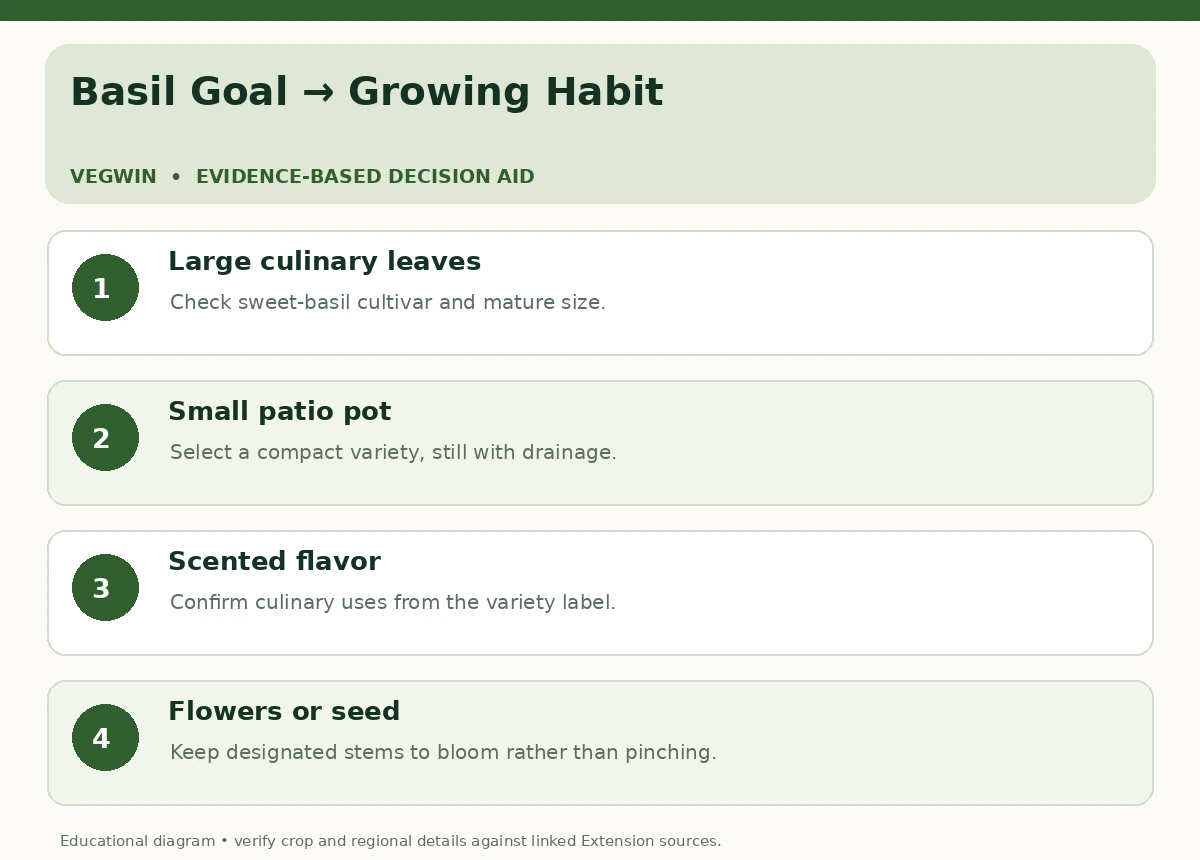
Start with your recipe and your space. Iowa State Extension describes sweet basil and other types, while University of Florida IFAS groups basils into sweet green, dwarf green, purple-leaf and scented varieties. A sweet basil selected for a large-leaf sauce harvest is not necessarily the best choice for a narrow windowsill or Thai cooking. Read the seed label’s mature size and culinary description, and verify any claim about disease resistance for the named cultivar rather than trusting a generic “improved” label.
Decide whether your main goal is tender foliage, decorative flowers or seed collection. Most kitchen growers want frequent leafy shoots, so pick a variety whose habit makes repeated cutting easy. A compact type can simplify a small container, but “dwarf” does not eliminate the need for root space, drainage and sufficient light. When buying plants, check leaf undersides and stems for discoloration before placing them next to healthy herbs. More varieties can add flavor, but they also require labels to prevent mistaken harvests.
Plant Only When Conditions Suit Basil
Basil prefers warm conditions and suffers from cold injury. Iowa State Extension advises waiting until frost risk has passed outdoors in a temperate climate, while UF/IFAS provides different seasonal advice for Florida. These are not conflicting calendars: they describe different regions. Use your local frost history, actual weather and crop tolerance, not an annual-vegetable timetable inferred from USDA hardiness zones. Seeds can be started in a suitable indoor medium, and young plants need sufficient light to avoid weak stems before hardening off.
Choose a bright growing site with reasonably fertile, well-drained soil and enough air circulation to inspect plants. Containers must drain and should not be left sitting indefinitely in runoff. UF/IFAS notes that containers can help with drainage; a pot can also dry more quickly than a bed during heat. Water the root zone thoughtfully as the top layer begins to dry, rather than treating a fixed number of watering days as universal. Avoid heavy nitrogen feeding, which Iowa State cautions can affect basil flavor.
Use Stem Tips to Encourage Branching
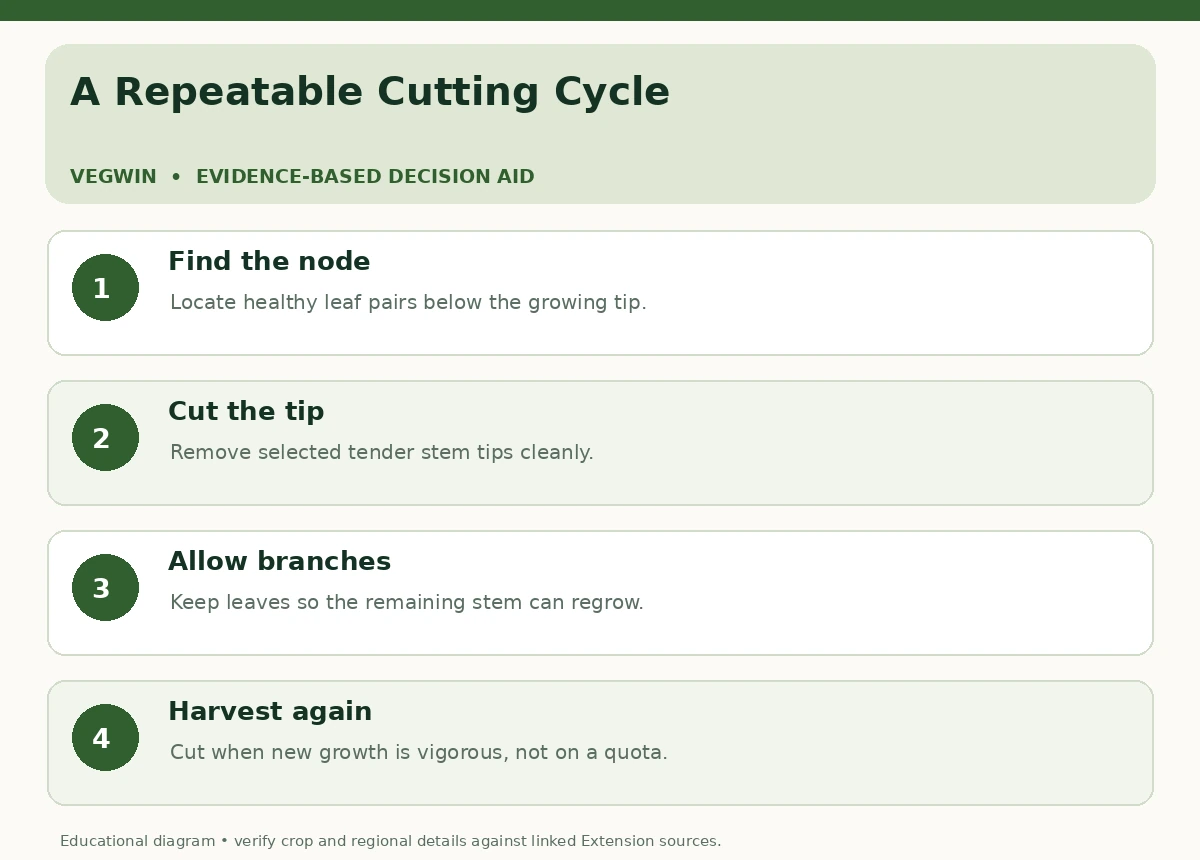
For an ongoing foliage harvest, look at a stem and identify a pair of healthy leaves with a growing point above it. Pinching or cutting the tip above a suitable node encourages branches below the cut to grow. Iowa State explains that removing stem tips makes new growth available later. This is more deliberate than repeatedly removing every large lower leaf, which can leave the plant lanky. Use clean scissors on thicker stems and avoid tearing a branch or crushing soft shoots.
Keep enough healthy leaf area for the remaining plant to continue growth. Do not make an extreme cut into woody, weak or diseased tissue expecting instant regrowth. Pick a few stems, let the plant respond and adapt the next harvest to its vigor and weather. In a shared garden, a harvest card can show which plants were clipped that week so several people do not cut the same plant hard in quick succession. A bushier shape is useful only if light and airflow still reach the center.
Decide What to Do When Flowers Appear
If culinary leaves are your priority, inspect stems for forming flower buds and pinch selected tips before flowering progresses. Both Iowa State and UF/IFAS explain that frequent cutting and removal of flowers can extend leaf production. A flowering basil plant is not automatically unsafe to eat; it simply may shift away from the tender leafy habit you wanted. Taste and texture can also vary by variety and the plant’s condition, so do not tell gardeners that every leaf becomes inedible at the first flower.
If you want seed or a flowering ornamental plant, intentionally keep some flower stalks. Removing every bud would defeat that purpose. UF/IFAS discusses allowing basil to set seed as a distinct goal; any decision to save true-to-type seed should also consider cross-pollination and how the cultivar was bred. You might designate one plant for kitchen leaves and another for blooms. That is more predictable than trying to maximize leaves, flowers and seed from the same small plant simultaneously.
Scout for Downy Mildew Before Treating
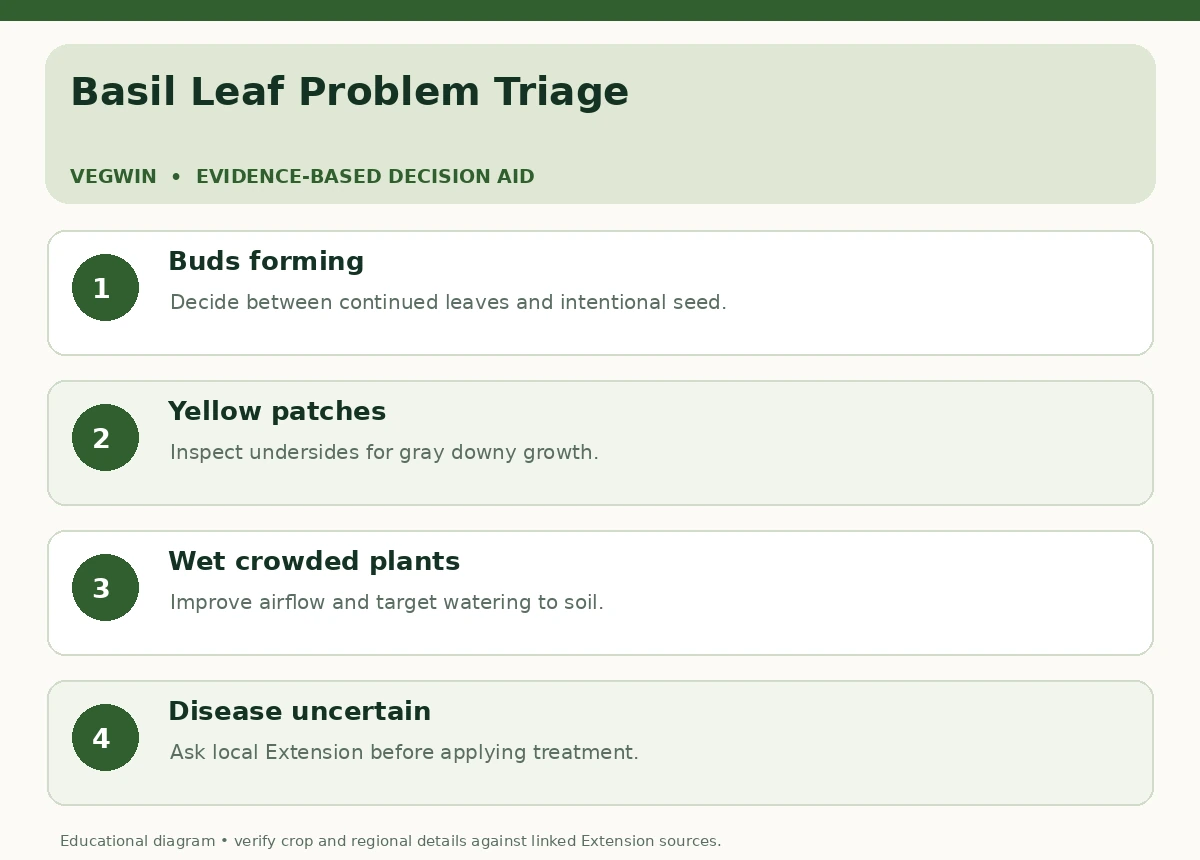
Not all yellow basil leaves indicate a nutrient shortage. Iowa State Extension describes basil downy mildew as yellowing between leaf veins that may precede gray fuzzy growth on leaf undersides. UF/IFAS also warns that the visible pattern can resemble a nutrient problem. Inspect the underside of several affected leaves and ask a local diagnostic service when symptoms are unclear. Do not apply random fertilizer, fungicide or household remedies to an unidentified issue; downy mildew is an oomycete disease and management advice is region-specific.
If downy mildew is suspected, avoid spreading infected material between pots and follow the Extension instructions for removing affected plants. Iowa State recommends bagging and removing strongly suspect plants rather than continuing to harvest visibly diseased foliage. Reduce prolonged leaf wetness and crowding where feasible; use irrigation that targets the soil rather than routinely wetting leaves. Cultivar resistance may be helpful but cannot be presumed from leaf color alone. Local disease pressure and published resistance rankings change over time. Our cilantro garden guide goes into more detail.
| What you see | Likely interpretation | Next action |
|---|---|---|
| Vigorous tips, no flowers | Harvestable vegetative growth | Cut selected tips above leaf nodes |
| Frequent flower buds | Plant shifting toward reproduction | Pinch for leaves or keep for seed intentionally |
| Yellow interveinal patches | Possible downy mildew, not confirmed | Inspect undersides; consult Extension |
| Wilt plus wet potting mix | Possible root-zone moisture problem | Check drainage before adding more water |
Build a Repeat Harvest and Renewal Routine
Twice a week during active growth, check soil moisture, new side branches, developing flower spikes and signs of spotted or yellow foliage. Record whether new shoots grew after the previous tip harvest. For cooking, cut from vigorous growth rather than harvesting just because the calendar says it is time. For a large batch of pesto or sauce, distribute harvest among multiple plants if that leaves more photosynthetic leaf area on each. Wash produce before culinary use following food-handling guidance.
When basil becomes woody, heavily flowered, diseased or unproductive for the season, decide whether replacement with a healthy new planting is more sensible than repeatedly stripping it. Indoor or protected growing can extend access where light and temperature permit, but the constraints differ from an outdoor summer bed. Do not overgeneralize one region’s planting months to another. The goal is a manageable series of healthy cuttings, not an unsupported promise of uninterrupted year-round production from a single plant.
Keep Basil Care Distinct From Herb Garden Planning
The earlier herb-garden article helps group rosemary, mint, basil and other herbs by space, water and growth habit. This basil guide instead provides a leaf-focused harvest method and plant-specific symptom check. Use the herb-garden article to decide where herbs belong, then return here when you want to understand why basil is flowering, how the stem should be cut or whether yellowing needs disease identification. This prevents a generic companion-planting discussion from becoming the answer to a practical basil harvest question. For the fuller picture, see our guide “Herb Garden Planning”.
For every new basil crop, save its label and note the date of first harvest, subsequent branching, flower formation and health concerns. Your records will show whether moving the pot, adjusting moisture or selecting another documented variety made a difference. Compare evidence against your actual conditions rather than copying a rigid fertilizer schedule or unverified claims that basil repels pests from neighboring tomatoes. This crop does well when decisions follow observation and source-backed guidance.
Related Guides
- Growing Herbs by Type: Water, Harvest, and Winter Survival Guide
- How to Propagate Basil From Cuttings in Water or Potting Mix
- How to Harvest Thai Basil Above Leaf Nodes for Fresh Branching Shoots
- Where to Pinch Basil Above a Leaf Pair for Strong Side Branches
- How to Grow Purple Basil From Seed and Keep Its Leaves Colorful
How We Research and Maintain This Guide
We checked the linked sources on October 19, 2026. Claims below are tied to specific university Extension or National Center for Home Food Preservation guidance, not to invented trials, a product endorsement, or universal regional conditions. These original graphics are simplified decision aids, not diagnostic photographs. The site owner should check local Extension recommendations, crop identity, packaging instructions and WordPress overlap before manually publishing. Basil climate, cultivar and local downy mildew risk affect the recommendations; crop-specific care is distinct from general herb garden layout.
Evidence and further reading: [1] Iowa State University Extension [2] University of Florida IFAS [3] North Carolina State Extension
All three buttons lead to independent educational sources and are not paid recommendations. We checked sources including affiliate disclosure.
For repeated branching, cutting a suitable growing tip above a leaf junction is often more effective than stripping lower leaves. Avoid removing most of a weak plant.
No. Flowering can shift production toward seed and shorten the leafy harvest period, but the plant does not instantly die at the first bloom.
Yes. Choose a cultivar with suitable mature size, supply drainage and monitor soil moisture more frequently during warm weather.
Not necessarily. Downy mildew can resemble nutrient problems; inspect leaf undersides for characteristic gray growth and confirm a diagnosis.
Do not depend on an unverified repellent claim. Use separate pest monitoring and IPM for tomatoes rather than treating basil as a pesticide.