
Chervil is a delicate culinary herb with parsley-like leaves and a mild anise note. It is especially useful in egg dishes, salads and sauces, but it is not a long-lived plant that can be treated exactly like rosemary or thyme. Warm, dry conditions encourage early flower stalks; once a plant bolts, its best leaf-harvest window is ending. Growing chervil successfully therefore means planning several small sowings rather than depending on one oversized planting to supply the whole season.
The botanical name is Anthriscus cerefolium. Grow it from correctly labeled culinary seed rather than collecting and eating unidentified wild look-alikes: the carrot family contains dangerous plants. Illinois Extension recommends direct sowing because chervil dislikes transplanting, and both university and RHS sources emphasize shallow covering, moisture and cool conditions. The decisions below put those recommendations into a practical home-garden schedule.
Pick a cool window and a lightly shaded place
In a temperate climate, early spring and the cooler part of fall can be productive windows. In a mild-winter region, a winter crop may be easier than one started in hot summer conditions. Chervil tolerates some sun, but light shade is useful as temperatures rise. The RHS recommends cool, lightly shaded positions; Illinois Extension also advises spring or late-fall seed sowing.
Choose soil that drains but retains enough moisture for shallow roots and seedlings. A nearby tall plant may provide some afternoon protection, but dense overhead shade can produce weak, stretched growth. Use actual weather and garden microclimate to set the date, not USDA winter hardiness zones. If the forecast calls for prolonged hot dry weather, postponing a sowing may waste fewer seeds than hoping shade cloth alone will solve bolting.
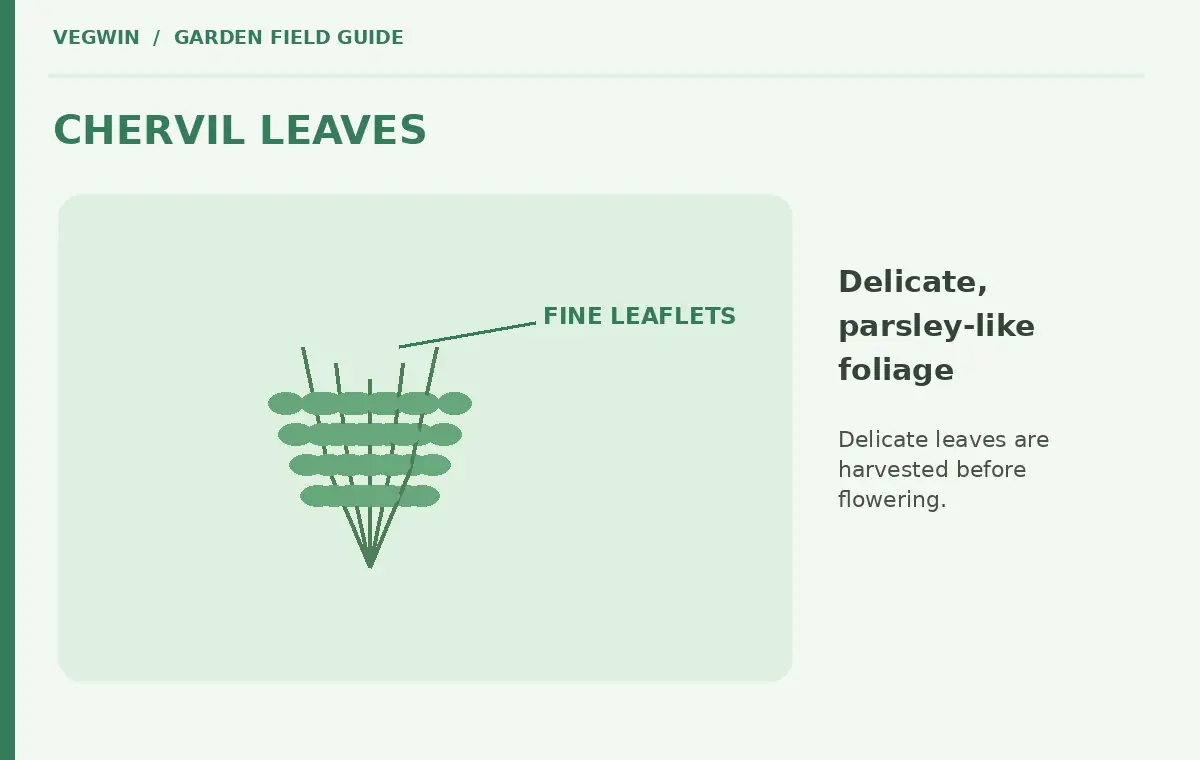
Use fresh seed and disturb roots as little as possible
Chervil seeds do not remain reliably viable for many years; the RHS recommends using collected seed within about a year. Before sowing, check the packet date and store spare seed cool and dry. Sow in the final bed or container whenever possible. Illinois Extension recommends direct sowing because seedlings can be difficult to transplant, and the RHS notes that young plants develop a delicate, extending taproot.
If indoor sowing is necessary, choose small individual modules and move plants before roots become crowded. Handle the intact plug, not bare roots. Chervil is one case where a little additional soil preparation outdoors may be easier and kinder to plants than raising many transplants indoors. Reserve the largest seed packet for multiple small sowings rather than an entire tray you cannot comfortably plant out.
Sow shallowly and keep the seed surface moist
Illinois Extension advises covering chervil seed very lightly or not at all because light helps good germination. Spread seed across a prepared fine surface, gently press it into contact and use only a very light covering if recommended for your local conditions. A deeply buried small seed has extra work to reach light, and a seed left on a crusted dry surface may never develop a healthy root.
Water with a fine spray so seeds remain where planted. Keep the top layer moist during germination but avoid a soggy surface that promotes decay. In a hot dry spell, surface moisture may need more frequent checks than established plants do. Once seedlings emerge, thin crowded rows carefully to create airflow and access for picking. A narrow labeled row is more manageable than a broad patch sprinkled without a plan.

Make small repeat sowings instead of one crop
Because chervil naturally flowers quickly, its leaf harvest is shorter than that of many perennial herbs. Illinois Extension suggests sowing new small batches roughly every three to four weeks for continuing harvests; the RHS also recommends regular successive sowings. Adjust the actual interval based on temperature and growth. In cool weather a small row may feed the kitchen for several weeks; a very warm month can compress that window. For the fuller picture, see our guide to growing parsley for repeated harvests.
Use two or three marked sections in a bed or a series of modest containers, each labeled with its sowing date. Harvest from the oldest productive section while younger plants grow. This approach also limits the disappointment when one batch bolts suddenly. You can preserve a few plants for seed, but do not sacrifice all your tender leaves simply because you want a continuous succession next month.
Harvest soft leaves before flower stalks take over
Pick individual soft, fully opened leaves when plants are established, rather than stripping tiny new seedlings. The RHS says plants can usually be harvested in approximately eight weeks under suitable conditions, with harvests influenced by temperature and vigor. Take only what you need for fresh cooking so remaining foliage can support continued growth. If cutting a larger quantity, retain enough growth for recovery.
Chervil loses much of its delicate aroma with prolonged cooking, so add it near the end to warm dishes. Look for the early appearance of elongated flower stems: flavor and tenderness may decline as plants bolt. At that stage switch the focus to the next sowing rather than trimming the same plant harshly in hopes that it will behave like a perennial.
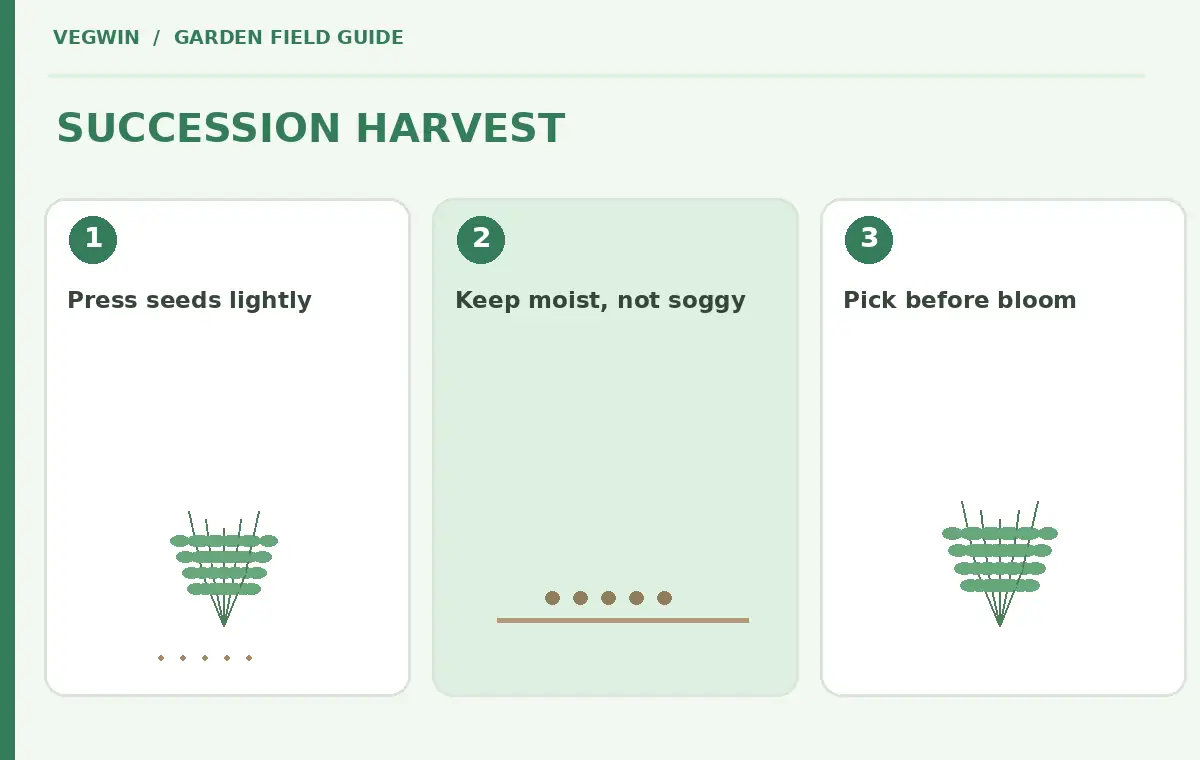
Respond to bolting and other practical problems
Premature flowering commonly reflects warm or dry conditions as well as the plant’s naturally short cycle. Increase consistency of soil moisture and use a cooler position for future sowings. Do not claim that any one treatment will keep chervil leafy through prolonged summer heat. If a container becomes hot and bone dry each afternoon, move the next crop to a more protected spot rather than overwatering the old one at night.
Inspect for aphids or slug feeding before reaching for sprays; mild problems may be managed with monitoring and simple physical methods. Separate edible herbs from potentially contaminated soil and use clean water on leaves that will be eaten. If plants are healthy but flowering, that is often their normal end-of-crop signal, not a disease to treat. Keep the last sowing date, location and harvest window in your notes.
Match the observation to the next action
| What you observe | Practical next step |
|---|---|
| Fresh packet, cool conditions | Direct sow shallowly in light shade. |
| Old seed with poor emergence | Replace with fresh seed before changing every other factor. |
| Crowded new seedlings | Thin gently; avoid damaging surviving taproots. |
| Leaves tender and fully open | Pick lightly and use fresh near the end of cooking. |
| Flower stalks emerging | Switch harvest to younger sowings; plan a cooler window. |
Keep this table with the planting records rather than converting it into rigid rules. Local weather, the actual species or cultivar, growing conditions and the condition of the plant all influence how a recommendation should be applied. When observations conflict with a general schedule, identify the cause before cutting, planting or watering more.
Related Guides
- Growing Herbs by Type: Water, Harvest, and Winter Survival Guide
- How to Direct-Sow Chervil for Delicate Leaves in Cool Light Shade
How We Research and Verify This Guide
Research checked October 22, 2026. We compared plant-specific guidance from established university Cooperative Extension programs and the Royal Horticultural Society, distinguished general growing principles from regional details, and used the sources to check the practical choices in this article. Our diagrams are simplified teaching illustrations and are not scaled planting plans.
Sources reviewed: University / Extension horticulture reference; RHS; University / Extension horticulture reference. Consult local Extension advice for climate-dependent timing, unusual plants or unresolved symptoms.
Editorial disclosure: This guide provides independent education and does not claim any verified paid partnership or commercial recommendation. See our affiliate disclosure for the site policy.
No. Chervil is a distinct herb with delicate anise-like flavor and a shorter cool-season harvest window.
Direct sowing is usually easier because young chervil develops sensitive roots; modules can work with careful handling.
Sow shallowly, with no cover or only a very light covering, following seed and Extension guidance.
It is a short-lived cool-season herb; warmth and drought can encourage earlier flowering.
Leaves are usually best before flowering; grow successive small sowings for ongoing tender harvests.