
Dill is not simply a smaller version of the perennial herbs in a mixed herb pot. It is an annual that offers two different harvests: feathery leaves while the plant is leafy and aromatic seed after flowering. The mistake behind many disappointing dill harvests is treating those goals as interchangeable. Hot weather and flowering shift the plant away from producing the leaves you wanted, while cutting every flower prevents a planned seed harvest. This guide sets up a small, repeatable sowing schedule and a deliberate split between leaf plants and seed plants. Your local frost pattern, soil and variety still determine the dates.
Decide Whether You Want Leaves, Seed, or Both
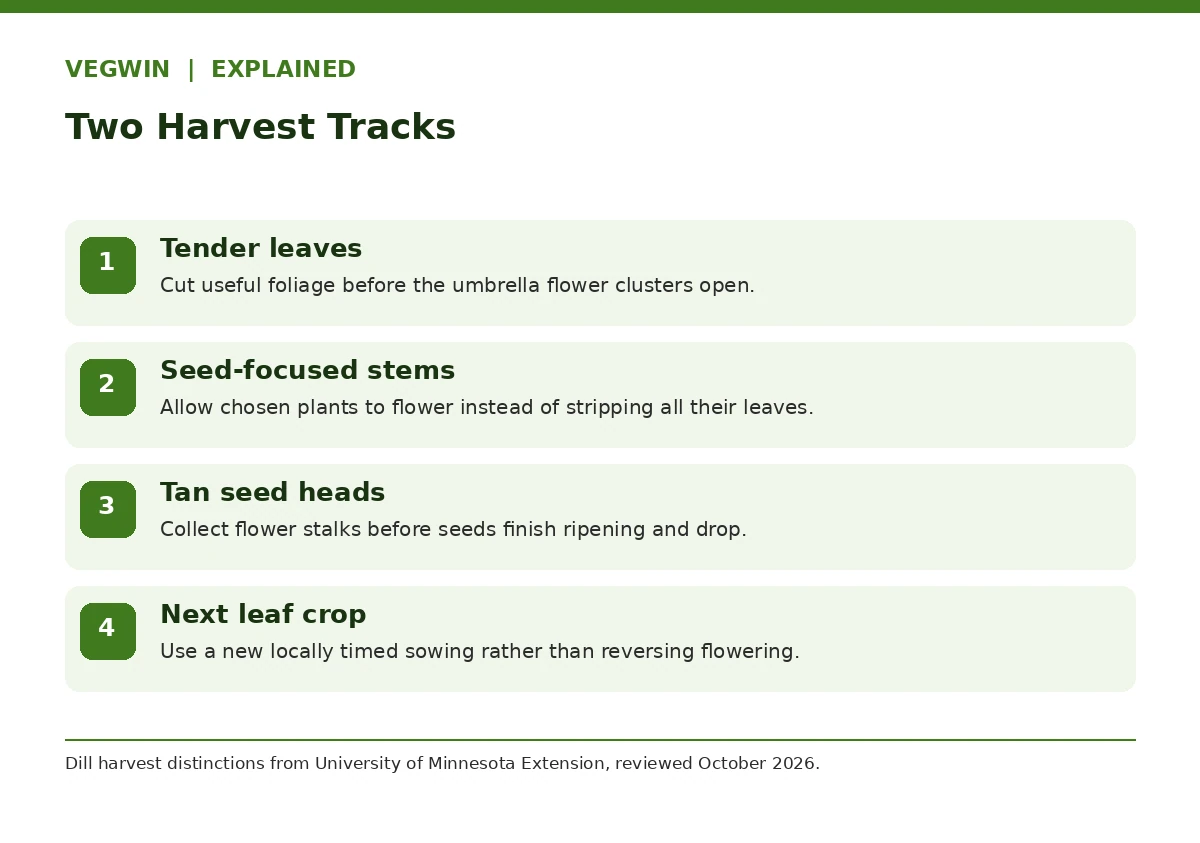
Start by naming the kitchen use. Leaf dill is often snipped for dressings, salads and fresh cooking; mature seeds have a different, stronger culinary role. University of Minnesota Extension advises harvesting the tender foliage during the season before the umbrella-like flower clusters open. If you want dry seed, you must let a portion of the planting continue into flowering and ripening instead of repeatedly cutting every stem.
For a small garden, label two groups in your notebook: “leaves” and “seed.” Harvest the first group frequently but gently while it is productive. Allow some plants in the second group to flower and develop seed heads. This division stops accidental overharvesting and makes the choice visible for everyone sharing the bed. A third option is to leave some flowering dill for insects rather than collecting every last seed. No single use requires an entire bed.
Choose a Well-Drained Spot and Sow Directly
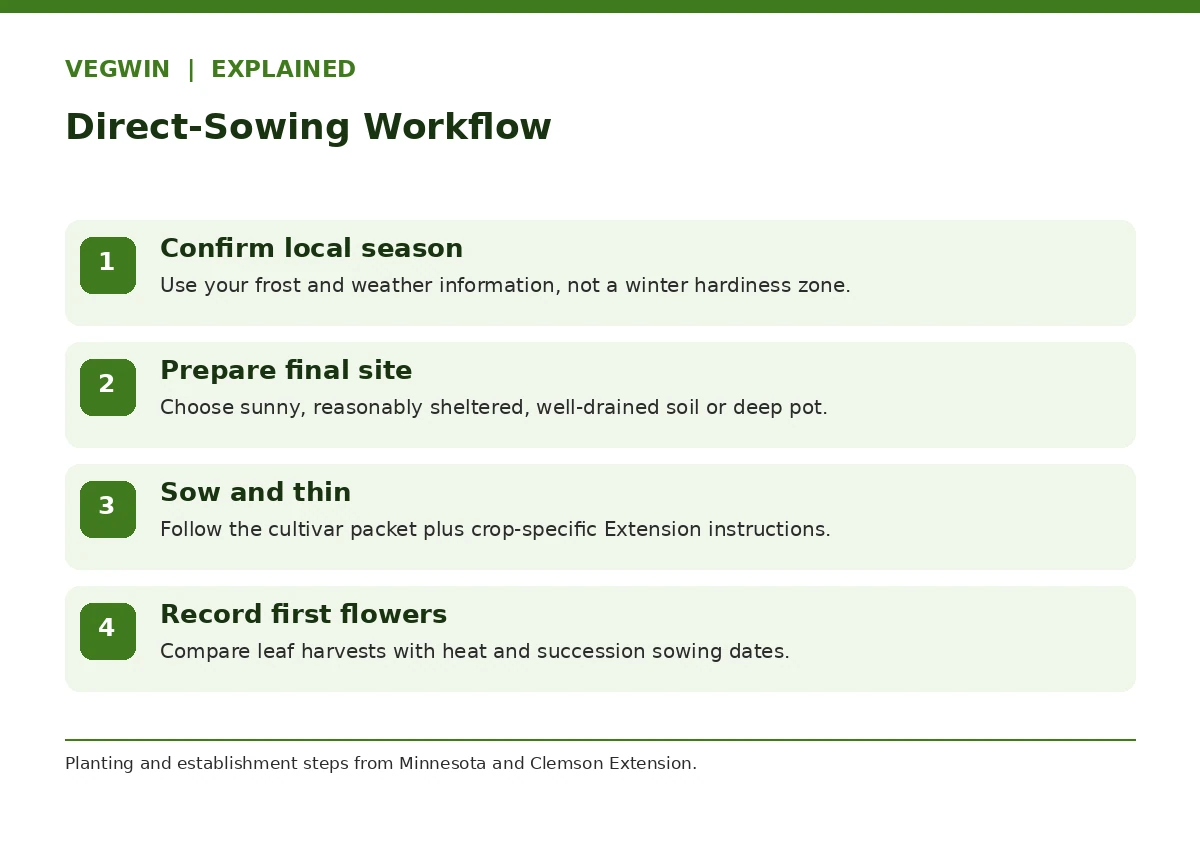
Dill favors a sunny position and well-drained soil with organic matter, according to Minnesota Extension. The same source notes that dill does not transplant readily, so outdoor direct sowing is generally preferred. Select a place where the mature stems will not shade low vegetables or be bent repeatedly by people passing. A wind-exposed spot may require support for the tall, hollow stems; a crowded windowsill is not automatically a more reliable substitute.
Use the seed packet and local Extension instructions together for seed depth, final spacing and planting window. Minnesota gives one-quarter inch planting depth and thinning guidance for its regional conditions, but those figures should be checked against the cultivar and your garden situation. Sow when local frost risk and soil conditions suit this tender annual. Do not use a USDA winter hardiness zone as an annual sowing date. Water the sown area gently so tiny seedlings are not displaced.
Keep Seedlings Open, Moist, and Uncrowded
Once seedlings emerge, identify the dill plants before weeding; their early foliage becomes more recognizable as it divides into feathery leaves. Thin according to the selected variety and Extension guidance while the plants are small. Overcrowding makes it harder to reach lower stems and reduces airflow. Dill does not need a fabricated fertilizer recipe. If growth is unusually weak, consider soil quality, moisture and sunlight first, then use a proper soil test before adjusting nutrients.
Keep the seedbed reasonably moist during establishment without maintaining saturated soil. Check whether a surface crust, heavy mulch or competition from nearby plants is slowing emergence. A deep container with drainage can work if a garden bed is not available, but the seed is better placed directly in its final container than repeatedly moved between pots. Minnesota warns that indoor dill often grows tall and spindly without adequate light; evaluate light and the drainage opening before blaming the seed.
Use Succession Sowing Instead of Fighting Flowering
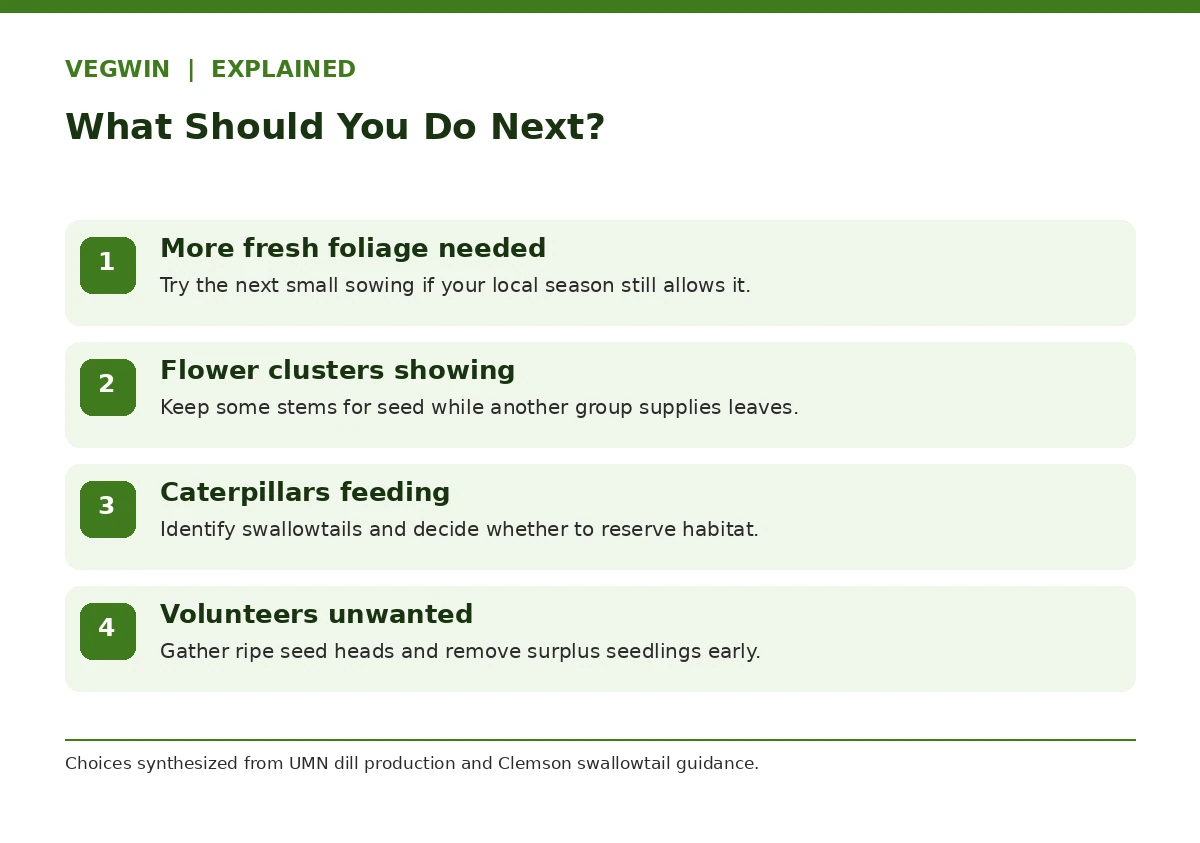
Dill is a cool-season herb, and Clemson Extension notes that hot weather encourages it to go to seed. Flowering is part of its life cycle, not necessarily a nutrient deficiency or pest outbreak. A better plan for fresh leaves is successive small sowings rather than attempting to return an aging flowering plant to its earliest leafy stage. Minnesota Extension suggests sowing additional crops every two to three weeks through midsummer in its region; adjust both end date and frequency for local weather.
Treat the next sowing as insurance, not a demand to plant on a rigid national calendar. If hot soil or approaching frost makes emergence unlikely, postpone or stop. Record when your first sowing started to flower, whether successive crops overlapped and how much foliage you actually harvested. That log is more useful than guessing a universal “days until bolting” figure. Letting one planting mature while replacing another also maintains flower resources without surrendering all kitchen leaves at once.
Harvest Tender Fronds and Ripening Seed Heads
Pick a modest amount of leafy growth when it is green, healthy and fragrant. Frequent large cuts can reduce the plant’s capacity to continue growing, especially when seedlings are small or stressed. Check leaves for insects, dirt and disease symptoms before bringing them inside; wash edible herbs appropriately before use. If you need a fresh bunch, use the leafy group rather than stripping seed plants just as their flower heads are beginning to form.
For seeds, Minnesota Extension recommends cutting flower stalks just before the seeds fully ripen and turn tan. Handle the heads over a clean surface to catch seeds that drop and finish drying them under suitable dry, clean conditions before storing. Label the year and keep culinary seed free from questionable mold or moisture. Seed saving for replanting has a different purpose than kitchen harvest, and variety identity may matter; do not promise saved seed will grow true to a named hybrid. Our cilantro garden guide goes into more detail.
| Observed situation | Likely decision | Next verification |
|---|---|---|
| Healthy feathery growth | Harvest some leaf dill | Check plant size and leaf quality |
| Umbels beginning to form | Keep seed plants; renew leaf sowing if season allows | Local heat and sowing window |
| Seed heads turning tan | Plan collection before much seed drops | Minnesota seed harvest guidance |
| Caterpillar on dill | Identify before intervening | Clemson swallowtail host note |
Manage Swallowtails and Volunteer Seedlings Sensibly
Dill belongs to the carrot family and can host swallowtail butterfly caterpillars, as Clemson Extension notes. A caterpillar on dill is not automatically an emergency needing an insecticide. Identify the animal accurately, inspect how much foliage remains and decide whether the plant is a culinary harvest or a wildlife-support planting. If you value butterfly habitat, reserve a few dill stems specifically for larvae rather than treating every chewed leaf as a failure.
Seed heads may also drop seeds into beds and paths. If volunteers are unwelcome, collect mature heads before they shatter and remove excess seedlings while small. Avoid claiming dill “repels all pests” in adjacent crops; such broad companion-planting promises are not supported by the herb-growing guides. Good sanitation, sound plant spacing and regular observation matter more than a magical neighboring plant. Put flowering plants where their height and future seedlings will be manageable.
Keep a Two-Harvest Dill Field Card
A simple field card can fit on one phone note: sowing date and weather, location and light, cultivar name, leaf harvest date, first flower sighting, seed-head ripening and any larvae or disease. Separate observations from assumptions. If no leaves were harvested before flowering, the lesson may be timing or heat exposure rather than a need for more fertilizer. If plants flop, reconsider wind protection and spacing rather than assuming that all dill varieties have the same height. If you want the full process, read how to grow dill in a pot.
At season end, keep the planting size that matched actual cooking use. A short succession of leaf plants plus one deliberately flowering patch is often easier to manage than a single large planting. This page is a crop-specific operational companion to the broader herb-garden overview: its purpose is deciding what to cut, what to leave to mature and what to sow next. Exact dates belong to your local Extension calendar and your own records.
Related Guides
- Growing Herbs by Type: Water, Harvest, and Winter Survival Guide
- How to Harvest Dill Seeds From Umbels Before They Scatter in the Garden
- How to Harvest Dill Seeds for Planting Before Umbels Shatter
How We Research and Update This Guidance
Sources and their current text were inspected on October 19, 2026. The accompanying diagrams are original decision aids summarizing those sources; they are not photos, field-trial results, or a substitute for local Extension diagnosis. Climate, crop varieties, changing pathogen prevalence and institutional revisions can change appropriate guidance. The author should revisit local recommendations before publishing or when a reader reports new field conditions.
Evidence and further reading: [1] University of Minnesota Extension [2] Clemson Home & Garden Information Center
Disclosure: No product or partner recommendations in this guide are sponsored or commissioned, and its buttons are educational links rather than affiliate offers. We checked sources including affiliate disclosure.
Direct sowing into its final outdoor bed or container is usually more reliable because dill is sensitive to transplanting, according to Minnesota Extension.
Dill is an annual and tends to flower as conditions turn warm. Sow smaller batches in a suitable local season instead of expecting mature flowered plants to return to lush leaf production.
Leaves may still be present, but Minnesota emphasizes harvesting green foliage before the flower umbels open for the intended leaf harvest.
Collect seed stalks shortly before seeds finish ripening and turn tan, then dry and store cleanly according to an authoritative seed-handling method.
No. Dill is a host plant for swallowtails; identify the caterpillar and decide whether you wish to preserve part of the planting for wildlife.