
Cilantro is an annual herb that can go from a flat, fragrant leafy clump to a tall white-flowered stem surprisingly fast. Harvesting a few leaves at a time can keep a healthy plant useful while it remains in leafy growth, but it cannot reverse flowering after heat and day length trigger the transition. The better plan combines gentle leaf cuts with new seed sowings. Here is how to find the harvestable stems, recognize early bolting and decide when a plant should be left for coriander seed instead.
Identify the Broad Lower Leaves and Central Growing Area
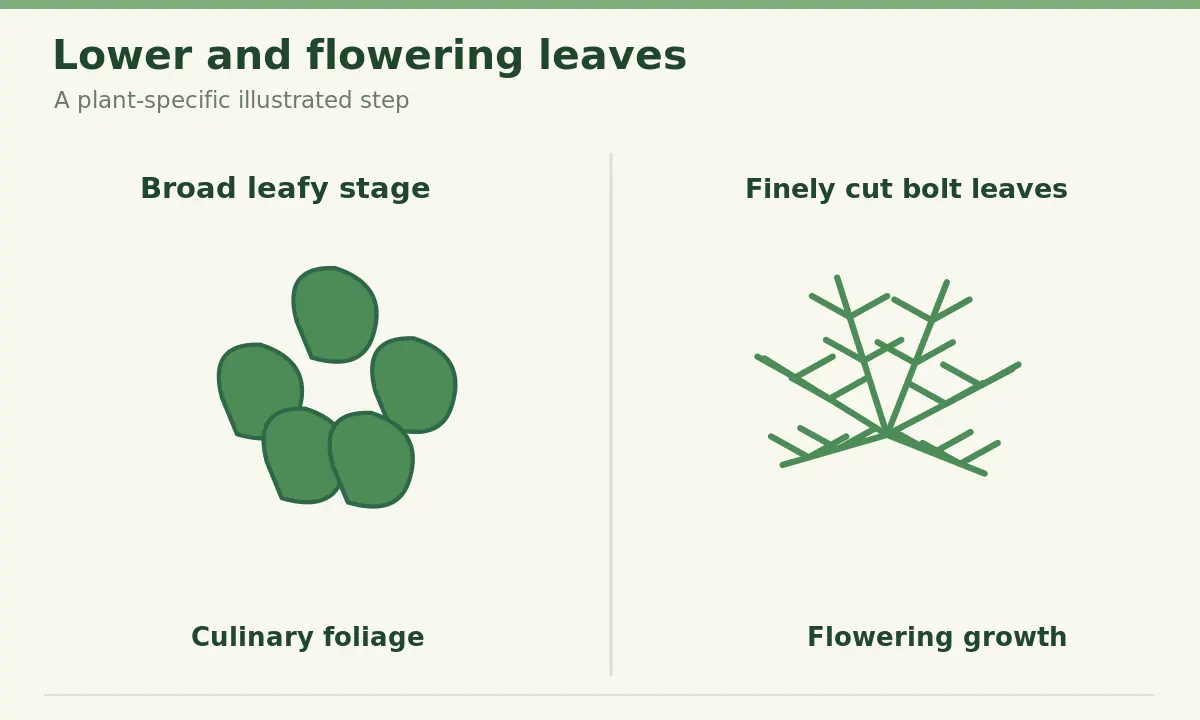
Young cilantro leaves are relatively broad, lobed and carried on slender green petioles. As the plant enters flowering, newer leaves along a rising stalk often become more finely divided and feathery. These two shapes can appear on the same plant. Before harvesting, find the lower leafy stems and the central part from which new foliage appears. Cutting a few outside petioles differs from severing the entire crown near the soil. OSU Extension permits harvesting individual leaves or even the whole plant; the choice depends on whether you still want future leaf growth from this particular planting.
Wait for Enough Leaf Growth to Make Cutting Worthwhile
OSU Extension suggests checking plants daily for harvest once they reach about six inches tall, with stage and climate affecting speed. Do not measure a plant to the millimeter or strip a tiny seedling after its first true leaf. Look for multiple usable leafy stems and healthy new leaves developing near the center. If seedlings are crowded, choosing a few whole plants as a thinning harvest may give the others room. Remove suspect yellow, diseased or insect-covered foliage separately. Harvest culinary leaves only from plants you have correctly identified; cilantro resembles some unrelated carrot-family plants that can be hazardous.
Snip Selected Petioles Rather Than Tearing the Crown
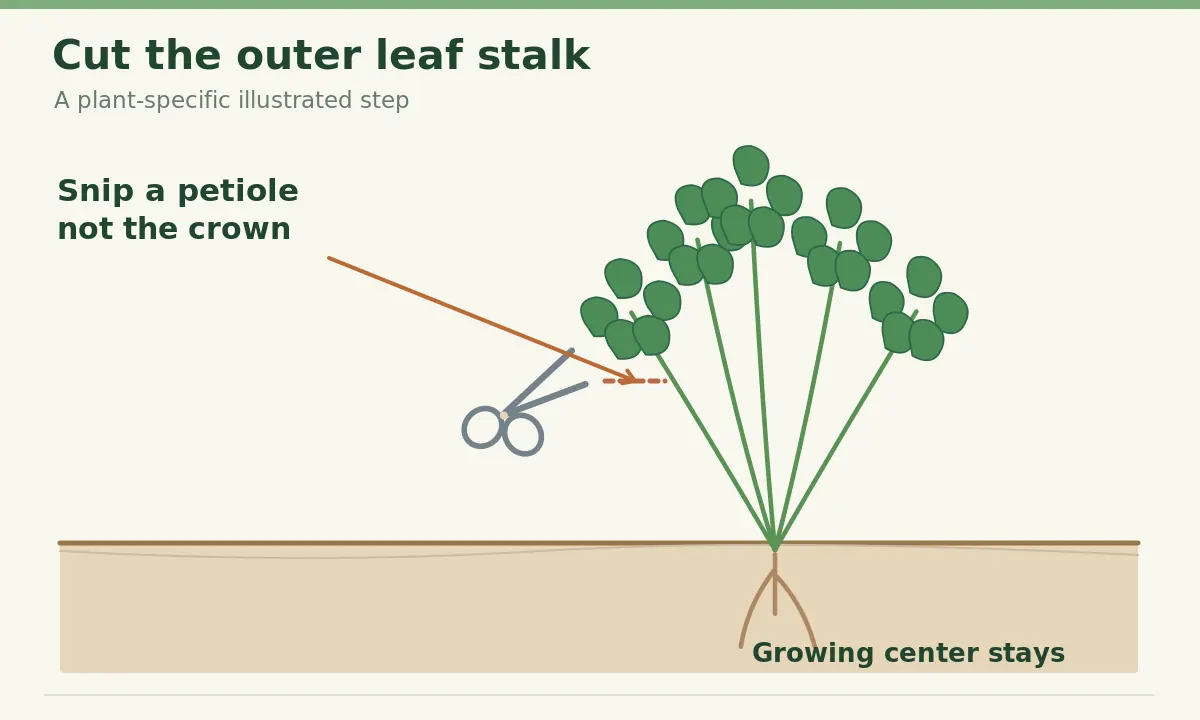
Use clean scissors or fingertips to take mature outside leaves, cutting through their slender petioles above the basal growing region. Keep a healthy center with younger leaves so that the plant can continue producing while it remains vegetative. Do not twist a handful so forcefully that the shallow crown and taproot pull out of the bed. For cooking that uses both tender stems and leaves, take a short leafy sprig rather than clipping every central shoot. Individual cuts do not create unlimited regrowth; cilantro has a short life cycle. If you need a large quantity at once, whole-plant harvest may be sensible.
Recognize the First Signs of a Flowering Stalk
A central stem that rapidly rises above the leafy rosette, increasingly fine upper foliage, and clusters of small flower buds indicate the plant is bolting. Once tiny white flowers open, it is shifting energy toward reproductive growth and coriander seed. Cutting the top back does not reliably return a bolted cilantro plant to its earlier leaf-producing stage. Use any remaining good leaves promptly, then decide whether to keep flowering plants for pollinators and seeds. This is different from pinching a branching basil plant; identical advice about removing flower tips does not fit every culinary herb.
Use Cool Growing Weather as the Main Control
Oregon State researchers emphasize that both temperature and day length can speed cilantro flowering. Spring and fall are often better leafy windows than the hottest weeks of summer in temperate regions. Where winters are mild, the local cool season may be quite different from a northern-state calendar. During warm weather, a little afternoon shade may reduce stress, but shade is not a guarantee against bolting under long hot days. Keep moisture steady in well-drained soil. A stressed plant with dry leaves should not be treated with a speculative fertilizer dose in hopes of reversing a natural flowering response.
Sow Fresh Short Rows for a Steady Kitchen Supply
OSU suggests sowing another small batch every three to four weeks as a practical approach to continuous cilantro harvest. In a hot region, postpone sowings during the worst heat and restart when conditions cool; seeds planted in the wrong weather may flower before providing useful foliage. Label sowing dates so you can distinguish older, rising flower stalks from young replacements. Do not depend on one large planting for a whole season. Because cilantro makes a taproot, direct sowing often avoids transplant disturbance, though gently handled starts can succeed. Repeated sowing is a supply plan, not a way to preserve one mother plant forever.
Keep Leaf Harvest and Seed Harvest Separate
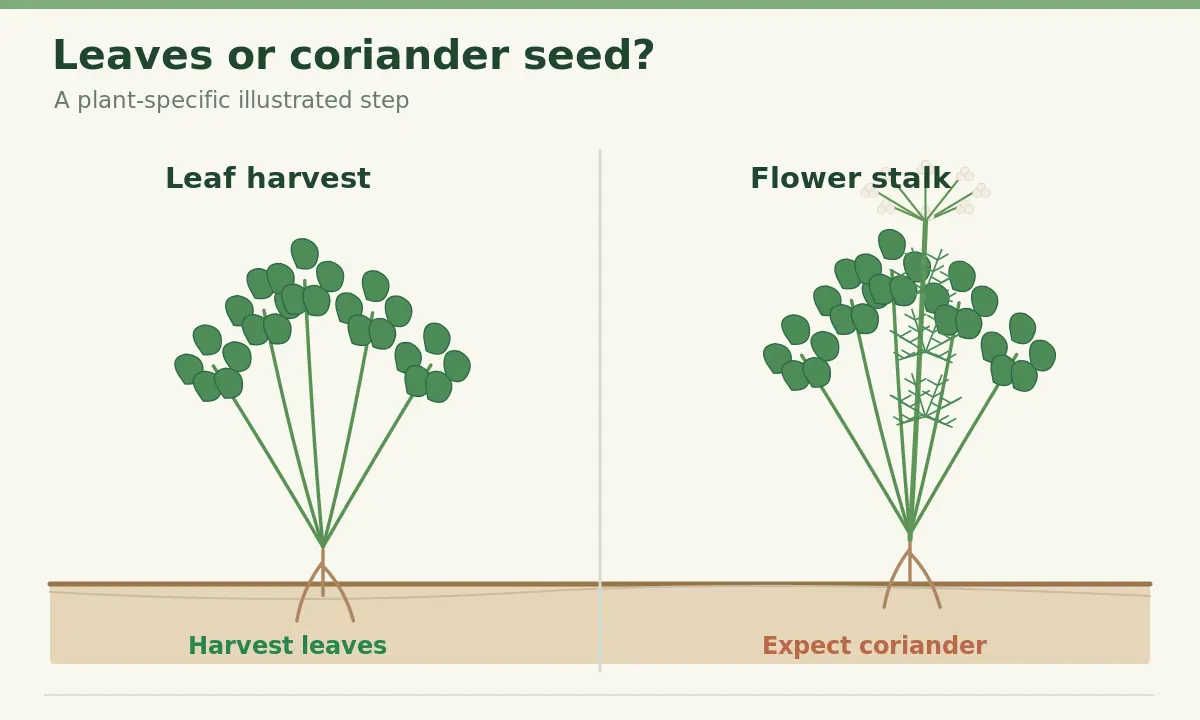
If fresh foliage is the goal, harvest before the plant sends up a tall flowering stem. If coriander seed is the goal, leave a healthy flowering plant in place and allow seed heads to mature. Cilantro and coriander come from the same species, but the harvest stages are different. As seeds develop and dry, flavor and texture of the remaining leaves change. Avoid cutting the entire flowering stem by mistake if you intended to save seed. Seed saved from open-pollinated plants may not exactly reproduce every marketed cultivar trait, especially where different strains cross; grow familiar seed sources for consistent leaf production.
Check for Look-Alike Damage Before Picking
Cilantro foliage can show minor insect chewing, sun scorch or yellowing from cultural stress. Do not assume every blotch is a disease requiring spray. Check leaf undersides, moisture and recent weather, and compare damaged stems with healthy neighbors. Because you intend to eat the leaves, use only labeled edible-crop products when any pest treatment is justified and observe all label restrictions. In many small herb patches, removing a few affected leaves and improving growth conditions is the lower-risk first step. Wash picked leaves with clean running water; do not soak dirty greens in a warm bowl and then store them wet.
Handle Fresh Leaves to Limit Wilting
Cilantro wilts quickly in hot sun. Harvest when leaves are cool if practical and move them into shade promptly. Trim obviously damaged stems, rinse thoroughly before use and refrigerate the greens. Oregon State describes standing fresh stems in a little water and loosely covering them as a short-term refrigerator storage approach. Change water and discard any slimy tissue. For cooked foods, cleaned cilantro may also be frozen according to food-handling guidance, but freezing does not preserve the crisp character of fresh garnish. Avoid harvesting from areas contaminated by manure runoff or pet waste.
Use a Leaf-versus-Seed Field Decision
Look first at leaf shape and the position of the central shoot. If you see mainly broad healthy foliage with new leaves forming, selectively snip mature outside stems. If you see a long rising central stalk and finer upper leaves, take any usable foliage soon and expect flowering to continue. If open flowers and developing seeds are present, switch the goal to coriander or remove the spent plants for another sowing. Write down the date and temperature pattern. The next planting will be easier if you know exactly when bolting started instead of simply cutting every stem shorter.
Related Guides
- Growing Herbs by Type: Water, Harvest, and Winter Survival Guide
- How to Harvest Coriander Seeds From Cilantro Before the Round Fruits Drop
- Cilantro Garden Guide: Grow Tender Leaves and Harvest Coriander
How We Research and Verify Plant Advice
Sources checked on 2026-10-26: extension.oregonstate.edu; extension.oregonstate.edu; extension.umn.edu. We reviewed each institution’s plant identification, correct growth stage and relevant cultural recommendations before adapting them into an independently written step-by-step guide. Where sources are region-specific, their calendar details are not applied universally. Pictures use simplified teaching shapes and should be compared with living specimens; they are not a substitute for laboratory disease diagnosis or local climate guidance. The relevant advice is paraphrased rather than reproduced.
Safety and Independent Editorial Disclosure
This independently prepared educational article does not claim sponsorship or affiliate approval. Our category reading links are informational, not product endorsements. See the VegWin affiliate disclosure. Clean sharp tools before cutting plants, protect hands from thorns and blades, and keep cut plant material away from children and pets where appropriate. Use only locally registered plant treatments labeled for the actual crop, and observe the product label. Do not rely on unsupervised home remedies or unverified harvest-safety promises.
A leafy, healthy plant may supply additional leaves after selective harvest, until its normal flowering phase begins.
Snip mature outside petioles while leaving healthy young central foliage and avoiding crown damage.
Not reliably; heat and day length control the reproductive transition, so new plantings are more dependable.
A practical OSU starting interval is every 3 to 4 weeks during suitable cool growing weather.
No. Coriander commonly refers to the dried seeds of the same species grown for cilantro leaves.