
Saving lettuce seed has a different calendar from harvesting lettuce leaves. You must allow one or more healthy plants to bolt, flower and mature fluffy seed heads instead of cutting them for salad. Lettuce is generally self-pollinating, which makes it a more approachable seed-saving crop than squash, but choice of variety, plant health and seed handling still matter. This guide gives a small-garden selection, harvest and storage workflow, plus a decision table for seeds that are too immature or damp. It complements a growing-lettuce guide by focusing entirely on producing trustworthy seed for a future crop.
Pick Open-Pollinated Lettuce Plants for Seed
Choose an open-pollinated variety when your goal is to maintain recognizable traits in the next generation. Seeds from an F1 hybrid can germinate, but offspring may vary instead of resembling the parent. Consult the original packet or supplier description rather than deciding by appearance. Save a record of the cultivar name, source, planting date and any qualities worth preserving. The difference between saving a few seeds to experiment with and maintaining a named variety for years should be explicit from the beginning. For a step-by-step method, see how to save pepper seeds without confusing maturity and crosses.
Select a healthy, vigorous, typical plant rather than the one that bolted prematurely under stress. Seed Savers Exchange recommends multiple plants when maintaining a variety long term, although an individual plant can provide enough seed for a modest test sowing. Plants with significant disease symptoms are poor candidates; do not treat their seed as automatically healthy simply because it looks dry. If the variety is rare, consult specialized seed-conservation guidance for an adequate population and isolation strategy.
Reserve Room for Tall Flower Stalks
A lettuce plant left for seed will no longer look like the compact edible head gardeners are used to harvesting. It extends a flowering stalk, branches and carries many small composite flower heads that do not mature simultaneously. Give the seed plants enough room and do not cut out the growing point. You may want to support tall stalks in exposed beds, especially when storms are likely. Choose a place where these plants can remain beyond the usual salad harvest rather than blocking a succession crop.
Lettuce is predominantly self-pollinating, but occasional crossing can occur, so do not promise that varieties grown touching one another will always remain pure. Seed Savers Exchange gives isolation guidance for conserving varieties and explains why saving from several representative plants can protect diversity. In tiny gardens, growing one seed-saving lettuce variety at a time simplifies recordkeeping. If other lettuce varieties are flowering nearby, document that fact and treat saved seed as an experiment unless appropriate isolation has been maintained.
Recognize Flowering and Seed Maturity
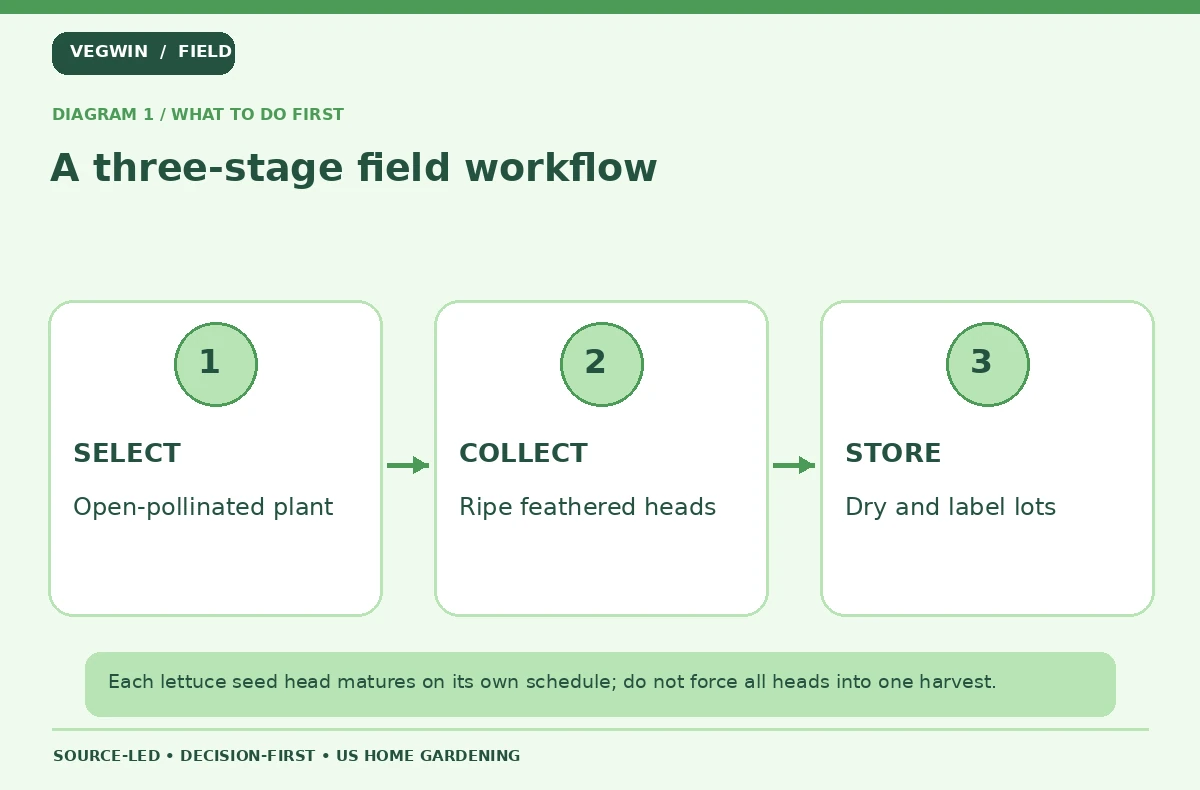
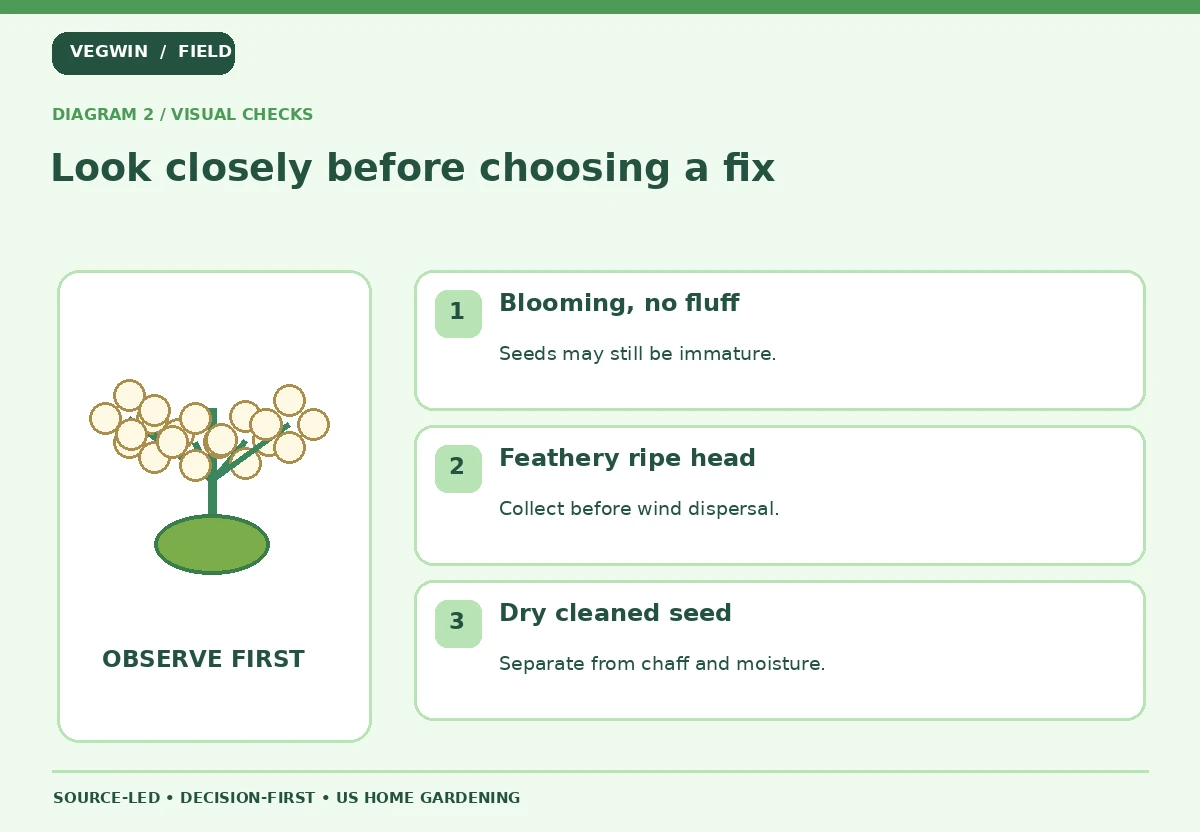
Lettuce bolting is undesirable for tender salad leaves but necessary for seed production. Branching stalks produce small flowers followed by seed heads resembling miniature dandelion puffs. The pale feathery tuft, called the pappus, helps carry the seed away on wind. Seed Savers Exchange identifies the emergence of these tufts as a maturity sign for individual heads. Because the same plant bears both young and mature heads, harvesting the entire stalk on one date can mix developed and immature seed.
Inspect a few heads closely before gathering. Mature seed should separate easily and have a reasonably full, firm appearance; immature seed is often lighter, softer or poorly developed. Brown or black seed color varies by cultivar, so do not use color alone as a universal test. Check during dry weather and avoid opening wet flower heads or shaking damp material into a storage bag. The objective is fully mature, dry seed rather than the largest possible pile of fluffy material.
Collect Small Seed Batches Over Time
For just a few plants, hold a clean container or paper bag under ripe fluffy seed heads and gently rub or pluck the heads. Mature seeds and lightweight chaff will collect together. Return periodically because additional heads ripen in stages. Seed Savers Exchange also describes gently shaking mature branches into a bag as the heads mature. Use a container that prevents wind from immediately scattering the crop. A calm morning after dew has dried is often easier to manage than a gusty afternoon.
Keep varieties separate from the first harvest. Label temporary bags with cultivar, plant location and date before taking them indoors. Avoid cutting green stems and sealing them inside plastic, where trapped moisture can encourage mold. If a thunderstorm is approaching, it may be better to collect only visibly mature, dry heads and leave young heads attached rather than rush an entire plant into a damp pile. More seed is not more useful if it later molds or loses viability.
Clean Seeds Without Damaging Them
Spread collected material in a shallow layer so moisture can escape. Once dry, gently rub seed heads between fingers or against a suitable screen to release seed from the fluffy pappus and surrounding chaff. Use a light fan or a careful pour between containers to separate lighter debris, working over a tray in case valuable seed spills. Avoid aggressive crushing or high heat, which can damage the embryo. A perfect-looking commercial finish is unnecessary for a small home lot.
Keep only sound, well-developed seed and discard visibly moldy or pest-damaged material. If much of the batch consists of tiny flat pieces, you may have picked the heads too early. Compare those with mature seed from another head before storing. Oregon State explains that dry-seeded crops such as lettuce generally need drying and cleaning, not the wet fermentation approach used for some fleshy fruits. Make this distinction clear in your garden notes so you do not apply a tomato-seed process to lettuce.
| Seed-head appearance | Likely stage | Action |
|---|---|---|
| Closed green flower head | Not mature | Leave on healthy seed plant |
| Pale feathery pappus visible | Often ready on that head | Collect dry ripe heads in stages |
| Damp, clumped seed material | Moisture risk | Dry with airflow before storage |
| Hard, clean, dry seed | Suitable for labeling | Store cool, dry and test later |
Dry and Label Seed Before Storage
After cleaning, allow remaining moisture to dissipate in a clean, shaded, ventilated place. Avoid baking in direct sun or placing seed on an oven, radiator or high-heat appliance. Cool, dry storage slows deterioration; a paper envelope with a clear label inside a suitable moisture-protected container can work once the seed is truly dry. Date each lot and note the cultivar, collection site and any isolation uncertainty. If conditions are humid, ask local seed-saving resources how to prevent condensation rather than sealing suspect damp seed.
Different seed lots age differently depending on drying and storage conditions. Seed Savers Exchange gives useful expected viability information for lettuce, but that is not a guarantee for a particular home envelope. Do not infer excellent germination from the fact that the seed looks normal. Avoid saving seed near household chemicals or places with repeated temperature swings. A cool cupboard with stable conditions may be more practical than a damp garage or a hot greenhouse shelf.

Run a Small Germination Check Next Season
Before filling a whole bed with saved seed, test a counted sample using a clean, moist medium and an appropriate lettuce germination environment based on local Extension guidance. Record how many normal seedlings appear rather than counting swollen seeds or those with damaged roots. A home sample cannot provide laboratory certainty, but it helps you adjust sowing density or decide whether to replace an old lot. Keep the tested sample separate from your stored reserve to avoid moving moisture into the container.
Poor germination has several possible causes: seed maturity, rough processing, improper drying, age or unsuitable test temperature. Lettuce germination itself is affected by temperature and sometimes light, so a badly designed test can underestimate a good lot. Repeat under recommended conditions before discarding all of it. If seed came from plants with unusual symptoms, do not assume a germination test establishes disease freedom; consult Extension and use clean purchased seed when crop health is in doubt. For a step-by-step method, see how to harvest fennel seeds when the umbels turn brown.
Keep Seed Saving Separate From Food Harvest
The best food-lettuce plants are ordinarily cut while leaves are tender, but seed plants need to stay through flowering. Decide early which individuals are designated as seed stock; otherwise repeated leaf cutting can delay or prevent the final harvest. The seed-saving area may occupy valuable cool-season bed space into warmer weather. Plan around that tradeoff, particularly if the same bed is needed for tomatoes or peppers after spring lettuce. Saving a variety over years is a deliberate project, not merely forgetting to pull out bolted plants.
At the end, review whether the saved lot produced enough clean seed and whether the variety remained true to expectations. Store notes together with the envelope and compare with next year’s grown plants. A small collection from healthy, intentionally selected lettuce can be more valuable than a large anonymous blend of flower heads. The skill worth repeating is observing each developmental stage, selecting carefully and keeping traceable records of the seed you actually saved. Our guide to saving tomato seeds goes into more detail.
Related Guides
- Growing Lettuce: Choose the Right Type and Harvest Before Bolting
- How to Grow Romaine Lettuce for Crisp, Upright Hearts
- How to Stop Slugs on Lettuce With Scouting, Shelter Traps, and Safe Decisions
How We Research and Verify This Guidance
Our research was checked on October 20, 2026 against the following primary horticulture and seed-conservation references: seedsavers.org reference 1, seedsavers.org reference 2, extension.oregonstate.edu reference 3, extension.oregonstate.edu reference 4. Each supports the topic-specific points recorded in the source metadata, but some recommendations depend on cultivar, climate, soil or local pest pressure.
Disclosure: This informational article contains no approved affiliate promotion and no compensated product recommendation. Read the site affiliate disclosure for the policy; the page itself has not been independently verified as accessible. For a site-specific problem, use your local Cooperative Extension and current regulatory labels rather than extrapolating a pesticide or fertilizer rate from a general guide.
You can collect it, but next-generation plants may not reliably match an F1 hybrid parent. Open-pollinated seed is more predictable.
It is a pappus that helps dispersal. The appearance of feathery tufts is a practical maturity clue for individual heads.
No. Heads mature in stages. Collect ripe heads repeatedly rather than harvesting the entire plant prematurely.
No. Lettuce is collected as a dry-seeded crop; dry, rub and clean the seed instead of using fruit-pulp fermentation.
Use a counted small germination test under recommended lettuce conditions before committing a whole bed to an old home seed lot.