
Fennel seed is harvested from flowering umbrellas called umbels, not from the swollen base of Florence fennel. That distinction is useful because gardeners growing fennel for a vegetable bulb often try to avoid early flowering, while seed growers need the flower heads to mature.
Utah State University Extension recommends cutting seed heads after they turn brown and letting them finish drying in a paper bag. Wisconsin Horticulture likewise advises collecting browned umbels before they shatter. Here is a practical plan for identifying maturity, collecting unevenly ripening heads and controlling the plant’s tendency to reseed. The advice is focused on culinary common fennel, with important distinctions for bulb fennel. For the basics, see our guide: When to Harvest Florence Fennel Bulbs Before They Become Woody.
Identify common fennel and the seed-bearing umbel
The species Foeniculum vulgare includes common fennel grown mainly for foliage and seed as well as Florence types selected for a bulb-like leaf base. Utah State Extension explains the distinction. Both may flower, but a gardener who needs a firm Florence fennel base is making a different harvest decision from someone growing spice seed. Check the original variety label before deciding that tall flowering stalks represent a failure or a successful seed crop. Our walkthrough on how to grow Florence fennel bulbs without premature bolting sets out each step.
Look for branched stalks ending in broad umbrella-like groups of many small flowers or fruits. Each small mature fennel “seed” is botanically a dry fruit. The head may contain some fruit that is still green and some that has become straw-colored or brown. Do not confuse foliage, stem joints and flower clusters: seed collection is targeted at the mature parts of the umbels.
Watch color and looseness instead of the calendar
Wisconsin Horticulture and Utah State Extension both emphasize browning of the seed heads. Color often changes over time within a plant, so one dated harvest of every stalk can collect immature fruit and lose overripe fruit together. Inspect multiple umbels at arm’s length. When the first heads become brown and seed begins to release readily, collection should move from the wish list to the day’s work.
The exact date varies with sowing, climate, and plant condition. Do not assign one universal month or “days after flowering” number. In a wet period, a dark umbel may be damp rather than safely dry; in windy weather, dry fruits can fall quickly. Note the conditions and handle heads gently so that the seed does not scatter during inspection.

Cut the head over a bag before seeds shatter
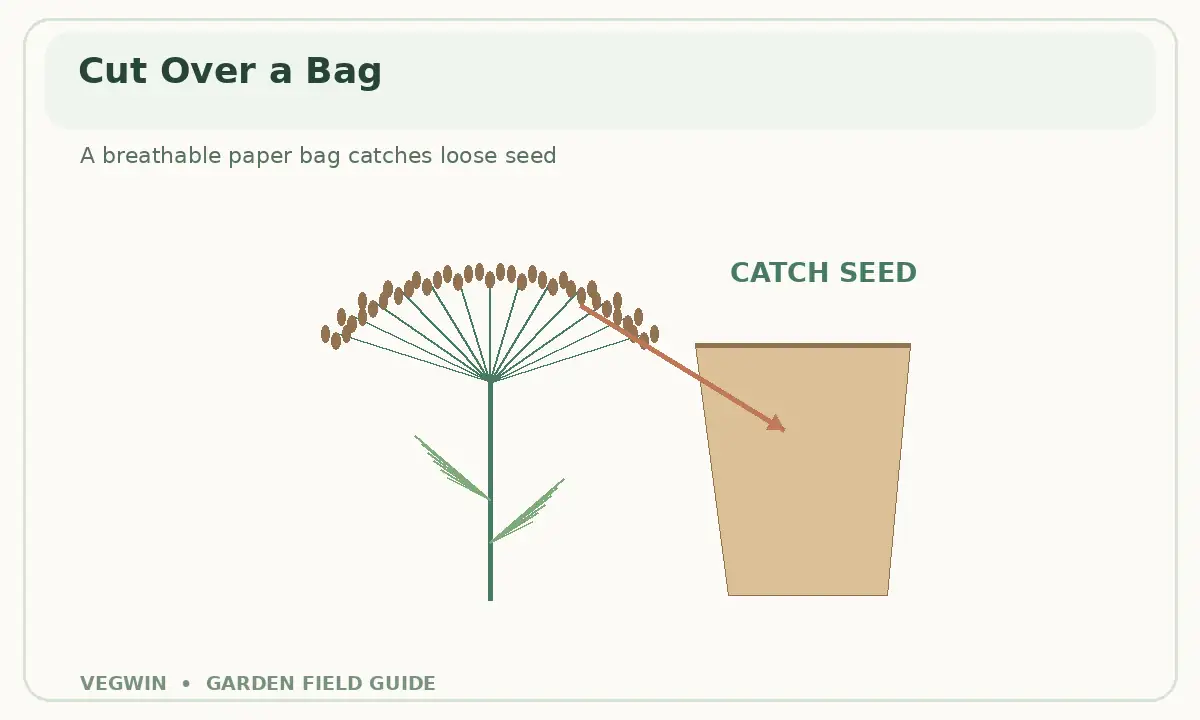
Hold a paper bag or tray beneath a mature umbel, then cut the stem below the seed head with clean pruners or scissors. The bag catches loose fruits when the stem moves. Avoid shaking over bare soil unless you deliberately want self-sown fennel there. If heads ripen at different times, make several brief collection trips instead of waiting for every umbel to brown. This is particularly useful in a home garden where the crop occupies only a few plants.
Keep visibly moldy or damaged material separate and discard it appropriately. Avoid cutting green immature umbels solely to meet a storage deadline; you may be saving fruit that has not reached full maturity. Mark the bag with the plant identity and date. If you also use fennel foliage, harvesting seed is a separate task that need not strip healthy leaves from the entire plant. Our walkthrough on how to save lettuce seeds from flowering to clean storage sets out each step.
Finish drying in a breathable location
Utah State Extension describes holding cut heads in paper bags to finish drying. Use a dry, airy, sheltered space out of rain and intense direct heat. A paper bag can catch the fruits that separate as the heads dry; do not seal damp umbels into plastic where moisture is trapped. Check the bag regularly and spread bulky heads out if they feel wet or develop a musty smell.
When fruit separates easily, rub the dry heads gently over a clean tray. Remove coarse stalks and chaff without crushing the flavorful fruits. Do not assume that overnight air exposure always finishes the job; the drying time depends on humidity, initial moisture and airflow. The meaningful test is dry, stable seed, not an arbitrary countdown. Protect food-intended seed from dust, pets and chemical storage areas.
Clean and label seeds before placing them in storage
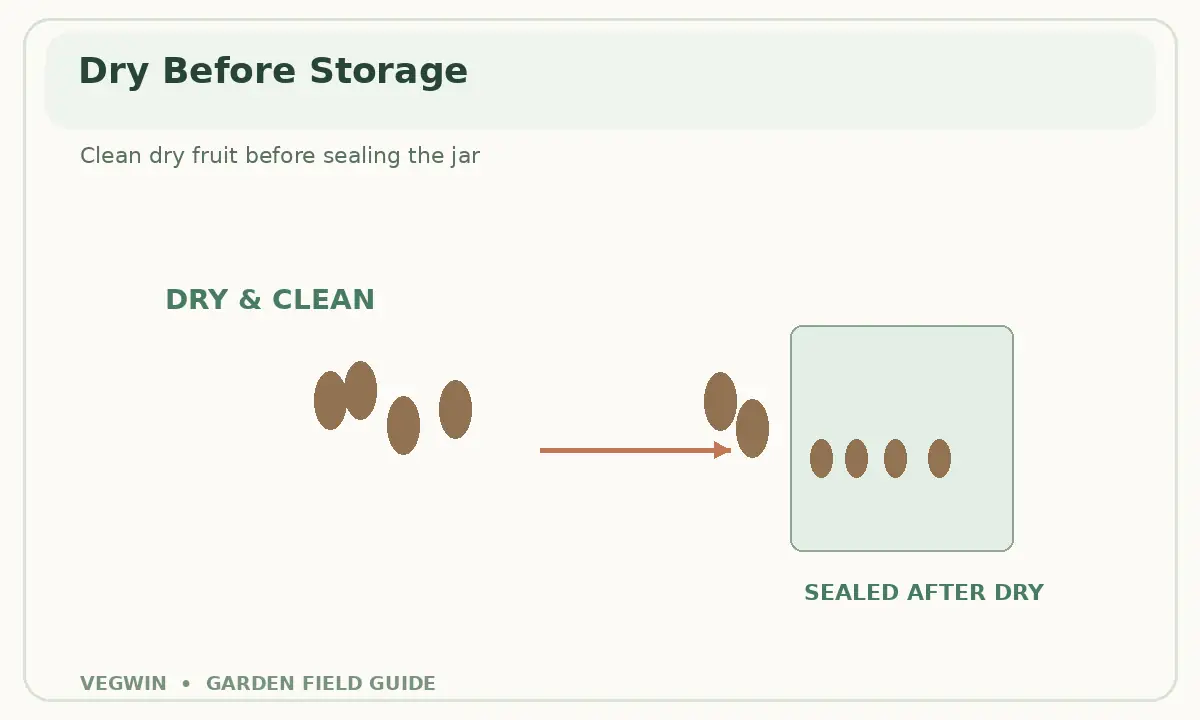
Sort the collected fennel fruits and remove foreign debris. Reserve visibly sound, fully dry material; do not mix it with green or moldy heads. Utah State Extension recommends a moisture-proof container once seed is dry. Label the container with species, harvest year and whether it is intended for culinary use or future sowing. Keep it away from excess heat and sunlight where the stored aroma and germination performance may deteriorate.
A food storage jar can be appropriate only after the crop is thoroughly dried. Moisture trapped in a tightly closed container is a bigger problem than an extra day spent checking the contents. If you want to save seed for planting, keep that lot separately identified rather than assuming spice quality establishes variety purity. Nearby fennel plants and open pollination may affect seed-grown offspring.
Prevent seed drop where fennel can spread
Wisconsin Horticulture warns that fennel may reseed and naturalize, especially in milder climates. Some regions identify fennel as invasive in particular habitats, so check local guidance before letting plants form mature seed outside a contained bed. A deliberate seed crop needs more attention, not less: catch shattering fruits, collect heads promptly and remove unwanted volunteers while small.
Do not dump chaff and missed seed near a drainage ditch or unmanaged roadside. The same fragrance that makes the plant welcome in an herb garden does not make uncontrolled dispersal ecologically harmless. Where you cannot safely prevent seed spread, harvest only what you can monitor or choose a different plant. Local regulations and management recommendations take precedence over broad gardening advice.
Decide whether to save the next umbel or remove it
After the first collection, examine the remaining heads. If a modest extra harvest is useful, mark the stalk and return as the umbel changes color. Treat this as staggered ripening rather than an all-or-nothing event. Keep the plant accessible so you can monitor windfall without walking through surrounding crops.
At the end of the season, compare how much clean seed you kept with how much volunteer management the planting required. That is a more useful measure of success than maximum seed production. A small labeled jar and an orderly garden may be preferable to a huge collection followed by fennel seedlings emerging where you do not want them.
Make a quick decision from what you observe
| What you observe | What it may mean | Useful next action |
|---|---|---|
| Head still green | Usually immature for dry storage | Inspect again instead of sealing it |
| Head brown, fruits loosen | Ready for careful collection | Cut over a bag to catch shattering |
| Bag contents feel damp | Drying is incomplete | Improve airflow before storage |
| Volunteers appear widely | Seed escaped at maturity | Remove seedlings and prevent dispersal |
Related Guides
How We Research and Check This Guidance
We base this guide on identifiable plant-science sources and distinguish their regional advice instead of presenting one universal calendar. We reviewed the cited institutional horticulture references on October 22, 2026 and checked whether the advice concerns the correct plant type, the growing stage, and the climate. The unique aim of this page is a practical decision the reader can make by observing the plant and conditions. Sources are identified below so gardeners can verify the reasoning; this is educational guidance, not a substitute for local Extension advice, product labels, or diagnosis of a damaged plant.
References verified October 22, 2026: Source 1 — Wisconsin Horticulture identifies umbels, seed browning, shattering and naturalizing concerns.; Source 2 — Utah State Extension describes common versus Florence fennel, harvesting browned seed heads and drying in a paper bag.. No affiliate partnership or paid product recommendation is asserted in this article. Our general policy is available in the VegWin affiliate disclosure. No commercial links are necessary for this guide. Verify species, local regulations and climate-specific instructions before taking actions that could harm plants or nearby habitat.
Green fennel fruits may be used in some cooking, but fully brown heads are the recommended target for dry seed harvest.
Mature fruits detach readily; hold a tray or paper bag underneath the head before cutting.
No. Breathable paper and good airflow reduce trapped moisture while drying.
Common fennel is typically grown for leaves and seeds, while Florence types are selected for their swollen bases.
Only where local conditions and plant status make that appropriate; fennel can self-seed and naturalize.