
A cold frame is a low, unheated enclosure with a clear lid, not a tiny greenhouse that can be shut and ignored. Its useful purpose is to protect cool-season vegetables from wind and some cold while letting you manage sunlight, moisture, and ventilation. This guide gives a daily operating routine for lettuce, spinach, radishes, and similar crops, rather than repeating a broad winter-garden planting calendar. Use a thermometer inside the structure and local weather forecasts. Your real harvest window depends on light, the crop, and how quickly the enclosure warms or cools.
Choose Crops That Benefit From Protection
Lettuce, spinach, hardy greens, and radishes are reasonable cold-frame candidates because they already tolerate cool growing conditions. University of Minnesota and Iowa State Extension identify these among the vegetables suited to protected shoulder-season planting. Protection may let you start earlier or harvest later, but it does not turn a frost-sensitive summer crop into a hardy winter crop. Keep the normal temperature tolerance of the individual species in mind, and choose a cultivar recommended for your region rather than relying on the word “winter” on a seed packet. To go further, our guide “Winter Vegetables to Grow” shows how to choose crops for harvest or spring regrowth.
Decide whether you want plants to grow actively, remain alive for later harvest, or supply occasional leaves during short winter days. Those are not equivalent outcomes. In a northern garden with very short days, an enclosure can preserve already-grown spinach while new leaf production remains slow. In a mild climate it may support steadier growth. Record the first and last local frost dates as background information, but also watch daylight and actual forecasts. A USDA hardiness-zone number does not tell you the date to sow lettuce.
Place The Frame Where Winter Sun Reaches Soil
Choose a sunny, well-drained place with a practical path for harvesting and opening the lid. A frame set into a flooded low spot will have soggy roots regardless of how clear the top is. Iowa State recommends a generally southern exposure to capture solar warmth; assess shadows from fences, evergreen shrubs, and buildings when the winter sun is low. Access matters as much as geometry because a difficult-to-reach lid is less likely to be vented on time or checked after storms.
A cold frame is typically a bottomless box with a transparent, hinged or removable lid. Some designs slope the lid toward the sun. Use structurally sound materials, secure the cover against wind, and avoid questionable reclaimed coatings or breakable glass where children or pets might encounter it. The interior needs a safe way to hold the lid open; do not trust a loose stick in a windy location. South Dakota State Extension describes sloped lids, drainage, and thermometers as important operating features rather than decoration.
Run A Morning And Afternoon Ventilation Check
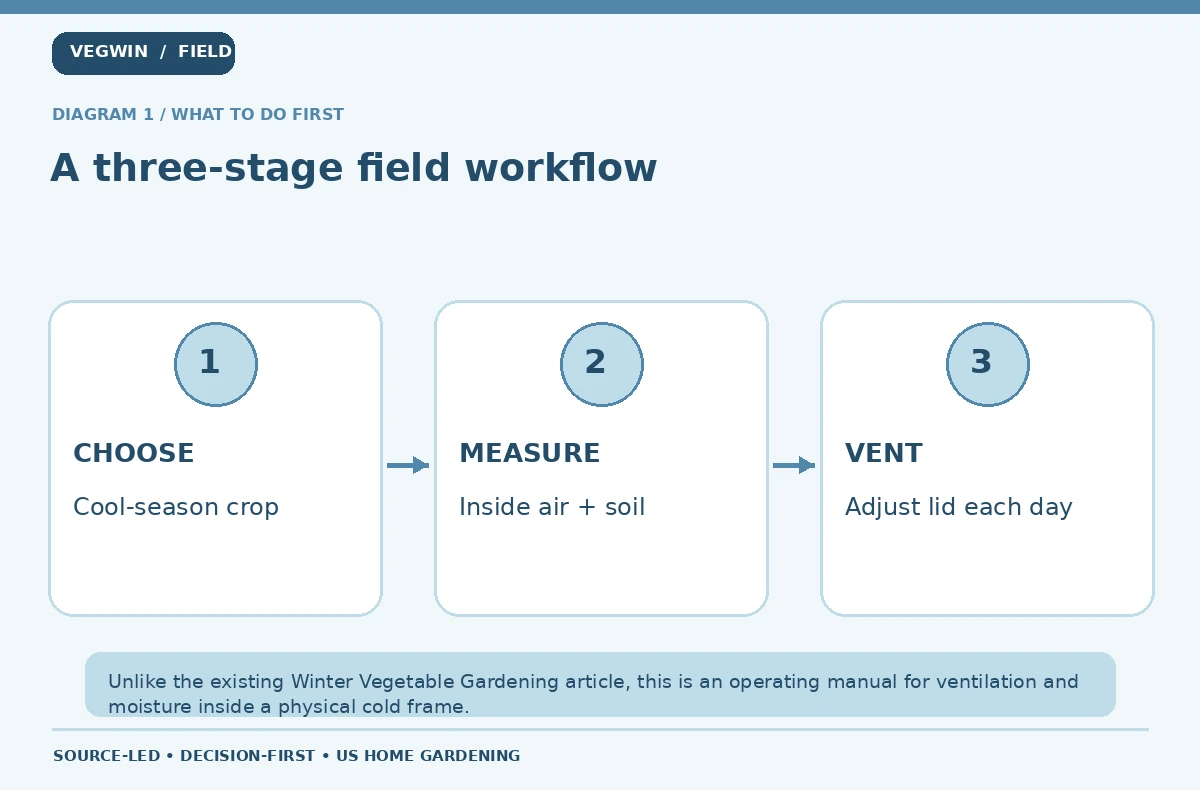
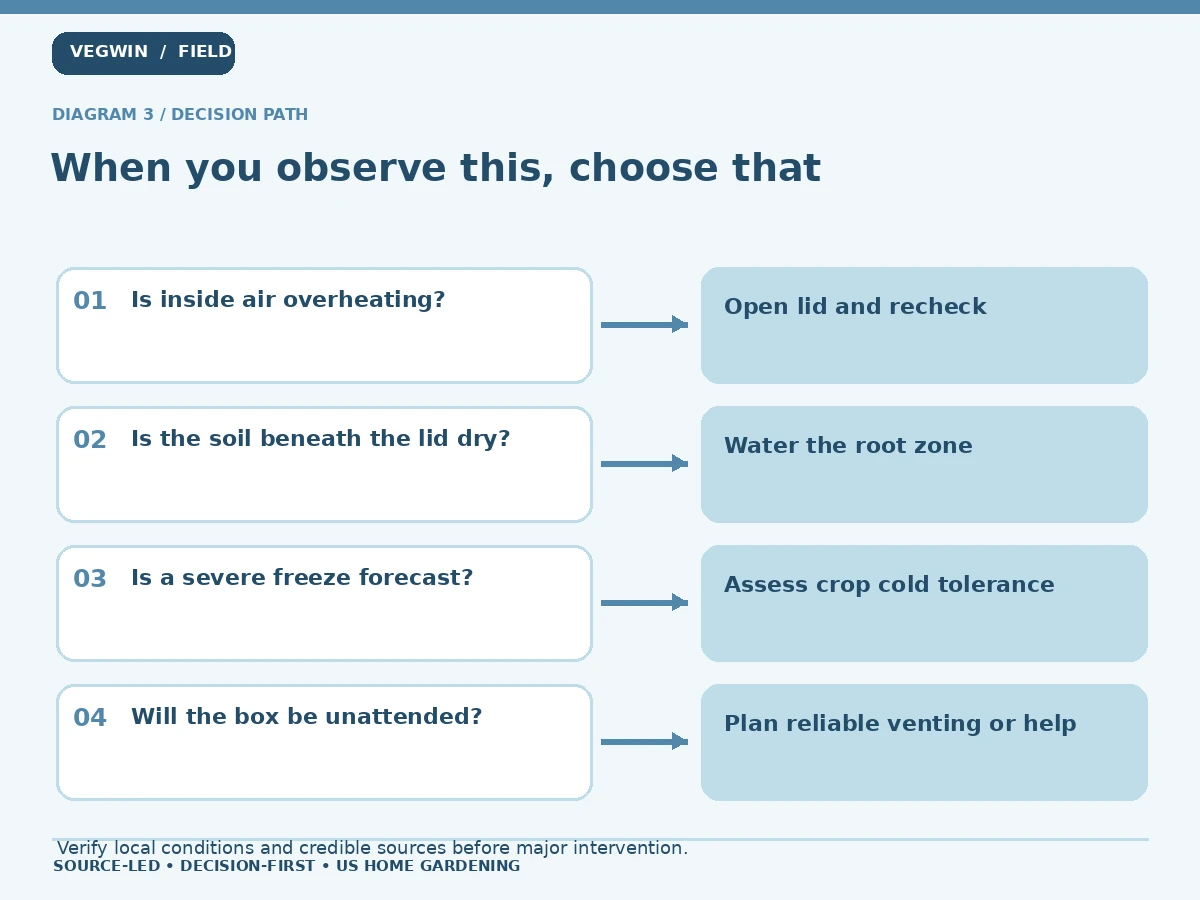
A sealed frame may become too hot under clear sky even when outdoor air feels chilly. Iowa State Extension advises monitoring air temperature inside and opening the sash when heat builds; its guidance specifies opening above 85°F as an upper trigger, not a universal target for every crop. Put the thermometer at foliage height out of direct sunlight, and compare the reading with how the plants look. The temperature in a small enclosure can change quickly, so checking only the overnight forecast is inadequate.
In the morning, inspect condensation, soil moisture, and interior temperature before deciding how far to raise the lid. On a sunny afternoon, increase ventilation if temperatures rise and humidity collects. Close the lid in time to conserve warmth before sunset, while recognizing that a cold frame alone cannot guarantee protection from severe freezes. If you will be away all day, consider a reliable automatic vent opener or arrange a competent check-in rather than leaving the frame tightly sealed in sunshine.
Decide When To Sow And When To Move Plants
For an early crop, start by choosing a crop’s normal regional planting window, then ask how much modest protection the cold frame could reasonably provide. Iowa State describes a two-to-four-week extension in typical local examples; that is an illustration, not a promise for every U.S. location. In fall, sow while there is still enough light and suitable soil warmth to establish plants before the coldest period. A seed that stays dormant in freezing soil is not a failed cold frame; the sowing decision may have been too late.
You can also place potted transplants inside as part of hardening, but that is a separate objective from producing a salad crop in the frame. Keep plants from pressing against the cover, where leaves may be damaged by extreme cold or trapped moisture. Avoid overcrowding because wet foliage and stagnant air increase disease risk. Use the seed packet and regional Extension for species-specific sowing depth and spacing. Do not invent a universal rule such as “plant everything four weeks early.” If you want the full process, read how to cover plants from frost without trapping heat or moisture.

Match Watering To Soil Rather Than Rainfall
The lid intercepts some rain and snow, so soil beneath it may dry even in a wet week. Lift a corner of mulch or test soil below the surface near roots rather than using the appearance of condensation on the lid as a moisture meter. Water gently when needed, preferably early enough for leaves and surfaces to dry before night. Cold, saturated soil is an invitation to root stress; a closed frame does not compensate for missing drainage.
The opposite mistake is letting soil dry completely because winter plants seem inactive. Active roots still need moisture, though demand is lower in cool, dark weather than in bright, warm spring conditions. Check more often during rapid sunny warming and after windy ventilation periods. If seedlings collapse or leaves yellow, examine water and root conditions before assuming disease or buying a treatment. Iowa State and Nebraska Extension both emphasize temperature and moisture management together.
| Inside-frame observation | Likely concern | First safe action |
|---|---|---|
| Sunny day; thermometer climbing | Overheating risk | Prop lid and recheck temperature |
| Wet lid and damp leaves | Condensation and still air | Vent as conditions permit; monitor foliage |
| Soil dry beneath surface | Lid blocks some rainfall | Water root zone gently |
| Hard freeze forecast | Protection may be inadequate | Evaluate crop tolerance and added protection |
Diagnose Heat Cold And Moisture Problems
Use symptoms to ask a question, not as a final diagnosis. Wilted foliage during a bright midday may reflect excessive heat, dry soil, or root damage; record inside temperature and feel the soil before intervening. Water droplets on the lid every morning suggest high humidity, but they do not alone identify a pathogen. Frost-injured leaves can look water-soaked or blackened later; document the outdoor low, whether the lid was closed, and the specific crop tolerance.
When a problem appears, make the smallest meaningful correction first: adjust venting, repair a drainage issue, remove badly decayed material, or revise the next sowing date. Do not recommend pesticides based only on a photo of a wilted leaf. If several plants fail in a pattern, isolate variables such as shaded versus sunny ends of the box or wetter versus drier spots. A simple log of lid position, interior temperature, and soil condition often explains more than a generic “winter care” checklist.
Plan The Exit From Protected Growing
As spring warmth becomes reliable, open the frame for longer intervals and gradually allow the plants to experience outdoor wind and sunlight. A crop that has spent weeks in a sheltered enclosure may still need a transition before its protection is removed. Follow regional transplant guidance if moving plants into another bed; cool-season greens that are already growing in the frame can usually remain there until harvest or until heat makes the enclosure unsuitable.
At the end of the season, clean tools, remove rotting debris, check hinges and glazing, and note which varieties gave a useful harvest. Compare the work of venting and watering with the extra crop you received. If you cannot monitor the structure regularly, a breathable row cover or a simpler season plan may be a better fit. The useful measure of success is a healthier, harvestable crop with a manageable daily routine, not the number of degrees an empty frame reaches at noon.
Related Guides
How We Research and Verify This Guidance
We checked sources including yardandgarden.extension.iastate.edu — source 1, extension.sdstate.edu — source 2, extension.umn.edu — source 3 and lancaster.unl.edu — source 4 on October 20, 2026. Each source supports a crop- or practice-specific assertion recorded in the source list. Gardening outcomes depend on local weather, species, cultivar, soil and management. This page is not a live verification of all WordPress canonical URLs. Editorial assessment and appropriate local Extension checks remain necessary before publication.
Disclosure: There is no approved affiliate offer or compensated product placement in this article; its links point to educational references. Read the site affiliate disclosure for applicable policy information. No pesticide or fertilizer rate is recommended without relevant local Extension support and, where applicable, an approved product label.
Cool-season lettuce, spinach and radishes are common choices; select regionally suited varieties and monitor the enclosure.
No. Sun can raise inside temperatures quickly, so check an inside thermometer and open the lid when needed.
No. Protection is limited and warm-season crops remain vulnerable to damaging cold.
Check soil beneath the lid. The transparent top can prevent precipitation from reaching roots.
Not everywhere. Light, crop tolerance and local winter temperatures can limit growth even when plants survive.