
A row of beet seedlings can look overcrowded even when the seeds were placed carefully. That is often normal: what gardeners call one beet seed is commonly a dry fruit containing several embryos. Several little plants may therefore emerge almost on top of one another. The safest response is not to yank every extra seedling out of the soil. The aim is to save one vigorous plant, preserve its young root, and leave enough room for the root to expand. Here is how to thin in stages without turning a healthy stand into a patch of injured roots.
Recognize Why One Beet Seed Makes Several Plants
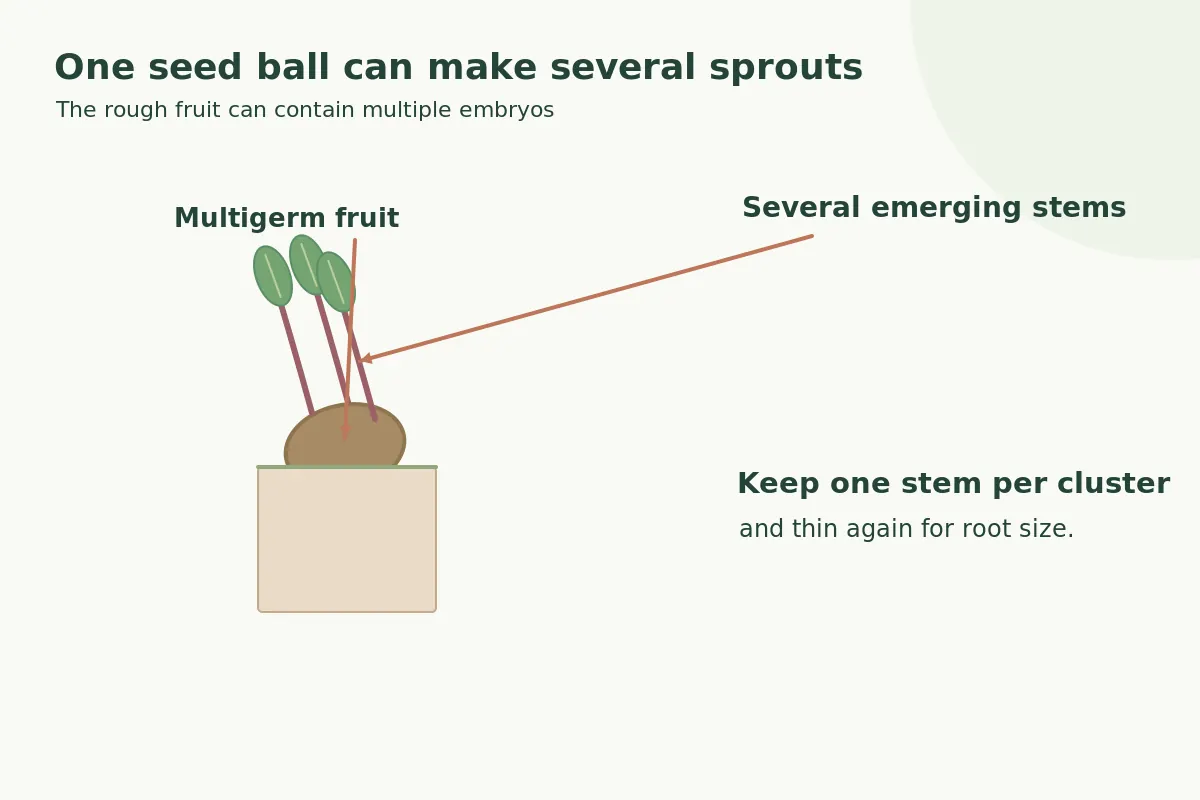
Most conventional beet seed is multigerm, meaning one rough, corky seed ball can yield two or more seedlings. University of California Agriculture and Natural Resources explains that these clusters commonly contain multiple true seeds. This differs from monogerm or precisely separated seed sold for easier spacing. Read the packet before assuming an unusual number of sprouts means you overplanted. Beet seedlings have slender stems, often red or pink-tinged near the base, with paired seed leaves followed by true leaves. Mark clumps that emerge together; your first decision is which plant is most vigorous, not which tiny stem happens to sit exactly on the row center.
Begin Before the Seedlings Become Rootbound Together
Do not wait for each seedling to form a visible beetroot. UC ANR recommends an initial pass when seedlings stand roughly one to two inches tall, while the University of Alaska Fairbanks notes that prompt thinning prevents early competition. Use plant development, not a fixed number of days after sowing, because cool soils and different varieties emerge at different speeds. If seedlings are tiny, drooping after rain, or still unfolding their seed leaves, check again after they have enough height to distinguish. If they are several inches tall and crowded, thin now rather than hoping the weaker plants will disappear on their own.
Select the Strongest Keeper in Each Cluster
Find the plant with an upright stem, balanced true leaves, and no obvious injury or abnormal discoloration. It is not necessary for the keeper to be the tallest if height comes from stretching in poor light. Keep a plant placed naturally where its root will have space; remove one lying directly against its stem. Make the choice before touching the group. For a cluster with several similarly strong sprouts, select the one easiest to preserve without disturbance. The purpose of thinning is a healthy surviving root, not equal treatment for every tiny seedling.
Snip Unwanted Stems at the Soil Surface
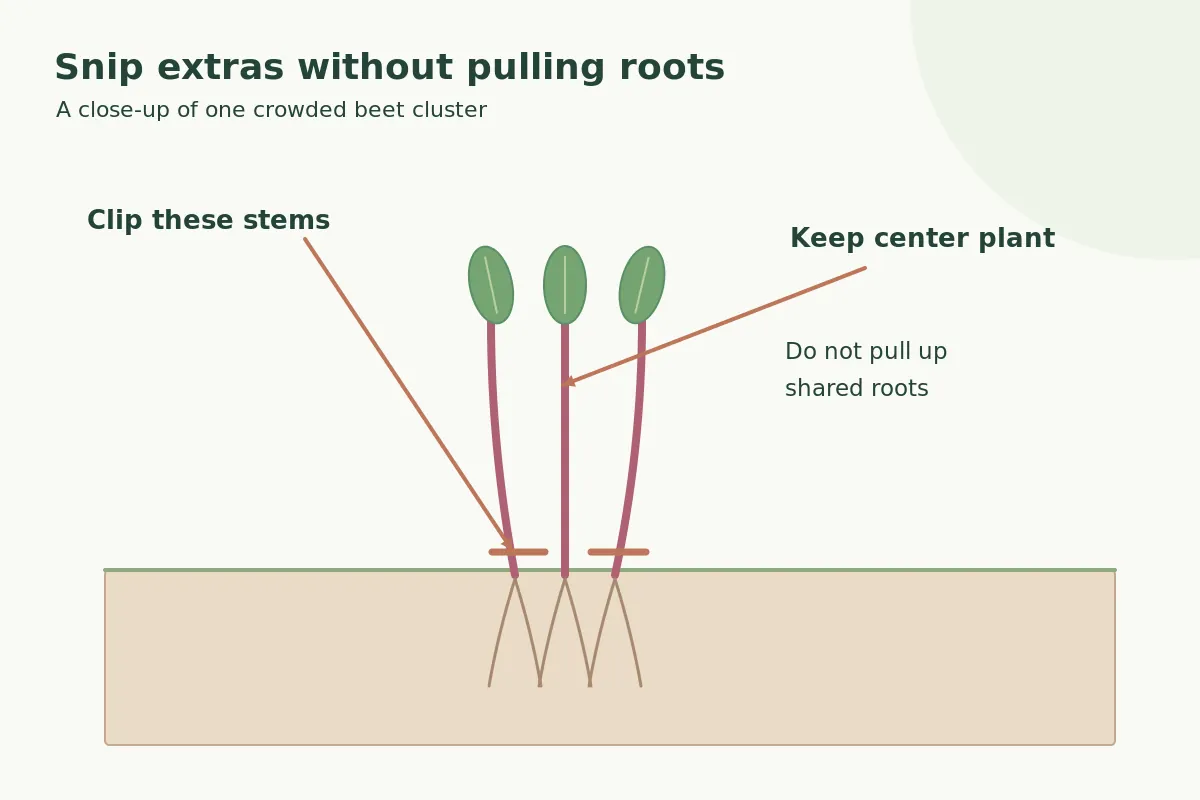
Use clean, pointed snips and cut the extra stems at or just above the surface, leaving their tiny roots in place. Hold the remaining plant steady only if necessary, without pressing it sideways. Pulling seedlings can dislodge the intertwined roots of the plants you want to keep; both UC ANR and Alaska Extension favor cutting for that reason. Do not cut across the base of the chosen seedling or trim its center leaves. The severed little shoots will not keep growing, and the remaining root can expand without you excavating soil directly beside it. For the basics, see our guide: When and How to Thin Carrot Seedlings Without Disturbing Their Roots.
Space the Row for the Roots You Plan to Harvest
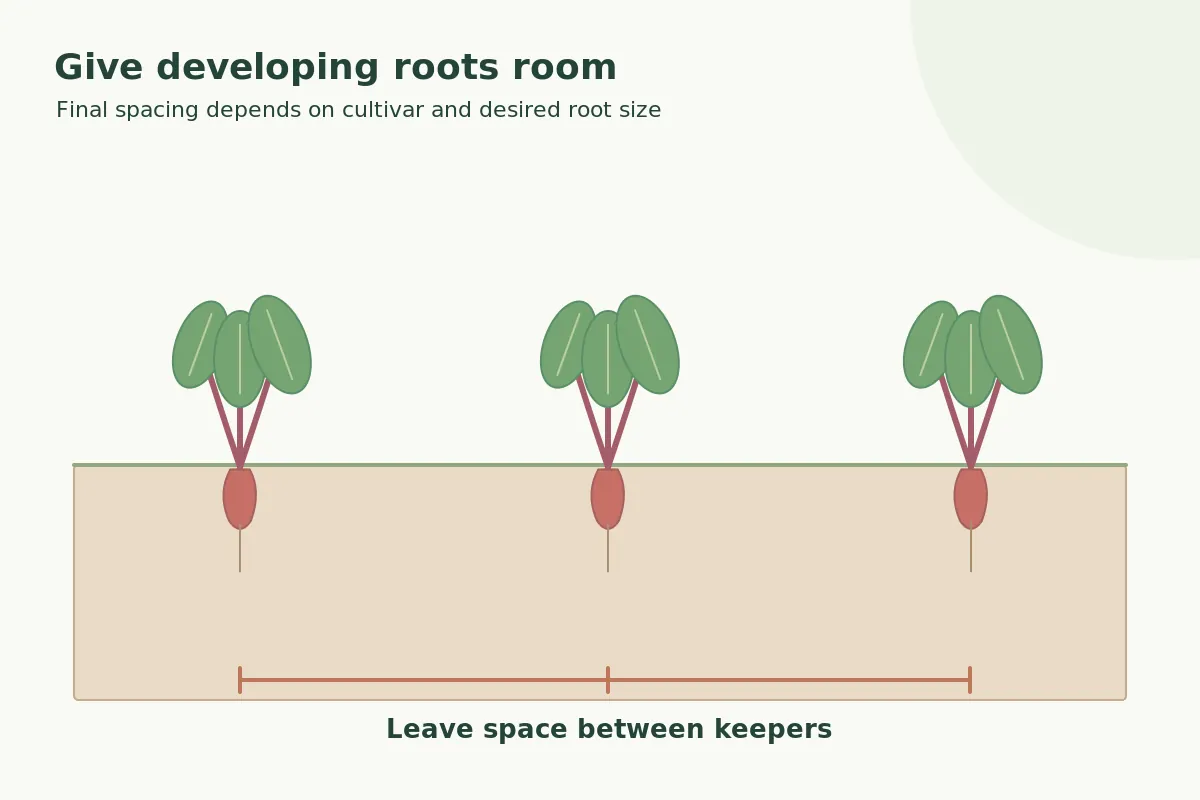
There is no single spacing that fits every beet. Alaska Extension gives about two inches for smaller roots, three inches for typical table beets, and four for large storage roots; Illinois Extension gives a general one- to three-inch thinning range. Consult the actual cultivar packet, particularly for cylindrical types or baby-beet harvests. It is reasonable to make one early pass within crowded clusters and a second pass once you can judge whole-row spacing. The final target is the distance between living plants along the row, not the distance between seed balls you originally dropped.
Make a Second Pass as the Beet Tops Develop
After removing doubles, stand back and inspect the row as a whole. Some originally separate clusters can still be so close that the crowns compete. Choose healthy keepers distributed reasonably evenly; avoid leaving a six-inch gap beside two roots touching each other. UC ANR describes a staged approach, with the second pass by roughly three- to four-inch plant height. Do not over-handle the soil; clipped unwanted tops can be carried away gently. If you are growing beets primarily for leaves, a closer stand may be intentional, but the goal and harvesting schedule should reflect that different crop.
Keep the Soil Evenly Moist While Roots Recover
The keeper is still small, with shallow roots that dry rapidly in warm, windy conditions. After thinning, water gently enough not to wash soil from the crown or flatten leaves. Beet growth is best with reasonably steady moisture and soil that drains, not repeated saturation. If dry weather follows, check the moisture where roots are growing, below the dusty surface. Spread mulch beside established seedlings if conditions demand it, but do not bury the crowns of tiny plants. Moisture consistency matters more than heavy one-time soaking immediately after thinning.
Handle Edible Thinnings as Delicate Greens
Young beet foliage can be eaten, and Extension guides note that thinnings are useful as tender greens. Collect only sound, clean leaves; wash them thoroughly to remove soil. A snipped plant with a very small root may be preferable to eating an older, tougher thinning. Never treat greens harvested from a sprayed bed as automatically safe: follow any pesticide label and preharvest interval. If your primary objective is full-size roots, avoid repeatedly stripping healthy leaves from the plants you retained, since those leaves power root growth.
Tell Root Crowding From Other Growth Problems
Crowding tends to give narrow roots or tiny swollen tops packed together, but poor beet growth is not proof that thinning was missed. Heavy crusting after rainfall can block emergence, shade reduces growth, and water stress can create uneven stands. Illinois Extension identifies deep sowing and crusted soil as reasons for poor seedling emergence. If the row was always sparse, thinning will not fix the underlying problem. Inspect drainage, light, seed depth, and variety before making changes. Beet seedlings that wilt immediately after you tug a neighbor out may have sustained root damage rather than a nutrition deficiency.
Adapt the Timing to Spring or Fall Gardens
Beets are a cool-season crop, but a spring seedling in still-cool soil develops differently from a fall planting in warm soil. Base the thinning pass on the actual leaf and height stage. Follow local planting calendars rather than assuming USDA hardiness zones tell you when to sow annual beets. During a hot spell, work at the cool end of the day and avoid disturbing the stand. For a late fall crop, remember that shorter days limit the time remaining for roots to expand; removing severe crowding is worthwhile, but thinning cannot replace missing growing time.
Use a Simple Three-Question Thinning Check
First ask whether one seed location has multiple living stems: if yes, clip down to a keeper. Second ask whether remaining plants are spaced for baby roots, table roots, or storage roots: if not, plan the row-wide follow-up. Third ask whether the survivors have moisture, light, and undisturbed crowns: if not, address those conditions before adding fertilizer or other inputs. In a heavy soil, use fingers or small scissors rather than a hoe close to the row. The resulting stand should look deliberately open but not stripped bare.
A Quick Field Decision Table for This Task
| Situation | First choice | Check again |
|---|---|---|
| Several shoots from one seed ball | Clip extras, preserve strongest seedling | Check final row spacing |
| Keep baby beets | Use smaller cultivar-appropriate gap | Harvest when tender |
| Grow larger roots | Use the wider cultivar-appropriate gap | Monitor even soil moisture |
Related Guides
- Direct Sowing Seeds Outdoors: A Crop-by-Crop Success Checklist
- How to Grow Golden Beets From Seed and Thin Crowded Seed Clusters
- How to Sow Beet Seed Clusters and Thin Multiple Seedlings Correctly
- How to Grow Sugar Beets From Seed Without Crowding Their White Roots
- How to Recognize Leafminers on Beets and Protect the Leaves Early
How We Research and Check Garden Advice
This article is based on horticultural guidance reviewed on 2026-10-25 (UTC). Sources consulted for the specific procedures include: ucanr.edu — UC Agriculture and Natural Resources; www.uaf.edu — University of Alaska Fairbanks Extension; extension.illinois.edu — Illinois Extension. The key recommendations above were compared across those sources, with climate and plant-stage limits retained. We separate recommendations directly supported by Extension or RHS from practical observational checks such as examining fresh growth. Advice is for general home gardening and should be adapted to the cultivar and local climate rather than to a hardiness zone alone.
Plant Safety and Independent Editorial Disclosure
Use clean tools, check plant identity, and follow current regional restrictions for any purchased treatment. Plant diseases and insect populations vary by location; a local Cooperative Extension office can help with unusual symptoms. This is independent informational content, not paid product placement and not proof of any affiliate relationship. Read the VegWin affiliate disclosure. For edible plants, use safe handling practices and follow the label for any pesticide or other garden chemical used on food crops.
Most ordinary beet seed balls contain several embryos, so one planted fruit can produce several sprouts; monogerm types are an exception.
Yes, especially within a close cluster. Cutting extra stems at soil level reduces the risk of tugging roots of the keeper.
Follow the cultivar packet and intended harvest size; Extension guidance generally places small roots closer and large storage roots farther apart.
Healthy young beet tops are edible when properly washed and harvested from plants managed with food-safe practices.
You can remove badly crowded plants, but earlier thinning better prevents competition and disturbance of neighboring developing roots.