
Beets give gardeners two possible crops: colorful roots and edible greens. Yet many beet failures start before a root begins to swell. What looks like one round beet “seed” is often a dried fruit containing several seeds, so a tidy sowing can emerge as crowded little clusters. Dry or crusted soil may also leave unexpected gaps. The central skill is to distinguish these two problems and thin at the right time. This guide follows beets from seedbed preparation through a controlled greens harvest and pulling roots while their texture is still tender.
Choose Beets for Both Root and Leaf Use
Red, gold, white and striped beets can all be useful in a home garden. Some cultivars produce round roots, while others are longer or flatter. Root color is not a reliable shortcut for growth time or storage behavior; read the seed packet for the specific selection. Iowa State Extension lists examples of several colors and shapes and emphasizes that both beet greens and roots can be used as food.
Decide whether you want a small harvest of baby roots, a full crop of medium roots, or primarily tender greens. This choice changes how you thin and when you harvest. Even when greens are delicious, repeatedly removing most of the foliage can reduce the photosynthesis needed to build the root. Set your objective before cutting leaves from every plant. Keep notes on variety because differences become important when comparing root size at equal ages.
Understand Why One Seed Makes Several Plants
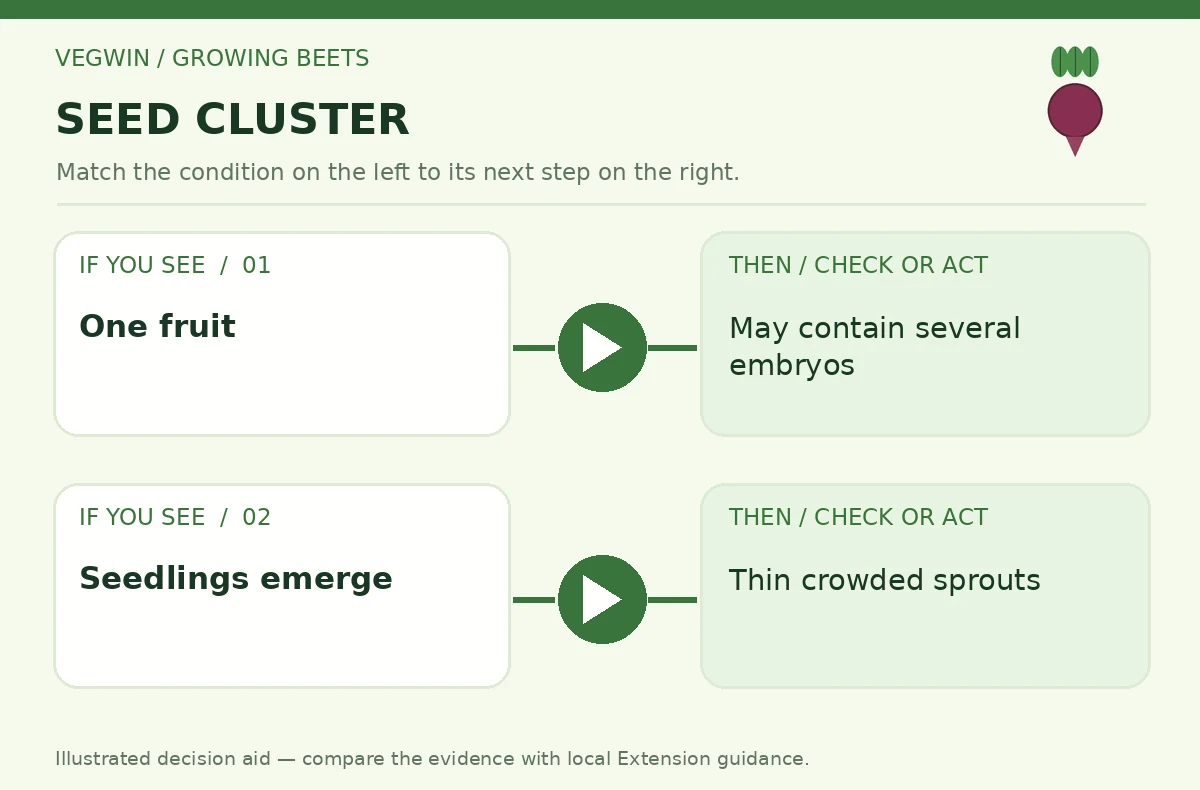
Conventional beet “seeds” are frequently multigerm fruit clusters. One planted unit can produce several seedlings close together. Iowa State Extension highlights this as a leading reason gardeners find beet rows overcrowded even after sowing carefully. The solution is not necessarily to buy fewer packets or wait indefinitely: inspect new seedlings and thin excess plants once they can be handled.
Some modern packets identify monogerm types, but do not assume all beets behave the same way. If two or three stems rise almost from the same point, count them as competitors for root-growing space. Snipping weaker seedlings at soil level can avoid tugging neighboring roots. Use healthy thinnings as greens only when they are clean and suitable for eating; do not consume material damaged by disease or unverified chemical exposure.
Plant Into Loose Soil That Will Not Crust
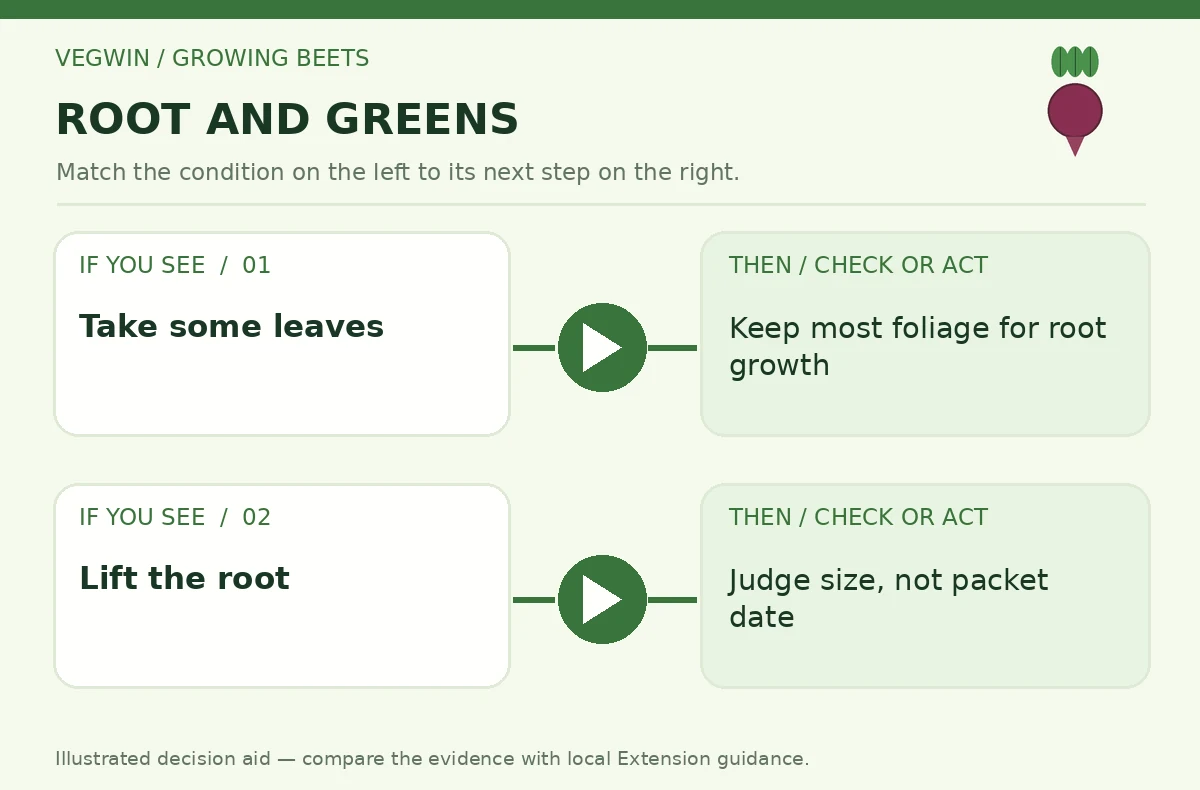
Beets prefer well-drained, adequately moist soil with enough room for a root to expand. Large clods, heavy compaction and a surface crust can interfere with emergence or root shape. Iowa State notes that a dry, impenetrable crust is a common cause of poor beet germination. Prepare a fine seedbed, sow at the depth on the packet, and maintain gentle consistent moisture while seeds are germinating.
Light, appropriate mulch or careful watering may reduce crusting on prone soils, but burying small seeds too deeply can cause a different failure. Test a few spots by touching the surface: if it bakes hard after rain, adapt preparation for the next row. Do not overwork soaking-wet clay, which can form more clods as it dries. Direct sowing is generally more suitable than treating beets like fragile indoor transplants, because disturbed roots may give inferior growth.
Thin Beet Seedlings for Root Space
Iowa State recommends thinning beet seedlings to roughly three to four inches apart to produce good roots in its home-garden system. Use the cultivar spacing if it differs. Make the decision while plants are small rather than waiting until roots have tangled. Healthy roots need growing room even when the tops still look attractive. If you see multiple seedlings almost touching, thin within the cluster first, then check spacing between clusters. For a step-by-step method, see how to thin beet seedling clusters without damaging neighboring roots.
Water before thinning if soil is dry, and avoid pulling a large group of seedlings so forcefully that the plants you intend to keep come out too. Once thinned, compare growth a week later, paying attention to whether the remaining plants are developing a thickened root rather than only leaves. Do not assume one perfectly spaced stand automatically means high yield; sufficient light, water, a workable soil and season timing still matter.
Schedule Successive Sowing for Cool Conditions
Beets are generally grown as cool-season vegetables, with spring and later-season opportunities in many US regions. Iowa State offers periodic spring sowing and a summer planting cutoff for its own location, but these dates do not travel nationwide. Use your local growing season, soil condition, frost patterns and heat exposure when deciding whether the next sowing can mature before adverse weather. For the fuller picture, see our guide to growing radishes.
Small repeat sowings can extend harvest and let you compare cultivars without tying up an entire bed. Check the maturity estimate on each packet and reserve time for weather delays. High heat or prolonged dry periods can reduce root quality even when seeds germinate. Do not use USDA winter hardiness zones as a sowing calendar; an annual beet crop depends on local seasonal conditions and the maturity of that particular variety.
| What is happening | Check first | Best next move |
|---|---|---|
| Several sprouts in one spot | Multigerm fruit clusters | Thin to keep one strong plant |
| Poor emergence and hard crust | Surface sealing or dry seed zone | Keep moist; improve next sowing bed |
| Big leaves, small root | Crowding or excess fertility | Check stand and soil test |
| Root tender and useful | Measured size and texture | Harvest as needed; keep greens moderate |
Balance Soil Moisture and Nutrients Carefully
Beet roots may crack or become woody if growth is repeatedly interrupted by dry soil or other stress. Use a trowel or finger to inspect moisture within the root zone; shallow splashes that wet only the surface are rarely a good irrigation strategy. Avoid keeping soil saturated because beets also need oxygen around roots. Consistent moisture is especially useful while seedlings establish and roots begin to expand.
Fertilizer should respond to soil conditions. Iowa State notes that fertile gardens may need little or no additional feeding for a beet crop. Too much nitrogen can favor abundant leaves over a satisfactory root harvest. Before making an application, look at recent compost additions, soil test results and signs of actual nutrient deficiency. Manure use must respect food safety; fresh manure and soilborne contamination do not belong on leaves that may be eaten.
Harvest Greens Without Sacrificing Roots
Beet leaves can be harvested as a cooked green or mixed with other greens, but take a moderate amount if you still want the root to enlarge. Iowa State describes taking only a portion of foliage from plants with established roots rather than stripping the whole plant. Young leaves may be tender, but quality depends on weather and age. Wash edible greens with clean water and refrigerate promptly. Our walkthrough on how to grow turnips for tender roots and edible greens sets out each step.
If greens are your primary goal, you may instead harvest complete young plants and treat those as a separate crop. The important distinction is whether you expect the same remaining plant to keep developing a full root. Healthy leaves can be harvested gradually, but repeatedly taking too many leaves can limit future growth. Mark which plants were harvested for greens so differences in later root size have a clear explanation.
Judge Root Harvest by Diameter and Texture
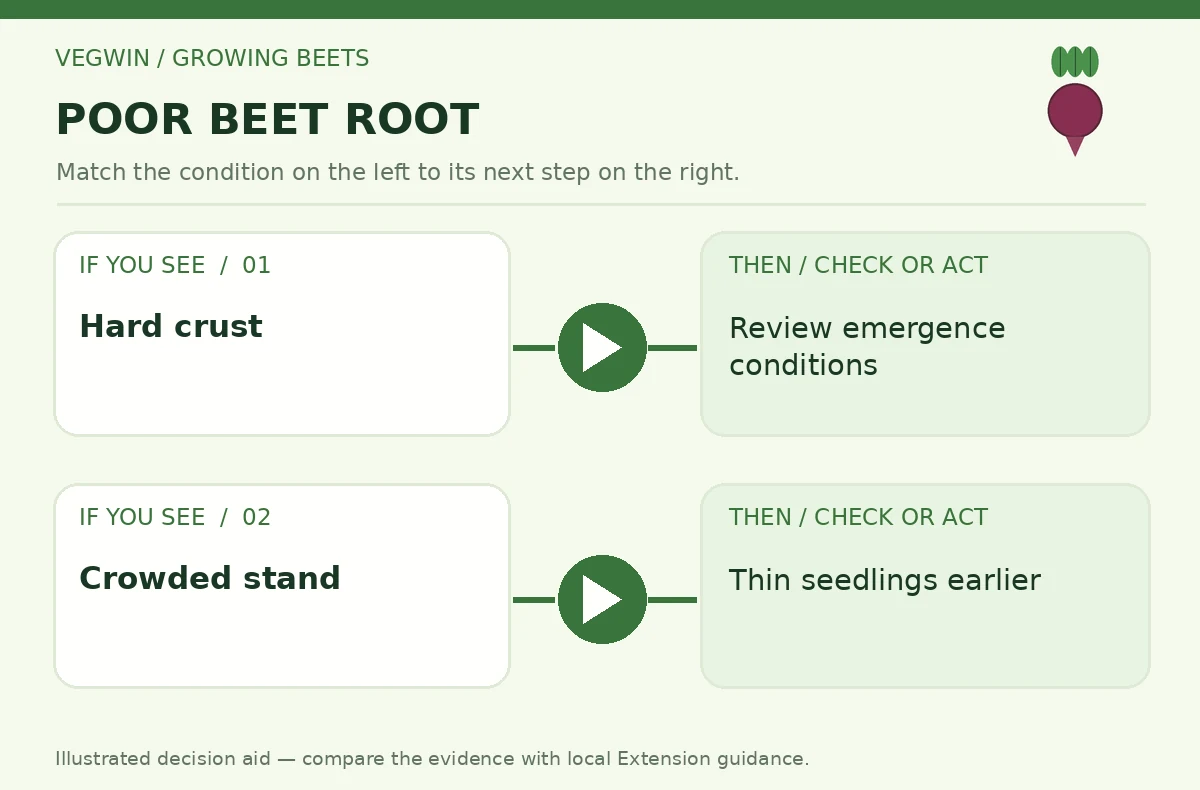
Beets are edible at several sizes. Iowa State’s home-garden guidance describes harvesting the main root crop when roots are around one and a half to three inches across, while smaller beets can also be taken. Very large roots may become tough or fibrous, although cultivar and growing conditions matter. Pull a sample rather than treating a maturity day printed on a packet as a guarantee.
Loosen surrounding soil if roots resist lifting. Trim tops for short-term storage without cutting deeply into the root itself. Check harvested produce for damage or decay; store fresh roots appropriately and separate them from any spoiled vegetables. Beets can also be preserved using established food-safety guidance, but this growing article does not provide canned or pickled beet processing instructions. Do not invent acidity or processing times.
Diagnose Emergence Gaps and Misshapen Roots
If a row has gaps, check seed age, soil crusting, moisture at sowing depth and whether the planted units had viable embryos. If a row emerges as clumps, multigerm seed and delayed thinning are more likely. When roots remain long and narrow, look at plant density, compacted soil, low light and root stress. One symptom can have several causes, so observe and document before amending soil.
Beets share the amaranth family with spinach and Swiss chard, unlike brassicas such as cabbage. Crop rotation records should reflect that actual botanical grouping rather than calling every vegetable root the same family. Inspect unusual leaf spots, tunneling or rotten roots with help from local Extension when necessary; pest identity and food-safe management come before any pesticide decision.
Related Guides
- How to Sow Beet Seed Clusters and Thin Multiple Seedlings Correctly
- How to Grow Sugar Beets From Seed Without Crowding Their White Roots
- How to Grow Golden Beets From Seed and Thin Crowded Seed Clusters
- How to Recognize Leafminers on Beets and Protect the Leaves Early
How We Research These Crop Decisions
We reviewed the original university research-based crop guidance on 2026-10-20: Iowa State University Extension, Iowa State University Extension, Iowa State University Extension. These sources support the crop-specific growing, diagnosis, season and harvest distinctions described above. Extension publications sometimes address Minnesota or Iowa directly; their example planting months, cultivar advice and soil test recommendations are not universal US instructions. The accompanying graphics are original explanatory decision aids rather than trial data or guarantees. The first 90 VegWin queue topics and search results were examined for potential overlap, but a complete inspection of existing live WordPress pages was not possible. An editor must compare published pages, confirm internal URLs and review material for local conditions before manual publication.
Its three buttons lead only to independent university educational references. Before publication, confirm that the site’s affiliate disclosure page is live and appropriate. No homemade pesticide formulas, unverified fertilizer rates or untested food-preservation instructions are provided.
Most traditional beet seed units are multigerm fruits containing several seeds. Thin emerging seedlings so roots have space.
Iowa State home-garden guidance uses about three to four inches for root crops; follow the cultivar label and local guidance.
Yes, if you remove only a moderate share of leaves from well-established plants; heavy repeated defoliation can reduce root growth.
Dry soil and a hardened crust can block emergence; also check seed quality, sowing depth and weather.
No. Beets are in the amaranth family with spinach and Swiss chard, while radishes belong to the mustard family.