
Dozens of pin-sized holes can appear in an eggplant leaf soon after transplanting, even while the rest of the garden seems fine. Flea beetles are common culprits: small dark beetles that jump when disturbed and feed on leaf surfaces, leaving pits and characteristic shot holes. The critical detail is plant age. An established eggplant may tolerate modest feeding, but a small transplant can lose growth at exactly the stage when it needs to establish roots. Diagnosis and exclusion are more useful first steps than automatically spraying a plant with every hole.
Identify the Small Dark Beetles That Jump
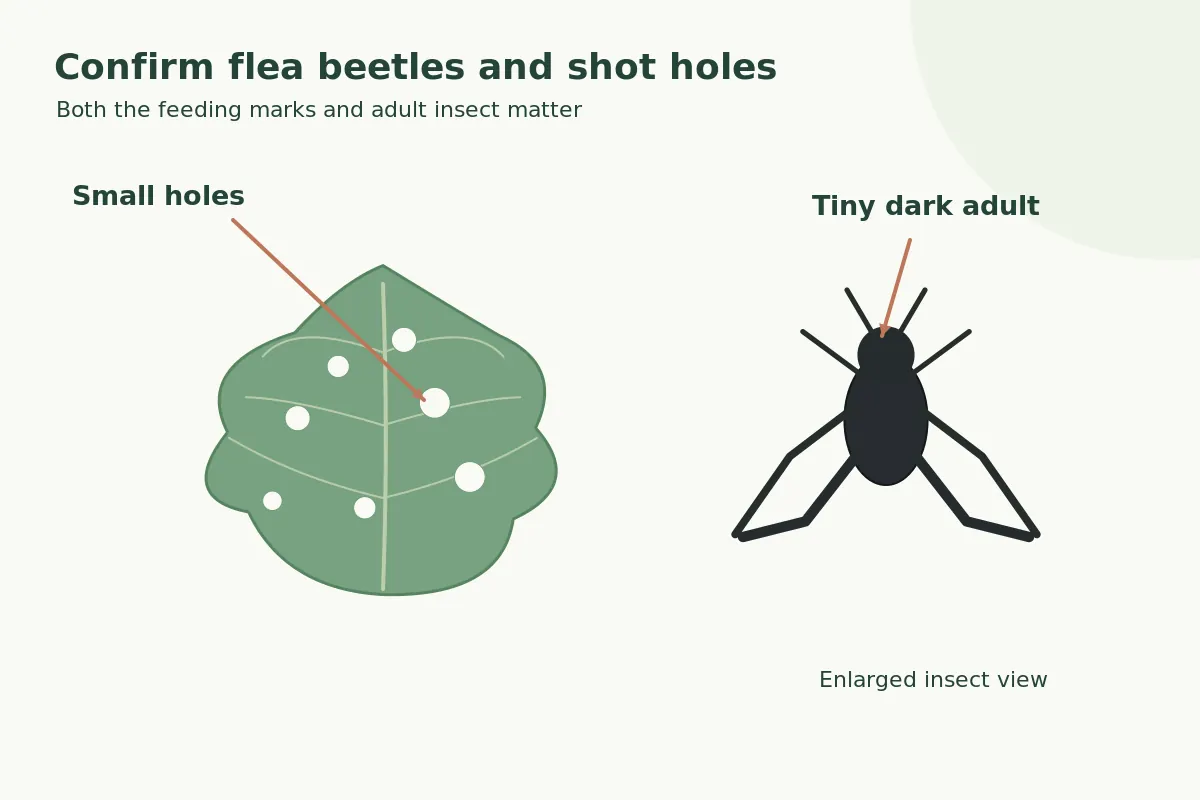
Adult flea beetles are tiny, often glossy dark insects that tend to spring away when a leaf is disturbed. The University of Minnesota diagnostic guide describes eggplant flea beetles as roughly one-sixteenth to one-eighth inch long and identifies Epitrix species among the culprits. View a damaged leaf quietly before shaking the foliage or approaching too quickly. You may spot several black dots running along the leaf veins. Their jumping behavior helps distinguish them from aphids, which tend to stay clustered and do not produce the same chewing pattern. Species and exact appearance vary by region.
Recognize Pits and Round Shot-Hole Feeding
Flea beetle adults scrape shallow feeding pits or chew small round-to-irregular openings through leaves. When many dots are present, the blade resembles material peppered with tiny holes. University of Minnesota and Maryland Extension both describe this shot-hole appearance on eggplant. A heavily scarred leaf does not automatically mean the pest is still present; inspect fresh growth for new spots and check for live adults. Damage on tender expanding leaves may later appear larger as the tissue grows, so diagnosis should use multiple leaves and observations rather than counting holes on one old leaf.
Check Other Causes Before Blaming Flea Beetles
Colorado potato beetles are substantially larger and may leave larger chewed patches, with distinctive striped adults or reddish larvae. Cutworms can clip young stems near the soil line, while wind damage and mechanical tears do not come with small jumping adults. Eggplant leaves with spots but no holes can also suffer disease or environmental problems. Minnesota Extension lists these different symptoms in its eggplant diagnosis guide. When you cannot find an adult, watch the underside of leaves and inspect again at another time of day. An accurate ID avoids unnecessary treatment and protects beneficial insects.
Scout the Youngest Plants First
A fresh transplant has little leaf area, so even modest additional chewing can delay the crop. Maryland Extension emphasizes protecting recently transplanted eggplants from flea beetles. Walk the planting regularly, especially soon after setting out starts, and compare growing tips with older damaged foliage. If new leaves expand normally and the plants remain vigorous, the approach may be monitoring rather than immediate intervention. If every new leaf is peppered and growth is stalled, exclusion or locally recommended management becomes more urgent. Commercial numerical thresholds cannot be applied blindly to every home garden.
Install Row Covers Over Hoops, Not Directly on Leaves
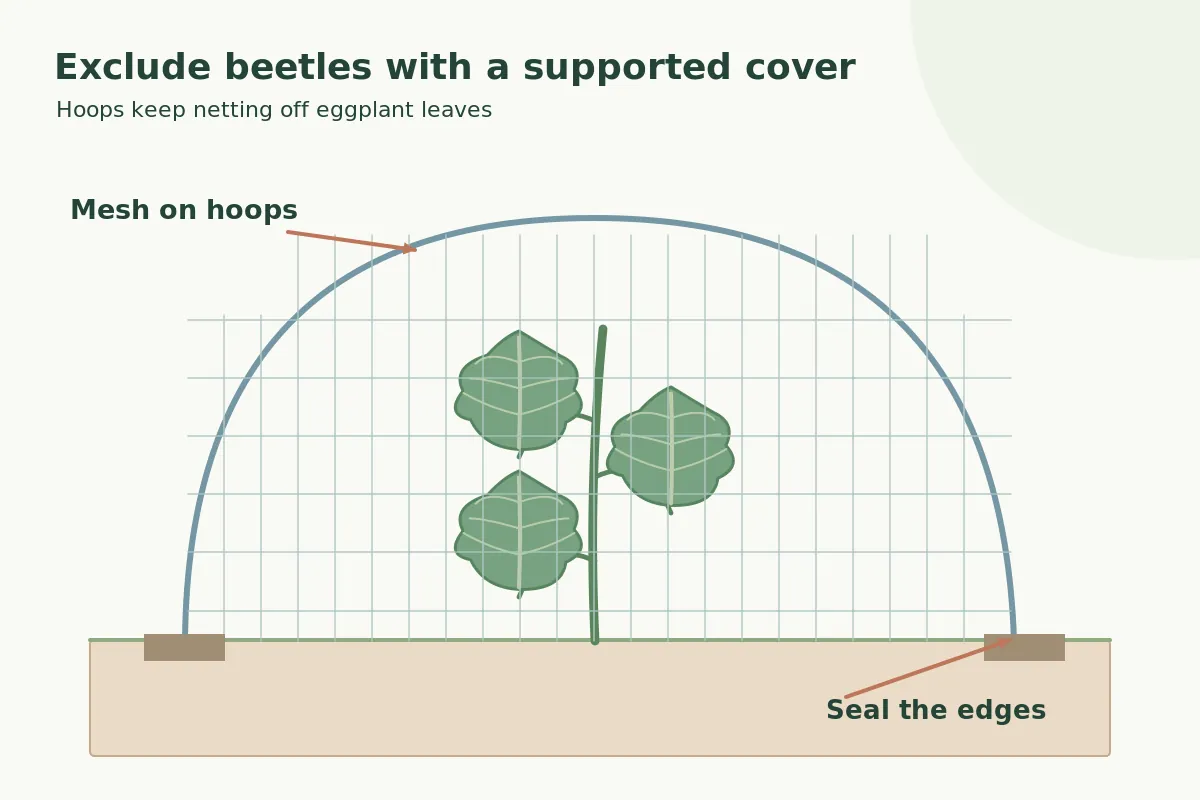
A floating insect row cover can prevent adult beetles from reaching vulnerable plants if installed before an infestation starts and sealed around the ground edges. Maryland Extension specifically advises placing cover over hoops for eggplant instead of letting material rest against the foliage. Give the plant space to grow under the fabric, then anchor all sides so beetles cannot crawl or hop beneath it. A cover placed over already infested plants can trap pests inside; inspect plants carefully first. Combine covers with sensible crop rotation because flea beetles may emerge from soil in formerly infested locations. Our walkthrough on how to identify flea beetles on eggplant and protect young transplants sets out each step.
Watch Ventilation and Remove Covers at Flowering
A covered tunnel changes humidity, air movement, and temperature, so check plants instead of assuming the cover makes them maintenance-free. Weed and water as necessary while minimizing openings that pests can enter. University of Maryland recommends removing eggplant row covers as plants begin to flower so pollination is not unnecessarily restricted and crop growth remains accessible. Heat buildup becomes a larger concern in warm climates or under dense fabrics. Check the fabric manufacturer’s light and temperature recommendations and watch actual weather, not just the calendar. A hoop frame should never crush the growing tips.
Build Vigorous Transplants Before the First Attack
Eggplant is a warm-season crop and performs poorly when set out into cold conditions. Healthy plants with suitable soil, light, drainage and regular moisture are more capable of growing past mild feeding, as Maryland Extension notes. Time transplanting to the local frost and soil-temperature situation rather than to USDA winter hardiness zones. Avoid placing stressed rootbound or nutrient-starved starts into a beetle-heavy bed and then assuming pesticide is the only solution. Black plastic mulch can warm cool soil in some regions, but adjust for local heat and moisture; it is not a universal treatment.
Avoid Relying on Unproven Repellents Alone
Anecdotes about strongly scented companion plants, kitchen sprays, or random barriers do not show reliable control of flea beetles. Physical exclusion before damage, routine scouting, and Extension-based integrated pest management are better starting points. University of Minnesota notes that trap-crop research is crop-specific and that covers work only when beetles are excluded. If you are considering a kaolin-clay barrier, understand it discourages feeding rather than killing existing pests, and follow the labeled directions for any registered product. Do not assume a pesticide sold as organic is harmless to pollinators, pets, or beneficial insects. Our guide “Flea Beetles in Vegetable Gardens” goes into more detail.
Reserve Pesticides for Confirmed Serious Problems
No spray is appropriate solely because a leaf has holes. Confirm active feeding, weigh the size and stage of the crop, and follow local Extension advice about whether a treatment is justified. Where pesticides are considered, use only products currently registered for the pest and edible crop in your jurisdiction and follow every label provision, including harvest intervals, pollinator precautions and protective equipment. Never use improvised concentrations or suggest that a common household soap substitutes for an insecticide label. Overuse may harm natural enemies, and treating after beetles have left will not repair old leaf holes.
Look for Fresh Undamaged Leaves to Gauge Recovery
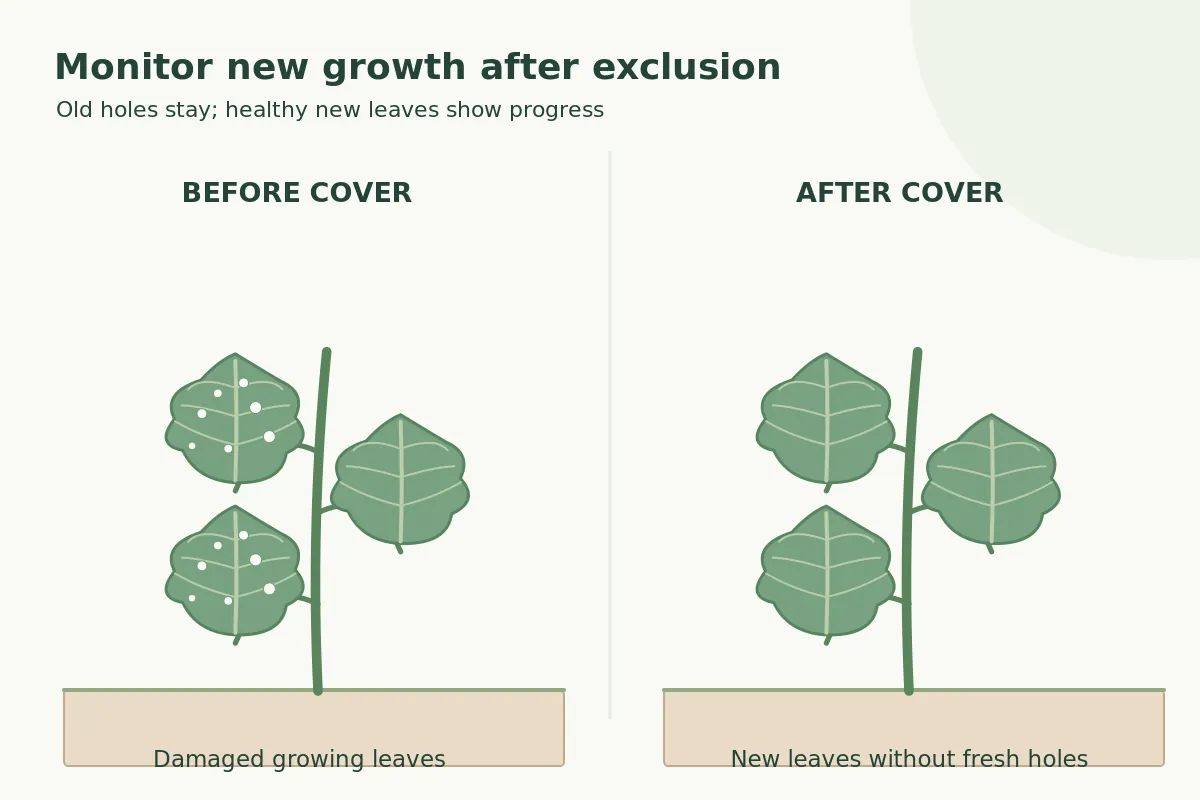
After excluding adults, examine the newest developing leaves over the following visits. Old perforated foliage cannot heal into a perfect blade, but vigorous clean new growth shows the plant is coping. Keep checking near edges of covers and at the soil line where gaps sometimes develop. A plant that wilts despite no new flea beetle feeding may have transplant shock, root disease, lack of water, or heat stress instead. Check each of those factors rather than continuing to treat insects that are no longer present. Small seedlings with very heavy damage may require replacement depending on growing season length. Our walkthrough on how to recognize flea beetles on radishes and protect young seedlings sets out each step.
Distinguish the Beetle From Its Plant Injury
A useful diagnosis includes both animal and symptom: a tiny dark jumping beetle together with small chewed holes on eggplant leaves. If you have only holes, record the damage and revisit the plant to confirm the insect. If you have only a beetle on an otherwise healthy plant, assess whether feeding is meaningful before intervening. Photograph both in good light, avoiding zoom that makes a tiny beetle appear as large as a Colorado potato beetle. This simple two-part observation reduces confusion and makes any later question to a local Extension adviser more productive. For a step-by-step method, see how to identify cabbageworms on kale and keep caterpillars off leaves.
A Quick Field Decision Table for This Task
| Field sign | Likely explanation | Next step |
|---|---|---|
| Tiny holes plus jumping dark adults | Active flea beetle feeding | Prioritize young-plant exclusion |
| Old holes, healthy new leaves | Past injury, plant recovering | Monitor instead of automatic spray |
| Large ragged chew marks or cut stems | Look for other pests | Identify before treatment |
Related Guides
- Eggplant Gardening: Warm-Soil Decisions, Flea Beetles, and Harvest
- When to Harvest Eggplant: Glossy Skin, Firm Flesh, and a Clean Cut
- How to Grow White Eggplant and Pick Glossy Tender Fruits
- How to Identify Colorado Potato Beetle Eggs and Larvae on Potato Leaves
- How to Identify Aphids on Pepper Shoots and Protect Beneficial Insects
How We Research and Check Garden Advice
This article is based on horticultural guidance reviewed on 2026-10-25 (UTC). Sources consulted for the specific procedures include: extension.umd.edu — Maryland Extension; apps.extension.umn.edu — Minnesota Extension diagnostic; extension.umn.edu — Minnesota Extension IPM; extension.umn.edu — Minnesota Extension. The key recommendations above were compared across those sources, with climate and plant-stage limits retained. We separate recommendations directly supported by Extension or RHS from practical observational checks such as examining fresh growth. Advice is for general home gardening and should be adapted to the cultivar and local climate rather than to a hardiness zone alone.
Plant Safety and Independent Editorial Disclosure
Use clean tools, check plant identity, and follow current regional restrictions for any purchased treatment. Plant diseases and insect populations vary by location; a local Cooperative Extension office can help with unusual symptoms. This is independent informational content, not paid product placement and not proof of any affiliate relationship. Read the VegWin affiliate disclosure. For edible plants, use safe handling practices and follow the label for any pesticide or other garden chemical used on food crops.
They often look like many small pits or round shot holes across the foliage, especially new leaves.
Look for tiny dark adults on leaves that jump away when disturbed, rather than judging from damage alone.
They can exclude adults when installed early, kept over hoops, and anchored securely without trapping beetles inside.
University of Maryland recommends taking row covers off as eggplants begin flowering; monitor heat and plant growth meanwhile.
No. Confirm active insects and meaningful injury, then use regionally appropriate IPM and the exact label for any registered pesticide.