
A sugar beet is not simply a red garden beet that has been left in the ground. Sugar beet cultivars of Beta vulgaris are selected for a large pale storage root and sugar production. Gardeners can raise them as an educational root crop, but the first challenge is the same as for other beets: one rough-looking seed ball may produce more than one seedling. Learn how to recognize that cluster, prepare space for a straight root, and thin without pulling your keeper plant.
Identify Sugar Beet Roots Before Planting
Sugar beet belongs to the same species as table beet and Swiss chard, but selections look different. A sugar beet develops a bulky cream-white to pale yellow, often tapering storage root topped by a tuft of broad green leaves. It is not the round, purple-red globe commonly shown on packets of table beets. Buy seed explicitly labeled sugar beet instead of assuming that any white beet is identical in use or yield. The cultivar name, not a photograph of white skin alone, is the useful identification check.
The large root stores sugars; it is not a potato tuber, and shoots arise at the crown near the soil surface. Its long root system can penetrate deeply in workable soil, as the Wisconsin crop profile explains. For a gardener, that means the shape can suffer when the root encounters a compacted layer or repeated transplanting. The botanical detail illustrates leaf petioles attached to a single crown, a swollen upper taproot and fine lateral roots below. Do not trim the taproot to make planting easier.
Prepare Loose Soil Before Direct Sowing
Choose a sunny, well-drained bed with soil worked deeply enough that a young root can descend without striking hard clods, stones or construction debris. Rake the surface smooth, remove perennial weed roots, and avoid working wet clay into a dense crust. If a container is unavoidable, choose a genuinely deep one with drainage rather than a shallow decorative bowl. A deep, uncompressed medium is more useful than a promise of a particular maximum root size.
Sugar beets are a temperate crop; the actual sowing window depends on soil conditions and your local season rather than a USDA winter-hardiness zone alone. Garden beets tolerate cool weather and Maryland Extension recommends direct seeding in suitable spring or late-summer conditions. Follow the sugar beet packet for cultivar-specific sowing depth and spacing. If you find very precise field-scale fertilizer prescriptions, do not apply them to a backyard bed without soil test guidance; agricultural sugar beet production is not a plug-and-play home recipe.
Recognize the Corky Multigerm Seed Ball
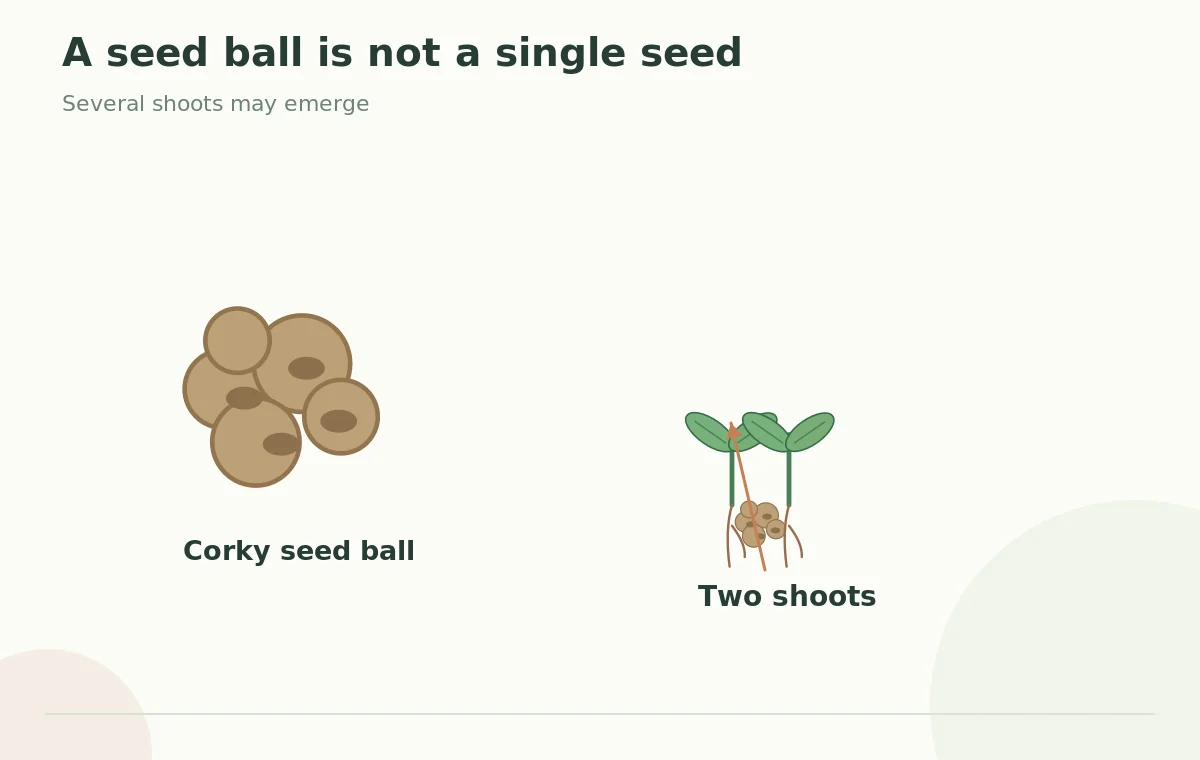
What growers call a beet seed may be a knobby dry fruit cluster containing more than one embryo. Some commercial beet lots are bred or processed as monogerm seed, so inspect the packet rather than asserting that every pellet must sprout several plants. Maryland Extension confirms the distinction. Plant each seed ball shallowly according to directions, with enough room to identify individual clumps after emergence. Unlike peas or beans, beet seed balls are irregular, not smooth round grains.
Water gently at sowing so a strong jet does not wash the seed into an accidental pile. The aim is evenly moist soil without prolonged saturation. Very dry surface crusts can block emergence, but watering every few hours creates different trouble. If emergence is patchy, check one small spot for crusting, recent weather and seed age before reseeding the entire bed. The close-up drawing contrasts one corky seed ball with two emerging shoots; the multiple shoots are a reason to thin, not proof of a seedling disease.

Thin Crowded Seedlings Without Yanking the Keeper
Wait until you can identify vigorous seedlings and a few true leaves, then thin according to the size you want to grow. If two or three shoots emerge from one seed ball, do not leave them to become a tangled cluster of mature roots. Cut the weakest stems at soil level with small scissors, leaving the healthy central seedling and its roots undisturbed. Repeat later if neighboring plants still crowd their leaves and roots; final spacing should follow the cultivar guidance.
Pulling an extra seedling beside a keeper can uproot or twist the remaining beet. This is particularly costly when you hope for one broad, straight storage root. The action diagram places the scissors at the unwanted stem, not at the crown of the selected plant. When thinning a larger bed, mark the finished row so you do not accidentally cut the same plants twice. Healthy, correctly identified beet thinnings can be used as greens, but do not harvest leaves from unidentified plants.
Keep Moisture and Nutrition Consistent
Established roots need moisture at depth, not a permanently wet surface. Water when the soil begins drying enough to impede growth, then allow excess water to drain. Mulch between plants after seedlings are established to lessen extreme evaporation and weed competition. Aim for steady growth without alternating severe drought and flooding. Beets are vulnerable to poor root development from overcrowding and competition, as Extension sources describe. Visible wilting in midsummer may reflect heat stress as well as insufficient water.
Avoid dumping extra nitrogen fertilizer on a planting just because its leaves are small; excessive nitrogen can promote foliage at the expense of satisfactory storage roots. If roots fail to swell, inspect spacing, light, soil texture and watering first, and use a local soil test for nutrient decisions. Inspect leaf surfaces periodically for spotting and insects, identify any problem before applying a control, and remove heavily diseased material appropriately. A simple weekly note on leaf growth and moisture is more useful than an invented universal feeding schedule.
Know When to Lift a Mature White Root
Unlike table beets harvested as small tender globes, sugar beets are selected to produce a substantial storage root. Do not transplant or cut the growing tip to speed bulking. Watch the root shoulder, leaf condition and the maturity guidance for your particular cultivar. Loosen soil well to the side of the root before lifting; pulling straight upward from dry, compacted ground can snap the tip. Long roots can still be surprisingly narrow at their bottom.
Inspect the freshly lifted root for rot, major splits and embedded stones. Brush away loose soil and keep the edible crop clean, but avoid claiming that raw home-grown beets can be processed into safe commercial sugar by a simple kitchen shortcut. Sugar extraction is an industrial process with its own food-handling requirements. If storing roots, consult regional recommendations for beet storage and ensure any food use matches the purchased cultivar and normal produce hygiene.
Diagnose Forking, Tiny Roots and Bolting
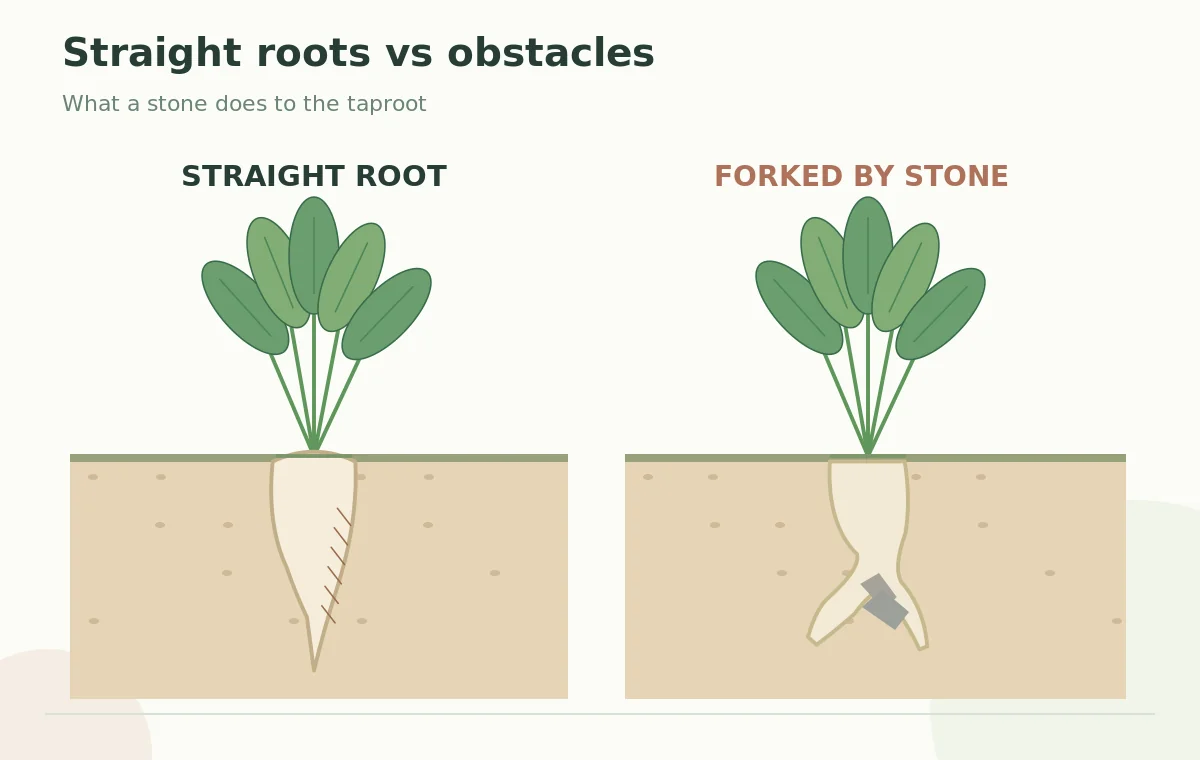
Forked roots often trace back to an obstruction, compaction, inconsistent moisture or early root disturbance. Tiny roots under a large canopy may reflect crowding, shade or unsuitable nutrition. An unusually tall flowering stem is bolting; beets are biennials, though stressful growing conditions can complicate timing. Once a mature flower stalk develops, that plant is no longer the same straightforward storage-root harvest candidate. Check several neighboring plants before blaming a single cause.
The comparison illustration pairs a clean pale tapered root with a forked root reaching around a stone. The stone is pictured below the shoulder, where it actually changes root direction. Crowded seedlings show a separate issue at the soil surface. Correct what you can for the next planting: a smoother soil profile, early thinning and steadier water. Do not assume any very large white root found in a garden is sugar beet without verifying its leaves, crown and planting history.
Use a Repeatable Small-Bed Workflow
Start with a labeled sugar beet seed lot and a loose, deep section of bed. Record sowing date and seed depth from the packet. Keep the row moist while it germinates, identify individual seedlings, snip extra sprouts, and check final spacing again as leaves broaden. Walk the planting weekly to note crusting, shade, pest damage and water needs. Photograph the same root shoulder each time if you want to follow its development without disturbing it.
At harvest, dig beside rather than through the storage root, lift gently and compare the results with the seed packet description. Separate healthy roots from damaged ones and clean tools before the next crop. This process gives a home gardener a useful, observable outcome even without commercial sugar production: one recognized sugar beet variety, one intact crown per plant, and a less crowded path to properly formed white roots.
Related Guides
- How to Grow Golden Beets From Seed and Thin Crowded Seed Clusters
- How to Sow Beet Seed Clusters and Thin Multiple Seedlings Correctly
- Growing Beets: Thin Seed Clusters for Tender Roots and Greens
- How to Thin Beet Seedling Clusters Without Damaging Neighboring Roots
- How to Recognize Leafminers on Beets and Protect the Leaves Early
How We Research and Verify Botanical Details
Verified primary sources reviewed October 28, 2026: corn.aae.wisc.edu — University of Wisconsin crop profile describes sugar beet root anatomy, its deep taproot and seasonal growth. extension.umd.edu — Maryland Extension describes multigerm beet seed balls, soil preparation, moisture and thinning to one established plant. www.uaex.uada.edu — University of Arkansas Extension distinguishes cultivated sugar beet and table beet types and explains beet seed clusters. Seasonal timing depends on local conditions and named cultivars; diagrams simplify scale while preserving the structural details described.
This independent educational guide contains no paid placements or confirmed product affiliate offers. Read the VegWin affiliate disclosure. Follow local Cooperative Extension and IPM advice for regional problems instead of unverified home chemical recipes.
They are cultivated forms of Beta vulgaris, but sugar beet varieties are selected for large pale roots and sugar production rather than typical table-beet traits.
Many beet seed balls hold several embryos; monogerm lots are an exception, so thin when needed.
Direct sowing generally avoids disturbing the descending root and is the safer choice for a straight storage root.
Snip only the unwanted seedling at soil level and keep the chosen crown and roots untouched.
Commercial sugar extraction is a specialized process; growing the root does not itself establish a validated home processing method.