
Growing vegetables in pots works when the site and the root volume fit the plant, not when the planter merely looks spacious from above. Start with a practical patio audit before buying seedlings. You can then compare crops, check drainage, and create a watering plan that changes as the plant grows. This is a multi-crop container planning guide, not a replacement for a tomato-specific growing manual. Disclosure: This is independent gardening information, not a paid product placement. Affiliate partnerships for this page are not verified; see the site affiliate disclosure.
Audit Sun, Water Access, and Surface Before Buying Pots
Map direct sunlight where pots will actually stand, not where the patio looks bright at noon. Watch the location across one ordinary day, noting building shade and exposure to wind. University of Maryland Extension suggests roughly six to eight hours of direct sun for warm-season fruiting vegetables and lower light exposure for many cool-season greens. A covered north-facing balcony may favor lettuce more than peppers; do not buy a high-yield tomato based on a tag without checking the actual hours. Our guide “Balcony Gardening for Vegetables” goes into more detail.
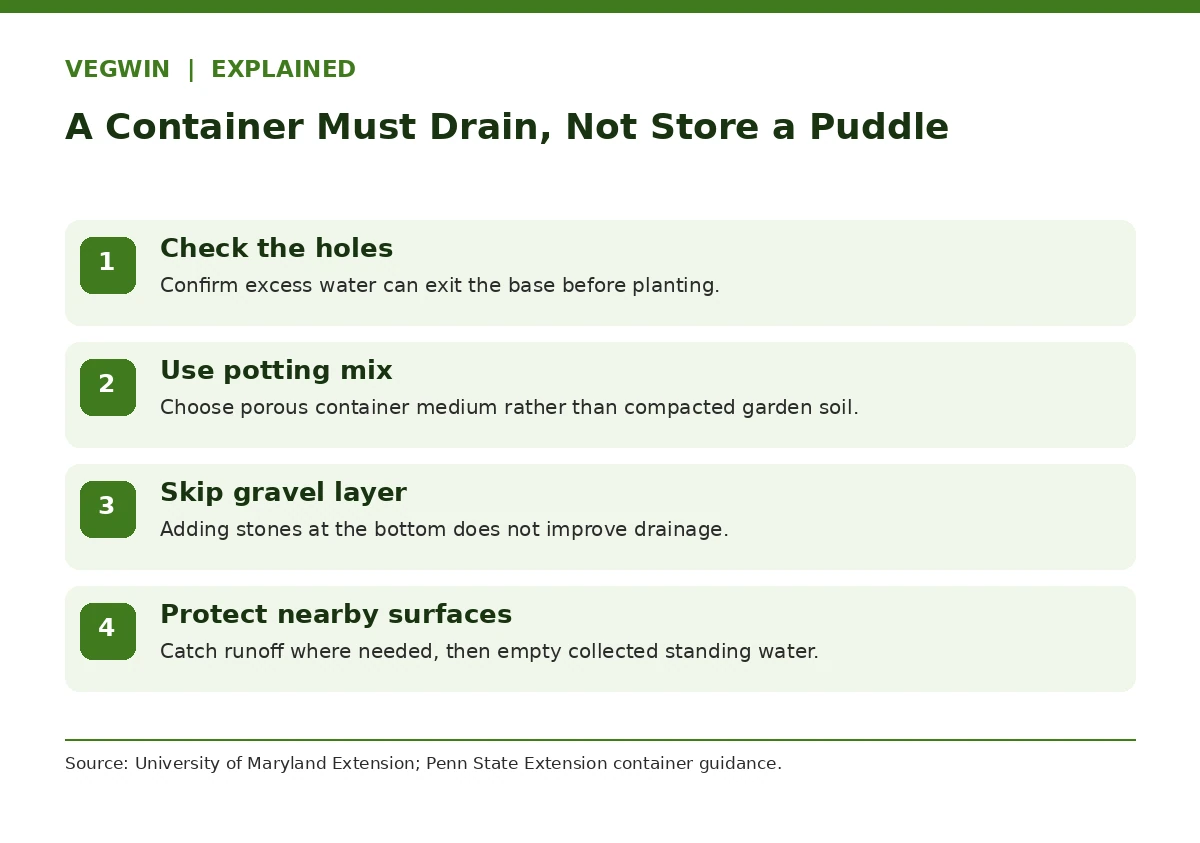
Identify the closest water source and decide where excess water can drain. Containers on elevated balconies may drip onto neighboring property; deep saucers need to be emptied so roots are not left standing in water. Hard pavement can reflect heat toward foliage and warm dark-sided pots. Finally inspect load limits and stability if you are setting large, wet containers on decking. The best crop choice is sometimes the one that fits the watering and weight constraints, not the one with the biggest potential harvest.
Choose a Container by Mature Root Demand and Stability
Container labels often describe diameter rather than the volume of media a mature root system can occupy. Compare both dimensions and actual gallon volume. Maryland Extension provides useful minimum-volume examples: a 5-gallon category for standard tomatoes, cucumbers, and peppers, while leaf lettuce and radishes can be grown in much smaller units. These are crop examples, not universal rules: vigorous cultivars and hot, windy sites generally benefit from more media, and heavy vines need a stable base.
A wide, substantial pot is often preferable to a tall, narrow planter of identical volume when a trellised vegetable could tip in wind. Check the base for clear drainage holes before adding potting mix. Skip a rock or gravel layer intended to “improve drainage”: Maryland Extension explains that it does not solve waterlogging and can worsen the moisture profile. Reused containers must be suitable for growing food and should not have previously stored harmful chemicals.

Match Plant Habits to the Available Pot and Light
Leafy greens, compact herbs and some small root crops are reasonable choices when the growing area is tight or partly shaded; fruiting plants usually need more light. A bush bean is not interchangeable with a pole bean when vertical support is limited. Similarly, a bush cucumber may be a better fit than a long-vined selection, but check the packet’s mature size and any recommended container dimensions. Avoid interpreting “patio” in a product name as a guarantee that a tiny decorative pot will work.
Use one primary crop per larger fruiting container unless a reliable Extension plan supports interplanting. Extra lettuce or herbs at the base of a tall plant compete for the same limited water reservoir and root zone, especially once the main crop matures. If you are choosing between two crops, favor the one you will harvest frequently and can reach comfortably. Fast replacement greens can also be grown in smaller separate boxes without disturbing roots of a long-season pepper.
Build a Draining Potting Mix Without Packing Garden Soil
Use a good-quality growing medium specifically designed for containers instead of filling a bucket with garden topsoil. Field soil may compact in pots and restrict oxygen, while a suitable potting mix retains useful moisture without remaining saturated. Wet the medium before planting and check that it can re-wet evenly; dry peat-rich mixes sometimes repel water initially. Press just enough to eliminate large air pockets, not so firmly that roots lose air space. Place any trellis or cage early while root systems are small. Our guide “Small-Space Gardening Ideas That Fit Your Light, Footprint, and Time” adds more detail on this.
Potting mixes differ in whether they already contain fertilizer or compost. Read the mix label, then follow a tested Extension recommendation and the fertilizer label for your crop instead of guessing a uniform feeding rate. Overapplication is not a substitute for insufficient sunlight, dry roots or cramped containers. Keep a simple record of what mix you used so that symptoms later can be interpreted against actual inputs rather than an invented “perfect soil recipe.”
| Crop group | Practical first check | What changes the decision |
|---|---|---|
| Leaf lettuce and radishes | Small containers can work; ensure depth and drainage | Heat, succession and soil drying |
| Bush beans | Maryland lists 2-gallon minimum as a reference | Variety size, sun and harvest access |
| Peppers and cucumbers | Maryland lists 5-gallon reference minimum | Mature variety, support, hot weather |
| Summer squash | Maryland lists a 10-gallon reference minimum | Vigorous habit, high water demand |
| Standard tomatoes | Maryland lists 5-gallon reference minimum | Larger pots often improve growth and stability |
Use a Root-Moisture Decision Rule Rather Than a Fixed Schedule
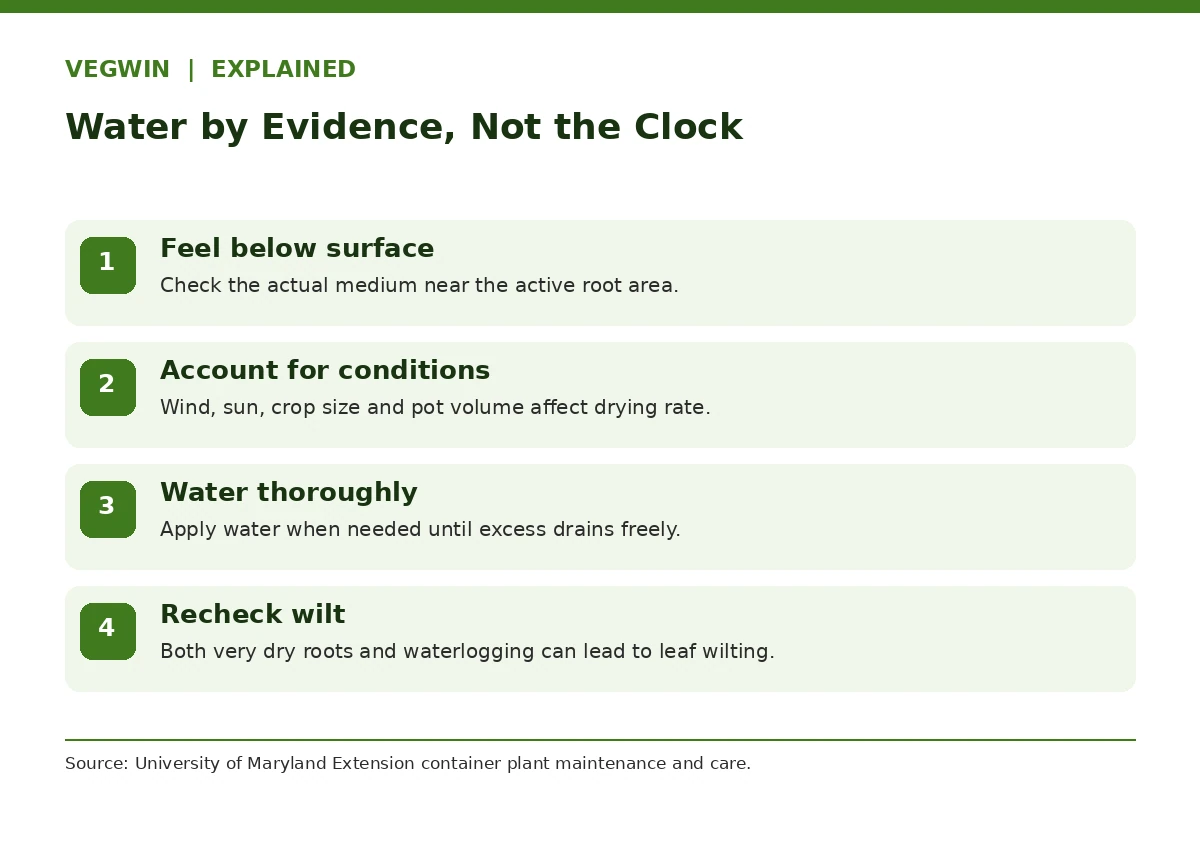
Check below the surface with a finger or another suitable moisture probe, and notice how heavy a manageable pot feels just after watering. A small pot in wind can dry rapidly; the same pot on a cool cloudy day may stay moist much longer. Water thoroughly when the root zone needs it, until extra water can escape through the holes, and then discard standing saucer water. Never infer root moisture from a wet leaf surface or from the fact that rain briefly hit the patio.
New transplants have a smaller active root system than mature, fruiting plants. Their needs change as roots colonize the media, the canopy expands, and the weather heats up. If a pot wilts at the same time every sunny afternoon, determine whether the medium is dry or waterlogged before adding water. A daily check is useful, but the actual watering decision should depend on the plant and media. Mulch and grouping pots may moderate drying without fixing an undersized root volume. Our guide “Mint in Pots” adds more detail on this.
Diagnose Container Failures by Their Earliest Evidence
Yellowing, wilt or poor growth can have different causes. First inspect drainage, water availability, sunlight and root restriction. A perpetually wet pot with little oxygen is not cured by more irrigation. A wilted plant with very dry mix may recover after thorough re-wetting if root damage is not advanced, but repeated severe drying reduces productivity. Brown leaf edges may follow high heat and dry conditions, while weak, stretched stems point toward inadequate light. Avoid diagnosing every symptom as a fertilizer deficiency.
Inspect leaf undersides and new growth before considering a pest problem. A container may suffer from the same insects and diseases as an in-ground crop, but isolated leaf spots are not enough to prescribe an insecticide. Use Extension photo guides and integrated pest management to identify the organism and its significance. When plants are crowded, remove a container or give foliage more room rather than routinely stripping healthy leaves or reaching for unverified sprays.
Set Up a Small Patio Trial You Can Improve Next Season
For a first trial, choose one or two crops with contrasting harvest patterns, such as a box of cut-and-come-again greens plus one supported pepper in a suitable pot. Record the sunniest position, pot volume, mix label, plant variety, first planting date and the weather at each watering. After two weeks, assess whether you can comfortably reach around each pot, whether support is firm, and whether drainage bothers anyone below the deck.
At harvest, note which arrangement delivered useful produce and which created too much daily maintenance. If a plant repeatedly dries out despite appropriate care, enlarge its container next season or choose a smaller cultivar. If the area is hot and bright, plan a separate location for greens that prefer milder conditions. This feedback loop makes a container garden more efficient than buying more and more pots before learning what your specific site can support. Our guide “Potted Tomato Plants” covers how to choose the right container and prevent water stress.
Related Guides
How We Research This Guide and Review Regional Exceptions
We checked current results for the precise reader question and read primary university Extension horticultural guidance on October 19, 2026. The public VegWin.org article and category pages were inaccessible during our independent check; consequently, we cannot confirm every live or unpublished WordPress URL, category route or ongoing site update. The editor must check competing posts and the live category in WordPress before manual publication. These recommendations reflect source-specific horticultural evidence and do not replace region-specific crop schedules, soil tests or product labels.
Sources checked October 19, 2026: University of Maryland Extension, growing vegetables in containers (updated September 2026); Penn State Extension, four keys to container vegetables (updated March 2026); University of Maryland Extension, maintaining container-grown vegetables. Each source supports the specific horticultural claim listed in the editorial record; the sources do not endorse VegWin. Statements about biological variety, planting readiness or garden pests are conditional on crop and local conditions. No pesticide mixture, fertilizer rate or commercial partnership is assumed. See our affiliate disclosure page for the general site policy.
Yes, for some crops and with suitable food-safe material, drainage and adequate light. The right volume depends on the specific vegetable and variety.
No. Maryland Extension explains that a gravel layer does not improve drainage; use free-flowing drainage holes and an appropriate potting medium.
Check root-zone moisture frequently, especially during hot weather, but water according to need rather than imposing a fixed schedule for every container.
Garden soil alone can compact, remain poorly aerated and drain inadequately. Use a container-specific potting mix.
Start with greens and crops more tolerant of partial shade; expect lower performance from fruiting crops that require sustained strong sunlight.