
Your potted mint may look unhappy for four different reasons: the pot is drying unevenly, roots are sitting wet, the clump has become crowded, or runners have escaped the boundary. These problems can look alike from the leaves, but they need different fixes. This guide is a troubleshooting and recovery protocol for mint already growing in pots. For general mint selection and harvest habits, use the existing Growing Mint guide; do not treat two nearly identical posts as separate advice. Disclosure: This is independent gardening information, not a paid product placement. Affiliate partnerships for this page are not verified; see the site affiliate disclosure.
Inspect the Actual Pot Before Giving It More Water
Begin by lifting the pot if it is safe to do so and examining the base. Identify open drainage outlets, cracks, blocked holes and any standing water in a saucer or decorative cachepot. A drained pot is not the same as a pot whose bottom is submerged in runoff. If you are using a self-watering container, follow the reservoir design rather than assuming it behaves like an ordinary bottom-draining flowerpot. University of Maryland Extension explains how container design and medium influence water availability; the first diagnosis must include the container rather than just the leaves.
Press a finger into more than one point in the upper mix and compare with the pot’s overall weight. A dry surface and a very heavy pot may signal wet lower layers; a lightweight pot where water immediately races down the sides may have media that has become difficult to rewet. Neither observation alone diagnoses root rot. Check stem bases and new growth for collapse, then consider whether the pot has remained wet for days, was recently moved or has been allowed to dry repeatedly. Do not automatically reach for fertilizer when mint wilts; first identify which part of the water pathway is failing.
Distinguish Four Common Container Failure Patterns
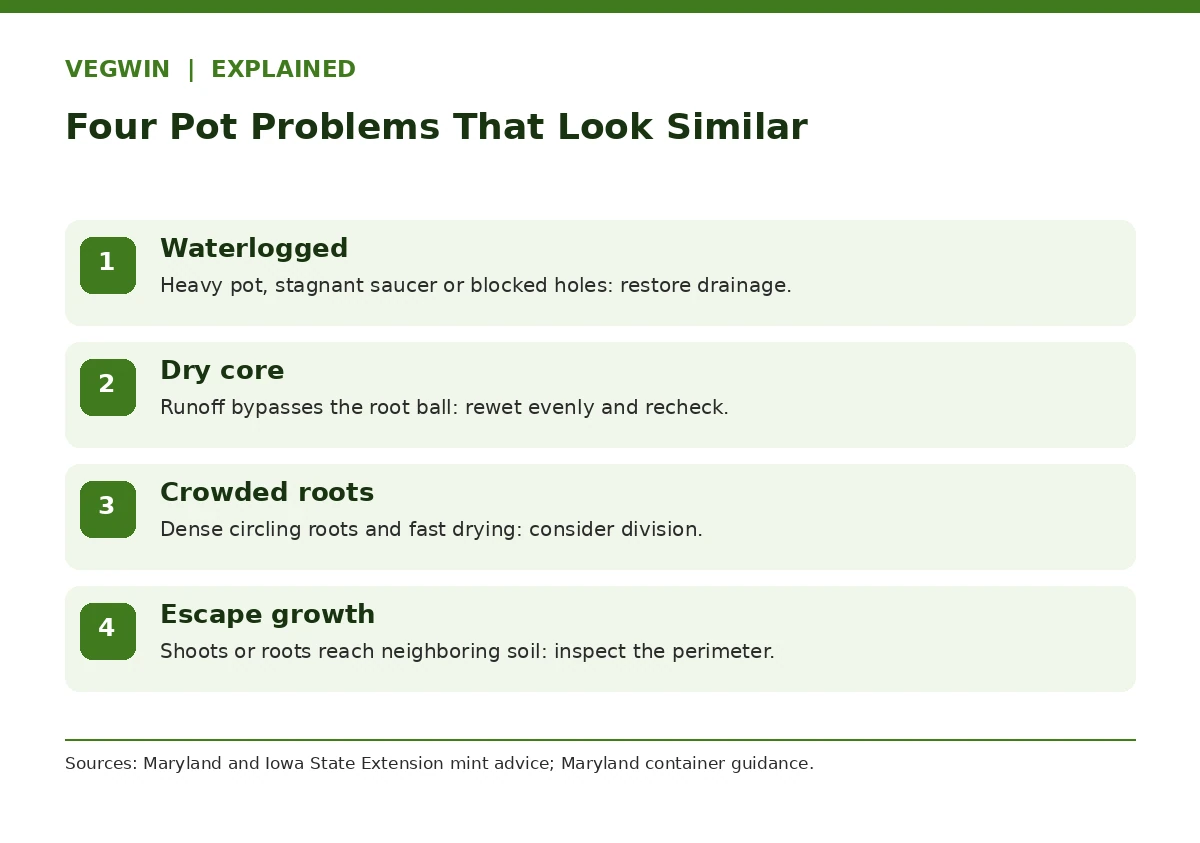
Pattern one: wet and airless. The mix remains saturated, drainage is blocked or a saucer holds water. Empty standing water and restore an unobstructed drainage path; if the plant continues declining, inspect roots and seek reliable local guidance before declaring disease. Pattern two: water bypasses the root ball. Water runs straight through cracks around a shrunken or overly dry medium while the center remains dry. Rewet gradually and check the root zone afterward instead of repeating quick splashes. Pattern three: exhausted root room. The plant dries much faster than before, roots fill the sides, and growth slows despite appropriate light. Evaluate division or repotting.
Pattern four: containment failure. A stolon reaches the next pot or rooted stems extend through a drainage hole into garden soil. Move the mint onto an inspectable hard surface and remove escape growth before it establishes elsewhere. Maryland Extension stresses that mint spreads by runners and recommends keeping growth within a roughly 12–16-inch container. The size is a useful reference, not a guarantee that an unmanaged pot cannot escape; vigorous mint can cross the rim or root through contact with nearby soil.
Use a Root Inspection to Decide What to Keep
If watering and light appear reasonable but the plant keeps failing, choose an appropriate time to slip the root ball from the pot for inspection. Protect the crown and stems; do not yank by foliage. A dense mass of roots circling the pot suggests limited room, but a few visible roots at a hole are not an emergency. Look for a coherent healthy clump, obvious dead sections or a saturated foul-smelling medium. Several unrelated problems can coexist, so the goal is to determine whether the plant needs fresh mix, division, improved drainage or professional diagnosis.
RHS guidance describes dividing established mint plants periodically, taking sound sections and replanting into suitable fresh growing medium. Use clean tools and retain healthy sections with roots and viable shoots rather than trying to save every damaged stem. Keep named culinary mints labeled; plants sold under different mint names may have distinct characteristics. If disease is suspected—particularly unusual rust-colored spots, collapse or persistent decline—do not multiply and distribute questionable material. Seek Extension identification first and isolate affected pots from other plants while diagnosing.
Repot Into an Inspectable, Stable Container
Choose a pot that holds sufficient medium for the surviving clump and has functional water outlets. University of Maryland recommends a container about 12 to 16 inches in diameter to help manage mint spread, but the appropriate replacement depends on the plant size and whether you divide it. Do not put several vigorous varieties together simply because a wider pot is available: they can mix and lose their labels. Use an appropriate potting medium rather than packing dense garden soil into a small container. Check that the base stands level and cannot tip in wind.
Before repotting, identify where runoff will go. A heavy saucer can protect a floor, but drain or empty it so roots do not remain in standing water. On a balcony, respect weight limits and downstairs neighbors; a wet pot can be considerably heavier than a dry one. Keep mint on a bench or paving where wandering shoots and roots are visible, but do not choose a surface so hot or windy that the root ball dries rapidly. In very warm locations, assess exposure and use a suitable partially shaded location when leaves suffer in intense afternoon sun, consistent with regional recommendations. If you want the full process, read how to repot a Japanese maple without burying the root flare.
| Observation | Working hypothesis | First response |
|---|---|---|
| Pot heavy; standing water | Poor drainage or saturated medium | Clear outlets; empty saucer; assess roots |
| Water runs off; inner mix dry | Dry or unevenly wetted root ball | Rewet gradually and confirm center moisture |
| Rapid drying; root mass dense | Crowded pot | Consider division and fresh mix |
| Runners beyond the rim | Containment failure | Cut escape shoots; move pot for inspection |
| Persistent spots or collapse | Possible disease or non-water stress | Isolate; seek Extension identification |

Track Recovery Without Drowning the New Root Ball
After repotting or dividing, water to settle medium around the roots, then check rather than watering according to a rigid calendar. Mint generally prefers consistent moisture, but a newly reduced root system may use water more slowly than a large established canopy. Pay attention to drainage, the weight of the pot and developing shoots. Keep track of the first new growth and whether wilting occurs in the morning or only during the hottest part of a day. A plant that looks briefly soft after division is not automatically diseased; a plant that steadily collapses in wet media deserves closer inspection.
Delay aggressive harvesting until the replanted clump resumes vigorous growth. Remove clearly dead or broken material, but avoid stripping most leaves from a recovering plant. If one pot remains permanently wet while another identical mint clump grows well beside it, compare their soil, drainage and root density rather than assuming the cultivar is the cause. One useful check per week is better than five different remedies applied at once, because it preserves evidence about which change actually helped.
Prevent Repeated Escape and Catch Problems Early
Mint’s horizontal rhizomes and above-ground shoots can extend past the pot and root on nearby surfaces. Check the rim, bottom and the area under the pot routinely, especially where containers sit directly on garden soil. Trim or lift wandering growth before it establishes beyond the intended boundary. If the pot is buried, Maryland Extension describes leaving the lip visible so emerging runners can be detected; even then, buried containment is not maintenance-free. A pot placed on a hard surface is usually easier to inspect than one tucked deep into a planting bed.
Keep a simple pot log: when drainage was inspected, when new roots were visible at the base, when water demand changed and when division occurred. At season changes, compare pot condition and new shoot vigor. RHS notes that mint often benefits from periodic division and refreshing the growing medium. If you no longer need this particular clump, dispose of roots and runners in a way that prevents unwanted establishment according to local guidance; do not casually dump vigorous living rhizomes into another planting area. Our guide to growing mint without takeover adds more detail on this.

Related Guides
- Growing Herbs by Type: Water, Harvest, and Winter Survival Guide
- How to Grow Chocolate Mint in a Pot and Contain Spreading Runners
- How to Root Mint Cuttings in Water With Leaves Above the Waterline
- How to Grow Clustered Mountain Mint From Seed and Recognize Silvery Bracts
How We Research This Guide and Review Regional Exceptions
We checked current results for the precise reader question and read primary university Extension horticultural guidance on October 19, 2026. This narrower draft is for readers diagnosing an existing failed or crowded pot: drainage tests, root inspection, pot rescue and recovery monitoring. Compare both live WP drafts; merge or discard if no standalone value. Do not automatically publish merely because the queue includes it. The VegWin.org article and category URLs could not be independently accessed during this research; consequently, we cannot confirm every live or unpublished WordPress URL, category route or ongoing site update. The editor must check competing posts and the live category in WordPress before manual publication. These recommendations reflect source-specific horticultural evidence and do not replace region-specific crop schedules, soil tests or product labels.
Sources checked October 19, 2026: University of Maryland Extension: Growing Mint in a Home Garden (2026); Royal Horticultural Society: How to Grow Mint; Iowa State University Extension: Growing Mint in the Home Garden; University of Maryland Extension: Growing Vegetables in Containers and Salad Tables (2026). Each source supports the specific horticultural claim listed in the editorial record; the sources do not endorse VegWin. Statements about biological variety, planting readiness or garden pests are conditional on crop and local conditions. No pesticide mixture, fertilizer rate or commercial partnership is assumed. See our affiliate disclosure page for the general site policy.
Check both wet, airless lower media and a root ball that remains dry despite runoff; leaf wilt alone does not identify the cause.
Look for a dense circling root mass, reduced space and rapidly changing water demand; a single root at a drainage hole is not definitive.
Yes. Runners can cross the rim or root into soil through openings, so the edges and base still need inspection.
When an established clump is overly crowded or declining and roots are healthy enough to divide; follow RHS seasonal guidance for your climate.
No. Inspect water movement, drainage, roots and plant health first; fertilizer will not correct a blocked outlet or waterlogged medium.