
A potted tomato lives in a more changeable root environment than the same plant in an open garden bed. Containers can get hot, dry quickly, lose nutrients through drainage and tip under a heavy vine. At the same time, pots let you grow food where there is no safe or sunny garden soil. The important decisions are the variety’s actual mature habit, adequate root volume, real drainage, growing medium and a watering routine that responds to conditions. This is a container-management guide, not another broad history of growing tomatoes. It focuses on what a pot changes and how to notice problems early.
Match the Tomato Habit to Available Space
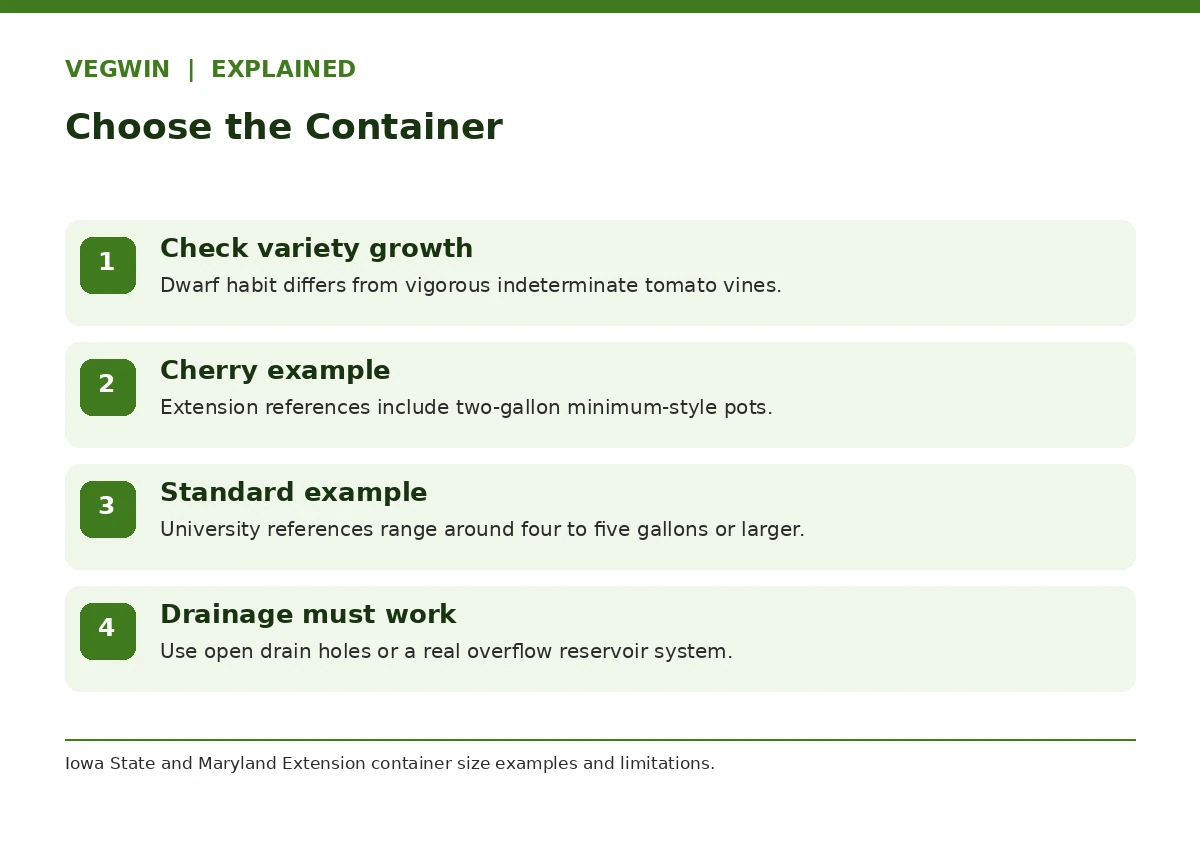
Start with the mature growth habit on the seed label or cultivar description. Dwarf and compact determinate tomatoes are often easier to manage on patios, while vigorous indeterminate vines can outgrow small pots and require substantial supports. Iowa State Extension notes that most tomato types can technically grow in containers but smaller-growing types are often a better fit. Cherry describes fruit size, not automatically the entire plant’s mature size. Confirm the actual variety rather than trusting a generic picture of a small tomato on a tag.
Consider sunlight across the day, not just the sun visible at noon. Iowa State recommends strong direct sunlight for productive tomatoes; shaded balconies often yield less than expectations. Also consider walking space, railings, heavy planters, wind and access to irrigation. A huge container can weigh far more once wet, so verify that a balcony or raised platform safely bears the intended load. Accessibility should influence how tall a cage or stake you choose, since pruning or harvesting becomes harder above arm’s reach.
Choose a Pot With Root Volume and Drainage
Tomatoes need a substantial root volume and unrestricted water exit. Iowa State suggests at least a two-gallon pot for many cherry types and four gallons for standard tomatoes, while Maryland lists a two-gallon cherry example and a five-gallon standard example. Treat these as minimum-style Extension comparisons, not an ideal maximum: bigger, appropriately designed pots usually buffer rapid drying better. Large indeterminate varieties may need more room than either example. Pick for cultivar size, climate and watering access.
Check for enough unobstructed drainage openings and a container base that will not sit in stagnant water. Ordinary buckets without holes, sealed decorative pots, or a saucer filled continuously after irrigation risk root oxygen deprivation. A purpose-built self-watering system is different: Maryland Extension describes a reservoir and an overflow that manage water height intentionally. Do not call a closed pot without an overflow “self-watering.” Place heavy pots at their growing location before filling and protect surfaces below from runoff.
Use Suitable Potting Mix Not Heavy Soil
A container medium must both retain available water and allow oxygen to roots. Iowa State recommends a well-draining soilless potting mix over dense garden soil for its lighter structure, moisture properties and reduced compaction. Garden soil may bring pathogens and weeds and can become heavy after repeated watering. Use a known container-growing substrate appropriate to outdoor vegetables. Pure compost is not a universal substitute: it can settle or behave unpredictably with moisture and fertilizer.
Many commercial mixes already contain nutrients or controlled-release fertilizer. Read the label before deciding what else to add. An exact weekly fertilizer rate cannot be responsibly assigned without knowing the product, crop stage and medium; follow a credible recommendation and the fertilizer label if feeding is needed. A soil test is useful for garden beds but does not directly determine the feeding program for a packaged soilless potting medium. Record its contents so you can interpret growth symptoms intelligently.
Water by Root Condition and Weather
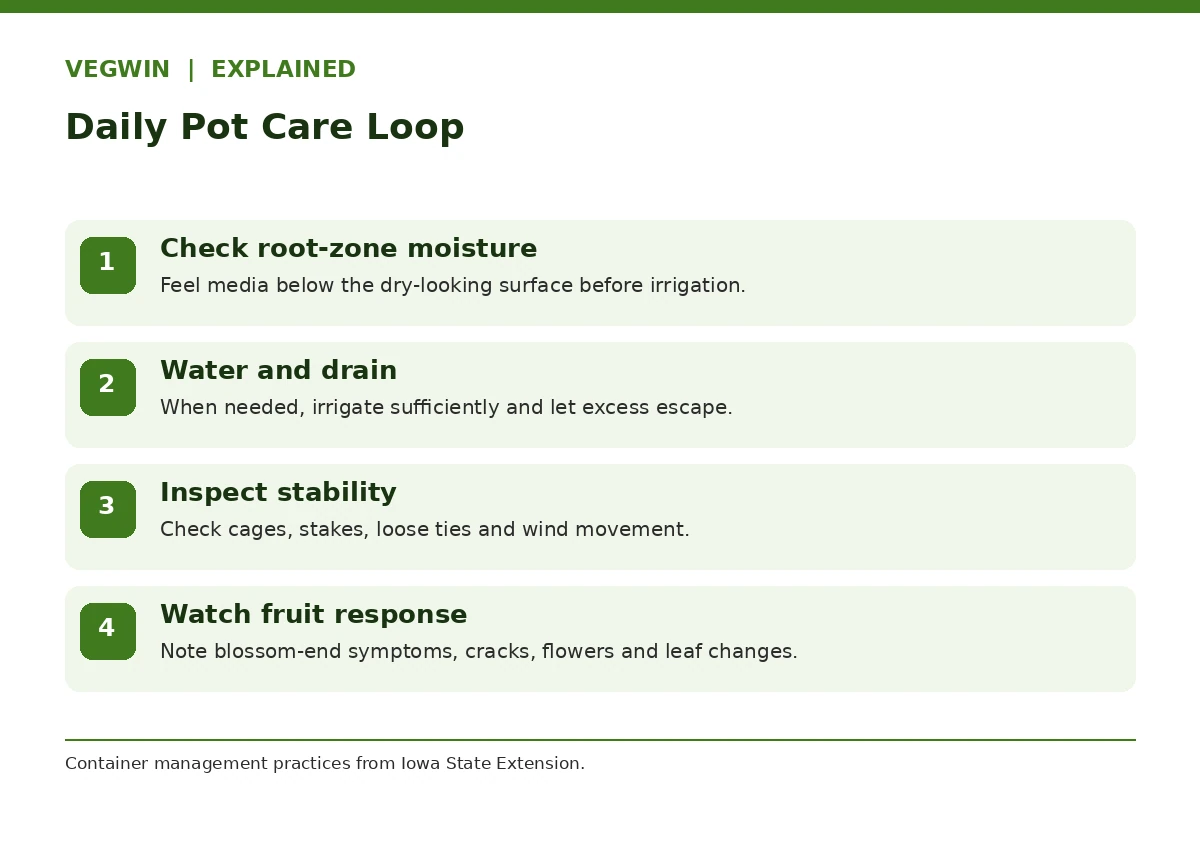
Potting media can dry rapidly in hot sun and wind. Check root-zone moisture rather than watering on the same hour regardless of weather. Iowa State notes that some container tomato plants need daily water in demanding conditions, but also warns that waterlogged roots lack oxygen. Water thoroughly until excess drains when needed, then observe how quickly the upper growing medium begins to dry. Never leave the plant sitting indefinitely in runoff. Containers can differ even on the same patio due to color, material, size and shade.
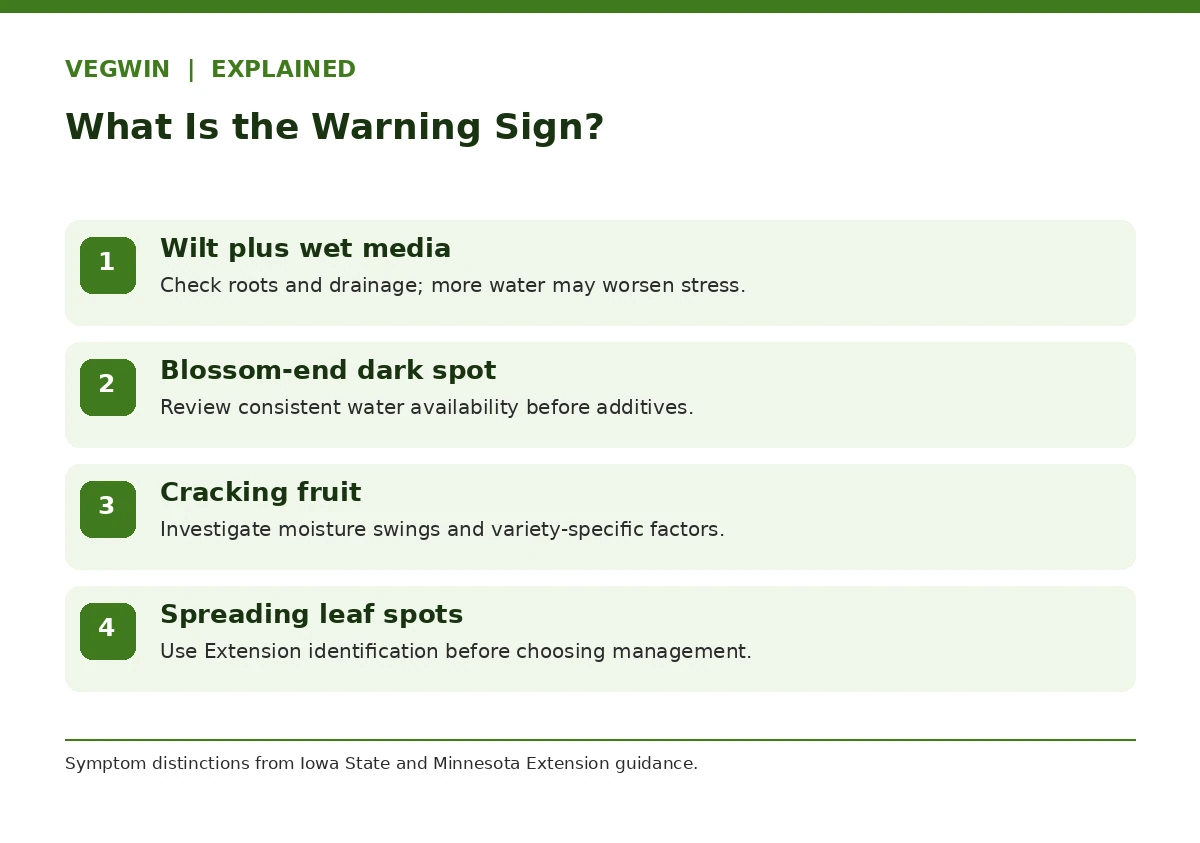
Consistent moisture helps reduce disorders associated with fluctuation, including fruit cracking and blossom-end rot. That does not mean maintaining saturated media. Investigate drainage holes when leaves wilt despite wet soil; adding more water can worsen oxygen loss. Mulch on the top of an appropriate container can slow evaporation, but should not block inspection or flow. When traveling, arrange a reliable watering plan rather than assuming a small reservoir lasts a fixed number of hot days.
Support the Plant Before It Gets Heavy
Install a stable cage, stake or trellis early so that pushing supports into a pot later does not slice through mature roots. Choose equipment appropriate to mature cultivar size. An indeterminate vine with clusters of fruit may require stronger anchoring than a dwarf patio plant. Iowa State advises staking or caging standard-sized tomato varieties; choose loose ties that will not constrict expanding stems. Secure the support to the pot or independent structure as appropriate for wind and safety.
Do not automatically prune all plants the same way. Some determinate varieties need little pruning, and excessive removal can reduce available photosynthetic foliage. For training tall indeterminate vines, learn the cultivar and pruning approach from a university tomato guide before removing suckers. Never let a heavy pot rock loose on a high balcony. Remove only damaged or clearly diseased material using sensible sanitation, and keep leaves off wet surfaces where possible to reduce disease pressure.
| Container decision | Extension-grounded option | Watch for |
|---|---|---|
| Cherry vs standard tomato | Maryland lists 2-gallon cherry and 5-gallon standard examples | Actual cultivar growth habit differs |
| Drainage system | Real holes or designed reservoir with overflow | Standing water and oxygen loss |
| Container mix | Lightweight well-draining potting medium | Compaction and sudden drying |
| Flower drop or fruit disorders | Check moisture consistency and temperature | Assuming all symptoms require fertilizer |
Distinguish Container Stress From Disease
If flowers drop or fruit splits, review moisture swings and temperature first. Blossom-end rot appears as a dark sunken area near the blossom end of fruit and is commonly associated with calcium movement and inconsistent water supply; simply adding crushed eggshells to the surface is not a dependable fix. If lower leaves develop spots or a plant wilts while soil is wet, a disease or damaged root system may also be involved. University disease guides emphasize identification before treatment.
Inspect leaves above and below, look for insects, check pot weight and drainage, and take photos over several days. Compare symptoms with adjacent healthy plants rather than blaming every problem on a pest. Avoid a pesticide or fertilizer response without a diagnosis, confirmed crop labeling and local advice. Container tomatoes can still get leaf pathogens carried by rain splash or airflow, even if a fresh potting mix lowered initial soil-borne risk. Keep tools and water practices sensible before considering interventions.
Build a Simple Patio Tomato Check Routine
Each morning or on your regular care visit, assess moisture in the root zone, stability of stakes, leaf condition and whether water can escape. Once a week, note growth habit, fruit development, and how quickly the pot dried in current weather. On hot windy days, repeat moisture checks as needed. Mark the variety and container volume so that a disappointing season can be traced to a real root-space decision rather than a vague claim that container growing does not work.
Harvest fruit according to cultivar color and appropriate ripeness guidance, handling stems and supports gently. At the end of the season, remove confirmed diseased material appropriately and decide whether used potting mix can be refreshed or needs replacing based on actual plant health. Keep future experiments modest: try a better-sized container, better sun placement or more reliable watering before buying expensive additives. This makes potted tomatoes a repeatable growing system rather than a series of emergency fixes.
How We Research and What Could Change
We compared current and historical Cooperative Extension, university food-preservation, and public-agency instructions relevant to the specific decisions in this guide. References were checked on October 19, 2026. The diagrams are our original summaries of those sources, not photographs of tested procedures or results from a VegWin field trial. This article does not replace a local crop calendar, food-safety protocol, laboratory analysis, or manufacturer instructions. Local climate, crop cultivar, packaging and equipment, and new official guidance can change your safest choice.
Research references: [1] Iowa State Extension [2] Maryland Extension [3] Maryland Extension [4] Minnesota Extension
Disclosure: This guide contains no sponsored recommendations, affiliate commissions or paid endorsements. See VegWin affiliate disclosure; the site owner must confirm that page is reachable before manual publication.
Iowa State suggests at least about 2 gallons for some cherry tomatoes and 4 gallons for standard types; Maryland lists 5 gallons for standard tomatoes. Larger vigorous types may need more.
A well-draining container potting mix is generally preferable to dense garden soil, which can compact and introduce pathogens.
Check moisture and weather rather than following a fixed calendar. Hot, windy conditions may require daily attention without saturating roots.
Many do, particularly standard and indeterminate varieties. Install support early and match its strength to expected plant size.
Moisture fluctuations may contribute to cracking and blossom-end rot; inspect the actual symptoms and root-water conditions before treating.