
“Warm-season vegetable” describes a crop’s response to growing conditions, not a month on the calendar. Beans, cucumbers, peppers and tomatoes share frost sensitivity, but they do not all germinate, transplant, flower or harvest in the same way. This guide sorts the crops and provides a planting-readiness test, then explains what to watch after planting. For an actual local date, you still need your Cooperative Extension calendar, frost history and current forecast. Disclosure: This is independent gardening information, not a paid product placement. Affiliate partnerships for this page are not verified; see the site affiliate disclosure.
Separate Warm-Season Crops From Cool-Season Vegetables
Penn State Extension groups tomatoes, peppers, eggplant, cucumbers, beans, corn, melons, squash and similar crops among warm-season vegetables. Many require warm air and soil and are seriously injured by frost. Cool-season vegetables such as peas, spinach, lettuce and many brassicas are managed around different temperature windows, and some lose quality in summer heat. Classification is useful because a bed that produced spring spinach may be suitable for a later warm crop, but it does not mean every member of either group should be planted on exactly the same day.
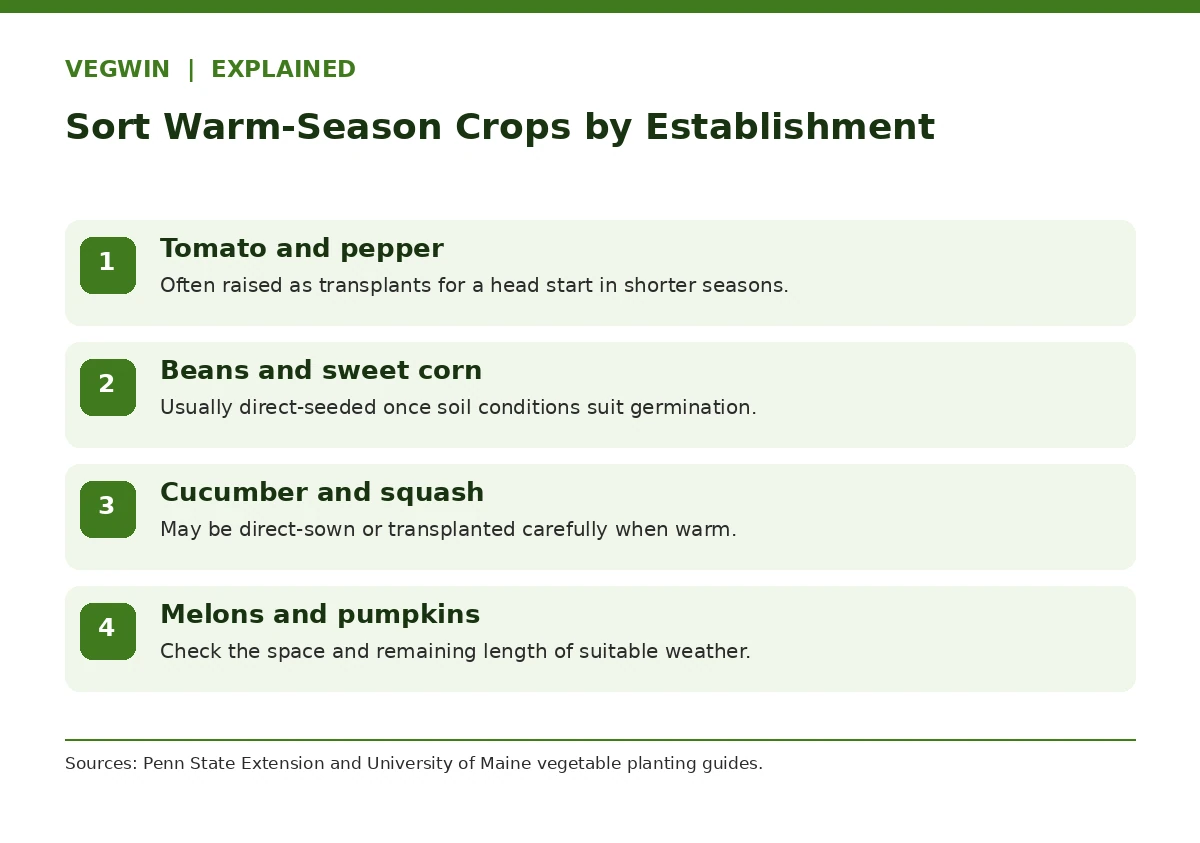
Within the warm-season group, separate crops often grown from transplants from those commonly direct-seeded when soil warms. Tomatoes and peppers are frequently started indoors where growing seasons are short. Beans and corn are typically sown where they will grow; cucumbers and squash may be direct-sown or carefully transplanted depending on the season and crop guidance. The fact that two plants need summer warmth does not make their root systems equally tolerant of transplant handling. For the fuller picture, see our guide to growing vegetables from seed.
Use Four Readiness Signals Instead of a Zone Number
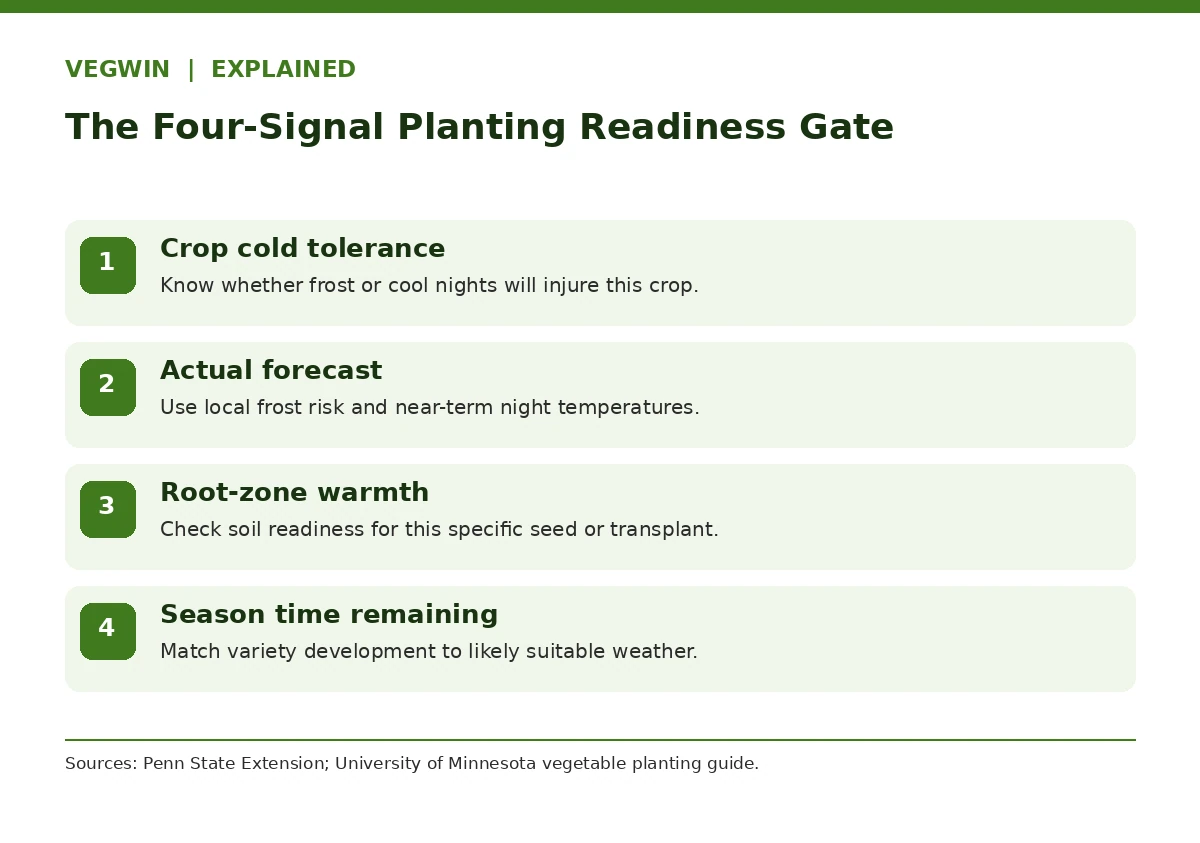
The first signal is the particular crop’s tolerance to cold. The second is the estimated local last spring frost date alongside the actual current forecast, which can depart from averages. Third, check whether the garden soil is sufficiently warm for the chosen seed or transplant. Fourth, compare the variety’s expected development period with the remaining suitable growing season. These four decisions work together; no single warm afternoon overrides frost risk and a cold root zone. Consult local Extension crop advice for acceptable temperature ranges rather than copying a universal threshold.
USDA hardiness zones map typical extreme winter cold and are used mainly to assess perennial cold hardiness. They do not identify annual vegetable planting dates, soil warming patterns, or whether an unusual frost will occur. A sheltered urban bed and an exposed rural site in the same region can behave differently. Measure at representative planting depth when appropriate and check nighttime forecasts as well as daytime highs. Local Extension schedules remain a stronger starting point than an online “zone 7 tomato date.”
Choose Direct Sowing or Transplants by Root Behavior
Direct sowing avoids root disturbance, but seeds in soil that is too cold or wet may germinate poorly or rot. For beans, corn, cucumbers or squash, planting guidance differs by crop and cultivar; begin when soil conditions match the recommendation. Indoors, a few crops benefit from a head start where outdoor warmth arrives late. The University of Maine’s regional sequence places warm-season transplants such as peppers, eggplant and tomatoes after earlier cool-season planting, while warm-season vine crops are sown once soil and weather are ready. For more detail, our guide “Direct Sowing Seeds Outdoors” looks at a crop-by-crop success checklist.
Transplants must be healthy, acclimated through a proper hardening-off process and planted at a safe depth for that species. Do not leave vigorous seedlings indefinitely in tiny cells waiting for an arbitrary date; root binding can reduce establishment. On the other hand, setting cold-sensitive transplants in chilling rain merely because they have outgrown a tray can stall growth. Have an indoor or sheltered holding plan if the outdoor forecast turns unfavorable, or choose purchased transplants when a local nursery offers better timing.
Group Crops by Their Summer Growth and Harvest Pattern
A bean planting may produce a concentrated flush depending on its growth habit, while an indeterminate tomato can produce over a longer period under favorable conditions. Cucumbers and summer squash often require frequent harvesting as fruit enlarges. Pepper and eggplant development depends on warmth and the cultivar’s maturity pattern. These differences should shape how much space, irrigation access and harvest time you assign to each crop, not just the line of seed packets in a display rack.
Create a small schedule with columns for crop, cultivar, whether it is direct-sown or transplanted, soil or weather readiness, support needs, and expected harvest behavior. A long-vined cucumber may need a trellis and pollinator access, while corn needs enough neighboring plants for wind pollination rather than a solitary showpiece. Melons need more space or appropriately strong supports depending on variety and fruit weight. A crop list becomes useful only when it turns into realistic care decisions.
| Crop group | Common establishment choice | Most useful planning check |
|---|---|---|
| Tomato, pepper, eggplant | Often transplants in short-season climates | Cold nights, transplant health and season length |
| Beans and sweet corn | Usually direct-sown into favorable soil | Soil readiness; corn pollination layout |
| Cucumbers and squash | Direct-sown or carefully transplanted | Warm soil, root disturbance, vine space |
| Melons and pumpkins | Warm-season vine crop method varies | Long growing period and harvest window |
| Summer harvest versus fall replacement | Crop sequence, not same-day sowing | First fall frost and cool-season follow-up |
Anticipate Summer Heat Stress Alongside Cold Sensitivity
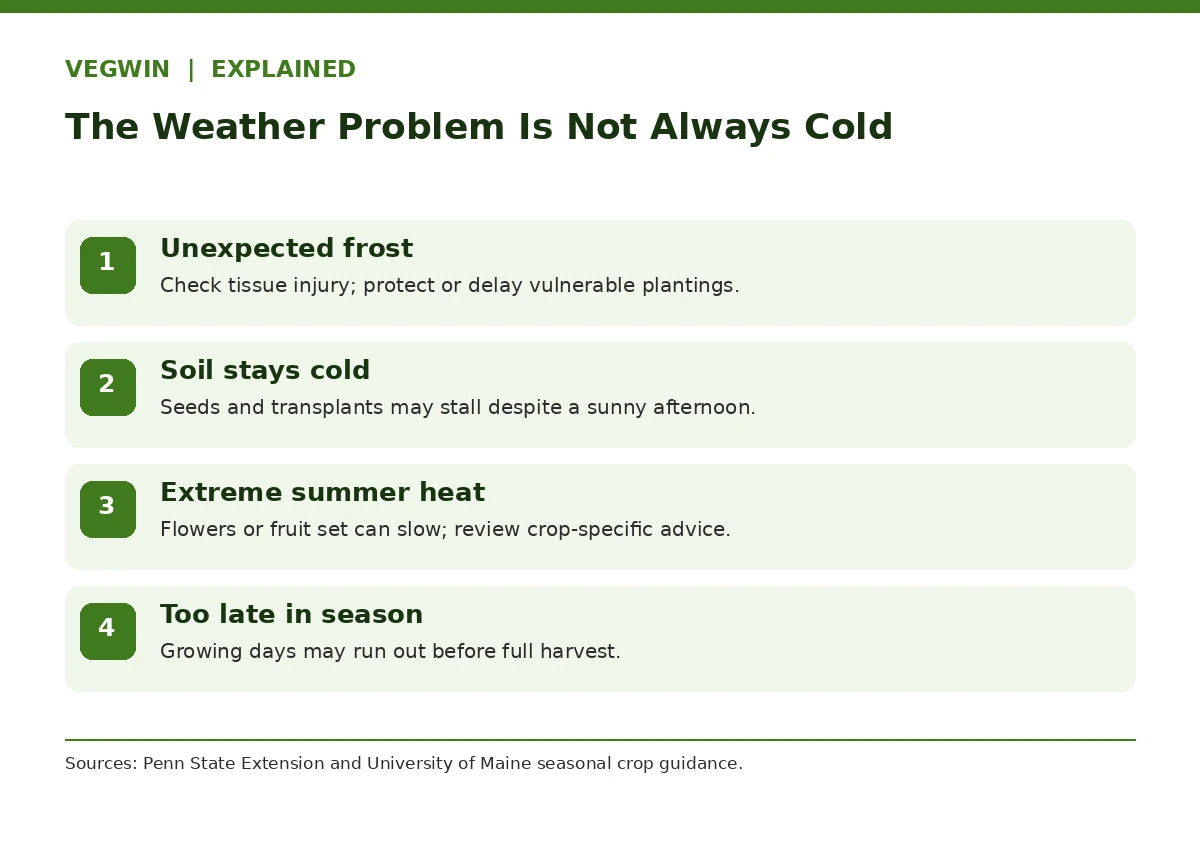
Warm-season is not the same as immune to excess heat. Strong heat, dry root zones and unfavorable nighttime temperatures can reduce flowering or fruit set in some crops. Fruit may show disorders related to irregular water supply even when foliage looks vigorous. Keep soil moisture reasonably consistent as appropriate to the crop and use mulch or irrigation practices recommended locally. Avoid treating a hot spell and flower drop as automatic evidence of a fungal disease or lack of a single nutrient.
Different crops respond differently to intense heat. A plant that grows leaves vigorously may still pause in setting flowers or fruit. Rather than guessing a universal heat threshold, compare recent daytime and nighttime weather with crop-specific Extension information, then note whether new fruit develops after conditions moderate. A healthy summer garden can need active watering and monitoring even when the crop label says “heat loving.” Very late plantings may also run out of suitable growing weather before reaching harvest. Our guide “Heat-Tolerant Vegetables” covers how to pick crops and protect fruit set in hot weather.
Plan Succession Around Actual Crop Time and Frost Risk
Some warm-season plantings can be followed by another planting if the region has enough remaining warm weather and if the chosen crop is suitable. But repeat sowing a bean crop in late summer is not equivalent to starting peppers from seed in the same week: establishment times and mature crop duration differ substantially. Count back from your likely first fall frost, allow time for slower growth as days shorten where relevant, and check the individual variety’s maturity information. Include a margin for weather uncertainty instead of using seed-packet “days to maturity” as a guaranteed harvest date.
As warm crops finish, cool-season vegetables may take their place in some climates. This is one reason to group crops by temperature preference in a bed plan. Keep rotation and local disease history in mind, especially when choosing a location for related crops, and avoid sowing into wet or compacted ground. A late-season crop is worth planting only if the growing window, seedling supply, water access and expected harvest justify the space. Do not treat a 26-week content plan or a gardening calendar as a substitute for the local season. To go further, our guide “Garden Planting Zones” shows how to read the USDA map without mistiming vegetables.
Run a Preplant Check and Reassess After a Cold Night
Before planting, write the specific cultivar name, Extension-appropriate soil condition, forecast frost risk, transplant condition, watering plan and likely support needs on a small card. On planting day, check whether all major conditions still hold. If a forecast deteriorates, delaying a few days may be less costly than replacing frost-injured plants. For temporary protection, use reliable Extension guidance on materials, ventilation and removing covers for crops that require pollinator access. A floating cover can reduce some exposure but cannot guarantee survival in severe cold. For the fuller picture, see our guide “Plan a Spring Vegetable Garden in Three Weather-Based Planting Waves”.
After an unexpected cold night, examine plants for wilt, discolored foliage and stem injury before fertilizing or treating anything. Keep roots from drying during recovery, but do not force saturated soil. Wait for evidence of new growth and consult region-specific advice about whether replacement is practical. Record which crops were injured and whether your soil-warmth or frost signal was missed. The goal is not to memorize a single summer planting date; it is to make the next timing decision with better information.
How We Research This Guide and Review Regional Exceptions
We checked current results for the precise reader question and read primary university Extension horticultural guidance on October 19, 2026. The public VegWin.org article and category pages were inaccessible during our independent check; consequently, we cannot confirm every live or unpublished WordPress URL, category route or ongoing site update. The editor must check competing posts and the live category in WordPress before manual publication. These recommendations reflect source-specific horticultural evidence and do not replace region-specific crop schedules, soil tests or product labels.
Sources checked October 19, 2026: Penn State Extension, cool-season versus warm-season vegetables (June 2024); University of Minnesota Extension, planting the vegetable garden; University of Maine Extension, keep your garden growing from spring to fall. Each source supports the specific horticultural claim listed in the editorial record; the sources do not endorse VegWin. Statements about biological variety, planting readiness or garden pests are conditional on crop and local conditions. No pesticide mixture, fertilizer rate or commercial partnership is assumed. See our affiliate disclosure page for the general site policy.
Yes. Both are sensitive to frost, but their preferred establishment methods, root handling and growing requirements differ.
No. Hardiness zones describe perennial winter cold extremes; use local frost patterns, soil conditions and crop-specific Extension advice for annual crops.
No. Seed germination and transplant establishment thresholds vary by species. Follow a crop-specific reliable source.
Not necessarily. Check the actual forecast, crop cold tolerance and root-zone warmth; the average frost date is not a promise.
No. Excessive heat, nighttime conditions and irregular water can disrupt flowers or fruit development, depending on the crop.