
Celosia can produce a handful of useful seed and a much larger pile of papery flower pieces from the same head. The trick is not collecting the biggest piece: viable-looking celosia seeds are tiny, hard, smooth and usually glossy black. Plumed, crested and wheat-type celosias hold them in somewhat different flower structures, so a single diagram does not fit every plant. This guide explains where to inspect, when to collect before seeds shatter, how to dry in a protected place, and how to distinguish cleaned seed from dry petals or immature material. Saved seed from hybrids may not produce plants identical to the parent, even when the seed itself germinates.
Know Which Celosia Form You Are Saving
Celosia grown as ornamental annuals includes feathery plume forms, wavy crested cockscombs and narrow wheat-like spikes. University of Maryland Extension describes those groups as distinct floral forms, not different positions of a single seed pod. A plume is a branching collection of tiny flowers, a crest is a broadened folded inflorescence, and a wheat celosia has a narrow upright spike. Seeds develop within the individual spent flowers rather than in a single large central capsule. Keep cultivars or flower colors separately labeled from the beginning. A dry red plume and a still-green spike may be at different stages even if they flowered on the same date.
Look for Hard Black Seeds Rather Than Brown Petals
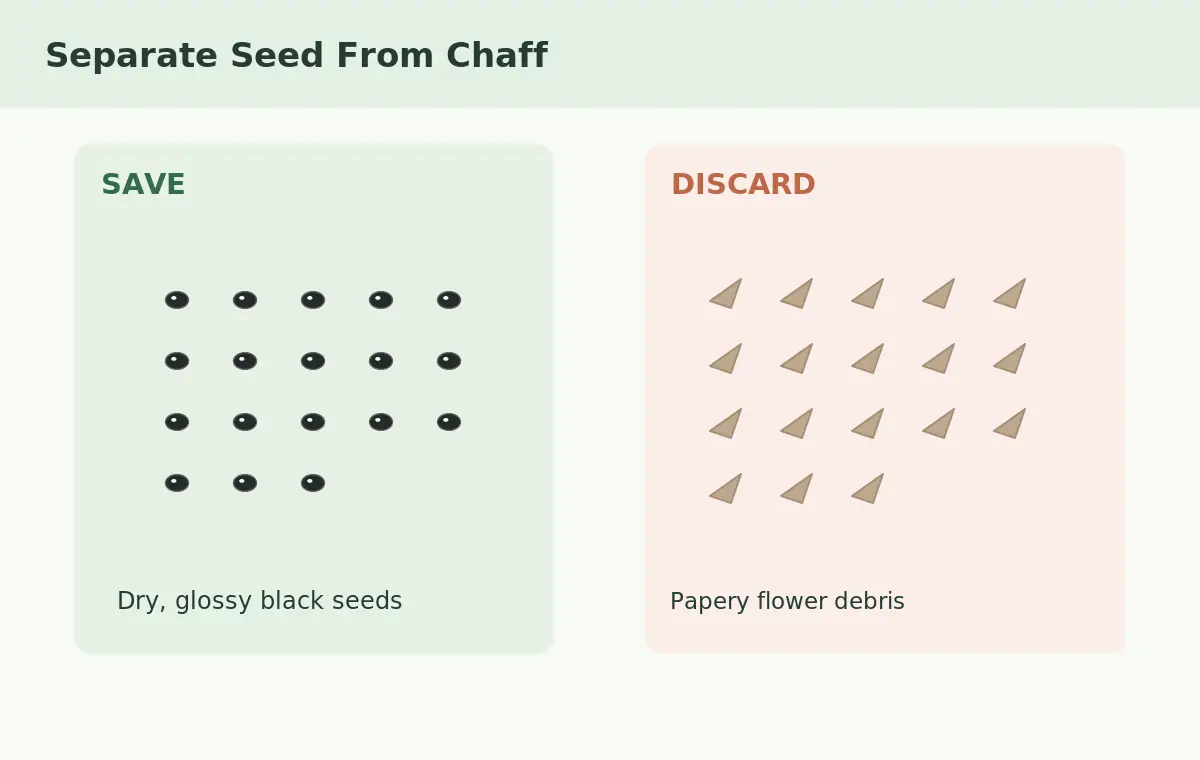
Wisconsin Extension describes small, shiny black seeds in the persistent calyxes of wheat celosia. A magnifier helps distinguish a seed from dull brown chaff. Mature seeds are usually smooth and bead-like; dry floral tissue is papery, pale, uneven and lighter. Not every dark speck in a wet or damaged head is sound seed, and visible mold makes a sample unsuitable for long storage. Rub a small ripe section over a light-colored sheet of paper to test whether black seeds drop out easily. If the seed head is still succulent and no seed is releasing, give it more time where weather permits. Photograph the type of flower head before harvesting.

Choose a Dry Day Before Rain or Frost
Wait until part of a flower head is aging and papery, but collect before strong wind or rain shakes out most of the ripe seed. In cool climates, a forecast of prolonged wet autumn conditions may justify cutting usable heads to finish drying under shelter. In warm climates, individual celosia heads can ripen at different times, so visit the plant regularly rather than harvesting an entire bed at once. Avoid taking dripping wet material directly into a sealed bag. If part of a head is brown and another part is still vibrant, test the older area first and expect a mixed collection. Harvest decisions should follow visible seed development rather than an exact calendar day.
Cut the Seed Head Over a Clean Catching Tray
Place a clean sheet, shallow pan or paper bag beneath the selected stem before you touch the flower head. Support the stem with one hand and cut it below the inflorescence with clean scissors. Seeds that have already loosened may rain out during handling; the catching surface prevents losing the best mature portion to the soil. Keep diseased, muddy or pest-damaged heads out of the good collection. If harvesting many plants, use one labeled container per variety and clean the workspace between them. A paper bag protects against accidental loss during transport but should not trap damp material for days. Avoid crushing the whole head when only gentle handling is needed.
Dry Heads Where Seed Cannot Scatter
Spread harvested flower heads in a single layer on paper or a fine mesh tray in a dry, shaded, well-ventilated room. Cover with a loose breathable screen if air movement or pets might scatter the seeds. Do not bake heads in an oven or leave them in direct hot sun as a shortcut. UF/IFAS advises air drying collected flower heads before shaking seed free. Turn material cautiously so damp undersides do not stay packed against paper; catch any black seeds that fall during this process. A head should feel thoroughly dry and papery before final threshing. A warm, humid room requires particular attention to mildew and may not be a good drying location.

Separate Shiny Seeds From Flaky Chaff
Over a wide white tray, gently rub or tap dry heads to release seeds. The heavy black seeds usually stand out against lighter fragments, but the mix may contain stems, bracts and immature seed. Start with coarse hand-picking, then use a suitable fine kitchen sieve or carefully tip the tray to move light pieces away. Test the mesh before committing a full batch: celosia seed is small enough to fall through openings that hold other flower seeds. Work away from fans and drafts. Throw out suspicious moldy debris instead of storing it in the seed packet. It is not necessary to achieve laboratory purity; the goal is reasonably clean, dry identifiable seed.
Understand Why Saved Hybrid Seed May Look Different
Celosia seed may germinate without producing the same flower shape or color as the parent, particularly when collected from F1 hybrids or plants that cross with another nearby selection. Do not promise that every saved red crest will make a uniform red crest the next year. Seeds from named open-pollinated lines may be more predictable when adequately isolated, but the actual breeding system and neighboring plants still matter. Store clear parent information, including cultivar name if known, flower type and approximate color, then treat any resulting variation as a known possibility. Collecting more than one head offers insurance against immature or damaged specimens, not a guarantee of genetic uniformity.
Package Only Completely Dry Seed
When the seed and residual chaff have dried fully, transfer them to small labeled paper envelopes or another container suitable for dry seed. Include the species or flower form, collection date and plant location; a vague label such as ‘red flower’ is nearly useless next spring. Keep packets cool, dark and dry, away from fluctuating humidity, insects and direct sunlight. If using an airtight outer container, make sure the seed truly is dry first; trapped moisture can promote mold. Do not put warm freshly harvested heads directly into the refrigerator in a sealed jar. A desiccant packet can help in a controlled seed-storage box if handled properly, but it will not rescue already moldy material.
Run a Small Germination Test Before Relying on It
Before committing a garden bed, place a counted sample of saved seed onto a moist seed-starting medium according to the species’ germination guidance. Keep the surface evenly moist, not submerged, and label the trial. Count healthy seedlings and compare with how many seeds were tested. A low result may mean seed was immature, damaged or stored poorly, but a cool room or incorrect sowing depth can also cause failure. This small trial provides practical planning information for sowing density. Do not discard an entire collection after a single poorly controlled test; repeat with suitable conditions if the first attempt was inconclusive.
Avoid Common Seed-Saving Mix-Ups
The most common avoidable errors are collecting a brightly colored but immature head, throwing away the black seed while keeping chaff, allowing a paper bag of damp flowers to mold, and saving unlabeled mixed varieties. Use a white work surface and a magnifying glass when needed. If you prefer continued blooming over seed production, remember that deadheading removes heads before mature seed develops; reserve a few marked stems to finish their seed cycle. Remove volunteer seedlings that appear in an unwanted place, because celosia can self-sow. Your best seed is not necessarily from the largest head; it is from a healthy plant with mature, well-dried black seed.
Authoritative Sources and Further Reading
Source materials consulted for these recommendations: hort.extension.wisc.edu garden guidance (Wisconsin Extension documents tiny shiny black seeds in spent wheat celosia flowers and their tendency to fall out while drying.). extension.umd.edu garden guidance (University of Maryland Extension describes plumed, crested and spiked celosia groups and their seed propagation.). gardeningsolutions.ifas.ufl.edu garden guidance (UF/IFAS describes drying flowering seed heads and shaking loose mature seed from cleaned collections.).
Related Guides
- When to Start Celosia Seeds and Grow Stocky Summer Transplants
- When to Start Plume Celosia Seeds Without Disturbing Young Roots
- How to Transplant Celosia Seedlings Without Burying the Stem Base
- How to Save Statice Seeds From Fully Dry Flower Clusters, Not the Papery Calyx
- How to Save Cleome Spider Flower Seeds Before Dry Pods Split
How We Research Plant-Care Instructions
We compared the exact plant and practical action against the named university Extension and IPM references, reviewed species and growth-stage differences, checked illustrated plant structures, and avoided unsupported pesticide doses or universal climate calendars. Sources checked October 27, 2026. Topics were screened against available B097–B124 titles and targeted site searches; the earlier B001–B096 production archive remains unavailable for comprehensive comparison.
Safety, Climate and Editorial Disclosures
Advice is educational, without a claimed paid product partnership. Conditions differ by cultivar, climate and site. Keep food and tool safety in mind, and use an appropriate local diagnostic service for uncertain problems. See the site’s affiliate disclosure for its general policies. No pesticide rates or product endorsements are implied.
They are typically tiny, smooth and glossy black, unlike the much lighter papery chaff around them.
Yes, but the seed sits among many small flowers, and saved hybrids may not reproduce the parent form faithfully.
Mature celosia seeds can fall readily from dry heads, so use a catch tray or fine mesh underneath.
No. Dry the heads in breathable conditions first to limit mold and deterioration.
No. Hybrid parentage and cross-pollination can produce offspring that differ in color, shape or habit.