
Celosia has several very different-looking flower forms: upright wheat-like spikes, feathery plumes and folded, crested heads. Seed packets may show all three under the same common name. What they share is a preference for warm growth and little tolerance for rough transplanting. Starting seed too early often creates crowded, pot-bound plants long before the garden is ready.
A reliable plan begins with the kind of celosia you want, your local frost pattern and a tray that protects the roots. University guidance differs somewhat in lead time and seed covering, so the cultivar packet and regional weather should settle the final detail. The objective is a compact, healthy transplant, not the largest seedling on the windowsill.
Check whether the packet shows plumes, combs or spikes
Wheat celosia (Celosia spicata) carries upright, slender flower spikes. Other familiar types have feathery plumes or crested, brain-like heads. Wisconsin Extension describes these distinct ornamental forms and notes that celosia works well in sunny beds and containers. The flower shape affects garden design and whether you need tall stems for cutting. It does not change the basic requirement for healthy, warm-grown seedlings. If the packet identifies a compact dwarf strain, do not plan spacing or support from a picture of a tall cut-flower selection.
Count backward from dependable outdoor warmth
Minnesota Extension lists celosia among annuals that can be started a handful of weeks before the outdoor season. Maryland Extension offers a roughly four-week lead time for greenhouse production. Wisconsin notes a longer indoor start for wheat celosia under its guidance. Rather than forcing all three recommendations into one national date, use your local last frost pattern, expected soil warmth and the named cultivar. Celosia is not a cool-weather transplant to put outdoors just because the calendar says spring.
Use clean trays and a gentle seed covering
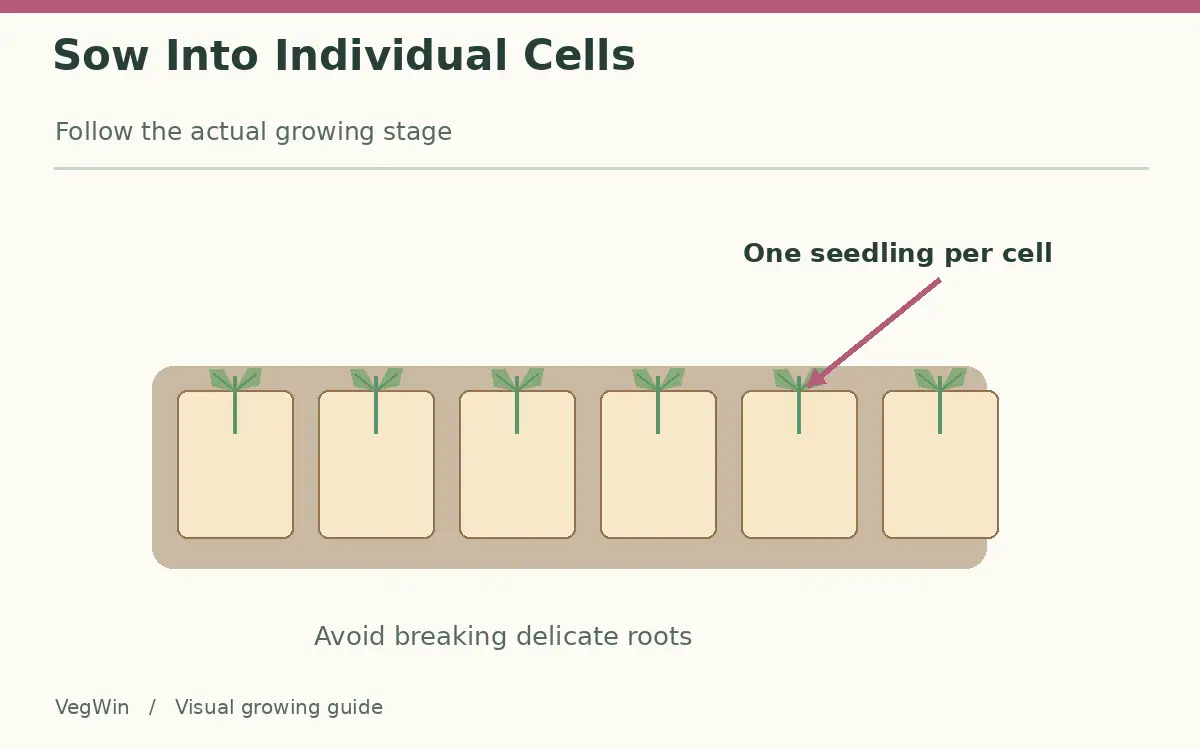
Celosia seeds are tiny. Use a fine-textured seed-starting mix and containers with real drainage. Sow thinly into individual cells where practical; Maryland Extension highlights sensitivity to root disturbance. Follow the packet for covering depth: recommendations vary by type and growing system, so do not bury small seed deeply under heavy wet compost. Pre-moisten the medium, press the seed into good contact, and add water gently enough not to wash everything to one corner. Label each cultivar before the first tray is watered. For the basics, see our guide: When to Sow Sweet William Seeds for the Right Flowering Season.

Keep moisture even while the seed is germinating
Seedlings need moisture for germination, but saturated, stagnant conditions favor collapse from damping-off organisms. Check trays frequently rather than following a blind twice-daily watering rule. Remove standing water from catch trays and allow fresh air as plants emerge. If some cells have poor germination, assess seed age, coverage, temperature and surface drying before adding more water. Under a humidity cover, condensation alone is not evidence that the root zone has the right balance of air and moisture.
Give the first leaves bright light and room
Once cotyledons appear, move young plants to ample light so stems remain short and sturdy. A window with limited hours of low winter light may produce stretched seedlings, while a correctly positioned grow light can give a more consistent start. Maintain space between leaves for airflow. Thin weak extra seedlings carefully rather than yanking their roots through a shared cell. The goal is an upright plant that can be handled by the plug of medium, not a leafy canopy created by overly rich fertilizer.
Watch roots before deciding the transplant date
Celosia can dislike root disturbance; a seedling that remains too long in a tiny plug may suffer after planting. Check one representative cell rather than pulling every plant from its container. Roots should hold the medium together without forming dense coils. If the outdoor bed is still cold, move the plant into a slightly larger pot gently instead of breaking the entire root ball. Conversely, transplanting a barely rooted seedling into heavy garden soil can be just as risky as waiting too long.
Harden off and plant into warm draining soil
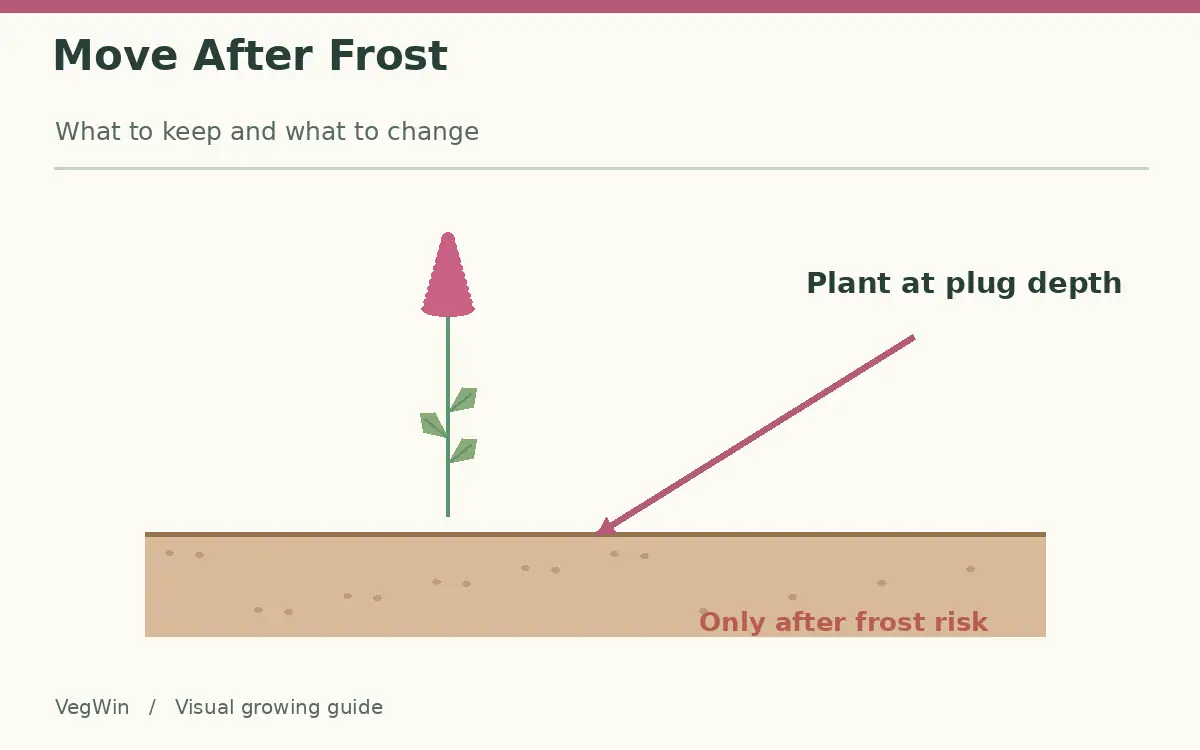
Expose plants gradually to sun, wind and outdoor temperatures. Start in sheltered light, then lengthen exposure as weather permits. Once the danger of frost has passed and the soil is reliably warm, plant at the same depth as the tray plug without burying tender stems. Water in around the roots and check drainage afterward. A cold, waterlogged bed is not improved by an extra dose of fertilizer. If a surprise chill is forecast, delay planting or protect the transplants with a suitable cover rather than assuming celosia is frost-hardy. For a step-by-step method, see how to start celosia from seed indoors without stunting seedlings.
Decide whether to pinch based on the flower goal
For some celosia types, pinching the young tip encourages branches and additional stems, an approach Wisconsin Extension notes for wheat celosia. But a grower hoping for a single dominant crested head or a specific cut-flower form may make a different choice. Consult the cultivar’s production guidance rather than pinching automatically. If you pinch, do it on a vigorously growing young plant above a suitable node and give it time to branch before flowering. Do not pinch a stressed or freshly transplanted seedling.
Diagnose slow growth without overcorrecting
A plant that stops growing after transplanting may have cold roots, compacted medium or root disturbance. Pale, stretched stems suggest inadequate light earlier in the process. Soft, collapsing bases point toward excessive moisture or disease concerns. These problems call for different remedies. Improve the growing environment, remove badly affected seedlings and keep tools and trays clean. Write down your start date and the date reliable warmth arrived outdoors so the next batch can be started closer to an appropriate transplant window.
Match the Next Step to What You See
| What you observe | Suggested decision |
|---|---|
| Tall wheat-type celosia | Plan support if exposed; pinching can increase branching. |
| Large crested type | Protect its intended head form; do not pinch by default. |
| Dense roots circling a small plug | Pot up gently or transplant when weather allows. |
| Cold soil or frost forecast | Keep seedlings protected and postpone planting. |
| Collapsed seedling stems | Check drainage, airflow and seedling hygiene; do not simply add water. |
Related Guides
- When to Start Plume Celosia Seeds Without Disturbing Young Roots
- How to Transplant Celosia Seedlings Without Burying the Stem Base
- How to Save Celosia Seeds From Dry Flower Heads Without Keeping Chaff
How We Research This Guide
These recommendations were checked against university Cooperative Extension and botanical-garden references on October 23, 2026. The sources clarify general plant biology; your local Cooperative Extension, weather and cultivar instructions still govern regional decisions. Key references: University Extension reference (Regional indoor start windows for annual flowers, including celosia.). Plant-care source (Wheat celosia seed propagation, sun, heat preference and need to protect roots.). Additional Extension guidance (Small celosia seed, root-sensitive transplants, damping-off risk and timing.).
This is independent informational gardening content, not a claim of professional on-site diagnosis or a product endorsement. We have not confirmed any paid referral partnership for this article. Read the affiliate disclosure before using any future commercial recommendations. Photos, local species identification, and site-specific safety concerns should be checked before acting.
Yes in suitably warm climates after frost risk has passed, though indoor starts may flower sooner.
No. It is small seed; follow the specific packet’s light-covering directions.
Insufficient light and overcrowding are common causes; review light placement and growing conditions.
Disturb roots as little as possible. Individual cells are usually a simpler option.
No. Move transplants out only when outdoor conditions are reliably warm.