
A peach pit contains a living seed that may produce a tree, but it does not carry a promise of the same peach you just ate. The seed combines genetic material and can make a tree with different fruit flavor, size, timing or hardiness from the source fruit. That is fine for an experiment or for learning propagation. It is a poor way to guarantee your favorite named cultivar.
Iowa State Extension specifically notes that peach seedlings do not come true from seed, and its tree-seed guide explains that peach seeds need a sustained cold treatment to break dormancy. Penn State likewise distinguishes seed-grown fruit trees from grafted cultivars. The first useful decision is therefore whether you want a learning project or a predictable harvest, before you save a pit.
Decide whether seed propagation serves your goal
Growing from a pit is worthwhile when you enjoy observing seed dormancy, germination and a young tree’s growth. Use a peach that was mature enough to develop a sound pit, preferably from a local source where growing conditions are known. The fact that a fruit tasted excellent does not guarantee that its seedling will bear identical fruit. Even siblings from similar pits may vary.
If your goal is a reliable cultivar with known harvest behavior, purchase a locally suitable grafted tree instead. The nursery can identify its scion cultivar and rootstock, information a volunteer seedling cannot supply. Cultivar choice matters in challenging climates because spring freezes, winter cold, disease and chilling requirements can prevent a tree from fruiting well, whether the plant came from seed or a nursery.
Handle the pit without damaging the living seed
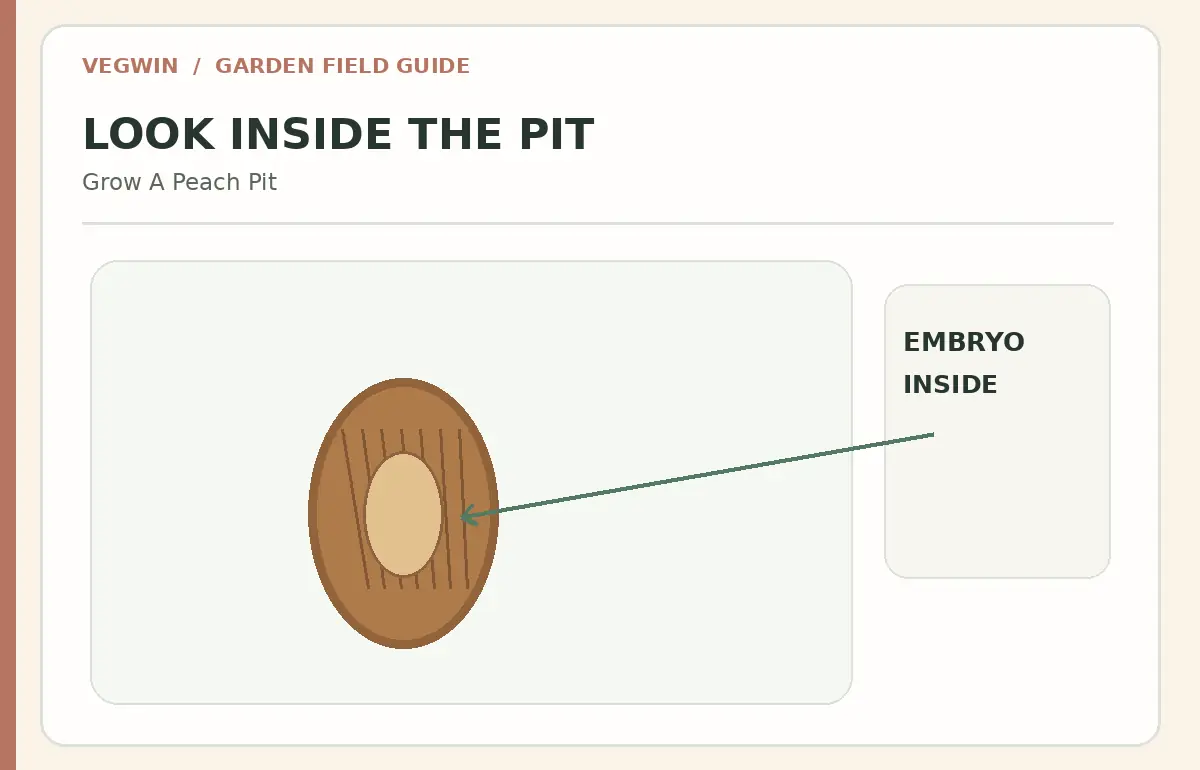
Clean fruit pulp from the pit and label it with collection date and source. The hard stone surrounds the actual seed. It can be tempting to strike the shell with heavy tools to speed the process, but crushing the kernel may destroy the embryo. A whole clean pit is safer for a beginner to manage than attempting to crack it open with force.
Do not eat peach kernels. They are not an edible garden snack and may contain cyanogenic compounds. Keep pits, loose seeds and cold-treatment containers away from children and pets. Start with more than one seed if you are comfortable doing so, because seed viability varies. Remove rotting or visibly moldy material rather than spreading it into other planting containers.
Provide the cold period before expecting germination
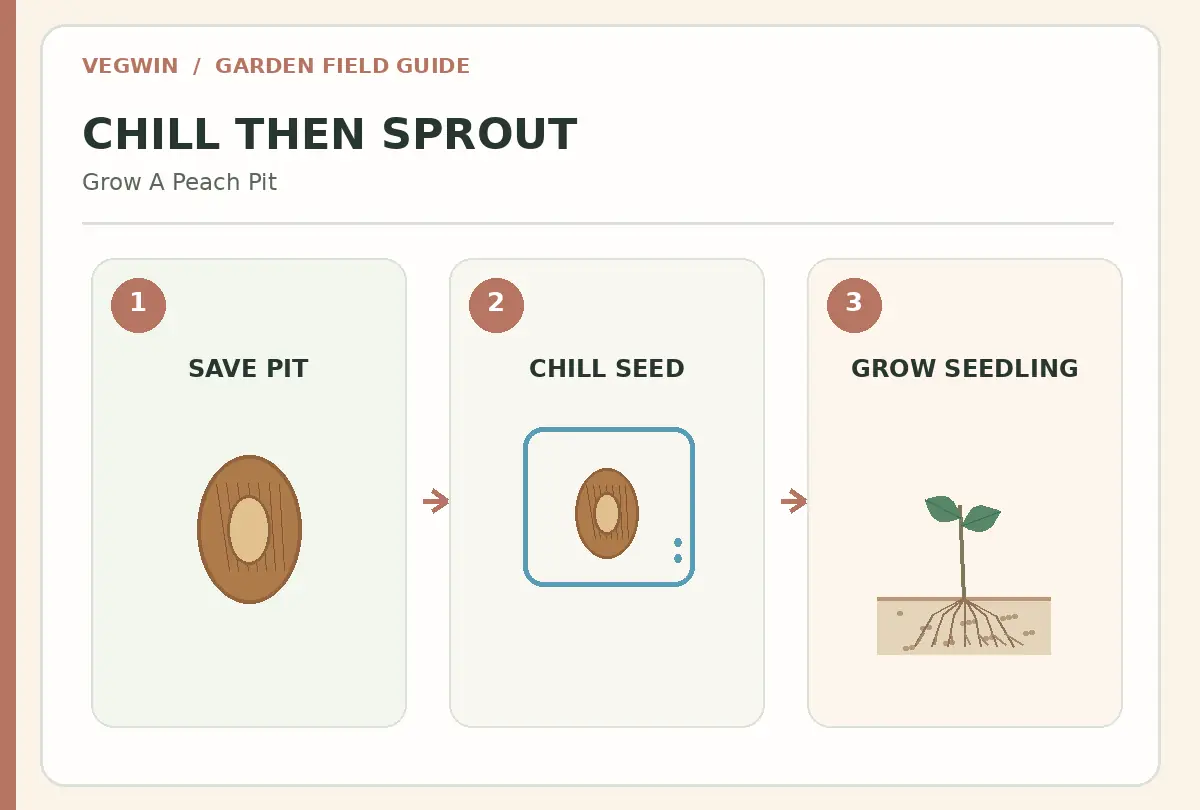
Iowa State Extension lists a prolonged moist chilling requirement for peach seed: around three months rather than a few nights in the refrigerator. Some gardeners sow clean pits outdoors in fall where the local winter provides the needed conditions. Others use a labeled moist medium in a refrigerator. Either route requires moisture without standing water and vigilance for decay.
For a refrigerator method, use clean seed and an appropriately damp, not saturated, medium in a labeled container. Follow the Extension protocol and monitor periodically. Warm climates and mild winters may not reliably deliver natural chilling, so local conditions and a credible seed protocol matter more than a month printed on a calendar.
Plant a germinated seed with good drainage
Once a sound seed germinates, transplant carefully before the root becomes badly entangled in its medium. Avoid snapping the first root or positioning it upward. Use a draining pot with enough depth for the initial root system and a suitable propagation mix. A container that remains waterlogged threatens the seedling more than a modest delay in moving it outdoors.
The Iowa State germination guide includes planting depth guidance for peach seeds. Use its advice when sowing whole pits into prepared outdoor soil, but do not force a fragile, already sprouting seed into a hard hole. Cover gently, label the pot, and water to settle the medium. Place the pot where seedlings receive good light while being protected from extremes during establishment.

Give seedlings a climate-appropriate first growing season
A first-year peach seedling needs adequate sunlight, drainage and observation, not promises of a quick fruit crop. Gradually acclimate plants grown indoors before exposing them to outdoor wind, intense sun or frost. Keep the root zone moist without constant saturation, and check the container for roots circling at the bottom. Transplant only when conditions support safe establishment.
Utah State Extension notes the importance of site drainage, chilling needs and spring-freeze exposure for peaches. In areas with a short frost-free season or severe winter weather, a random seedling may be especially unreliable. Use local Extension recommendations and do not plant close to pipes or structures simply because the seedling is tiny now. A mature peach tree requires canopy space and ongoing care.
Expect variability in fruit and tree behavior
A seedling can eventually flower and bear peaches, yet the result may differ dramatically from the parent. Fruit can vary in flavor, texture, size and ripening time; tree hardiness and disease response are also uncertain. The parent fruit’s store label generally identifies the mother cultivar, not the pollen source. Calling a seedling by that cultivar name would be misleading.
Grafted trees are used to preserve the desirable characteristics of a named scion and to match a rootstock to site conditions. If you later decide to graft the seedling or use it as rootstock, get local training because successful grafting demands compatible material and good technique. The seedling itself is not proof that the parent is suitable for every garden.
Record the experiment and know when to start over
Write down whether you stratified indoors or sowed outdoors, how long the cold treatment lasted, when the seed sprouted and how it handled its first winter. Photograph the leaves and growth each month. If seed never germinates, consider seed maturity, drying, inconsistent moisture and chilling before changing several variables at once. Our walkthrough on how to sow native milkweed seeds in fall or after cold treatment sets out each step.
If you want fruit soon and with greater predictability, switch to an appropriately selected grafted tree instead of repeatedly blaming the seedling. A seed-grown peach is a worthwhile horticulture experiment even if it never produces a commercially desirable peach. Its value lies in learning what a seed can and cannot reproduce.
Choose Your Next Step From the Evidence
| What you notice | What it may mean | Reasonable next step |
|---|---|---|
| Pit stored warm and dry only | Dormancy may remain | Follow a verified moist chilling protocol |
| Seedling emerges from pit | Seed is viable | Move carefully into draining medium |
| Fruit matches parent appearance | Coincidence, not cultivar identity | Do not label the tree as the parent cultivar |
| Goal is known cultivar and timing | Seedling not dependable | Choose locally adapted grafted stock |
Related Guides
How We Research and Check These Recommendations
We reviewed the original institutional and specialist horticulture guidance listed below on October 22, 2026. These sources support the specific biological and practical distinctions discussed above; they cannot forecast conditions in every garden. This is not a claim to have inspected the full published text of every older article. The simplified illustrations show decisions and recognizable plant structures, not photographic proof of a diagnosis. Always account for local weather, plant identification and the recommendations of a nearby Extension office.
Sources checked October 22, 2026: Source 1 — Iowa State Extension explains that peaches can be grown from pits but seedlings do not reproduce true to the parent cultivar.; Source 2 — Iowa State Extension gives peach seed cold-stratification requirements and planting guidance.; Source 3 — Penn State Extension explains sexual seed propagation, chilling and the role of grafting for cultivar fidelity.; Source 4 — Utah State Extension explains how chill hours, winter injury and site selection affect peach production.. No paid partnership or affiliate approval is being claimed. For more detail, read our affiliate disclosure. No product treatment or application rate is being prescribed without its appropriate label or local expert context.
No. The seedling can differ from the parent in fruit and tree characteristics.
Typically yes. Extension guidance describes an extended cool, moist stratification period.
It is not necessary for beginners and can damage the embryo. Follow a reliable germination protocol.
No. Do not treat peach kernels as food; keep them away from children and pets.
Yes, when you want a named cultivar and rootstock suited to the growing region.