
Camellias do not all bloom at the same time, so a rule that merely says “prune in winter” can remove flowers from one plant while helping another. Camellia sasanqua selections often flower in fall or early winter, while many Camellia japonica selections open from winter into spring, depending on climate and cultivar. University of Georgia Extension advises light thinning when needed, with timing chosen around the flowering cycle; many established camellias need no routine cutting at all. Before lifting your pruners, identify when your own shrub blooms and which shoots actually need removal. The guide below explains selective cuts that preserve structure and reduce the risk of removing next season’s buds.
Identify the Camellia and Its Normal Flowering Season
The most useful name on a plant label is the botanical species or named cultivar, not simply “camellia.” Many sasanquas bloom in fall or early winter, while japonicas commonly bloom later, often winter to spring; regional temperature changes the exact calendar. Look at records from last year or observe your shrub through the season. Camellia foliage is glossy and evergreen, with flower buds forming well before they open. A shrub with plump buds in late summer may be preparing for a completely different bloom season than its neighbor. University of Georgia Extension specifically distinguishes pruning recommendations for fall/winter bloomers from spring bloomers. Do not prune based on a neighbor’s plant if yours has a different flowering schedule. Mark the last flowering period and select a suitable pruning moment afterward.
Wait Until the Current Flower Show Is Finished
For most home shrubs, the safest general opportunity for shaping is shortly after the plant has finished its main flowering display, before new flower buds for the following cycle are well developed. Georgia Extension recommends early spring for fall- and winter-blooming camellias and just after blooming for spring-flowering camellias. Do not interpret that as an identical date across the United States. For a late-blooming japonica, waiting until its own flowers fall is important; for an early sasanqua, months may separate flowering from appropriate mild weather for new growth. Severe cold or extreme heat can add stress after heavy cuts. If one twig is dead or broken, sanitation pruning can be done when necessary, while discretionary reshaping should follow the flowering and weather conditions. If you are starting from scratch, read When to Prune Azaleas After Bloom Without Losing Next Spring’s Buds.
Decide Whether Pruning Is Necessary at All
Camellias often maintain an attractive natural silhouette without annual shearing. First stand back and identify a real problem: crossing branches that rub, a dead limb, growth blocking a path, or a dense pocket with poor air circulation. A vigorous, well-shaped plant with abundant healthy leaves may need only faded flower cleanup or no cut. Georgia Extension notes that camellias generally require little pruning and suggests thinning rather than constant surface clipping. Avoid trying to force a large established shrub into a tiny round ball every year. Repeated shearing can obscure its natural branching and remove many potential flowers. When a shrub has outgrown a small space, consider whether staged selective reduction or eventual replacement is more realistic than radical annual topping.
Identify a Flower Bud Before Cutting a Shoot
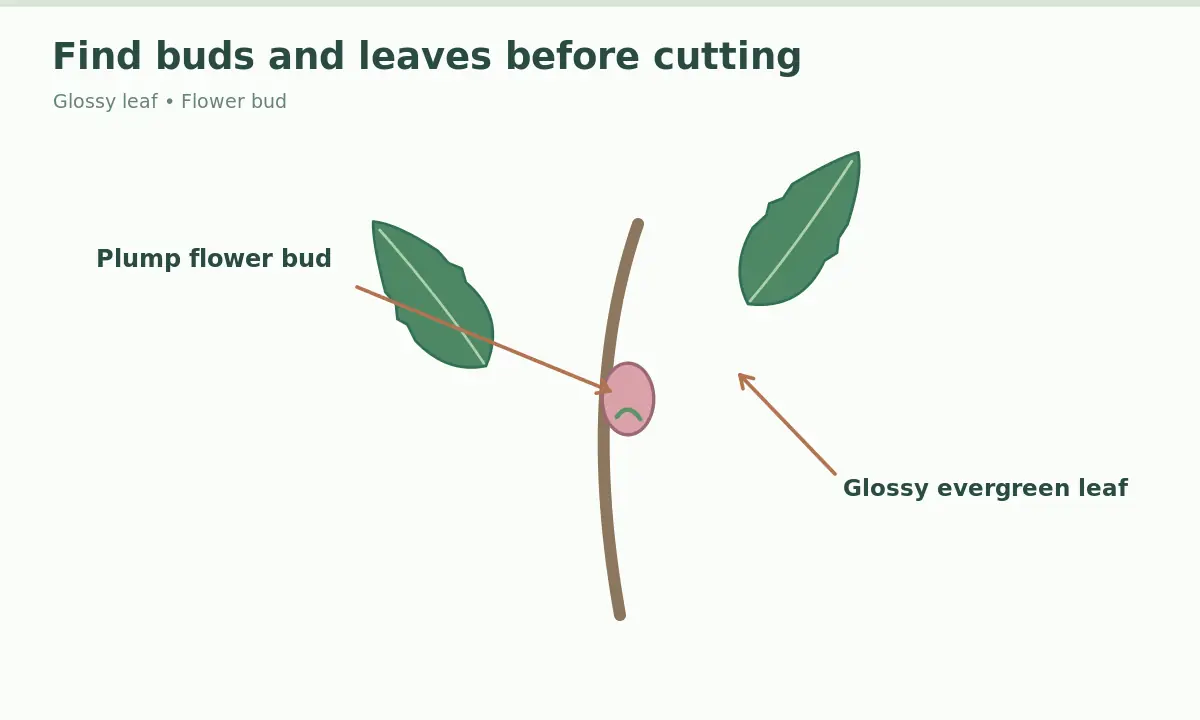
Camellia flower buds are usually plumper and more rounded than narrower vegetative buds, though appearance varies by type and season. Examine several nodes near the outside of a branch and note where buds sit relative to the leaf axils. Once the next season’s flower buds are present, cutting the outer tips removes those buds. Do not assume a branch is “empty” merely because there are no open flowers yet. Leaf buds also matter because they drive regrowth after a cut. This is why timing and observation take priority over shearing to a fixed height. If a shrub carries a few opened flowers and many closed buds, it is not finished blooming; wait unless a branch is hazardous. The botanical picture in this guide distinguishes leaves, plump flower buds, and the point of a selective branch removal.

| What you see | Better response | Avoid |
|---|---|---|
| Glossy leaf | Decide Whether Pruning Is Necessary at All | Acting before confirming the plant stage |
| Cut at junction | Choose Thinning Cuts Over a Flat Outer Shell | Copying a technique intended for another plant |
| Selective thinning | Manage Tools and Cleanliness Without Over-Treating | Ignoring the remaining healthy plant tissue |
Choose Thinning Cuts Over a Flat Outer Shell
A thinning cut removes an entire misplaced shoot back to a larger branch or appropriate junction, allowing light into the canopy without forcing a dense uniform exterior. Identify the branch you want to retain and trace the competing one to its origin. Cut just outside the branch collar or natural junction without leaving a long stub; do not flush-cut into the parent branch. On a mature camellia, a few thoughtful removals often look better than dozens of short tip cuts. The UGA pruning bulletin recommends thinning camellias to maintain a natural form. Work slowly and recheck the outline after each cut. Do not strip the shrub’s interior bare or expose shaded bark and leaves abruptly to harsh sun. Retaining a balanced structure helps the plant recover gradually.
Remove Dead, Broken, and Crossing Wood First
Begin with dead or broken twigs and branches that repeatedly rub through their bark. Follow dead wood toward healthy tissue and choose a sound branch junction for the removal. Use sharp, clean bypass pruners for small wood and a suitable saw for larger limbs. Do not tear bark by letting a heavy branch fall uncontrolled; use proper staged cuts for substantial branches or professional help if the limb is overhead or near a structure. Crossing twigs can be resolved by removing one and keeping the better-positioned branch. Sanitation and safety come before decorative shaping. Do not apply wound paint as a routine cure for pruning; sound cuts and basic plant health are the useful priorities. Afterward, step back and check that foliage remains distributed around the plant.
Avoid Severe Renewal Without a Recovery Plan
Old camellias can sometimes recover from substantial renovation, but recovery may be slow, the flowering display can be interrupted, and sudden exposure can stress previously shaded tissue. If the shrub is very overgrown, consider reducing a limited number of offending branches over more than one growing season. Check the cultivar’s vigor, root health, and local climate before making large cuts. A thirsty plant on compacted soil will not respond like a vigorous shrub in an established mulched bed. Heavy shearing during bud formation almost guarantees lost flowers on the removed sections. Never copy a severe treatment done to a different kind of evergreen shrub. For a mature specimen or a large branching problem, ask a qualified local arborist or Extension expert for a staged plan.

Manage Tools and Cleanliness Without Over-Treating
Wipe dirt from blades and disinfect as appropriate between diseased plants according to local plant health guidance. Prune on a dry day when practical, especially if foliage has visible disease symptoms. Bag clearly diseased plant material when recommended locally and avoid scraping bark to clean a harmless lichen patch. Do not mistake dark sooty mold from honeydew-producing insects for a problem that cutting every branch will solve; inspect for scale and other sap feeders first. On a dry site, follow a pruning session with normal watering when soil moisture warrants it, not an invented fertilizer drench. Good sanitation means clean tools, undamaged collars, and keeping fallen diseased material managed—not an automatic chemical spray after each cut.
Watch New Growth Before Judging Results
After selective thinning, new shoots may form near retained leaves or branches, especially in favorable growing weather. Give the shrub time. Its outer silhouette may look more open at first, and that is expected. If a sudden cold spell follows cutting, avoid further stress by changing irrigation or fertilization without evidence. Watch for dieback around poorly placed stubs; if a cut heals normally, there is no reason to recut it. Some flowers may be lost in the following season even after correct heavy renovation because flowering wood was removed; that is different from disease. Take a photograph after pruning and again at the next bud-setting period. Those comparisons help you determine whether the shrub truly needed the amount of thinning you gave it.
Build a Camellia Pruning Calendar From Observations
Write down when the first and last flowers appeared on your individual shrub, then note when fresh shoots and swelling buds became visible. This simple record is more reliable than guessing from a nationally distributed month chart. UGA Extension distinguishes early-spring attention for fall/winter flowerers and post-flowering attention for spring camellias, but a cool mountain garden and a subtropical coastal garden can differ widely in flowering dates. Mark when pruning was performed and whether next year’s flowering was affected. If the plant is growing well and flowering nicely, choose less pruning the next time. Do not use USDA hardiness zones alone as a bloom calendar. Observe the living plant, use local cultivar knowledge, and keep large interventions infrequent. If you want the full process, read how to prune camellias by bloom season without losing buds.
Related Guides
- How to Prune Flowering Quince After Bloom Without Losing Next Year’s Flowers
- When to Prune Bridal Wreath Spirea and Keep Its Arching Spring Flowers
- When to Prune Deutzia After Flowering and Thin Older Canes Correctly
- When to Prune Japanese Pieris Without Losing Next Spring’s Flowers
- When to Prune Pyracantha Without Losing Spring Flowers or Winter Berries
How We Research and Verify This Guidance
Sources reviewed on 2026-10-24: extension.uga.edu — University of Georgia Extension: prune fall and winter camellias in early spring and spring bloomers after flowering; thinning technique; extension.uga.edu — University of Georgia Extension: camellias generally need little pruning, thin if necessary after bloom; www.rhs.org.uk — Royal Horticultural Society: camellia seasonal flowering and general cultivation. We compared the original guidance for plant identity, timing, and specific garden actions, and rejected one-size-fits-all dates when local climate or plant type changes the answer. The drawings are educational simplifications, not botanical scale drawings. Local Cooperative Extension information and the cultivar label can refine these recommendations.
Disclosures, Safety, and Regional Differences
This is educational gardening information, not individualized medical, agricultural, or pesticide advice. There is no claimed sponsorship or affiliate relationship for the recommendations in this guide. Read VegWin’s affiliate disclosure. Follow locally registered pesticide product labels where relevant and consider local pest or plant restrictions. USDA hardiness zones describe winter minimums, not a complete seed-sowing, pruning, or harvest calendar. No unverified chemical or fertilizer rates are recommended.
You can remove a hazardous or dead branch, but shaping while flower buds are present usually sacrifices those blooms.
For many fall or winter bloomers, early spring is a suitable shaping period after the floral display; local conditions matter.
Generally after its main flowering period ends and before the next flower-bud cycle develops.
Not necessarily. Healthy shrubs with good structure often need only occasional selective thinning.
Repeated shearing can remove buds and create a dense outer shell. Selective thinning better preserves a natural form.